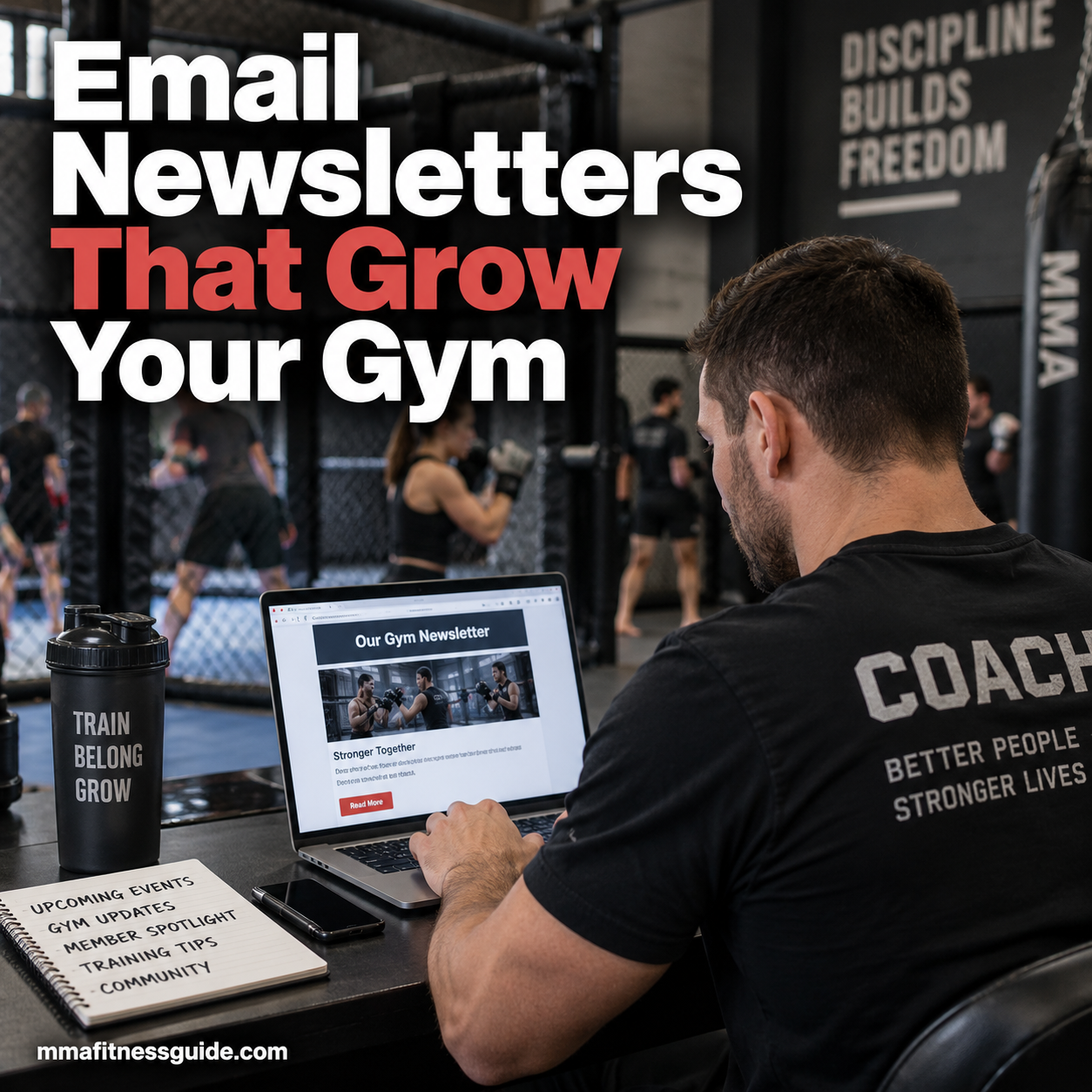
Social media is useful for getting an MMA gym in front of new people, but there’s a catch: followers may never see what you post. Algorithms decide how widely each post is distributed, and even interested prospects can quickly scroll past it.
Email gives a gym a more direct way to stay in touch. Someone who signs up for a trial class, downloads information, attends an event, or joins the gym can continue hearing from you long after that first interaction.
A useful gym newsletter might remind members about an upcoming seminar, introduce a new class, share a training tip, highlight a student’s progress, or encourage someone who has not trained recently to come back.
The goal isn’t to fill inboxes with promotions. It’s to give members and prospects a reason to stay connected to the gym.
Why Email Newsletters Work for MMA Gyms
A gym’s email list contains people who have already shown some level of interest. They may be active members, former students, parents, trial students, or prospects who contacted the gym but haven’t signed up yet.
Regular emails give you opportunities to:
- Stay visible to prospective students
- Keep current members informed
- Reconnect with students who stop attending
- Announce schedule changes and events
- Share what is happening inside the gym
- Promote trials, seminars, and referral offers
- Strengthen the community around your classes
Instead of hoping someone sees an announcement on social media, you can deliver it directly to the people who asked to hear from you.
Step 1: Build a Simple Email List
Start collecting email addresses from the people already interacting with your gym.
Good opportunities include:
- New member registrations
- Trial class sign-ups
- Website inquiries
- Parents of youth students
- Seminar and event registrations
- Current members
- People who request information about classes
Your website can include a short newsletter form, while the front desk can collect emails during registrations or inquiries.
Be clear about what people are signing up for, and avoid adding people to marketing emails without their permission.
Step 2: Choose an Email Platform
An email platform keeps your subscriber list organized and gives you tools that regular personal email accounts don’t provide.
Popular options include Mailchimp, Kit (formerly ConvertKit), MailerLite, and Constant Contact.
Depending on the platform and plan, you may be able to:
- Organize subscribers into groups
- Design reusable newsletter templates
- Schedule emails in advance
- Create automated email sequences
- Track opens and link clicks
- Manage unsubscribes automatically
For a smaller MMA gym, start with the features you’ll actually use. Subscriber management, basic templates, scheduling, and simple automation are usually enough to get started.
Step 3: Send a Welcome Email
When someone joins your email list, send a welcome message while their interaction with the gym is still fresh.
For example, a prospect who signs up after researching beginner MMA classes could receive an email explaining what happens during a first session.
A welcome email could include:
- A short introduction from the coach or owner
- What your gym teaches
- What beginners should expect
- What equipment they need for their first class
- A link to the current class schedule
- Contact information for questions
You can also include a short explanation of what future emails will contain so subscribers know why they should keep reading.
Step 4: Give People Something Worth Opening
A gym newsletter doesn’t have to contain several pages of content. A few useful updates can be enough.
Here are several topics you can rotate throughout the month.
Class Highlights
Show members what different classes are working on. You might mention recent striking drills, wrestling techniques, conditioning sessions, or beginner fundamentals.
Fitness and Conditioning Tips
Share something readers can use immediately, such as a mobility exercise, recovery tip, warm-up routine, or simple conditioning drill.
Upcoming Events
Remind subscribers about seminars, belt promotions, competitions, open mats, schedule changes, and other important dates.
Member Spotlights
Feature a student’s progress, competition experience, fitness milestone, or training journey. Get permission before sharing personal details or photographs.
Behind-the-Scenes Updates
Introduce a coach, show new equipment, explain how a class is structured, or share improvements being made to the facility.
Promotions and Trial Offers
Email subscribers can receive occasional trial offers, referral incentives, introductory programs, or bring-a-friend invitations.
Training Mindset
Share a short lesson from coaching, such as how to handle a difficult training session, prepare for competition, or stay consistent when progress feels slow.
Rotating these topics keeps the newsletter from becoming a stream of sales pitches.
Step 5: Reconnect With Students Who Stop Training
A member who hasn’t attended class for several weeks may not formally cancel right away. Work, family responsibilities, injuries, schedule changes, or a loss of momentum can gradually pull someone away from training.
Email gives the gym an opportunity to reconnect before that absence becomes permanent.
A short message can say that you haven’t seen them recently, share the current schedule, and invite them to return when they’re ready.
These messages should feel like communication from a coach or gym community rather than pressure from a salesperson.
You can also create separate emails for members who have been inactive for specific periods, such as 14 or 30 days.
Step 6: Use Photos From Your Gym
When possible, use photographs taken inside your actual gym instead of generic fitness images.
Show:
- Coaches teaching
- Students drilling
- Pad work
- Sparring sessions
- Group classes
- Competition teams
- Seminars
- Belt promotions
- Gym events
Someone considering their first MMA class wants to know what your environment looks like and who they’ll be training with.
Real photographs answer those questions better than a polished stock photo of people they’ve never met.
Always get appropriate permission before featuring members, particularly children, in promotional emails.
Step 7: Make Newsletter Sign-Ups Easy to Find
Don’t hide your email form on a page nobody visits.
Give people several opportunities to subscribe, including:
- Your website
- Trial-class registration pages
- Contact forms
- Front-desk materials
- QR codes inside the gym
- Social media profiles
- Event registration pages
- YouTube video descriptions
You can also explain what subscribers will receive. “Get gym updates, training tips, upcoming events, and class announcements” gives someone a clearer reason to subscribe than simply saying “Join our newsletter.”
Step 8: Choose a Schedule You Can Maintain
The right frequency depends on how much useful information your gym has to share.
A busy academy running events and competitions might have enough material for a weekly email. A smaller gym may be better served by sending an update every two weeks or once a month.
Possible schedules include:
- Weekly gym updates
- Bi-weekly training tips and announcements
- Monthly gym roundups
Avoid sending an email simply because the calendar says one is due. Each newsletter should contain something useful, timely, or relevant to the reader.
Step 9: Automate Repetitive Emails
Some gym emails are triggered by predictable events and can be prepared in advance.
Automation can be useful for:
- New trial registrations
- New member welcomes
- First-class instructions
- Class or appointment reminders
- Beginner training guides
- Follow-ups after trial classes
- Inactive-member check-ins
For example, someone who books a trial could immediately receive directions, parking information, what clothing to wear, and what to expect when they arrive.
A second email a few days later could answer common beginner questions.
Once those messages are set up, every new prospect can receive the same helpful information without a coach manually writing each email.
Step 10: Track What People Respond To
Email statistics can help you decide what deserves more attention.
Watch a few basic measurements:
- How many subscribers open each email
- Which links receive clicks
- Which subjects generate more interest
- Whether readers visit your class or trial pages
- How many people unsubscribe
Look for patterns across several newsletters rather than judging your strategy based on a single email.
If competition recaps consistently receive attention, publish more of them. If members frequently click class-schedule links, make the schedule easier to find in future emails.
Most importantly, track actions that matter to the gym. Trial registrations, returning members, event attendance, and new memberships tell you more about business results than open rates alone.
Final Thoughts
A useful MMA gym newsletter has a straightforward job: keep the relationship going between visits to the gym.
A prospect can learn what their first class will be like. A current student can discover an upcoming seminar. A member who hasn’t trained recently can receive a reason to return. Parents can stay informed about youth programs and schedule changes.
Start with a manageable subscriber list and a realistic publishing schedule. Share useful training information, genuine gym updates, and occasional offers when they are relevant.
Over time, that email list becomes a direct communication channel between your gym and the people most likely to train there.