Female MMA fighter preparing for weigh-in, representing discipline, focus, and smart weight-cutting strategies.
The Smart Fighter’s Approach to Weight Cutting
Cutting weight is one of the most challenging — and misunderstood — parts of MMA preparation. While it’s common to see fighters lose 10–15 pounds before a fight, the truth is: how you cut matters more than how much.
Done right, a weight cut can improve your performance by putting you in the right division. Done wrong, it can wreck your energy, endurance, and health before you even step into the cage.
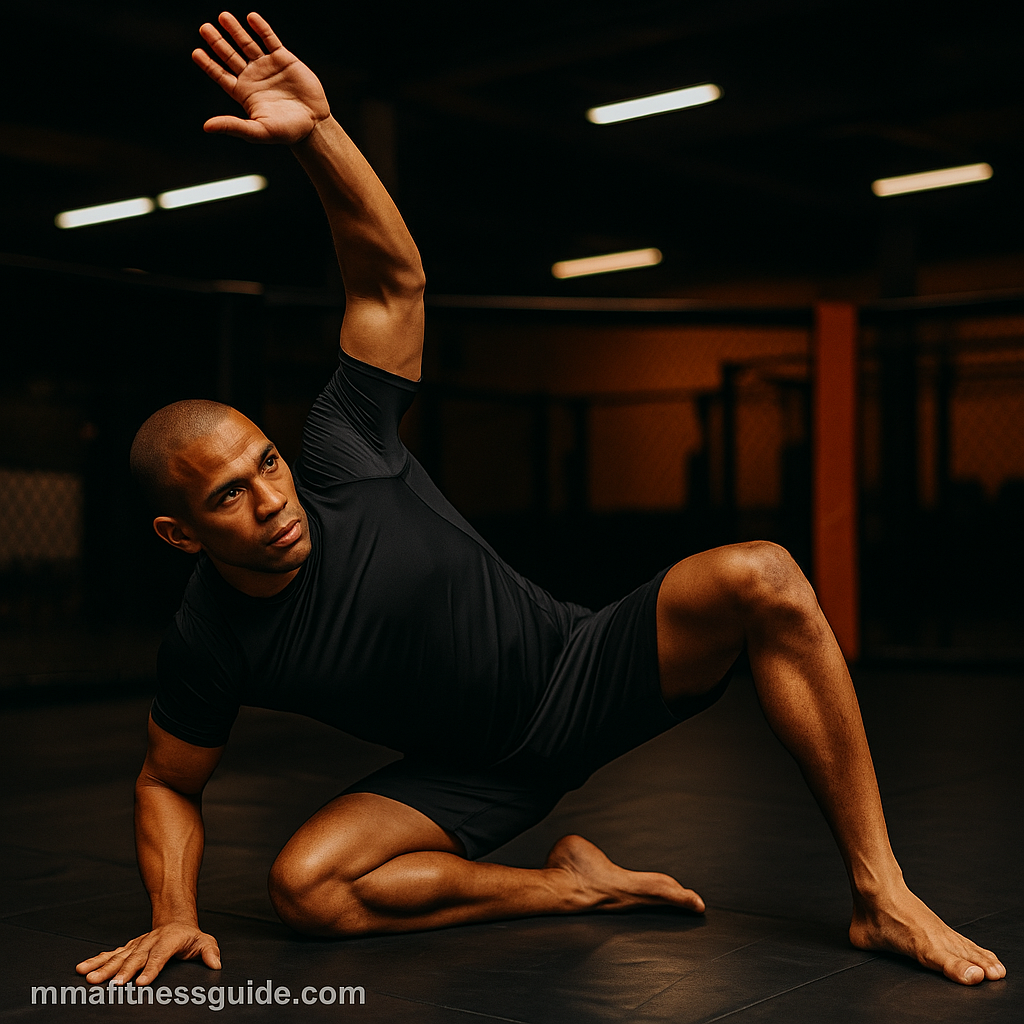
Focused MMA fighter practicing mobility drills in the gym to improve flexibility, control, and movement efficiency.
The Secret to Longevity in MMA
Every fighter wants to hit harder, move faster, and stay in the game longer — but few realize that mobility is the foundation for all of it. Mobility isn’t just flexibility; it’s your ability to move freely and powerfully through your full range of motion.
Without mobility, you can’t kick high, sprawl fast, or throw combinations with balance. With it, you build fluid strength, avoid injuries, and perform with the grace of a martial artist — not just the power of a brawler.
Female MMA fighter resting after training, reflecting on balance between hard work, recovery, and mental focus.
The Fighter’s Paradox: Train Hard, But Recover Harder
In MMA culture, we often hear phrases like “no days off” or “grind until you can’t.” But the truth is, rest isn’t weakness — it’s strategy. Every elite fighter knows that recovery is just as important as the hours spent sparring, lifting, and drilling.
Finding the right balance between training intensity and proper rest is what separates long-term athletes from short-lived competitors.
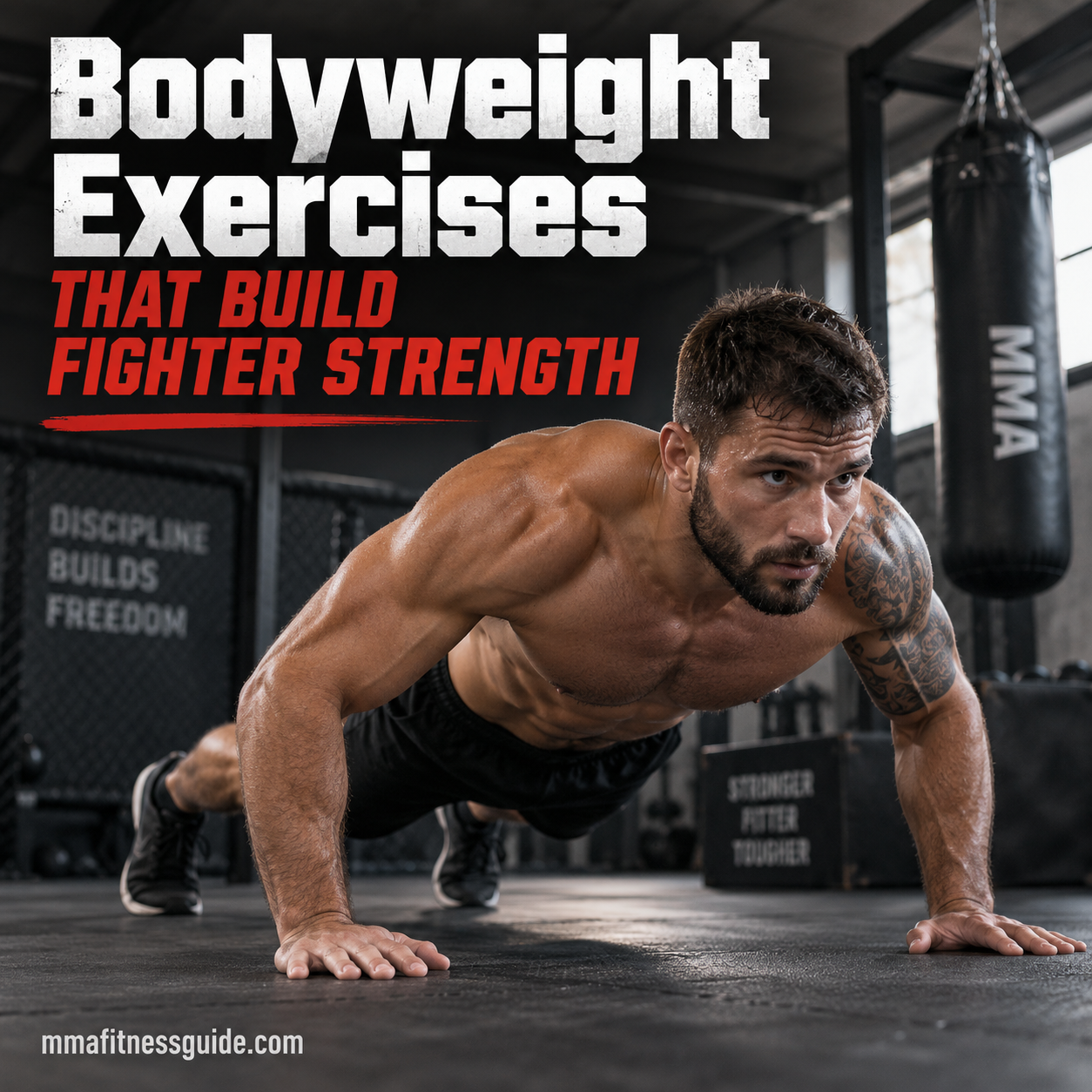
Build fighter strength anywhere with bodyweight exercises that improve power, endurance, balance, and control for MMA.
Building strength for mixed martial arts doesn’t require a fully equipped gym, expensive machines, or a room full of weights. Some of the most important physical qualities a fighter needs—balance, muscular endurance, coordination, and body control—can be developed through consistent bodyweight training.
Push-ups, pull-ups, squats, lunges, planks, and burpees provide a practical foundation for fighters who want to become stronger without relying entirely on traditional weightlifting.
However, fighter strength involves more than completing hundreds of repetitions. It requires the ability to produce force, maintain stable positions, resist fatigue, and control your body while an opponent is actively working against you.
A fighter needs strong legs to drive through takedowns, a stable core to transfer force during strikes, and upper-body strength to maintain control in the clinch. Bodyweight exercises can help develop these qualities when performed with proper technique and progressively increased difficulty.
This guide covers seven essential bodyweight exercises for MMA, explains how they contribute to fighting performance, and provides practical workout routines for beginners and experienced athletes.
Whether you’re training at home, supplementing martial arts classes, or building your fitness before joining an MMA gym, these exercises can form the foundation of an effective strength program.
Cinematic image of an MMA fighter inspired by Anderson Silva’s calm precision and mastery inside the cage.
The Spider’s Story: From Humble Beginnings to MMA Greatness
Few fighters have defined an era quite like Anderson “The Spider” Silva. Known for his lightning reflexes, fluid striking, and almost supernatural composure, Silva built a career that blurred the line between art and combat.
His story is not just one of victories and knockouts — it’s a story of discipline, adaptation, and an unbreakable belief in self-expression through martial arts.
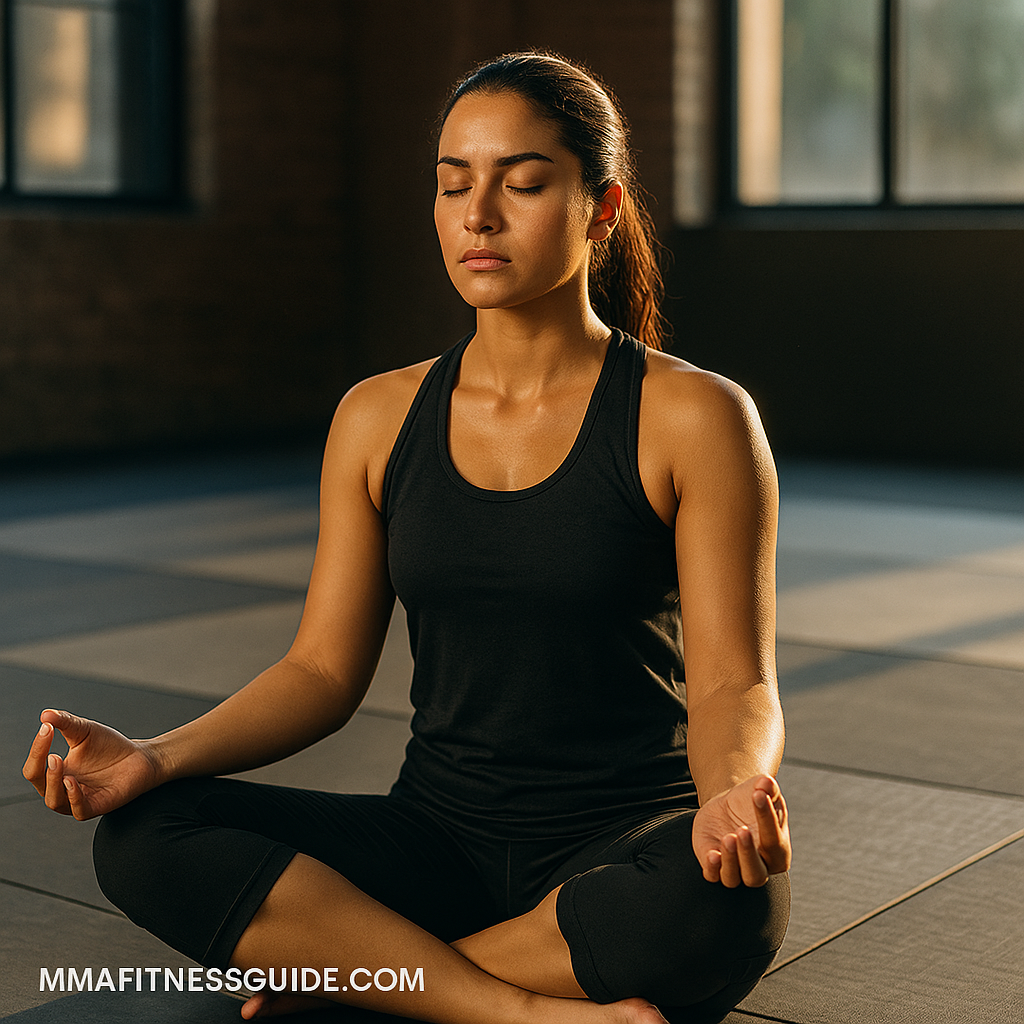
Female MMA fighter practicing meditation after training, reflecting emotional fitness and mental balance through martial arts.
The Mental Battle Beyond the Mat
When most people think of martial arts, they picture punches, kicks, and takedowns. But ask any seasoned fighter, and they’ll tell you that the hardest battles happen in the mind.
Training in martial arts builds not only strength and skill but also emotional fitness — the ability to manage stress, control impulses, and stay composed under pressure. In an age where mental health is as important as physical health, martial arts can be a powerful form of emotional training.
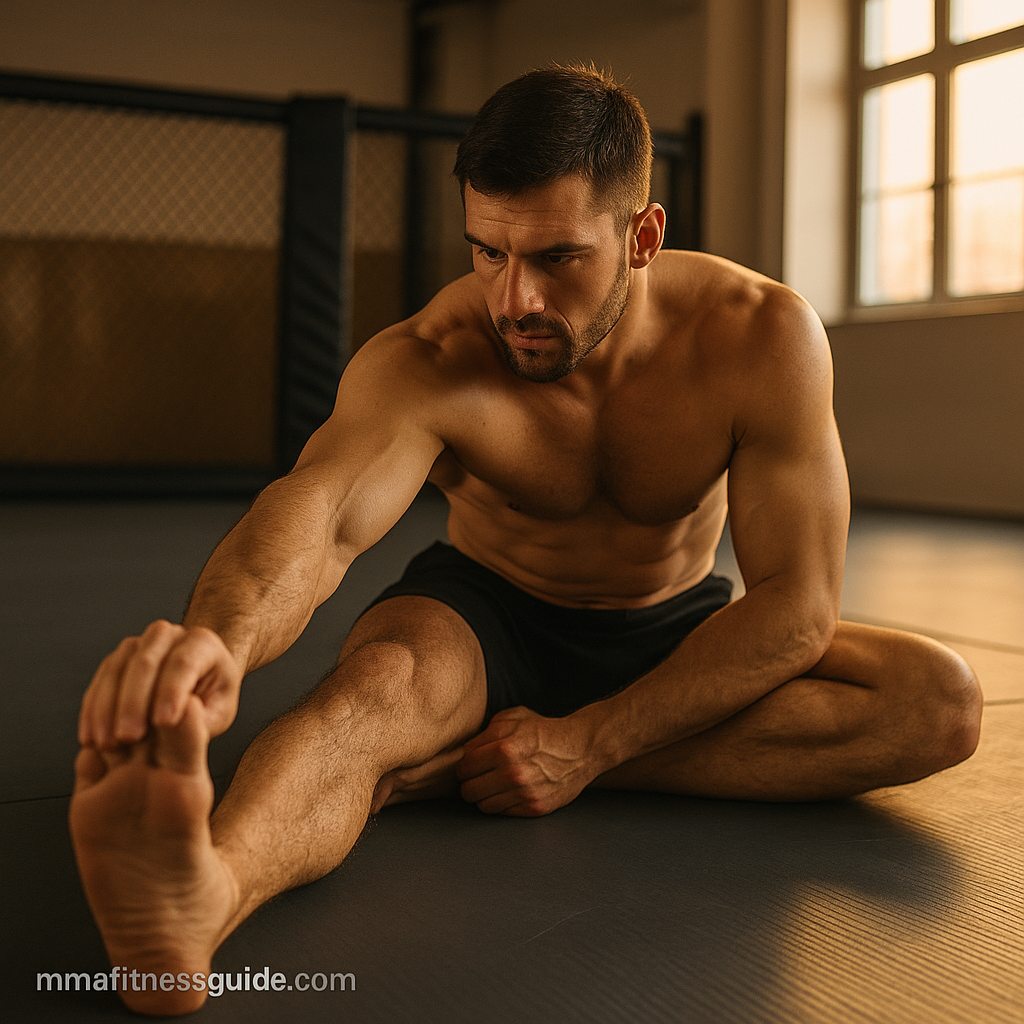
Regular mobility and stretching work can help MMA fighters maintain the range of motion needed for striking, wrestling, and grappling.
Flexibility affects nearly every phase of MMA. A fighter needs enough hip mobility to throw clean head kicks, enough shoulder range to hand-fight and grapple, and enough movement through the ankles, knees, and spine to change levels, scramble, and defend takedowns.
When those ranges become restricted, technique can start compensating. A tight hip may force a kick to come around awkwardly. Limited shoulder mobility can make certain grappling positions harder to escape. Tight hamstrings can interfere with stance changes, guard work, and level changes.
A consistent stretching routine helps maintain the usable range of motion that MMA training demands.
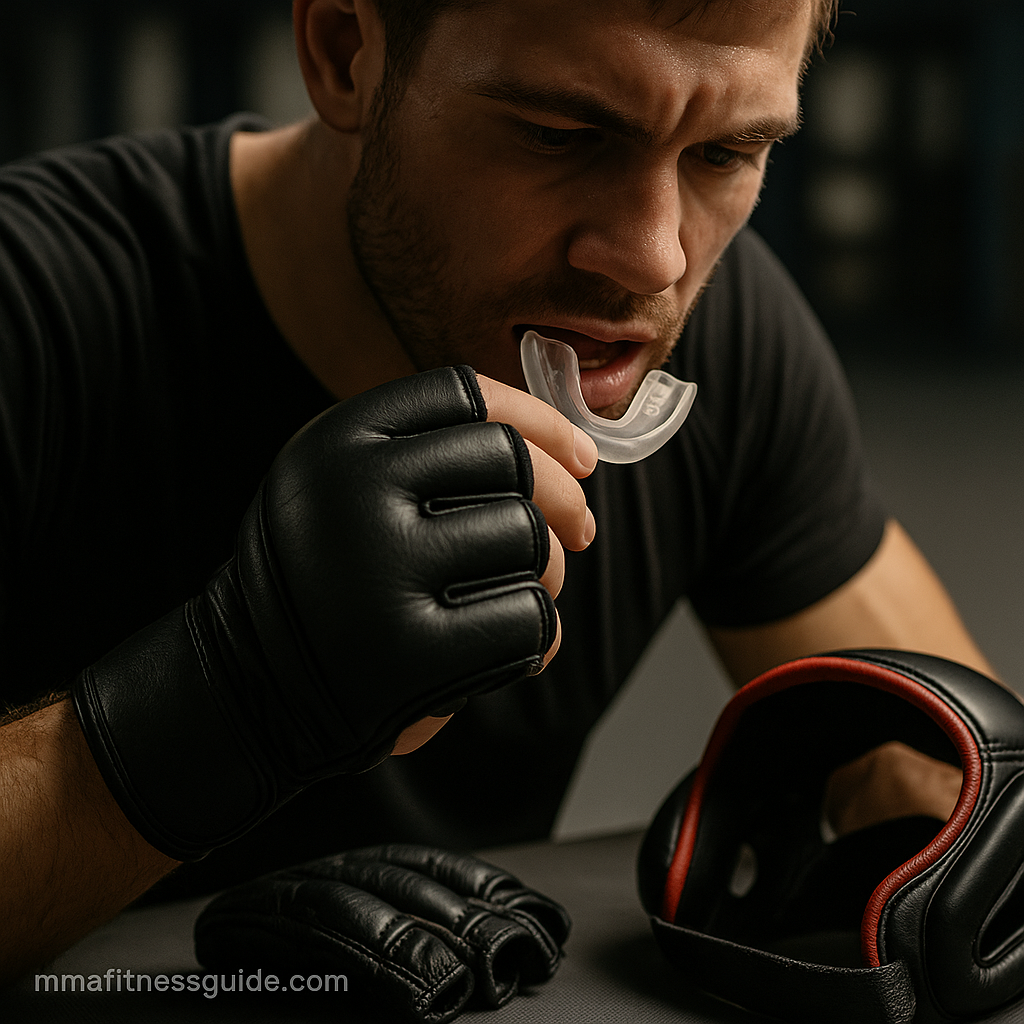
MMA fighter preparing for training with gloves and mouthguard, emphasizing the importance of protection and proper gear.
Protect Your Most Valuable Asset — Your Smile
When it comes to MMA gear, fighters often focus on gloves, wraps, or shin guards — but one of the most important pieces of equipment you’ll ever own is your mouthguard.
A properly fitted mouthguard doesn’t just protect your teeth. It cushions your jaw, absorbs impact, and can prevent concussions and soft tissue injuries. Whether you’re sparring lightly or going all-out in the cage, a quality mouthguard is non-negotiable.
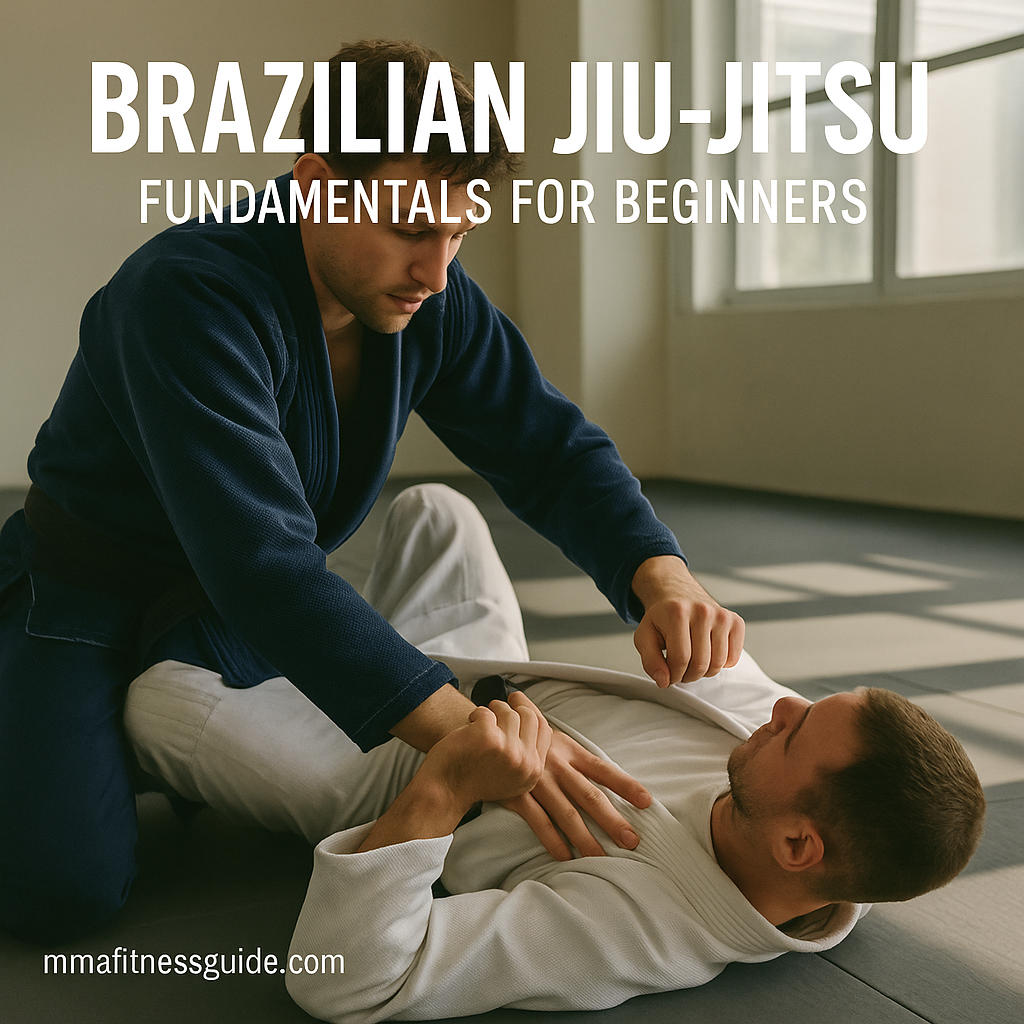
Two beginners practicing Brazilian Jiu-Jitsu fundamentals in a bright dojo, focusing on technique and control.
The Gentle Art: Where Technique Beats Strength
Brazilian Jiu-Jitsu (BJJ) is often called “the gentle art,” but don’t let the name fool you — it’s one of the most effective and technical martial arts in the world. Rooted in leverage, control, and precision, BJJ teaches smaller or less powerful practitioners to overcome larger opponents using skill and strategy rather than brute force.
Whether you’re training for MMA, self-defense, or pure fitness, mastering the fundamentals of BJJ gives you a foundation for life — balance, patience, and awareness.
Balanced MMA recovery meal with salmon, rice, and vegetables, fueling muscle repair and performance after intense training.
Refuel Like a Fighter
After an intense MMA training session — heavy sparring, grappling rounds, or conditioning drills — your body is running on empty. Recovery isn’t just about rest; it’s about rebuilding your muscles, restoring energy, and reducing inflammation so you can perform again tomorrow.
Choosing the right recovery foods helps you bounce back faster, rebuild stronger, and stay consistent through demanding training schedules.