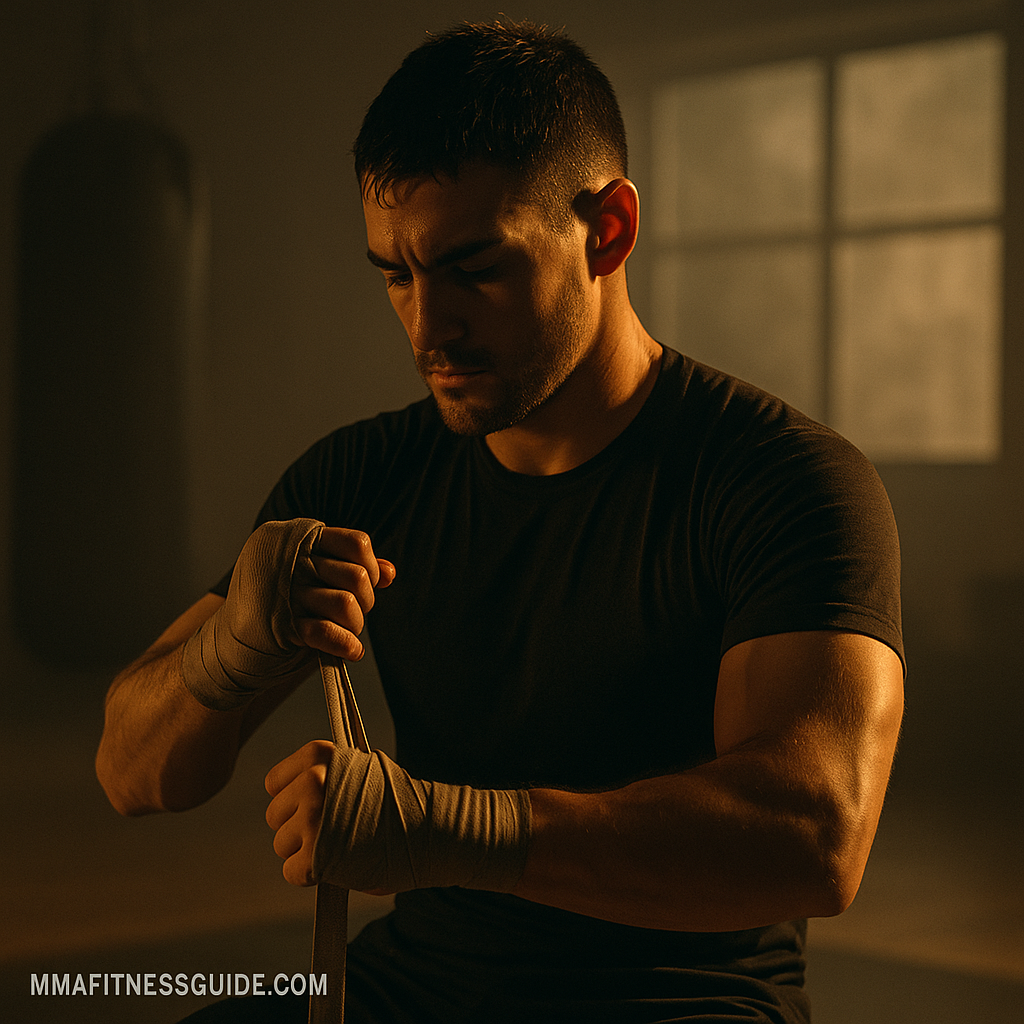
Focused MMA fighter pushing through fatigue during intense conditioning to build endurance for championship rounds.
The Endurance Edge in Championship Fights
In MMA, power wins moments — endurance wins fights. When the bell rings for the fourth or fifth round, fatigue exposes everything: technique, mindset, and preparation.
Building endurance for five-round fights isn’t just about running more miles. It’s about developing the right mix of cardio capacity, muscular endurance, and fight-specific conditioning that carries your strength, speed, and focus to the final second.
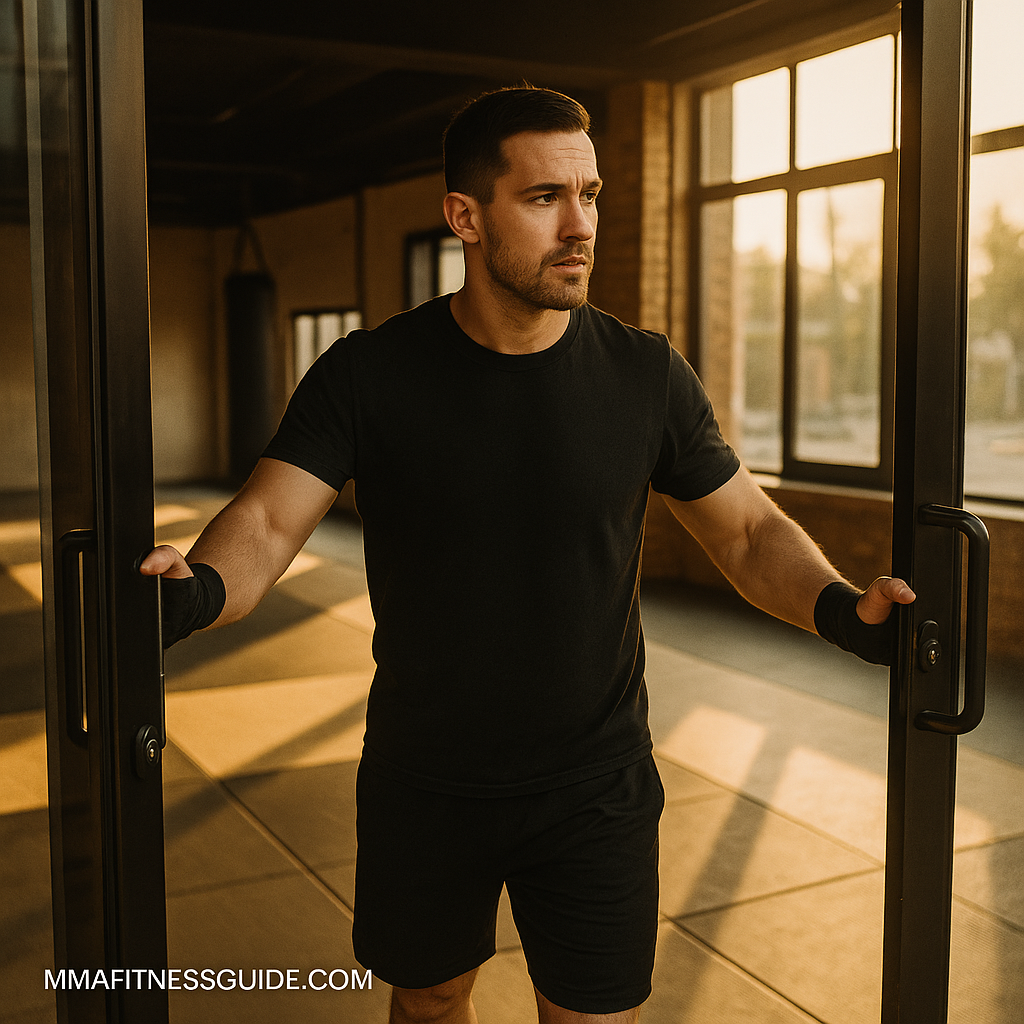
MMA coach opening the doors to his new gym, symbolizing dedication, entrepreneurship, and the start of a martial arts journey.
Turning Your Passion for Martial Arts Into a Business
For many fighters and enthusiasts, the dream doesn’t stop at competition — it extends to creating a martial arts gym of their own. Owning a gym means building a space where discipline, community, and business meet.
But starting an MMA or martial arts gym takes more than just mats and gloves. It requires vision, strategy, and the mindset of both a coach and entrepreneur.
A structured morning can help fighters prepare for training with hydration, mobility, nutrition, and focused preparation.
A fighter’s first training session doesn’t begin with the opening bell or the first round on the pads. It often begins hours earlier—with getting out of bed on schedule, drinking water, loosening stiff joints, eating appropriately, and preparing mentally for the work ahead.
MMA athletes may train striking, grappling, strength, and conditioning in the same week, sometimes across multiple sessions per day. A structured morning helps organize that workload and reduces the number of decisions that have to be made before training begins.
The exact routine varies from fighter to fighter, but several habits fit naturally into an MMA training schedule.
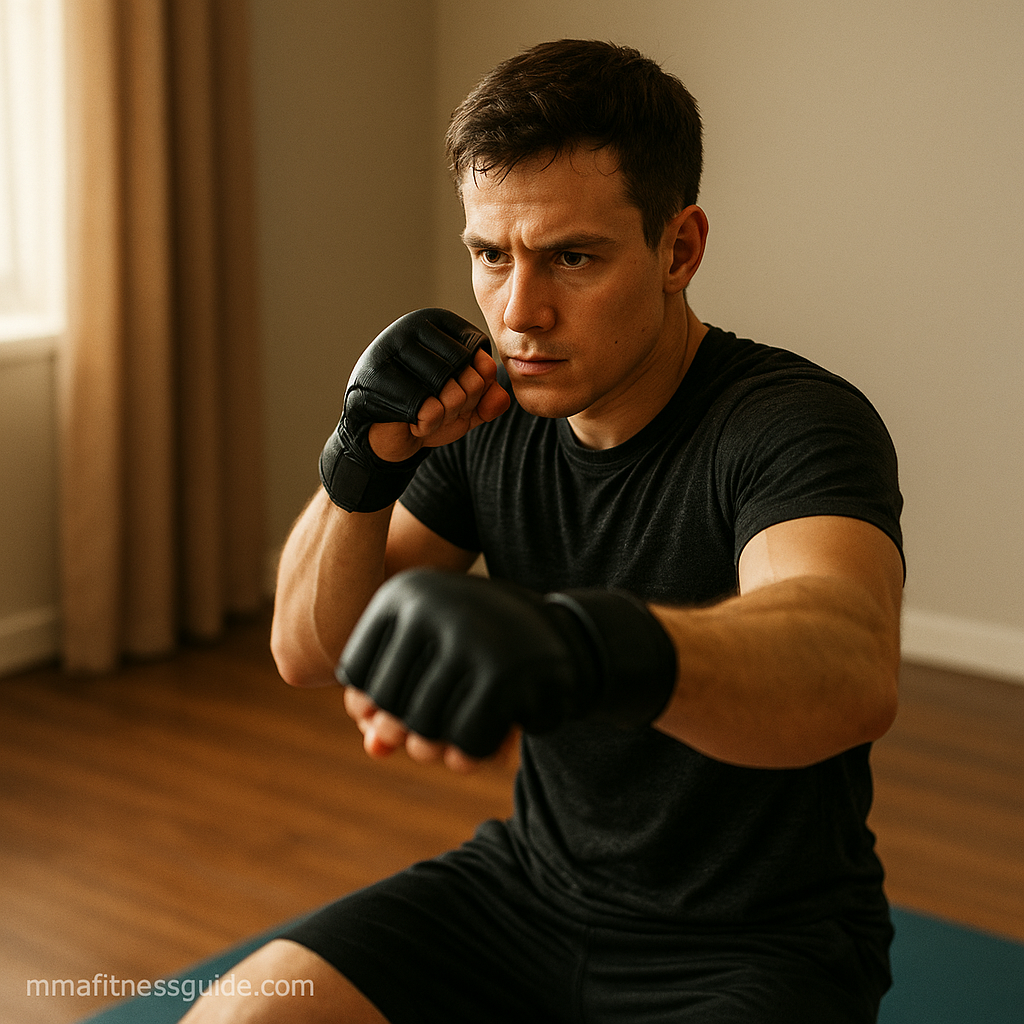
A beginner MMA enthusiast training at home, building fitness and technique through dedication.
Starting MMA-inspired fitness training does not require a gym membership, professional equipment, or prior combat experience. Many effective MMA workouts can be done at home using bodyweight movements, controlled striking drills, and basic conditioning exercises.
Beginner MMA workouts focus on building foundational strength, endurance, coordination, and movement awareness. These workouts borrow techniques from mixed martial arts training while emphasizing fitness, safety, and gradual progression rather than competition or fighting.
This guide explains how beginners can safely start MMA-style workouts at home, what types of exercises to include, how often to train, and how to build a routine that supports long-term fitness development.
Bruce Lee’s emphasis on adaptability, cross-training, and efficient movement helped influence principles that remain central to modern MMA.
Decades before MMA fighters routinely combined boxing, wrestling, submissions, kicks, and strength training, Bruce Lee was already questioning why martial artists should be limited to a single style.
Rather than treating martial arts as rigid systems, Lee emphasized adaptability, efficiency, physical conditioning, and using techniques because they worked—not simply because tradition demanded them. Through his development of Jeet Kune Do and his broader approach to training, he promoted a mindset that closely resembles the cross-training philosophy at the heart of modern MMA.
Bruce Lee never competed in MMA as we know it today, but his influence can still be recognized in the way fighters train, coaches approach skill development, and athletes combine techniques from different disciplines. His legacy is less about claiming he invented MMA and more about how early he embraced many of the ideas that would eventually become central to the sport.
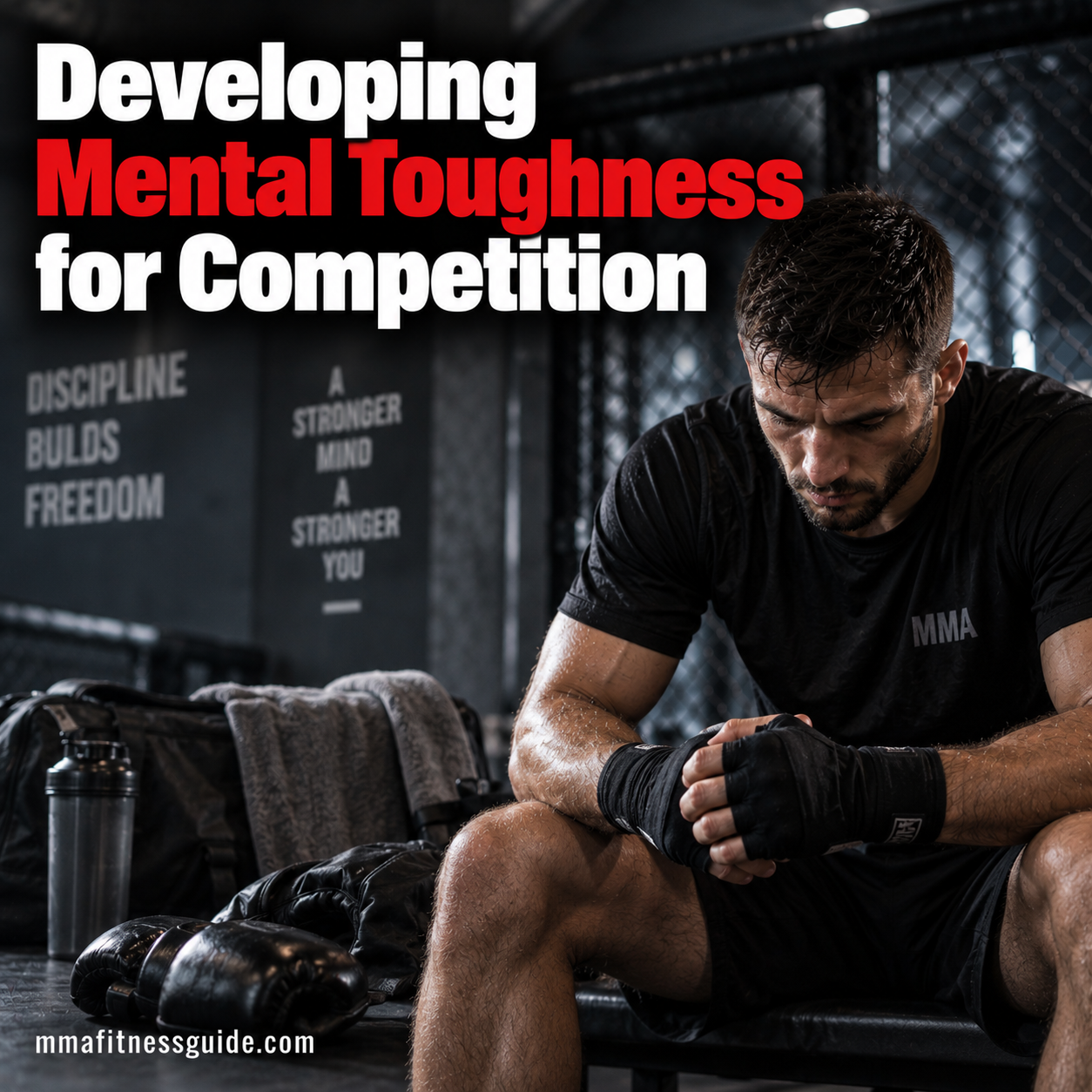
Mental toughness involves preparing for pressure, maintaining focus, and responding constructively to setbacks during MMA competition.
You’re halfway through a hard sparring round when your opponent takes you down and settles into side control. You’re tired, your breathing is getting faster, and your first escape attempt fails. Your coach is shouting instructions, but all you can think about is how badly the round is going.
You have several choices. You could panic and waste energy pushing against your opponent. You could become frustrated and make a reckless movement. Or you could recognize the position, protect yourself, establish your frames, and work toward an escape.
That third response illustrates what mental toughness can look like in MMA.
It isn’t the absence of fear, frustration, or fatigue. It’s the ability to respond effectively when those experiences appear.
Mental toughness develops through preparation, realistic training, emotional awareness, and the ability to adapt. It also requires knowing when to rest, ask for help, or stop training because something is unsafe.
For fighters preparing for competition, the goal is not to become emotionless. It’s to build reliable habits that remain useful when the pressure increases.
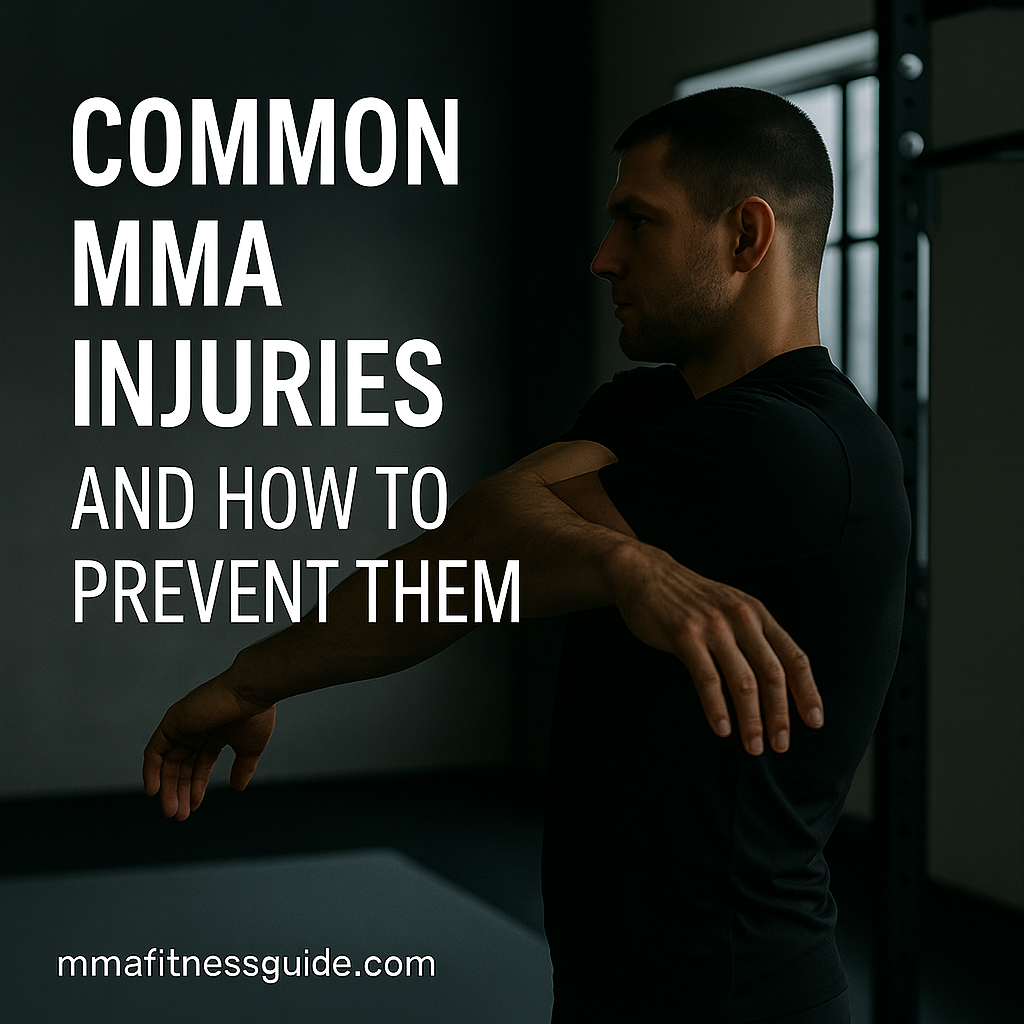
Recognizing injuries early, adjusting training intensity, and allowing adequate recovery can help MMA fighters reduce unnecessary risks.
A fighter throws a punch during heavy bag training and feels a sharp pain in their wrist. Another twists their knee while defending a takedown. During sparring, someone takes a hard shot to the head and feels dizzy afterward.
These situations illustrate the different injury risks involved in mixed martial arts.
MMA combines striking, wrestling, submissions, and demanding physical conditioning. Each discipline places different stresses on the body, and injuries can occur during both competition and regular training.
Some injuries develop suddenly through a single impact or awkward movement. Others appear gradually when training demands exceed the body’s ability to recover.
Although no training program can eliminate every risk, appropriate coaching, sensible training loads, protective equipment, and early recognition of symptoms can help reduce preventable injuries.
Understanding common MMA injuries also helps fighters recognize when to modify training and when professional medical attention is necessary.
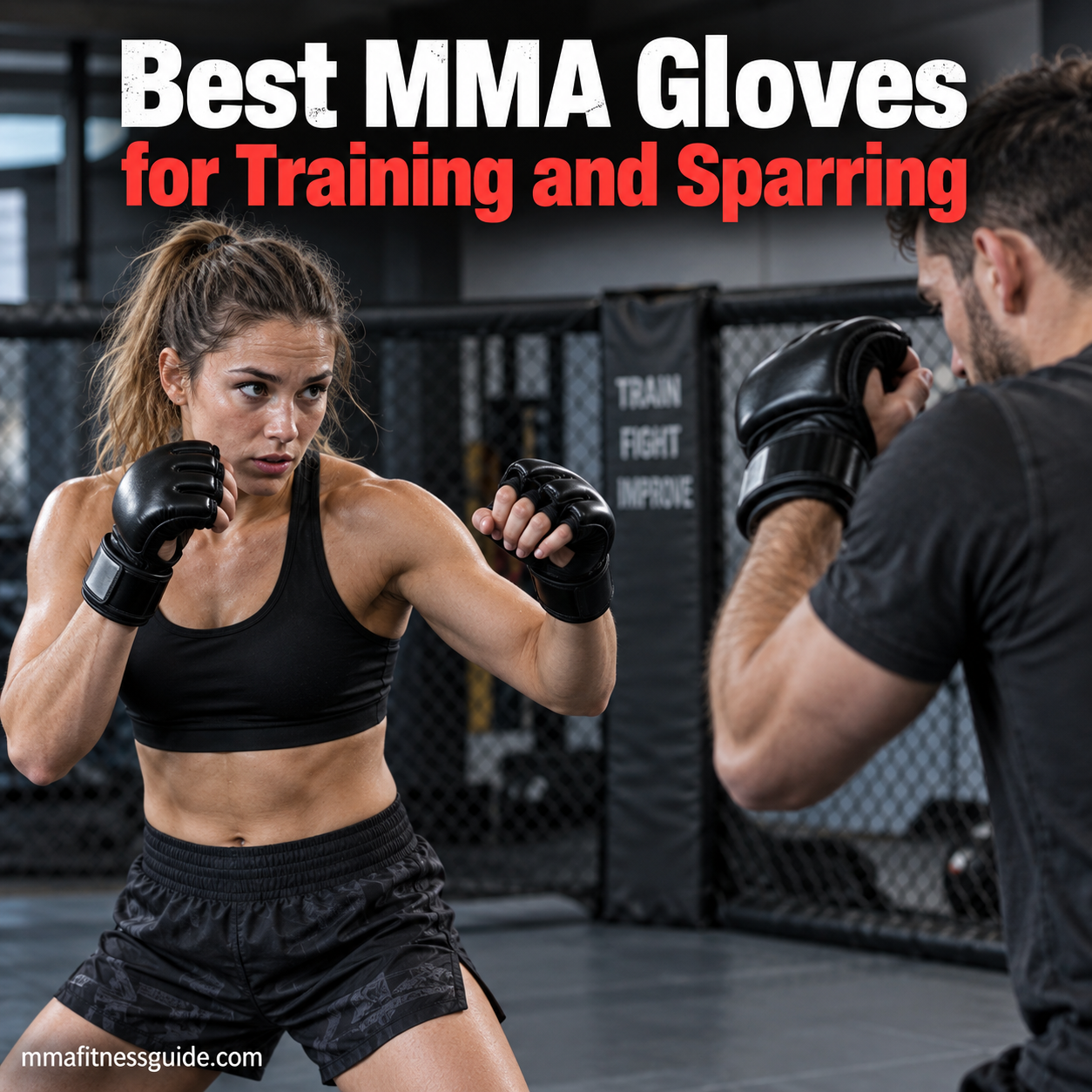
Choosing the right MMA gloves for training, sparring, and hand protection.
Choosing the right MMA gloves is an important part of safe and effective training. Whether you are new to mixed martial arts, attending fitness-focused classes, or preparing for regular sparring, your gloves need to match the type of training you perform.
MMA gloves are not interchangeable with boxing gloves. They feature an open-finger design that allows athletes to grip, clinch, and perform grappling techniques. However, the amount of padding, wrist support, and finger mobility varies significantly between glove styles.
A glove that works well for hitting pads may not provide enough protection for sparring. Similarly, lightweight competition gloves are designed for a different purpose than everyday training equipment.
Choosing incorrectly can lead to unnecessary hand discomfort, reduced training efficiency, and increased injury risk for you or your training partners.
This guide explains the different types of MMA gloves, how to evaluate padding and fit, which features matter for beginners, and how to select gloves for sparring, bag work, and conditioning.
It also covers sizing, materials, maintenance, replacement, and common purchasing mistakes so you can make a more informed decision before investing in your next pair.
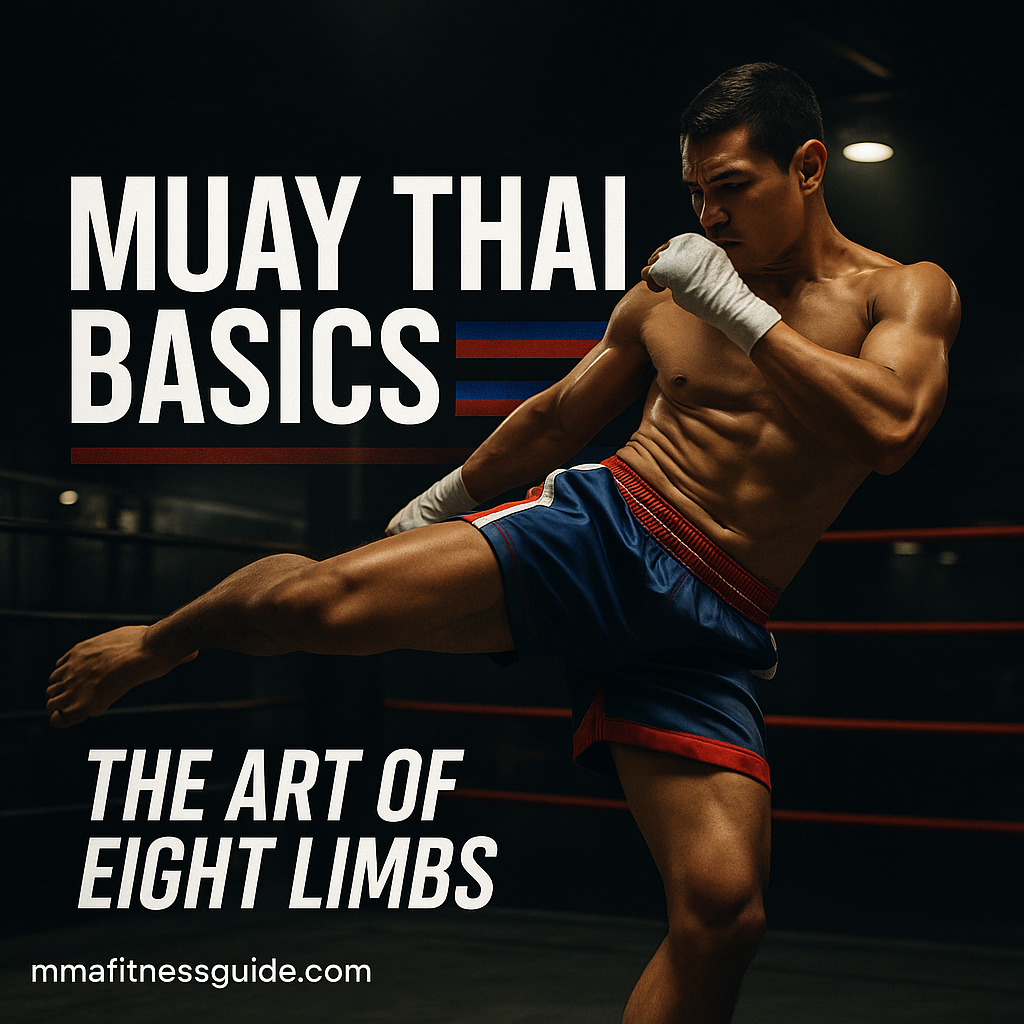
A Muay Thai fighter demonstrates the art of eight limbs — mastering punches, kicks, elbows, and knees for total-body power.
A Muay Thai combination can begin with punches at long range, transition into a round kick, and finish with knees or elbows after the distance closes. That ability to strike with the fists, elbows, knees, and shins gives the Thai martial art its familiar nickname: the “Art of Eight Limbs.”
For MMA athletes, Muay Thai provides techniques for several striking ranges while developing the footwork, balance, hip rotation, posture, and conditioning needed to repeatedly deliver those techniques.
Training doesn’t have to begin with hard sparring. Beginners typically spend considerable time learning stance, movement, basic punches, kicks, knees, defensive actions, and controlled combinations before adding greater speed or resistance.
Focused athlete refueling with a nutrient-rich post-training meal.
Nutrition plays a critical role in MMA fitness and training performance. While strength and conditioning build physical capability, proper nutrition supports energy levels, recovery, endurance, and long-term progress. For MMA fighters and MMA fitness enthusiasts, meal planning helps ensure the body is properly fueled for demanding workouts.
MMA meal plans are not about extreme dieting or rapid weight changes. Instead, they focus on balanced nutrition that supports training intensity, muscle recovery, and overall health. Because individual needs vary, meal planning should be flexible, sustainable, and aligned with personal goals.
This guide explains the fundamentals of meal planning for MMA fitness, outlines key nutritional principles, and provides general meal structure examples suitable for different training levels.