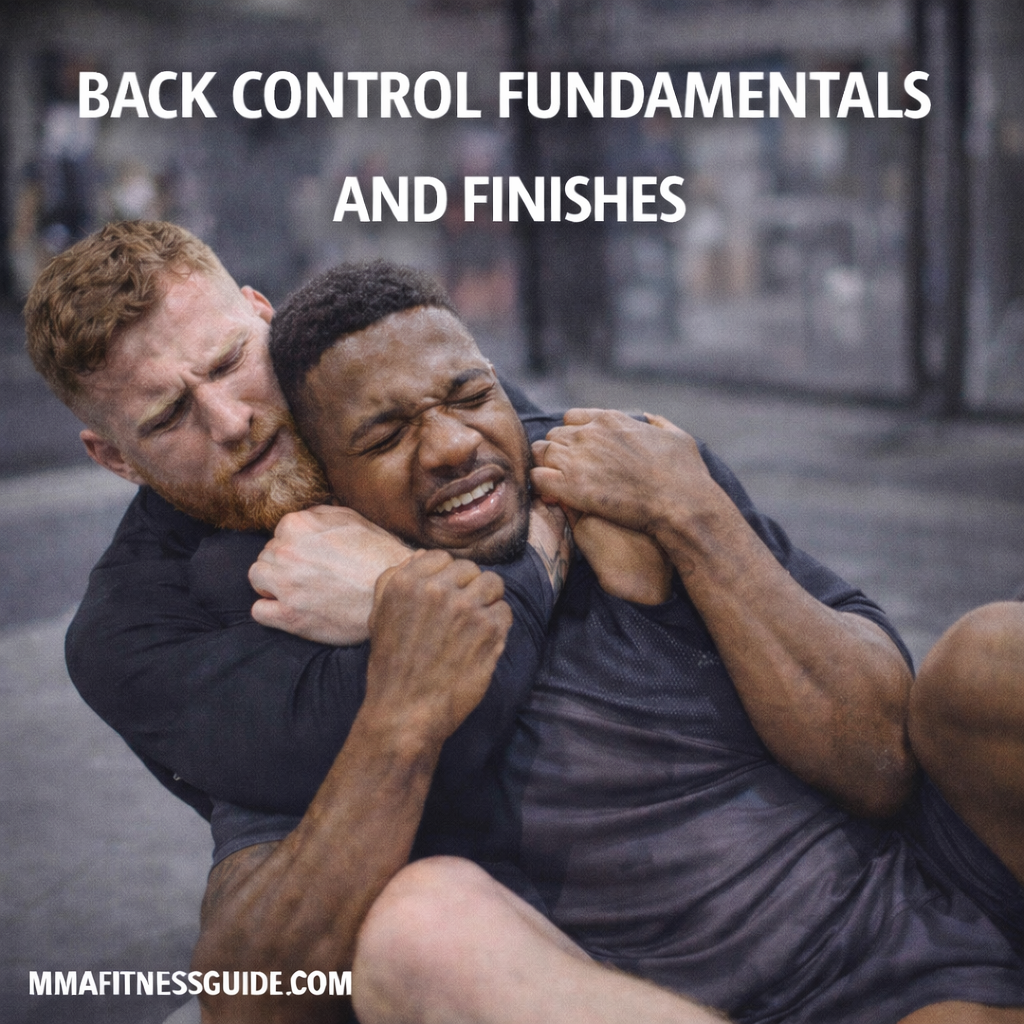
Back Control Fundamentals and Finishes

Two MMA fighters training back control techniques in a gym, demonstrating rear control positioning and submission fundamentals.
MMA fighters drilling back control fundamentals and submission finishes during grappling training.

Back control is one of the most dominant positions in MMA and grappling. When you control an opponent’s back, you limit their offense, control their movement, and open the door to high-percentage finishes. At every level of MMA, fighters who understand back control fundamentals consistently outperform those who rely only on strength or speed.

This guide covers the essential principles of back control, common mistakes, and the most effective finishes fighters should master.

Continue reading “Back Control Fundamentals and Finishes”


Natural Foods That Support Hormonal Balance

MMA athletes eating whole foods like salmon, avocado, and vegetables to support hormonal balance and performance.
MMA athletes fueling with natural whole foods that support hormonal balance, recovery, and long-term performance.

Hormones play a critical role in energy levels, recovery, muscle growth, mood, and overall performance. For MMA athletes and active individuals, hormonal balance directly affects training consistency and long-term progress. Poor nutrition, excessive stress, and inadequate recovery can disrupt this balance — often without obvious symptoms at first.

The good news is that daily food choices have a powerful influence on hormonal health. This guide explores natural foods that support hormonal balance and how fighters can use nutrition strategically to stay healthy, resilient, and performance-ready.

Continue reading “Natural Foods That Support Hormonal Balance”

Building a Home MMA Gym on a Budget

MMA athlete training on a heavy bag at home while an athlete performs pull-ups, showing a budget-friendly home MMA gym setup.
MMA athletes training in a simple home gym setup with minimal equipment, demonstrating how to build an effective MMA gym on a budget.

Training MMA doesn’t require an expensive commercial gym membership or high-end equipment. With smart planning, you can build an effective home MMA gym on a budget that supports conditioning, strength, skill development, and recovery — without wasting money on unnecessary gear.

This guide breaks down how to build a functional home MMA gym affordably, what equipment actually matters, and how to prioritize purchases based on training goals.

Continue reading “Building a Home MMA Gym on a Budget”

Brand Partnerships the Right Way

MMA athletes discussing brand partnerships with a manager inside a gym setting.
MMA athletes discussing brand partnerships and professional opportunities inside a training gym.

Brand partnerships can be a powerful income stream and career accelerator for MMA fighters — but only when done correctly. The wrong partnerships can damage credibility, alienate fans, and limit long-term opportunities. The right partnerships, on the other hand, support financial stability, strengthen your personal brand, and grow alongside your career.

This guide explains how MMA fighters can approach brand partnerships the right way, with authenticity, professionalism, and long-term thinking.

Continue reading “Brand Partnerships the Right Way”

Decluttering Your Fitness Routine

MMA athletes organizing training gear in a gym, representing a simplified and focused fitness routine.
MMA athletes organizing their training gear to simplify and declutter their fitness routine.

Many athletes believe progress comes from doing more — more workouts, more exercises, more programs, more tracking. In reality, excess complexity often leads to confusion, burnout, and stalled results. Decluttering your fitness routine means stripping away what doesn’t serve you so you can focus on what actually drives progress.

For MMA athletes and fitness enthusiasts alike, a simpler routine is often more effective, sustainable, and mentally freeing. This guide explains how to declutter your training without sacrificing results.

Continue reading “Decluttering Your Fitness Routine”

MMA: Set Realistic Fitness Goals

Asian male MMA beginner listening to a coach in a gym while a female athlete stands in the background, representing realistic fitness goal setting in MMA.
An MMA beginner receiving guidance on setting realistic fitness goals during training.

Starting MMA training is exciting, but many beginners struggle with one key issue: setting realistic fitness goals. New athletes often expect rapid transformation, compare themselves to experienced fighters, or push too hard too fast. This approach usually leads to frustration, burnout, or injury.

Setting realistic fitness goals helps beginners stay consistent, motivated, and healthy while building a strong foundation for long-term progress. This guide explains how to set MMA fitness goals that actually work — and how to adjust them as you grow.

Continue reading “MMA: Set Realistic Fitness Goals”

The Evolution of Judging and Scoring

Two MMA fighters standing in the octagon as a referee speaks between rounds, representing judging and scoring decisions in modern MMA.
MMA fighters listening to the referee inside the octagon, highlighting the role of judging and scoring in professional bouts.

Judging and scoring have shaped MMA just as much as techniques and rules. From the early days of no-time-limit bouts to today’s structured rounds and scorecards, how fights are evaluated has influenced fighter strategy, pacing, and even the evolution of entire fighting styles.

Understanding the evolution of MMA judging and scoring helps fans, fighters, and coaches better understand why fights look the way they do today — and why judging remains one of the most debated aspects of the sport.

Continue reading “The Evolution of Judging and Scoring”

MMA: Build Unshakeable Confidence

MMA fighters standing confidently in a gym environment, representing mental strength and unshakeable confidence in training.
MMA athletes displaying calm focus and confidence during training preparation.

Confidence in MMA isn’t something you’re born with — it’s something you build. True confidence isn’t loud, reckless, or based on hype. It’s quiet, stable, and reliable under pressure. Fighters with unshakeable confidence perform consistently, adapt during adversity, and trust themselves even when things don’t go perfectly.

This guide breaks down how MMA fighters can build real, lasting confidence through mindset, preparation, and daily habits.

Continue reading “MMA: Build Unshakeable Confidence”

Sauna and Steam for Recovery

MMA fighters using a sauna for recovery after training, including a female athlete relaxing during heat therapy.
MMA athletes using sauna and steam sessions to support muscle recovery and relaxation.

Sauna and steam rooms have been used for recovery and relaxation for centuries, and they’ve become increasingly popular among MMA fighters and athletes. When used correctly, heat exposure can support recovery, reduce soreness, and improve overall well-being. When misused, it can interfere with hydration, recovery, and performance.

This article explains how sauna and steam can benefit MMA recovery, how to use them safely, and when they make the most sense in a training schedule.

Continue reading “Sauna and Steam for Recovery”

How Often to Replace Training Equipment

MMA fighters examining worn gloves, shin guards, and training gear in a gym, highlighting when to replace MMA training equipment.
MMA athletes inspecting worn training equipment to determine when replacements are needed for safety and performance.

MMA training equipment takes a beating. From gloves and shin guards to rash guards and mouthguards, your gear absorbs sweat, impact, and constant friction. Using worn-out equipment doesn’t just affect comfort — it can increase injury risk, reduce training quality, and create hygiene problems.

Knowing when to replace your training gear helps you stay safe, train effectively, and avoid preventable setbacks. This guide breaks down how often common MMA equipment should be replaced and the warning signs to watch for.

Continue reading “How Often to Replace Training Equipment”