You wake up the morning after a hard sparring session. Your shoulders feel stiff, your legs are sore, and you’ve got another training session scheduled for the afternoon. You might wonder whether adding salmon, berries, or turmeric to your meals could help you recover faster.
Food can support recovery, but the relationship between diet and inflammation is more complicated than eating a handful of supposedly anti-inflammatory ingredients.
Inflammation is part of the body’s normal response to exercise and injury. It helps coordinate tissue repair and adaptation. The aim isn’t to eliminate inflammation altogether; it’s to support normal recovery while avoiding dietary habits that may contribute to poor long-term health.
For MMA fighters, the practical approach is to eat enough food, prioritize a varied diet, and choose nutrient-rich ingredients consistently. No single food can compensate for inadequate sleep, excessive training, or an untreated injury.
Understanding Inflammation: What’s Normal and What’s Not?
Inflammation is an immune response that helps the body react to injury, infection, and other forms of stress.
During a demanding training session, muscles experience mechanical stress. Your body responds through several overlapping processes involved in repair and adaptation.
You may notice temporary soreness, particularly after unfamiliar exercises or unusually intense sessions.
This is commonly called delayed-onset muscle soreness, or DOMS.
Soreness often develops hours after exercise and may peak during the following day or two. Its severity doesn’t reliably indicate how productive a workout was.
Importantly, exercise-related soreness is not the same thing as chronic systemic inflammation.
Chronic inflammation refers to inflammatory activity that persists over time. It can be associated with various health conditions, but diagnosing it requires more than noticing that your muscles ache after sparring.
Persistent joint swelling, unexplained pain, fever, or symptoms that worsen instead of improving should be assessed by a healthcare professional.
Nutrition may support normal recovery, but it cannot diagnose or treat the underlying cause of persistent symptoms.
How Does Diet Affect Inflammation?
Diet influences the body through numerous pathways, including energy balance, blood glucose regulation, gut health, and the availability of essential nutrients.
Certain dietary patterns are associated with more favorable inflammatory markers, while others are associated with less favorable outcomes.
However, the effects of individual foods are often smaller and less predictable than dramatic marketing claims suggest.
A Mediterranean-style eating pattern, for example, emphasizes vegetables, fruit, whole grains, legumes, nuts, olive oil, and fish. Research has associated this overall pattern with favorable changes in some inflammatory markers.
PubMed
+1
That doesn’t mean every meal can be classified as either fighting inflammation or causing it.
A fighter who occasionally eats white bread or dessert isn’t automatically undermining recovery.
The more useful question is whether their overall eating pattern supplies sufficient energy, protein, carbohydrates, healthy fats, and micronutrients.
For combat athletes, underfueling can be a more immediate problem than failing to eat a particular superfood.
1. Fatty Fish: A Practical Source of Omega-3s
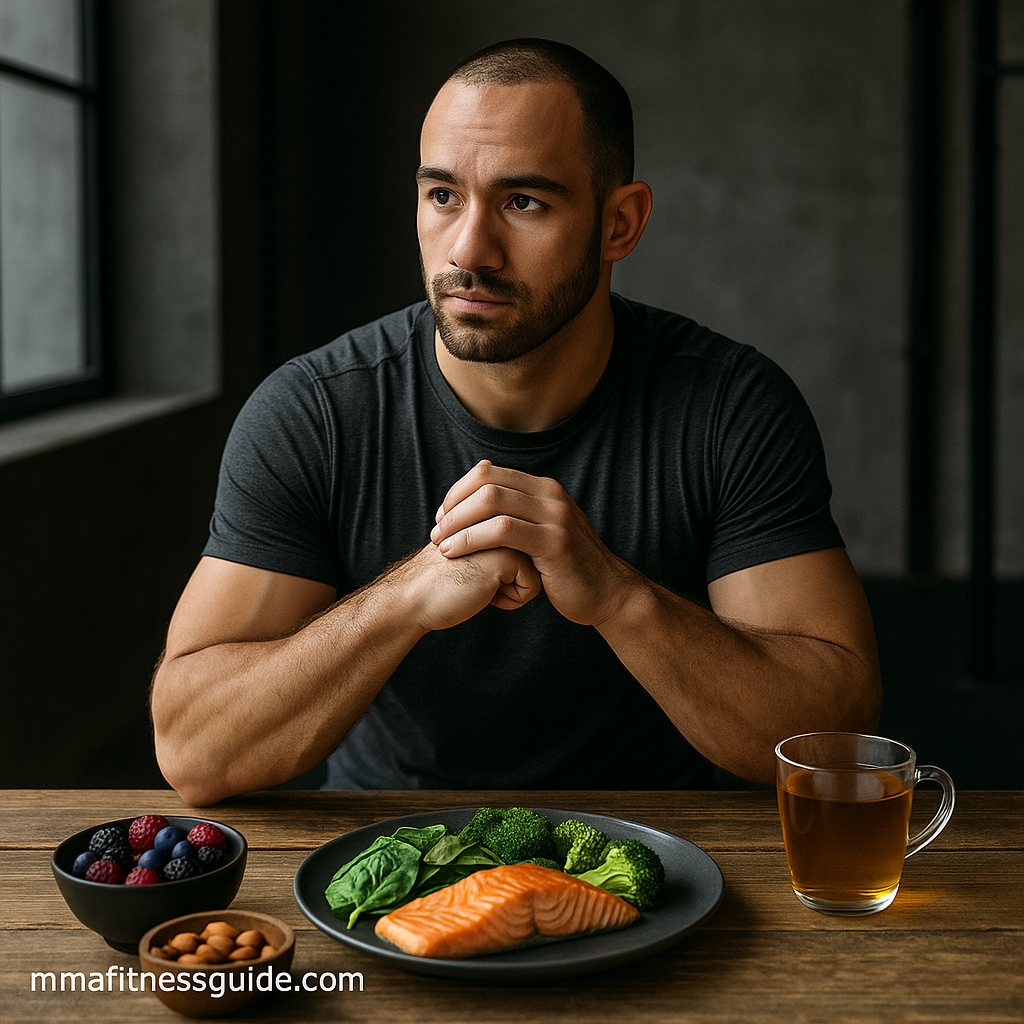
Salmon, sardines, trout, and mackerel provide the long-chain omega-3 fatty acids EPA and DHA.
These fats participate in processes involved in regulating inflammatory responses. Researchers have also investigated whether omega-3 supplementation can reduce exercise-related soreness.
Results vary, however, and eating fish doesn’t guarantee less joint pain or faster recovery from sparring.
The strongest practical reason to include fatty fish is that it provides several valuable nutrients in one food, including protein, omega-3 fats, and, in some varieties, vitamin D.
How Fighters Can Include It
Try salmon with rice and roasted vegetables after training, or add canned sardines to toast for a quick lunch.
Aim for variety rather than eating the same fish every day. Choose lower-mercury options, particularly if you consume seafood frequently.
If you don’t eat fish, walnuts, chia seeds, and ground flaxseed provide the plant omega-3 fat ALA. Algae-derived products offer a direct source of EPA and DHA, although supplementation should be considered according to individual needs.
2. Berries: Colorful Fruit With Useful Plant Compounds
Blueberries, strawberries, raspberries, and blackberries contain fiber, vitamin C, and various plant compounds.
Many berries contain anthocyanins, which contribute to their red, blue, and purple colors.
Researchers have investigated berry-derived compounds for their effects on exercise-induced muscle damage and recovery. Some studies report promising findings, but results depend on the product, dose, exercise protocol, and outcome measured.
Ordinary servings of berries should not be treated as a proven substitute for recovery time.
Their everyday advantage is simpler: they’re a convenient way to increase fruit intake while supplying carbohydrates and micronutrients.
Easy Ways to Eat More Berries
Add frozen blueberries to oatmeal, blend strawberries into a smoothie, or combine mixed berries with Greek yogurt.
Frozen berries are often more affordable than fresh varieties and can be stored for months.
A useful post-training snack might combine berries, yogurt, and cereal. The berries provide fruit and carbohydrates, while the yogurt contributes protein.
That combination supports recovery more comprehensively than berries alone.
3. Leafy Greens: Nutrient Density Without the Hype
Spinach, kale, Swiss chard, and other leafy greens supply a range of vitamins, minerals, and plant compounds.
Depending on the vegetable, these may include vitamin K, folate, carotenoids, potassium, and magnesium.
These nutrients support normal physiological functions, but eating spinach doesn’t directly switch off muscle inflammation.
For fighters, leafy greens are valuable because they help diversify a diet that can otherwise become repetitive during training camp.
Make Them Easier to Eat
Add spinach to scrambled eggs, include kale in soups, or sauté Swiss chard with garlic and olive oil.
Cooked vegetables can be easier to consume in substantial portions than enormous raw salads.
If you experience gastrointestinal discomfort before training, eat large vegetable servings farther away from intense sessions.
There’s no benefit in forcing down a high-fiber meal immediately before wrestling if it consistently leaves you bloated.
4. Extra-Virgin Olive Oil: An Everyday Fat Worth Using
Extra-virgin olive oil contains predominantly monounsaturated fat along with various polyphenols.
It is a characteristic component of Mediterranean-style eating patterns, which have been studied for their associations with cardiovascular and metabolic health.
Some olive oil compounds have demonstrated anti-inflammatory activity in laboratory research, but those findings shouldn’t be interpreted as proof that a spoonful of oil will relieve a fighter’s sore joints.
Its practical value lies in replacing less nutritious dietary habits and providing a versatile source of fat.
Use olive oil to dress salads, roast vegetables, or prepare meals.
Remember that it is energy-dense. This can be useful for fighters struggling to eat enough during heavy training, but portions still matter when managing body weight.
There’s no need to consume olive oil by itself as a recovery treatment.
5. Nuts and Seeds: Healthy Fats, Fiber, and Convenient Calories
Walnuts, almonds, chia seeds, flaxseed, and pumpkin seeds offer different combinations of unsaturated fats, protein, fiber, and minerals.
Walnuts, chia seeds, and flaxseed are particularly notable for their ALA omega-3 content.
Pumpkin seeds provide magnesium and other nutrients, while almonds supply vitamin E.
These foods are convenient for fighters because they require little preparation.
A handful of walnuts can accompany fruit as a snack. Ground flaxseed can be stirred into oatmeal, and chia seeds can be added to yogurt.
However, nuts and seeds are relatively high in fat and fiber.
Immediately before intense training, a large serving may be uncomfortable for some athletes.
Use them primarily in regular meals and snacks rather than assuming they’re ideal last-minute fuel.
6. Turmeric and Ginger: Useful Ingredients, Not Miracle Treatments
Turmeric contains curcuminoids, including curcumin. Ginger contains several bioactive compounds, including gingerols.
Both have been investigated for potential effects on inflammatory pathways and discomfort.
Some clinical studies suggest that particular preparations may influence certain symptoms or biomarkers. However, research often uses concentrated extracts rather than the amounts normally added to food.
You cannot assume that sprinkling turmeric over rice will produce the same effects as a studied supplement.
That doesn’t make these spices useless.
They add flavor, encourage variety, and can help make simple meals more enjoyable.
Practical Meal Ideas
Add turmeric, black pepper, and garlic to a rice dish.
Use fresh ginger in a tofu stir-fry or chicken marinade.
Make ginger tea when you want a warm, caffeine-free drink.
Concentrated curcumin supplements require more caution than ordinary culinary use. Some formulations have been associated with liver injury, and supplements may interact with medications.
Discuss their use with a healthcare professional rather than taking high doses to treat training pain.
7. Whole Grains and Legumes: Supporting the Bigger Picture
Oats, brown rice, quinoa, lentils, chickpeas, and beans provide carbohydrates alongside varying amounts of fiber, protein, and micronutrients.
These foods support overall diet quality and can help fighters meet energy needs.
Legumes also provide plant protein, making them especially useful for athletes who eat little or no meat.
Fiber supports digestive health, but increasing it too quickly may cause bloating or gas.
If you currently eat very little fiber, add these foods gradually and drink appropriately.
For a fighter with two training sessions in one day, whole grains and legumes don’t need to appear in every meal.
White rice or regular pasta may be more practical before training, while beans and higher-fiber grains can be included later.
A recovery-focused diet should accommodate the demands of training, not create digestive problems in the name of eating perfectly.
8. Green Tea: A Beverage With Potential Benefits and Limitations
Green tea contains catechins, a group of plant compounds studied for their effects on health.
It can be a reasonable alternative to sugary beverages and contributes to daily fluid intake.
However, drinking green tea hasn’t been established as a reliable method for preventing muscle damage or accelerating MMA recovery.
It also contains caffeine.
For fighters sensitive to caffeine, drinking several cups late in the day could interfere with sleep.
That trade-off matters because adequate sleep is fundamental to recovery.
Enjoy green tea if you like it, but don’t sacrifice sleep to fit another supposedly anti-inflammatory product into your routine.
Which Foods Should Fighters Limit?
It’s misleading to claim that every processed food, refined carbohydrate, or sugary drink automatically causes harmful inflammation.
Food processing describes a broad range of products. Fortified cereals, canned beans, frozen vegetables, and protein powders are all processed to some degree and can fit into a nutritious diet.
Context matters.
A sports drink during a demanding session serves a different purpose from repeatedly consuming sugary beverages in place of balanced meals.
Similarly, white rice may be an excellent pre-training carbohydrate source even though it contains less fiber than brown rice.
The more useful priorities are to limit excessive alcohol, avoid routinely relying on nutritionally poor meals, and maintain an overall dietary pattern that supplies enough essential nutrients.
Alcohol deserves particular attention because heavy consumption can interfere with sleep, judgment, and aspects of recovery.
There is no need to label individual foods as inflammatory toxins.
Evaluate your usual eating habits across days and weeks.
A Practical Anti-Inflammatory Meal Plan for MMA Fighters
This example combines a variety of nutrient-rich foods with the carbohydrates and protein needed for training.
It is not a medical anti-inflammatory diet or a fixed calorie prescription.
| Meal | Example | Nutritional purpose |
|---|---|---|
| Breakfast | Oatmeal with blueberries, Greek yogurt, and ground flaxseed | Carbohydrates, protein, fiber, omega-3 ALA |
| Lunch | Salmon, rice, and cooked spinach | Protein, carbohydrates, EPA and DHA |
| Pre-training snack | Banana and toast | Easily digested carbohydrate |
| Dinner | Chicken or tofu stir-fry with vegetables, ginger, and rice | Protein, carbohydrates, varied micronutrients |
| Evening snack | Yogurt with strawberries or fortified soy yogurt | Additional protein and nutrients |
Adjust portions to your body size and training workload.
A fighter completing two demanding sessions may require considerably more food than someone doing one light technical session.
If you’re hungry between meals, add practical options such as sandwiches, fruit, trail mix, or additional servings of rice and potatoes.
Don’t let the pursuit of an ideal anti-inflammatory menu lead to inadequate energy intake.
Hydration Supports Recovery, but It Doesn’t Flush Out Inflammation
Water supports circulation, temperature regulation, and many normal physiological processes.
Dehydration can make demanding exercise more difficult, particularly in hot environments.
However, the idea that drinking extra water flushes inflammatory toxins out of sore muscles is inaccurate.
Your kidneys and liver perform essential roles in processing and eliminating substances. Drinking excessive water does not accelerate muscle repair.
Aim to maintain adequate hydration through regular drinking, meals, and appropriate replacement of sweat losses.
Fighters who sweat heavily may need additional sodium, particularly during long sessions in hot conditions.
Avoid forcing large amounts of plain water, as excessive intake can cause dangerous reductions in blood sodium.
Athletes recovering from significant dehydration associated with weight cutting need individualized guidance.
Do Anti-Inflammatory Supplements Help MMA Recovery?
Food-first nutrition is generally a sensible starting point, but supplements may have specific uses.
The important question is whether a product addresses an identified need and has evidence relevant to your situation.
| Supplement | What to consider |
|---|---|
| Fish oil | Provides EPA and DHA; recovery benefits are not guaranteed |
| Curcumin | Research is mixed, and concentrated products have safety considerations |
| Vitamin D | May be appropriate when intake or status is inadequate |
| Magnesium | Useful for correcting inadequate intake; not a proven universal soreness remedy |
| Protein powder | Convenient for meeting protein needs, but not inherently anti-inflammatory |
Avoid taking iron, vitamin D, or other high-dose nutrients simply because you’re sore.
More isn’t necessarily better, and excessive supplementation can cause harm.
Athletes competing under anti-doping rules should also consider contamination risks and select appropriately third-party-tested products where possible.
A sports dietitian can help determine whether a supplement offers a meaningful benefit.
The Recovery Habits That Matter Beyond Food
Even an excellent diet cannot compensate for every source of soreness or fatigue.
A fighter who trains hard twice daily, sleeps five hours, and never adjusts training intensity may continue to struggle despite eating salmon and berries every day.
Recovery requires several coordinated habits.
Sleep: Maintain a consistent schedule and allow enough time for adequate sleep.
Energy intake: Eat enough to support training, especially during demanding fight camps.
Protein and carbohydrates: Distribute protein across the day and replenish carbohydrates according to your workload.
Training management: Include appropriate lighter sessions and recovery periods.
Injury assessment: Seek professional evaluation for persistent or worsening pain rather than attempting to treat it through diet alone.
If soreness is unusually severe, accompanied by substantial swelling or weakness, or associated with dark urine after intense exercise, seek urgent medical evaluation.
These symptoms should not be dismissed as normal post-training inflammation.
Frequently Asked Questions
What is the best anti-inflammatory food for MMA fighters?
There is no single best food. Fatty fish, berries, vegetables, olive oil, nuts, and whole grains can contribute to a nutrient-rich dietary pattern. Overall energy intake and dietary consistency matter more than any individual ingredient.
Can food reduce muscle soreness after sparring?
Certain dietary approaches and supplements have been studied for exercise-related soreness, but results vary. Adequate nutrition supports normal recovery without guaranteeing that soreness will disappear.
Is turmeric better than ibuprofen for inflammation?
Turmeric and ibuprofen are not interchangeable. Ibuprofen is a medication with specific indications and risks, while culinary turmeric is a food ingredient. Do not replace prescribed treatment with spices or supplements without medical guidance.
Should fighters avoid sugar completely?
No. Carbohydrates, including simple sugars, can be useful around intense exercise. The appropriate amount and timing depend on training demands and the rest of your diet.
Does drinking more water reduce inflammation?
Adequate hydration supports normal bodily function, but excessive water intake does not directly eliminate inflammation and can be dangerous.
How quickly will changing my diet improve recovery?
There is no reliable universal timeline. If your current diet is inadequate, improving energy and nutrient intake may help you feel and perform better. Persistent pain or fatigue may have causes that require medical assessment.
Final Takeaway
Fighters don’t need a kitchen full of expensive powders or an elaborate anti-inflammatory protocol.
Start with a varied diet that includes fruit, vegetables, protein-rich foods, sufficient carbohydrates, and sources of unsaturated fats. Fatty fish, berries, leafy greens, olive oil, nuts, and seeds are useful choices because they contribute valuable nutrients—not because they can independently cure inflammation.
Make those foods part of meals you enjoy and can prepare consistently.
Then address the bigger recovery picture: eat enough, stay appropriately hydrated, sleep adequately, and manage training intensity.
The objective isn’t to eliminate the body’s normal inflammatory response. It’s to give your body the resources and recovery time it needs to adapt to training.