The Importance of Clinch Fighting in MMA
In MMA, fights don’t just happen at long range — they’re often decided in the clinch.
This close-range position determines who controls the fight, whether it’s landing knees, setting up takedowns, or breaking an opponent’s rhythm.
Clinch fighting is where strength, balance, and technique meet. It’s the invisible battle that decides who dictates the action.
What Is the Clinch?
The clinch is the standing grappling range — too close to strike freely, but not yet on the ground.
Here, fighters work for:
- Control of posture and movement
- Positioning to land effective strikes
- Opportunities for trips, sweeps, or takedowns
Styles like Muay Thai, Greco-Roman wrestling, and judo all offer unique clinch systems, each emphasizing different forms of leverage and control.
The Core Principles of Clinch Control
- Posture Dominance – Keep your head lower than your opponent’s and control their posture.
If you own the head position, you own the clinch. - Underhooks and Frames – These are your steering wheels.
Underhooks give you control, while frames create space when you need to strike or escape. - Balance and Footwork – Small shifts of weight can make or break your base.
Always keep a strong, staggered stance to prevent trips or takedowns. - Pressure Management – Constantly adjust between pushing, pulling, and rotating.
A good clinch fighter controls tempo — dictating when the opponent works and when they rest.
Striking from the Clinch
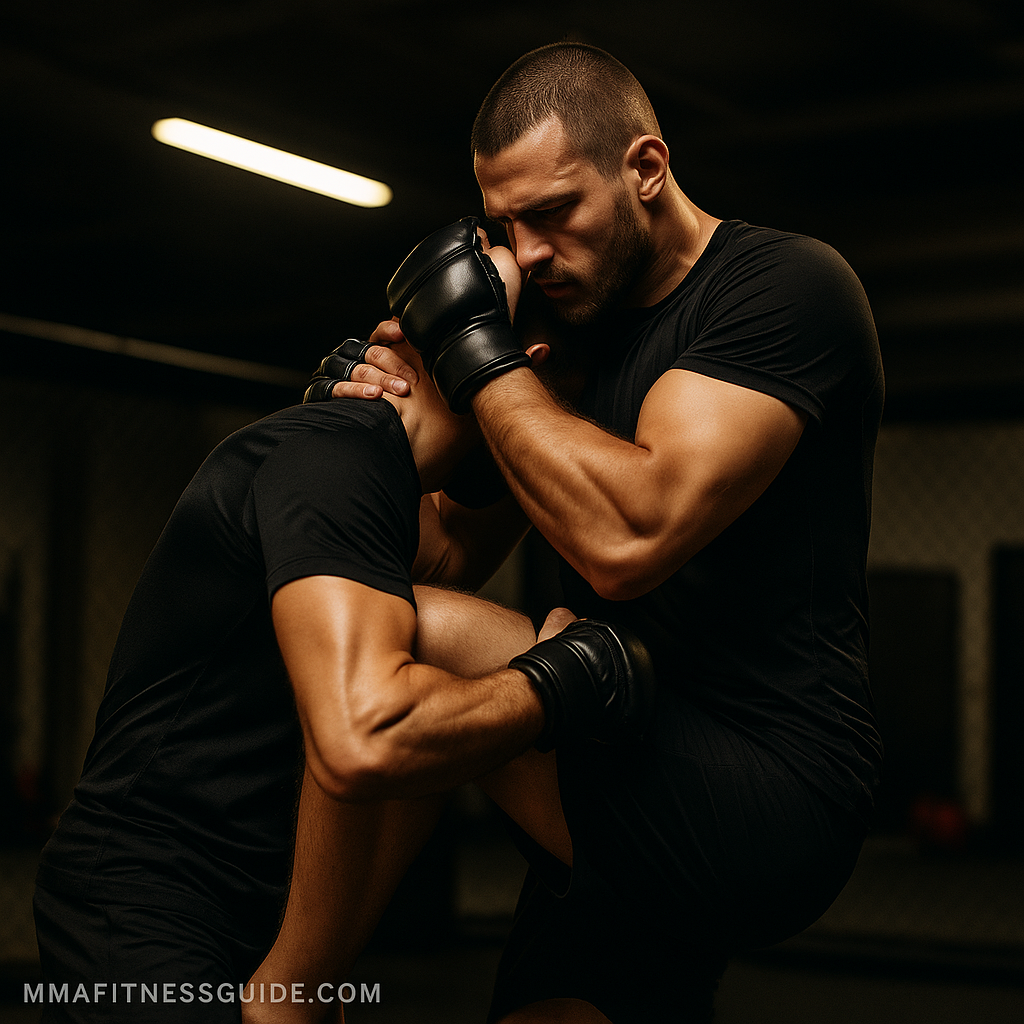
The clinch isn’t just for grappling — it’s one of the most dangerous striking ranges in MMA.
From here, you can deliver powerful, short-range strikes:
- Knees to the body and head
- Elbows in tight angles
- Short punches or uppercuts
- Foot stomps and shoulder strikes
Muay Thai fighters are known for dominating this range — their ability to break rhythm and deliver damage from minimal space is unmatched.
Trips and Takedowns
Once you control the clinch, you can use your opponent’s balance against them.
Common trips include:
- Inside and outside foot sweeps
- Body lock trips
- Judo-style hip tosses
- Wrestling dumps from underhooks
The key is timing — don’t force it. Use your opponent’s pressure and momentum to make them fall naturally.
Drills to Improve Clinch Skills
You don’t need to be a heavyweight wrestler to excel in the clinch — you just need consistent drilling.
Try these exercises:
- Pummeling for underhooks (2–3 rounds daily)
- Wall control sparring
- Clinch-to-knee strike combinations
- Partner drills focused on balance breaking
These build muscle memory, timing, and control under pressure.
Defensive Clinch Tactics
When trapped in the clinch, remember:
- Frame and create space with your forearms.
- Move your feet — never stand square.
- Break grips by circling or swimming inside.
- Use strikes (elbows, knees, short hooks) to disrupt control.
The goal isn’t just to survive — it’s to reset the range and reestablish rhythm.
Key Takeaways
- Clinch fighting decides control and tempo in close-range combat.
- Master posture, underhooks, and footwork to dominate the position.
- Use the clinch to mix strikes and takedowns effectively.
- Practice balance and pressure management through consistent drills.
“In the clinch, whoever controls posture controls the fight.”