Post-Fight Recovery Meals That Work

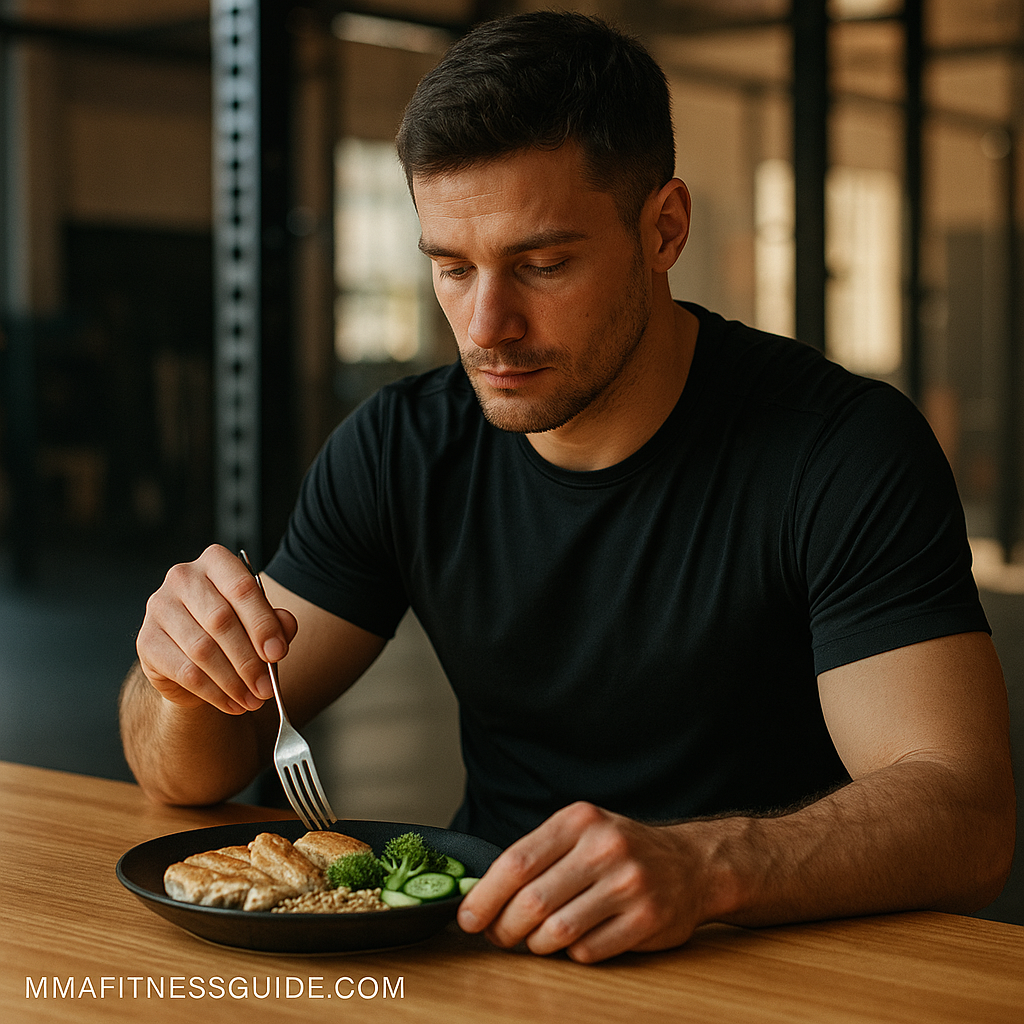
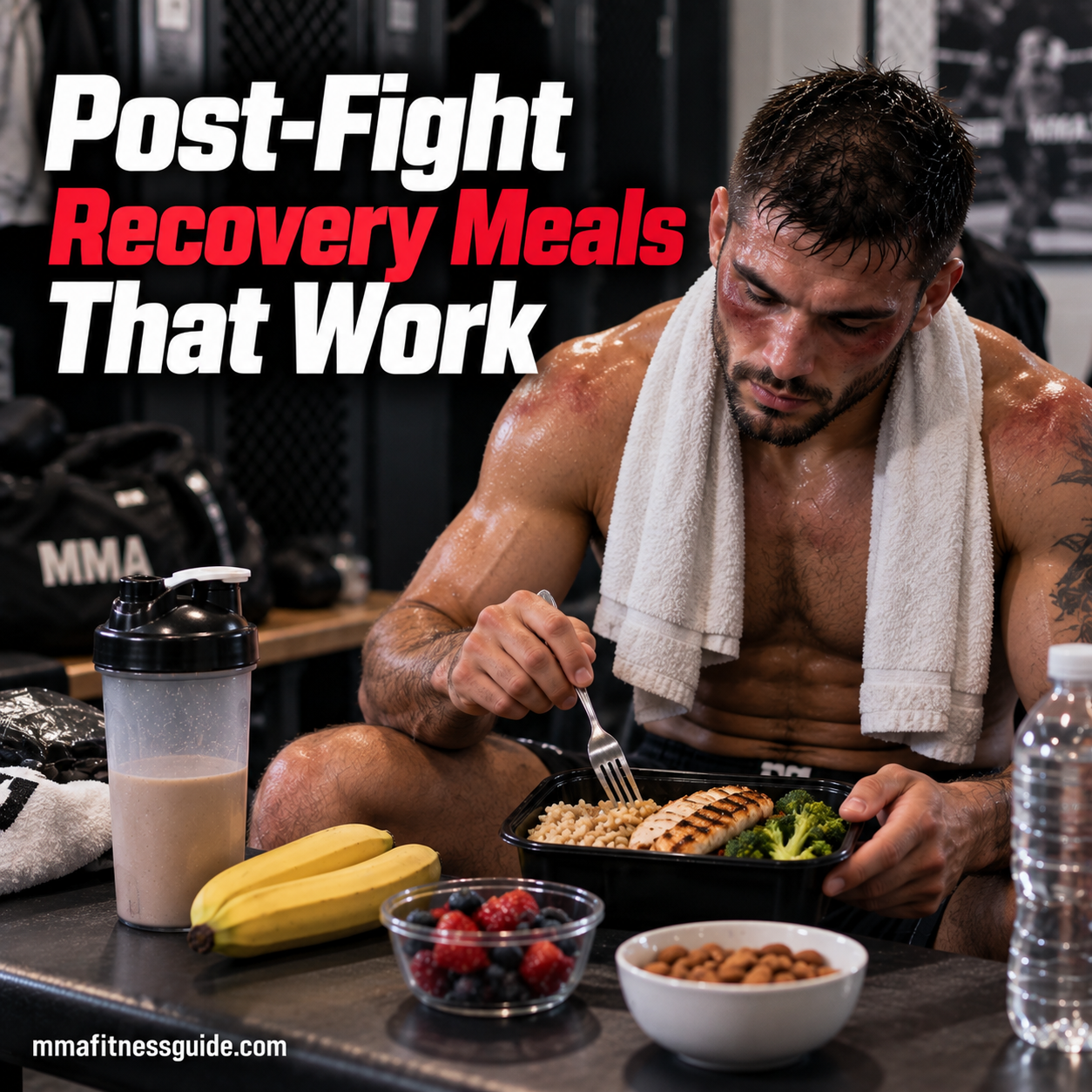
MMA fighter eating grilled chicken, rice, and broccoli after a fight, with a protein shake, bananas, berries, and water nearby.
Balanced post-fight meals provide protein, carbohydrates, and fluids to support muscle repair, energy replenishment, and rehydration.

The final bell rings, your gloves come off, and the adrenaline begins to fade. Your muscles are sore, your energy is depleted, and you may have lost considerable fluid through sweating or pre-fight weight cutting. Even if you’re not hungry, your body still needs nutrients to begin recovering from the physical demands of competition.

A protein shake and a banana might be all you can manage immediately after a fight, but your next meals should provide more substantial nutrition. Chicken and rice, salmon with potatoes, or a hearty bowl of soup can supply the protein, carbohydrates, fluids, and electrolytes needed to support muscle repair and replenish energy stores.

Recovery doesn’t end with your first post-fight meal. What you eat and drink over the following 24–48 hours can help restore hydration, support tissue repair, and prepare your body for a gradual return to training. The key is to start with foods your stomach can tolerate, rehydrate appropriately, and build toward balanced meals as your appetite returns.

Continue reading “Post-Fight Recovery Meals That Work”

MMA: Boost Energy Naturally Without Caffeine

MMA fighter drinking water after training with nutritious foods nearby, illustrating natural ways to boost energy without caffeine.
Proper hydration, balanced nutrition, and adequate recovery help MMA fighters maintain energy without relying on caffeine.

You finish your morning coffee, take a scoop of pre-workout, and head into MMA training feeling alert. An hour later, your energy starts fading. By the afternoon, you’re reaching for another energy drink just to get through strength training or an evening sparring session.

Caffeine can temporarily improve alertness and exercise performance, but frequent use can lead to tolerance, sleep disruption, and unwanted side effects. For fighters already managing demanding training schedules, poor sleep and inadequate recovery can create a cycle of fatigue that another dose of caffeine won’t solve.

Sustained energy starts with how you fuel, hydrate, sleep, and recover. Eating enough carbohydrates, replacing fluids lost through sweat, maintaining consistent sleep habits, and preparing your body with an appropriate warm-up can help you train without depending on stimulants.

Whether you’re trying to reduce your daily caffeine intake or eliminate it entirely, adjusting these habits can help you maintain energy through demanding workouts while supporting recovery between sessions.

Continue reading “MMA: Boost Energy Naturally Without Caffeine”

Top Protein Sources for Martial Artists

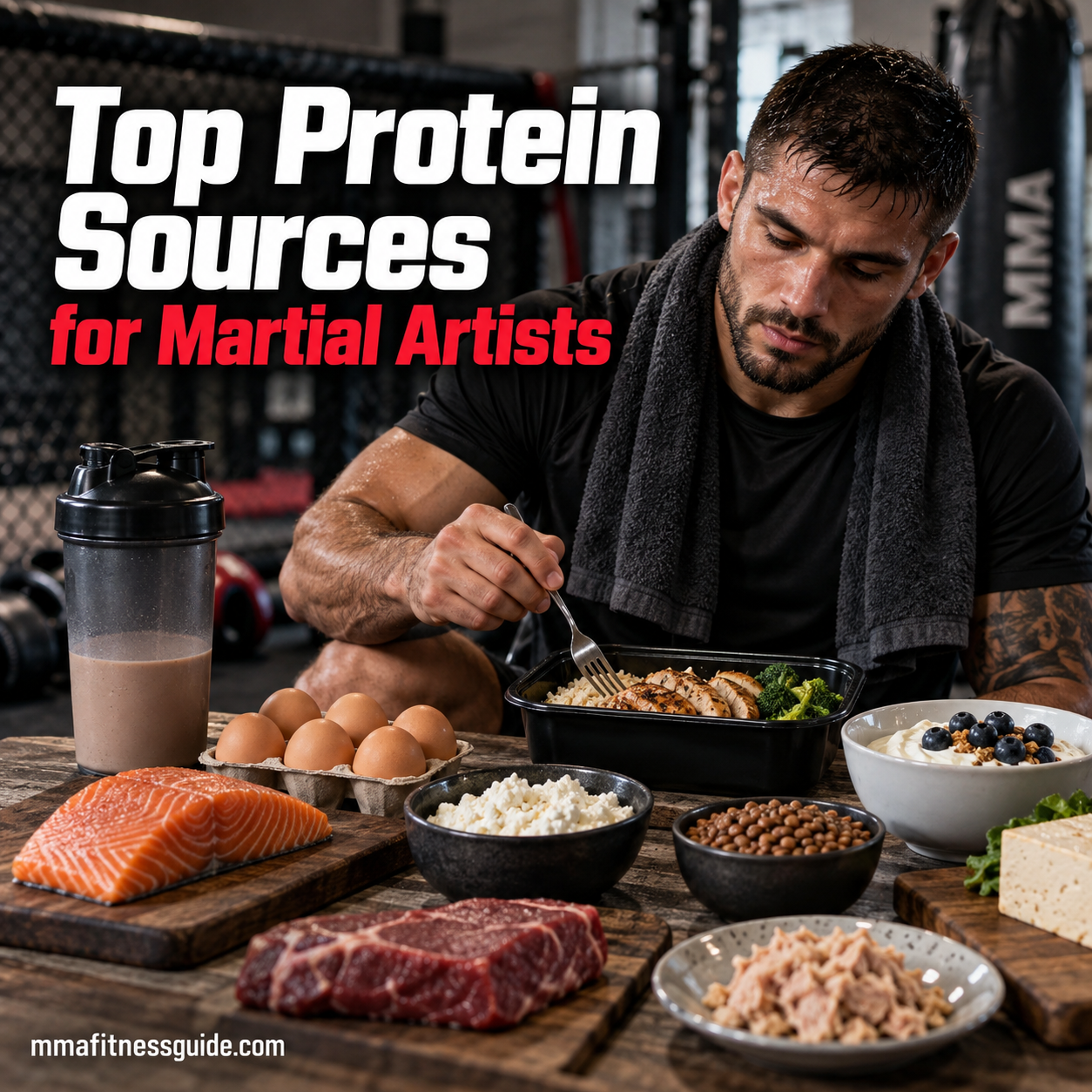
MMA fighter eating a high-protein meal surrounded by chicken, salmon, eggs, Greek yogurt, and other protein-rich foods.
High-quality protein sources help martial artists support muscle recovery, maintain strength, and meet their training nutrition needs.

After a tough session of sparring, grappling, or conditioning, your muscles need the right nutrients to recover before the next workout. Protein plays a central role in repairing muscle tissue, maintaining strength, and helping martial artists handle the demands of consistent training.

But choosing the right protein sources involves more than simply eating chicken breast or drinking a post-workout shake. A fighter preparing to make weight may prioritize lean, low-calorie options, while someone training twice a day needs enough protein and overall calories to support recovery. Foods such as eggs, salmon, Greek yogurt, lean meats, and plant-based proteins each offer different nutritional advantages.

The key is getting enough protein consistently while choosing foods that match your training schedule, recovery needs, and weight goals. Knowing which sources to prioritize—and how to distribute them throughout the day—can make your nutrition plan more practical and effective.

Continue reading “Top Protein Sources for Martial Artists”

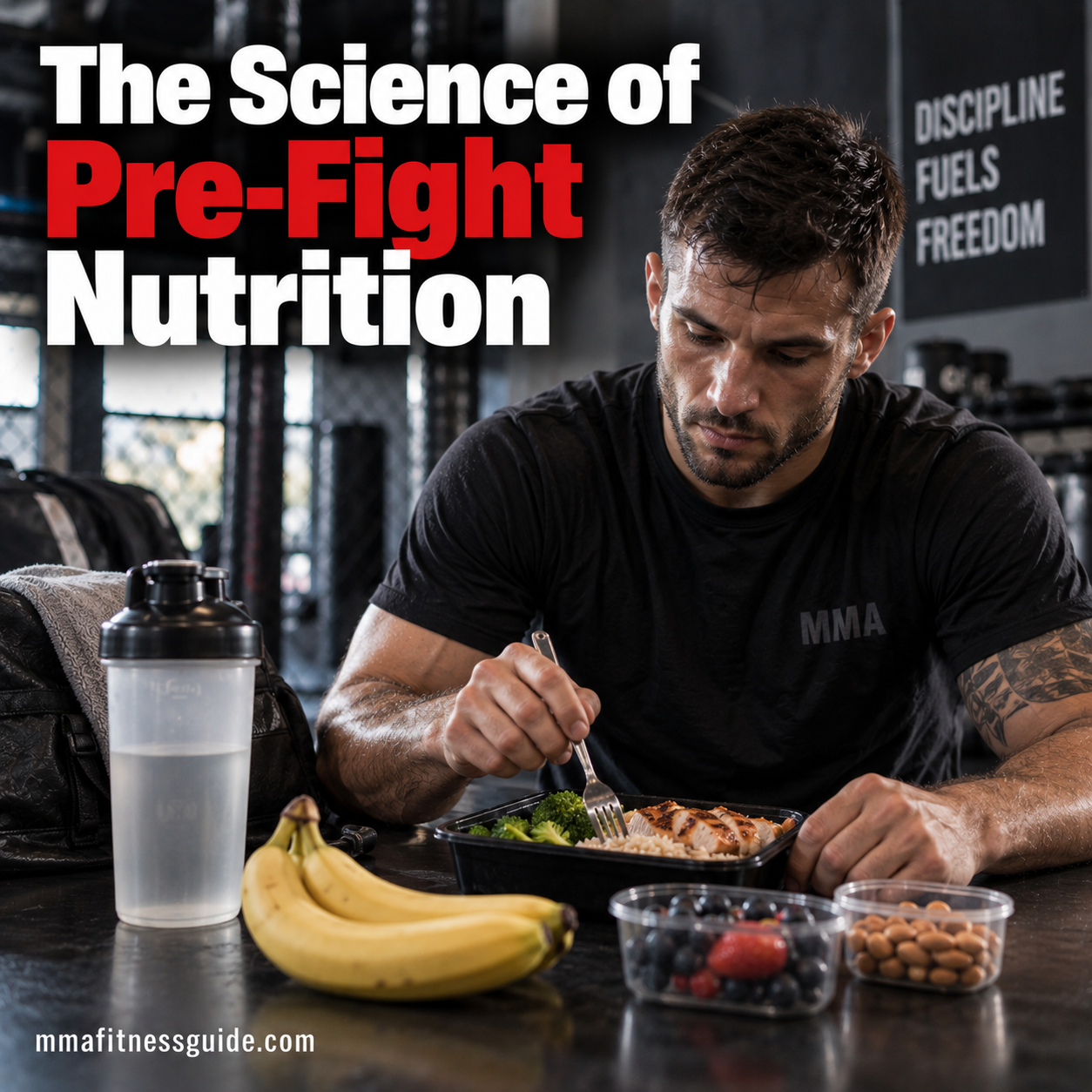
The Science of Pre-Fight Nutrition

MMA fighter eating a pre-fight meal of chicken, rice, and vegetables at a gym, with fruit and a water bottle nearby.
A familiar, carbohydrate-rich meal and appropriate hydration can help MMA fighters prepare for competition.

You’ve made weight, completed your final training sessions, and arrived at the venue. Your fight is scheduled for 8 p.m., but the event is running behind. You ate lunch hours ago, your stomach feels unsettled, and you’re unsure whether to eat another meal or wait until after the fight.

This is where a well-planned nutrition strategy becomes valuable.

Combat athletes need enough energy to support explosive movements, repeated exchanges, and sustained physical effort. At the same time, eating too much, choosing unfamiliar foods, or drinking excessive amounts immediately before competition can cause gastrointestinal discomfort.

Pre-fight nutrition isn’t about finding a magical meal that guarantees victory. It’s about arriving at competition adequately fueled, hydrated, and comfortable.

The best strategy depends on your body size, event schedule, training demands, digestive tolerance, and whether you’ve recently undergone a weight cut.

Understanding the science behind these factors can help you make informed decisions long before fight night.

Continue reading “The Science of Pre-Fight Nutrition”

Intermittent Fasting for Fighters: Pros and Cons

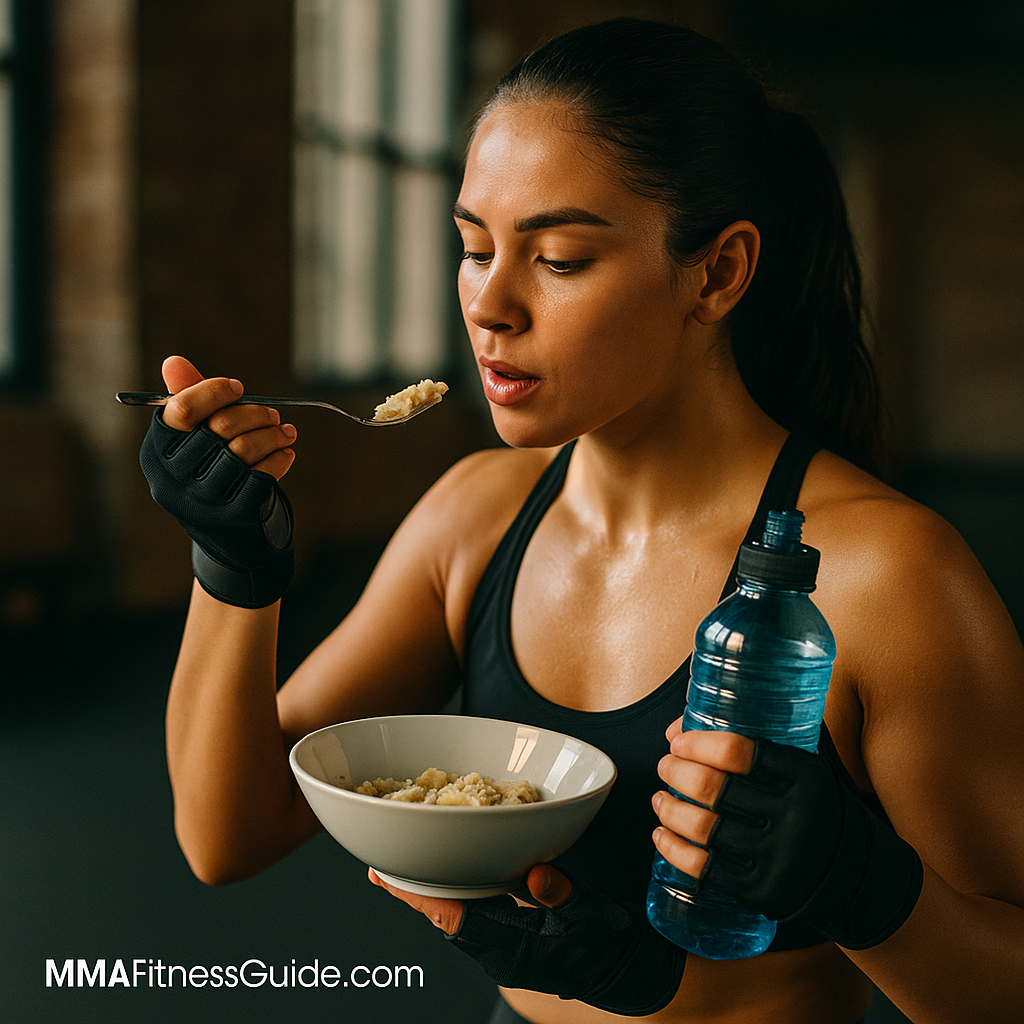
Female MMA athlete eating a healthy meal and drinking water after training in a gym.
Female MMA fighter recovering after training with a nutritious post-workout meal, representing balance in intermittent fasting.

The Rising Trend of Fasting in Combat Sports

Intermittent fasting (IF) has gained huge popularity among athletes for its potential benefits in weight management, focus, and metabolism.
But for MMA fighters — who train hard, cut weight, and recover constantly — fasting isn’t a one-size-fits-all approach.

Before jumping in, it’s important to understand both the advantages and drawbacks of fasting for performance and recovery.

Continue reading “Intermittent Fasting for Fighters: Pros and Cons”

Foods That Reduce Inflammation Naturally

MMA fighter preparing a nutritious meal with salmon, leafy greens, avocado, and quinoa, surrounded by berries, nuts, ginger, and turmeric.
Nutrient-rich foods such as fatty fish, berries, vegetables, and nuts can support a balanced diet and normal recovery after MMA training.

You wake up the morning after a hard sparring session. Your shoulders feel stiff, your legs are sore, and you’ve got another training session scheduled for the afternoon. You might wonder whether adding salmon, berries, or turmeric to your meals could help you recover faster.

Food can support recovery, but the relationship between diet and inflammation is more complicated than eating a handful of supposedly anti-inflammatory ingredients.

Inflammation is part of the body’s normal response to exercise and injury. It helps coordinate tissue repair and adaptation. The aim isn’t to eliminate inflammation altogether; it’s to support normal recovery while avoiding dietary habits that may contribute to poor long-term health.

For MMA fighters, the practical approach is to eat enough food, prioritize a varied diet, and choose nutrient-rich ingredients consistently. No single food can compensate for inadequate sleep, excessive training, or an untreated injury.

Continue reading “Foods That Reduce Inflammation Naturally”

MMA: Maintain Muscle While Cutting Weight

Male MMA athlete checking his weight on a gym scale with a lean muscular build and focused expression.
Male MMA fighter maintaining lean muscle while monitoring his weight before competition.

The Balancing Act of Cutting Weight

For MMA fighters, cutting weight is part of the game — but losing muscle in the process doesn’t have to be.
The key is maintaining strength, energy, and muscle mass while safely shedding body fat before competition.

Whether you’re dropping a few pounds for a weigh-in or aiming for lean performance, smart planning makes all the difference.

Let’s break down how to cut weight without sacrificing hard-earned muscle.

Continue reading “MMA: Maintain Muscle While Cutting Weight”

Nutrition Myths MMA Fighters Should Ignore

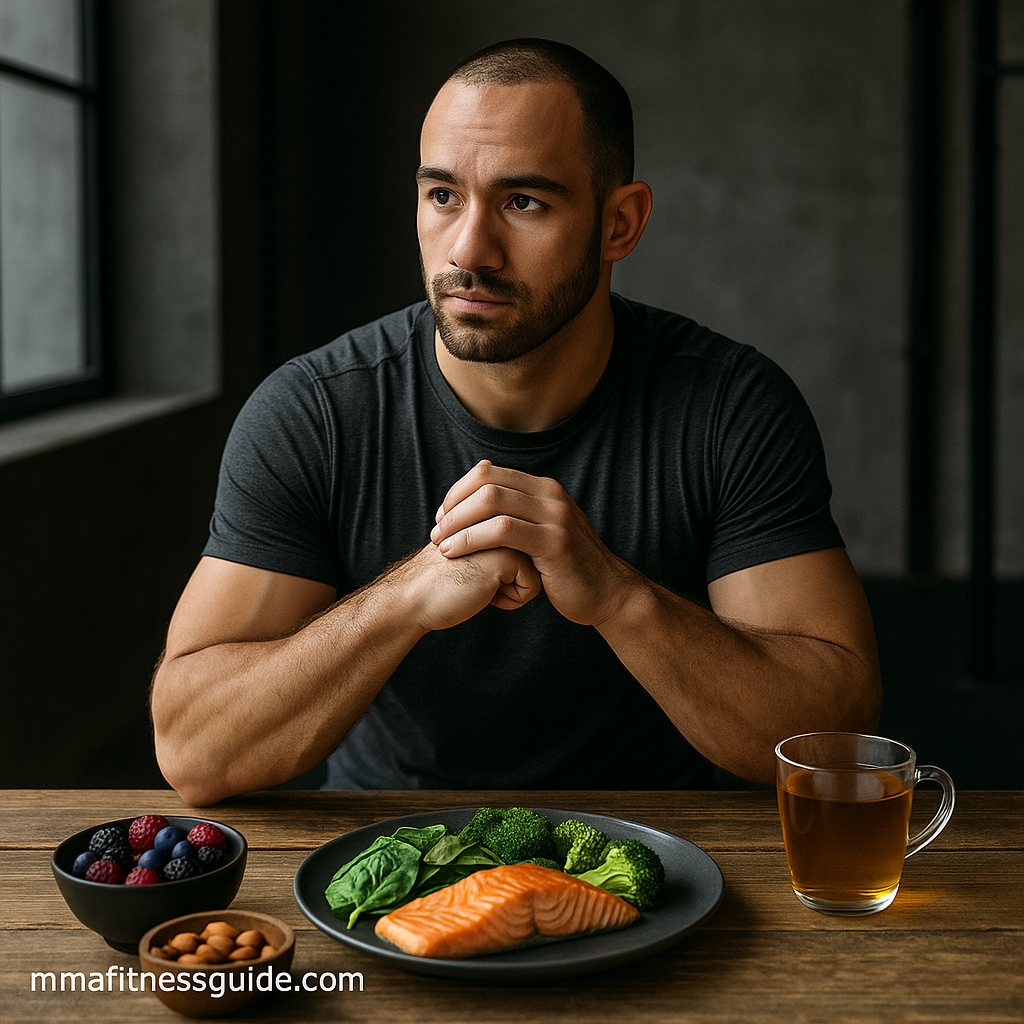
Male MMA fighter sitting at a gym table eating a balanced post-training meal under warm natural light.
Male MMA fighter refueling after training with a healthy, nutrient-packed meal for sustained performance.

Separating Fact from Fiction in Fighter Nutrition

When it comes to MMA nutrition, misinformation spreads faster than a highlight knockout.
From fad diets to extreme weight-cut methods, fighters are constantly bombarded with conflicting advice — much of it unscientific or outright dangerous.

To perform your best, you need fuel, not fads. Let’s break down the biggest nutrition myths MMA fighters should ignore — and what to do instead.

Continue reading “Nutrition Myths MMA Fighters Should Ignore”

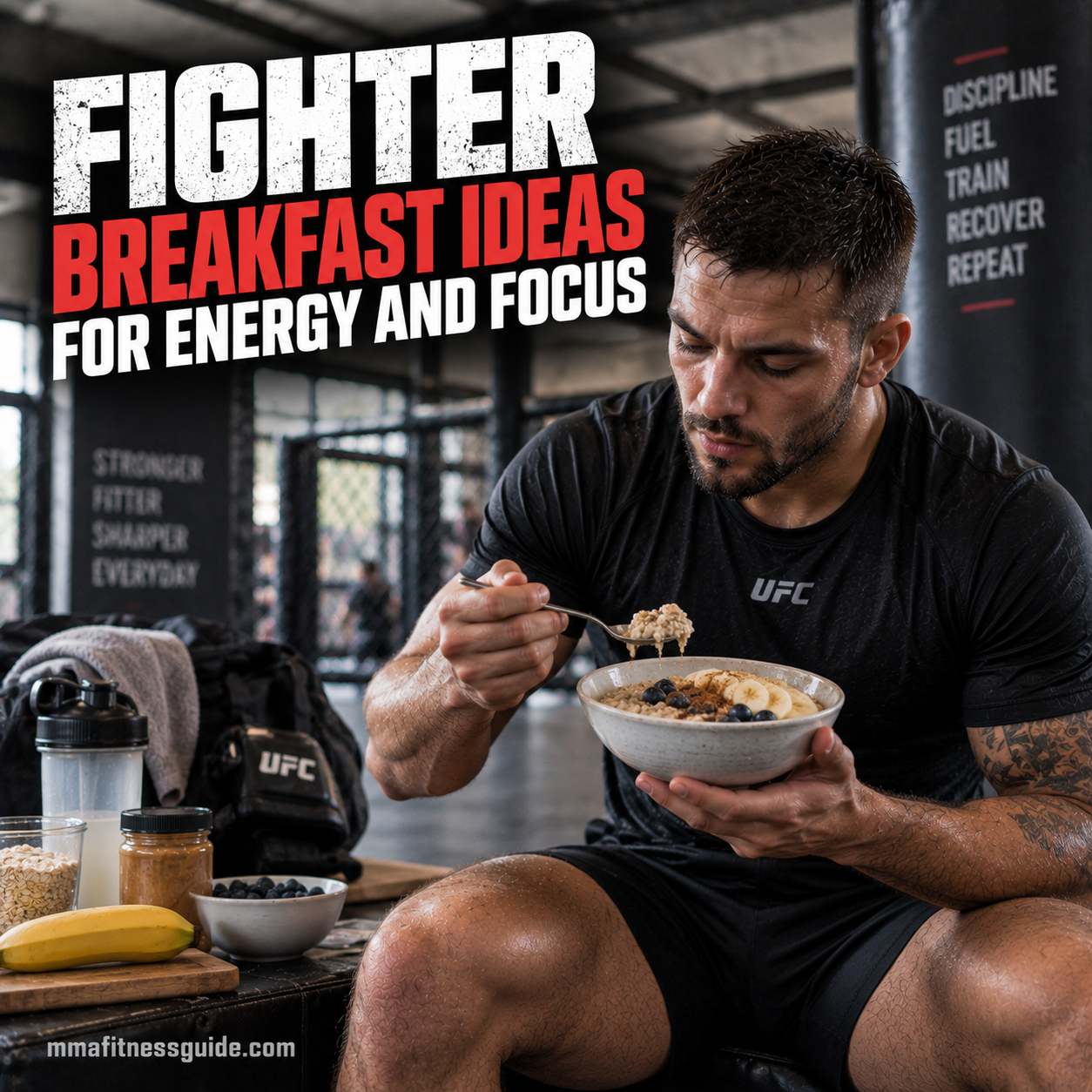
Fighter Breakfast Ideas for Energy and Focus

MMA fighter eating a bowl of oatmeal with bananas and blueberries before training at a combat sports gym.
A balanced breakfast containing carbohydrates and protein helps MMA fighters fuel morning workouts and support muscle recovery.

Morning training presents a practical challenge: you need enough food to support striking, grappling, or conditioning without feeling overly full when practice begins.

A fighter heading into a 7 a.m. wrestling session may prefer a banana and a protein shake, while someone training at 10 a.m. has more time for eggs, oatmeal, and fruit. Both approaches can work when they fit the athlete’s schedule, digestive tolerance, and overall nutritional needs.

Breakfast provides an opportunity to replenish energy after an overnight fast, consume protein for muscle recovery, and replace fluids lost during sleep.

These ten breakfast ideas use accessible ingredients and straightforward preparation methods, with options for early training, busy mornings, and recovery days.

Continue reading “Fighter Breakfast Ideas for Energy and Focus”

Hydration Training Tips for Combat Athletes

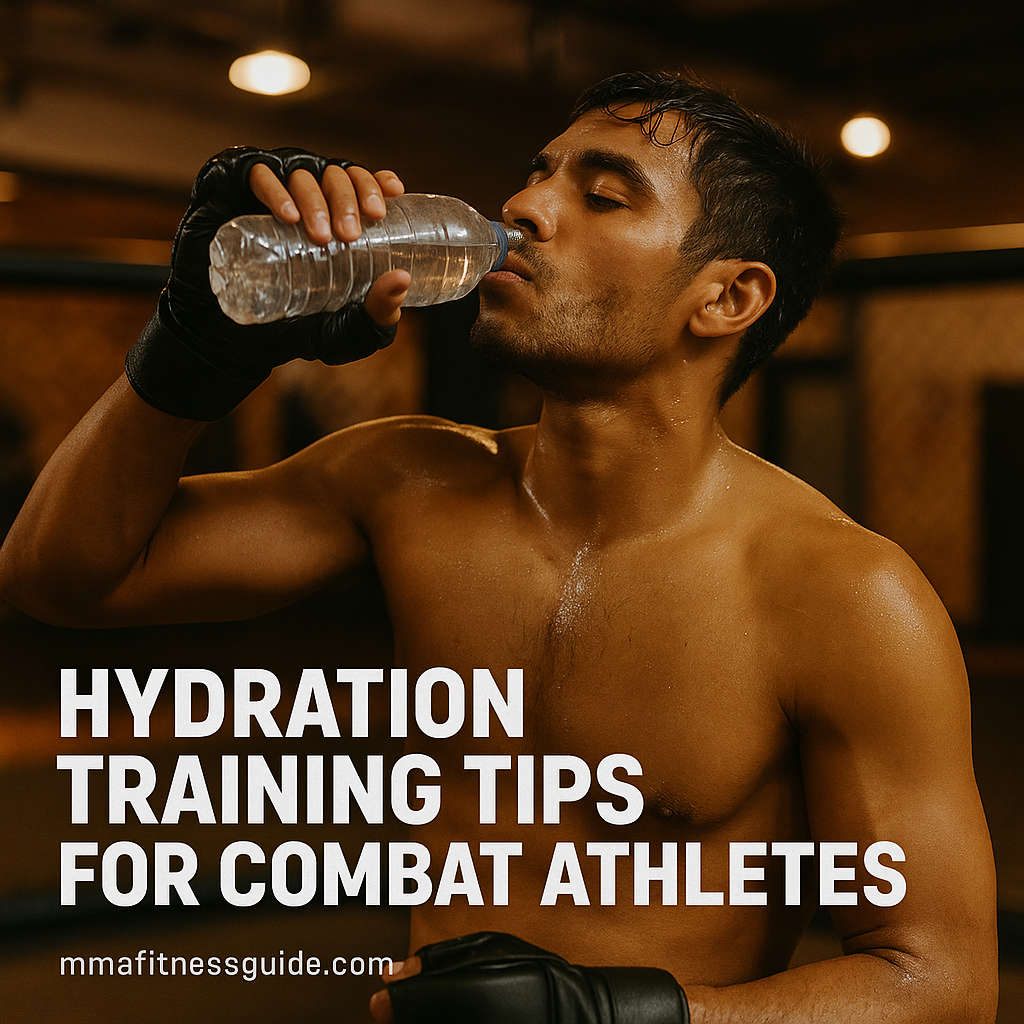
Male MMA athlete drinking water between training rounds in a gym with sweat visible under warm lighting.
Male MMA athlete hydrating during a break in training, emphasizing the importance of hydration for combat performance.

Fueling the Fighter’s Engine

Every combat athlete knows the importance of training hard — but few realize that hydration is just as critical as strength, cardio, and nutrition.

Your body is over 60% water.
In MMA, where intensity and sweat loss are extreme, proper hydration can be the difference between peak performance and early fatigue.

Let’s break down how to hydrate like a professional fighter — before, during, and after training.

Continue reading “Hydration Training Tips for Combat Athletes”