Your trusted source for MMA fitness, nutrition, and fighter-level health.
Category: MMA Training & Conditioning
MMA Training & Conditioning focuses on building strength, endurance, speed, and durability for mixed martial arts. Articles cover conditioning principles, training structure, cardio development, recovery balance, and long-term performance strategies for fighters at all levels.
Female MMA athlete training reaction speed during shadowboxing.
Reaction time can be the difference between slipping a punch or eating it. Whether you’re counterstriking, defending takedowns, or finding openings during scrambles, faster reactions make every technique sharper and every decision smarter. The good news? Reaction time isn’t genetic destiny — it’s a trainable skill.
A grappler developing powerful hand and forearm strength through towel pull-ups—an essential workout for stronger grips in MMA and BJJ.
Introduction
Grappling lives and dies by grip strength. Whether you’re controlling wrists, locking a body lock, finishing a choke, maintaining sleeve grips, or holding onto a single leg — your grip determines who controls the exchange.
The stronger your hands, fingers, and forearms are, the easier it becomes to dominate scrambles, maintain positions, and secure submissions. Grip strength isn’t just “nice to have” — it is a core skill for every grappler.
Here’s how to build world-class grip strength with workouts that translate directly to MMA, wrestling, and BJJ.
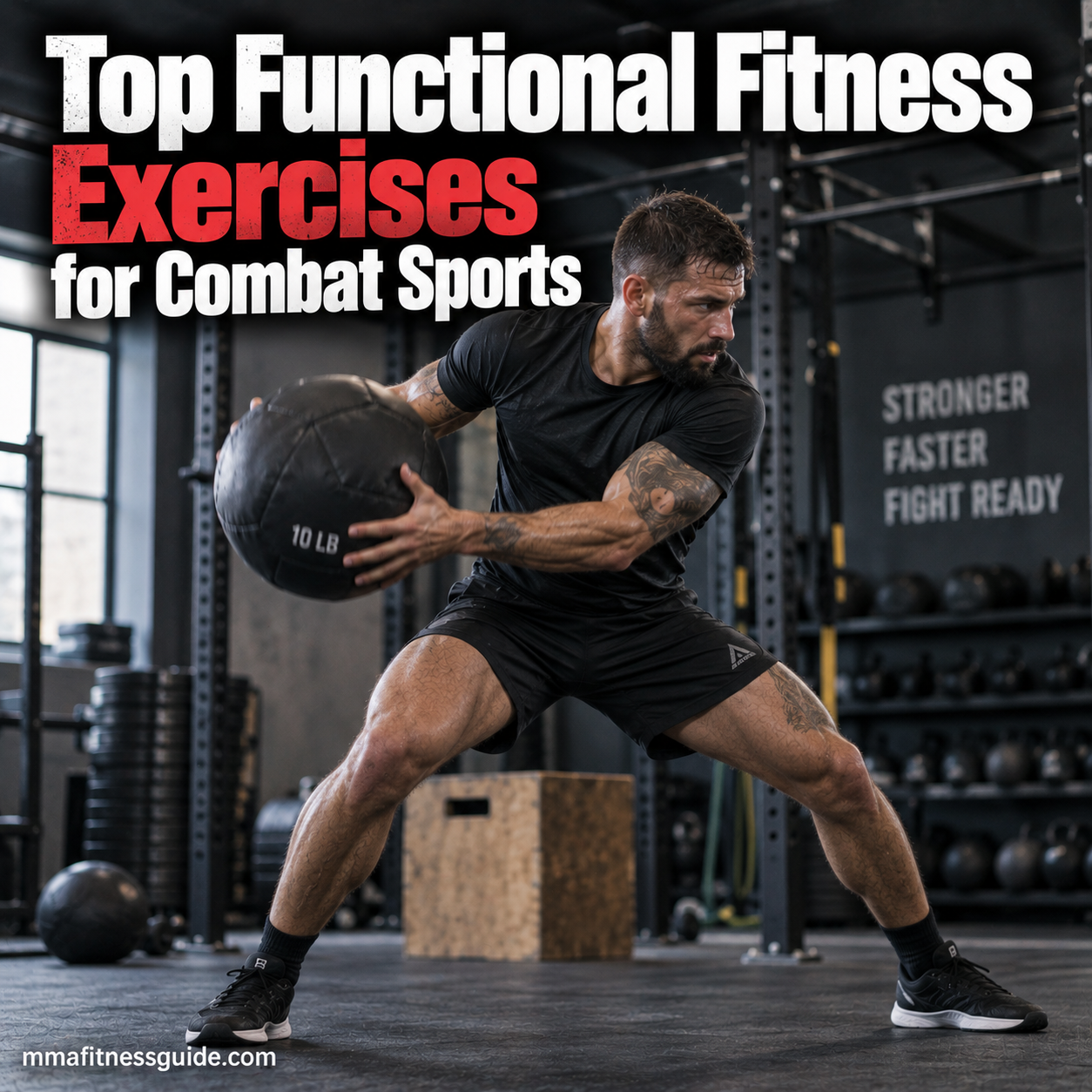
Functional exercises such as medicine ball throws, kettlebell swings, sled pushes, and carries develop strength, stability, and power for combat sports.
Introduction
Combat sports rarely involve producing force from a perfectly stable position. Fighters punch while moving, kick from one leg, resist opponents pulling them off balance, rotate through takedowns, and repeatedly transition between standing and ground positions.
Functional training can prepare the body for these demands by emphasizing movements that involve several joints and muscle groups working together.
Exercises that develop hip extension, rotation, single-leg stability, grip strength, carrying strength, and explosive movement can complement regular boxing, wrestling, Muay Thai, BJJ, or MMA practice.
Here are 12 exercises that fit particularly well into combat-sports strength and conditioning.
A fighter taking a recovery day to restore energy, reduce soreness, and boost long-term performance.
Introduction
Hard training is only half of the performance equation. The other half — the one most fighters ignore — is recovery. Without rest days, your body can’t rebuild, your nervous system stays overloaded, and your technique starts slipping. Recovery days aren’t a sign of weakness. They’re a smart part of training that helps you feel sharper, stronger, and more explosive.
Here’s why recovery days matter and how to use them to boost your performance.
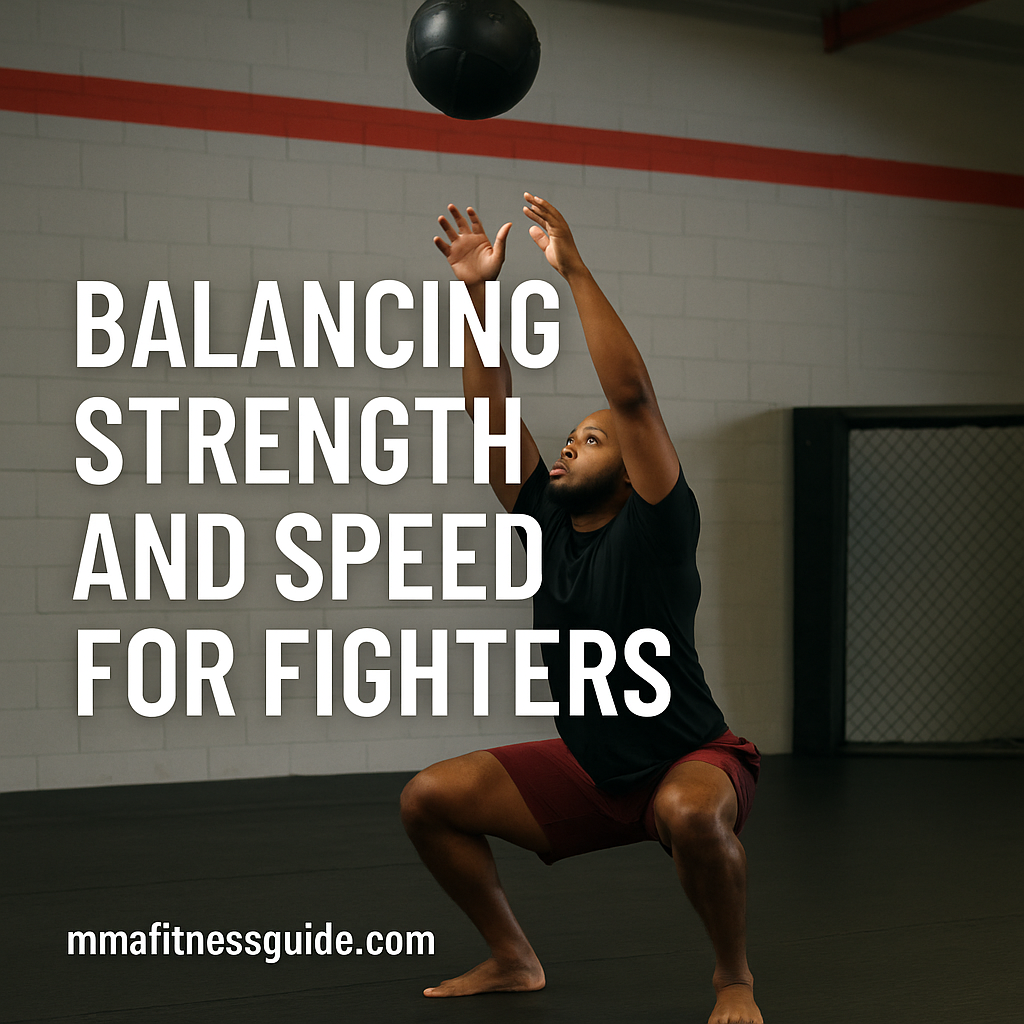
A fighter working on developing the right balance of strength and speed for MMA performance.
Introduction
In MMA, strength and speed work together. You might be strong, but if you’re slow, opponents can outmaneuver you. And you might be fast, but without strength, your strikes and takedowns won’t carry enough power. The key is to train both — without letting one take away from the other.
Balancing strength and speed isn’t complicated. With the right structure and a few smart adjustments, you can improve both qualities at the same time and feel more explosive in every aspect of your game.
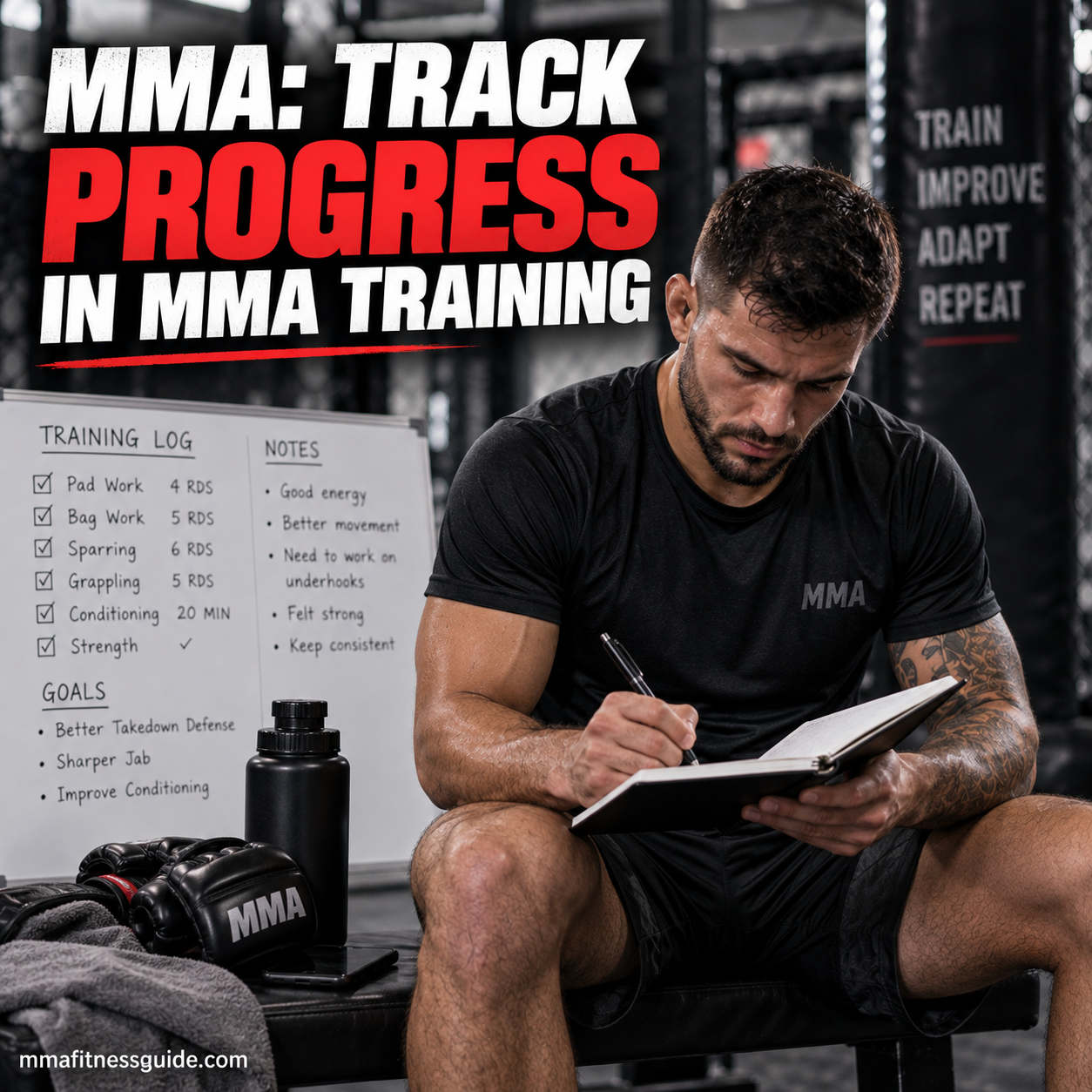
Tracking MMA sessions, technical goals, conditioning, and recovery can reveal progress that is difficult to notice from individual workouts.
Introduction
MMA progress rarely moves in a straight line. Your striking may improve while your grappling feels stuck. You might handle five hard rounds comfortably one week and struggle through three the next because of sleep, workload, or accumulated fatigue.
That makes progress difficult to judge from individual training sessions.
Tracking a few useful indicators—rounds completed, technical goals, conditioning benchmarks, sparring observations, recovery, and video—gives you something concrete to compare over weeks and months.
The goal isn’t to record everything. Track enough information to recognize patterns and decide what deserves more attention in training.
MMA endurance circuits combine striking, bodyweight movements, intervals, and conditioning drills to prepare athletes for repeated bursts of effort.
Introduction
MMA conditioning has to handle repeated changes in pace. A fighter might spend several seconds hand-fighting against the cage, explode into a takedown attempt, scramble back to the feet, and immediately exchange punches and kicks.
That pattern is very different from maintaining the same pace on a treadmill or during a long run.
Circuit training gives fighters a way to practice repeated bursts of work while already fatigued. By combining striking drills, bodyweight exercises, movement, and short recovery periods, circuits can develop conditioning that carries over more directly to MMA rounds.
The following workouts use formats commonly associated with combat-sports conditioning and can be adjusted for beginner and intermediate athletes.
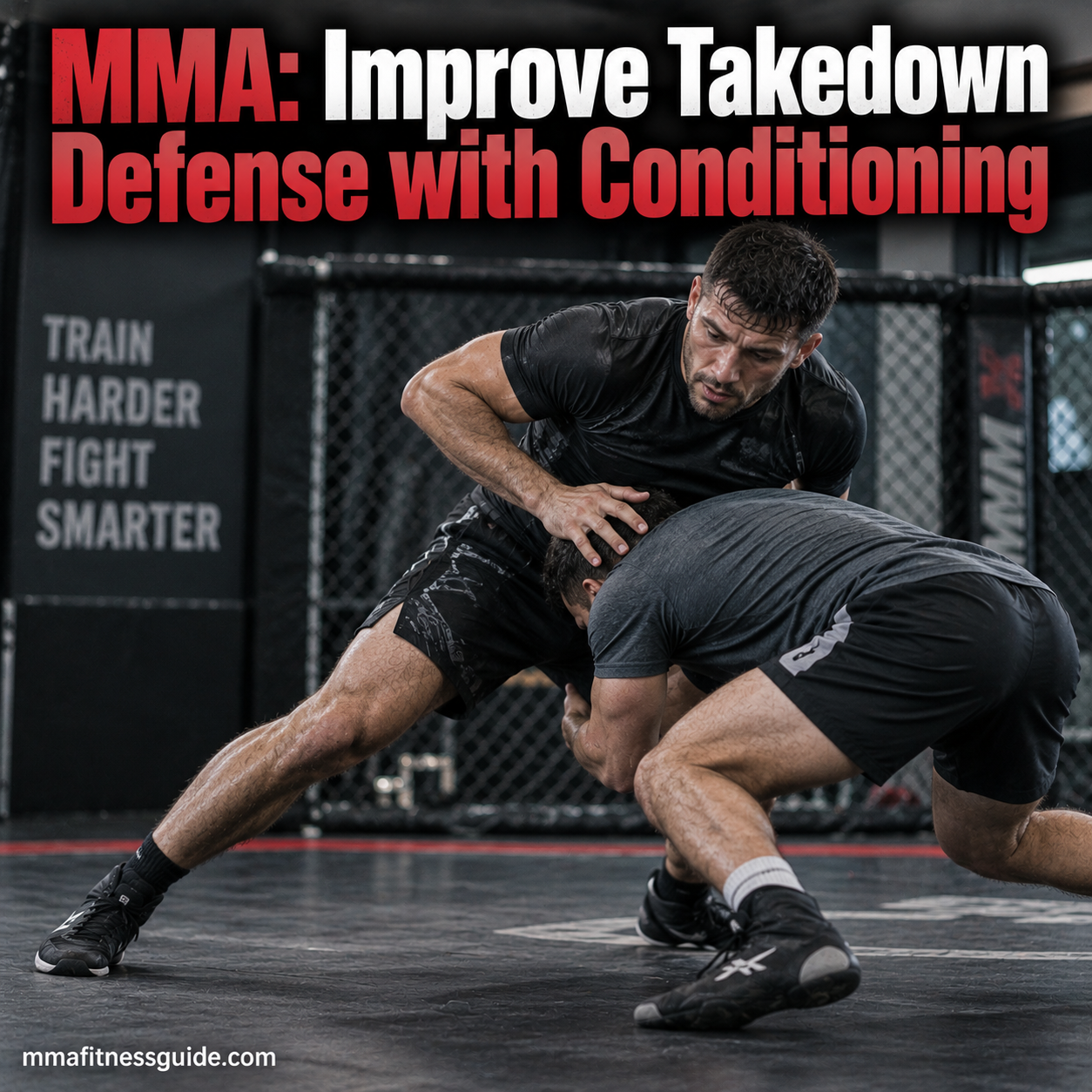
Takedown defense conditioning develops the hip strength, balance, leg drive, and scrambling endurance needed to defend repeated wrestling attacks.
Introduction
Defending a takedown often happens in a matter of seconds. You may need to drop your hips into a sprawl, establish an underhook, absorb forward pressure, circle away from the cage, or scramble back to your feet.
Technique determines how you perform those actions, but fatigue can make even well-practiced movements slower and less precise.
Conditioning for takedown defense should therefore focus on the physical demands behind the technique: hip extension, balance, leg drive, trunk stability, repeated sprawls, and short bursts of scrambling.
The following drills can be added to MMA practice or strength training to develop those qualities.
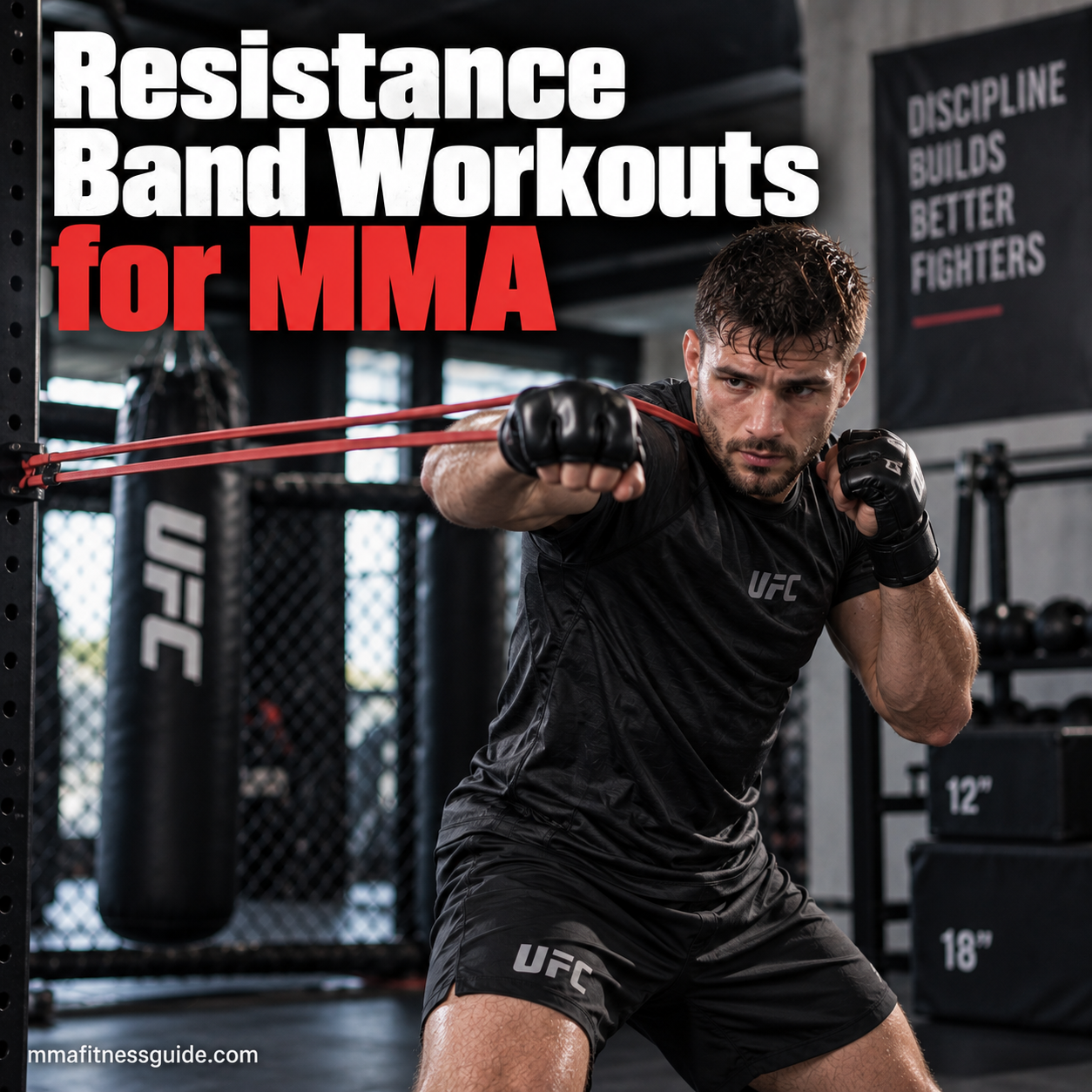
Resistance bands can add progressive resistance to punching, rotational movements, level changes, and other fighter-focused strength exercises.
Attach a resistance band behind a fighter during a penetration step and the hips have to drive harder to complete the movement. Anchor one behind the shoulders during straight punches and every extension has added resistance. Use a mini band during lateral movement and the hips must work continuously to maintain stance and knee position.
That versatility makes resistance bands particularly useful for MMA training.
Bands can add resistance to punching, level changes, rows, rotational movements, hip exercises, and conditioning drills without requiring a rack of weights. Because resistance generally increases as the band stretches, fighters can also use them to train acceleration through specific movement patterns.
They work especially well as a supplement to regular strength, conditioning, and technical training rather than a replacement for those methods. A few bands can provide additional resistance for warm-ups, accessory strength work, explosive drills, and short conditioning sessions whether you’re training at a full MMA gym or away from your usual equipment.
The key is choosing exercises that reinforce useful movement patterns instead of simply adding band resistance to every MMA technique.
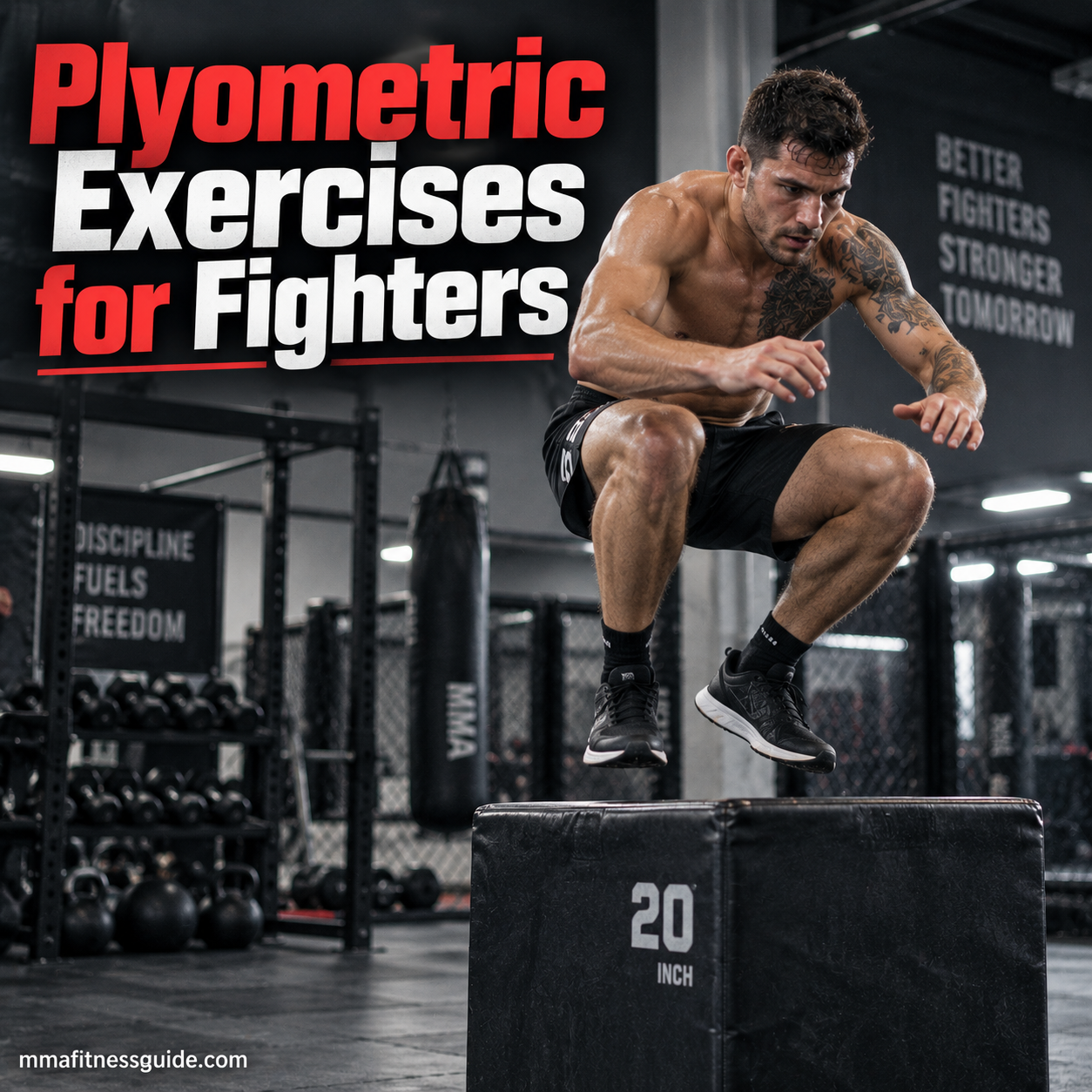
Plyometric exercises can help MMA fighters train rapid force production for striking, takedowns, footwork, and explosive transitions.
MMA repeatedly demands force in short bursts. A fighter may drive forward on a double-leg, push off the mat during a scramble, change direction to create a striking angle, or rotate through the hips during a punch or kick.
Plyometric exercises train the ability to produce force quickly. They use rapid loading and explosive movement to develop qualities that complement strength training and technical MMA practice.
This guide covers plyometric exercises for the lower body, upper body, and full body, along with practical ways to incorporate them into an MMA training schedule.