Periodization Training for Martial Artists

MMA fighter using a periodized training plan for strength, conditioning, skill development, and recovery.
Periodization organizes martial arts training into phases that balance skill work, strength, conditioning, intensity, and recovery.

Martial artists have to balance technical practice, sparring, strength work, conditioning, mobility, and recovery. When every week is treated as a hard week, fatigue can accumulate faster than the body can adapt.

Periodization gives that workload structure.

Instead of repeating the same training volume and intensity throughout the year, periodization divides training into phases. Each phase emphasizes particular qualities while other areas are maintained. A fighter might spend several weeks developing aerobic capacity and strength before shifting toward explosive power, harder rounds, and more fight-specific conditioning.

For MMA fighters and other martial artists, this approach helps organize competing training demands without trying to push every physical quality at maximum intensity at the same time.

Continue reading “Periodization Training for Martial Artists”
MMA: Use Jump Rope for MMA Conditioning

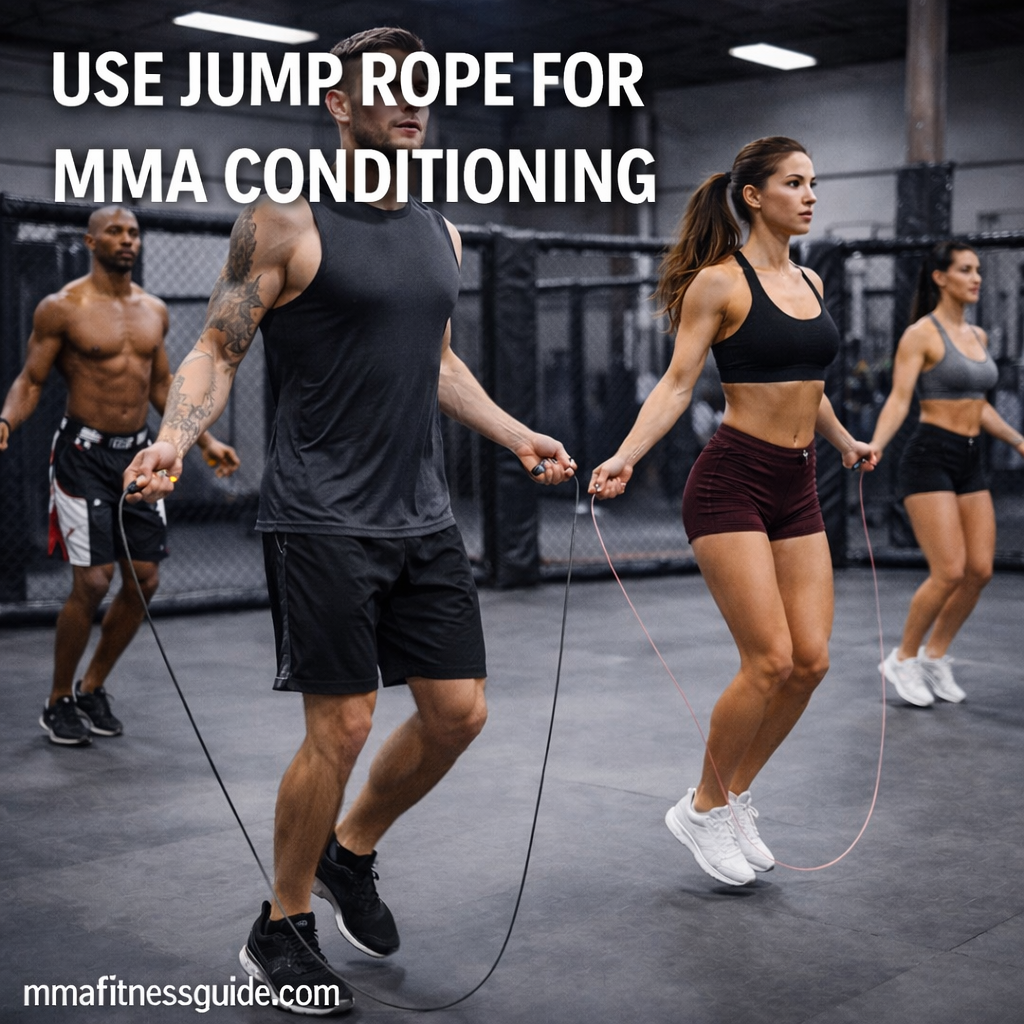
MMA athletes using jump ropes for conditioning inside a gym, highlighting jump rope training for MMA endurance and footwork.
MMA athletes using jump rope training to improve conditioning, footwork, and cardiovascular endurance.

Jump rope training has been a staple in combat sports for generations—and for good reason. From boxing gyms to MMA fight camps, the jump rope remains one of the most effective, accessible tools for conditioning, coordination, and footwork. Despite its simplicity, jump rope training offers powerful benefits that translate directly to MMA performance.

This guide explains how fighters can use jump rope for MMA conditioning, why it works so well, and how to structure sessions to maximize endurance, agility, and rhythm.

Continue reading “MMA: Use Jump Rope for MMA Conditioning”

Dynamic Warm-Ups for Combat Performance

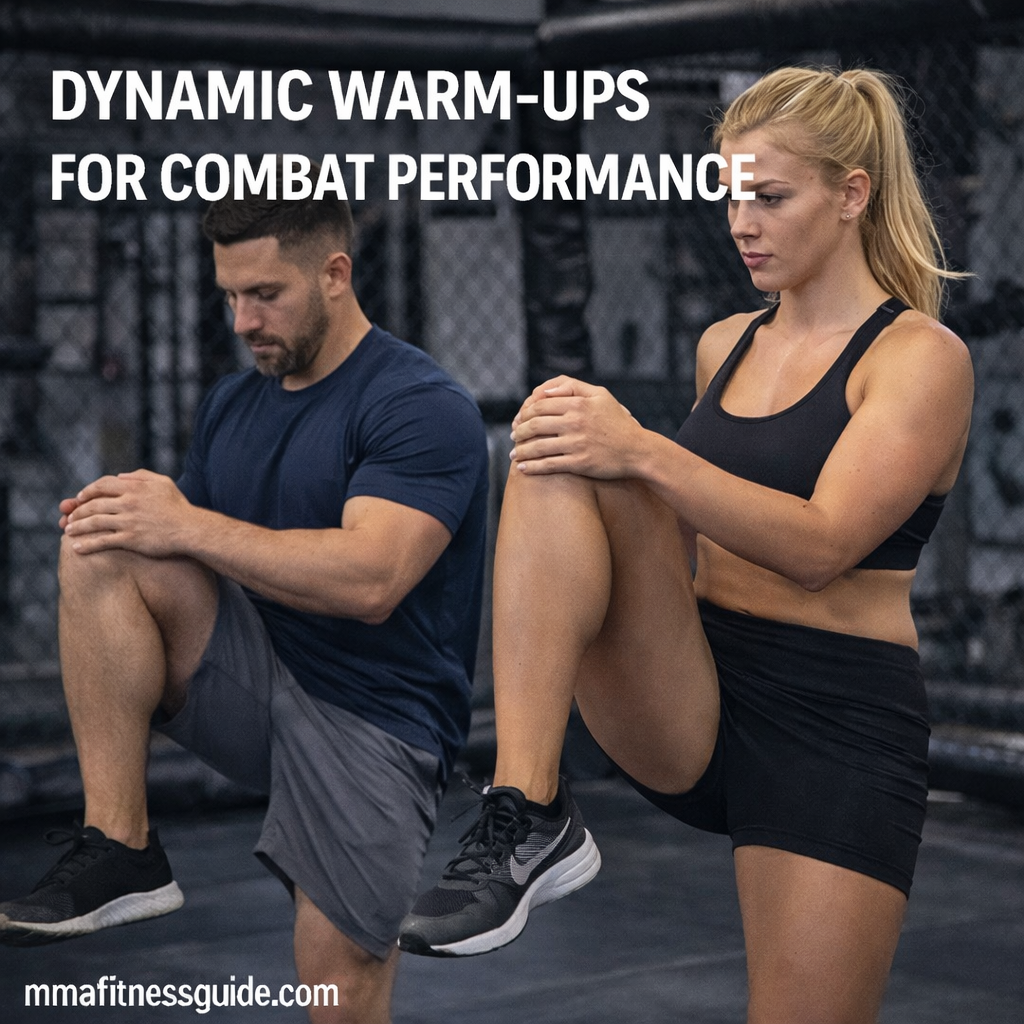
MMA fighters performing dynamic lunges and mobility exercises on training mats before a combat sports workout.
Prepare for MMA training with dynamic warm-up exercises that improve mobility, coordination, and readiness for striking and grappling.

A proper warm-up can make a noticeable difference in how an MMA fighter moves, reacts, and performs during training. Whether preparing for striking drills, wrestling exchanges, grappling, or sparring, the body needs time to transition from a resting state into demanding athletic activity.

Starting an intense session without preparation can leave fighters feeling stiff, poorly coordinated, and unprepared for sudden changes in movement.

Dynamic warm-ups address this problem by gradually increasing body temperature, activating important muscle groups, improving usable joint mobility, and introducing movement patterns that resemble the upcoming training session.

Unlike a conditioning workout, a warm-up should not leave you exhausted. Its purpose is to prepare your body for the work ahead.

For MMA athletes, this preparation is particularly important because training involves multiple physical demands. A fighter might move from rapid footwork to explosive punches, defend a takedown, scramble across the mat, and immediately return to standing.

Each transition requires coordination, strength, mobility, and control.

This comprehensive guide explains how dynamic warm-ups work, which exercises are most useful for combat sports, and how to build an effective routine for striking, grappling, conditioning, and competition.

Continue reading “Dynamic Warm-Ups for Combat Performance”

Fighter Stretching Routines That Improve Range

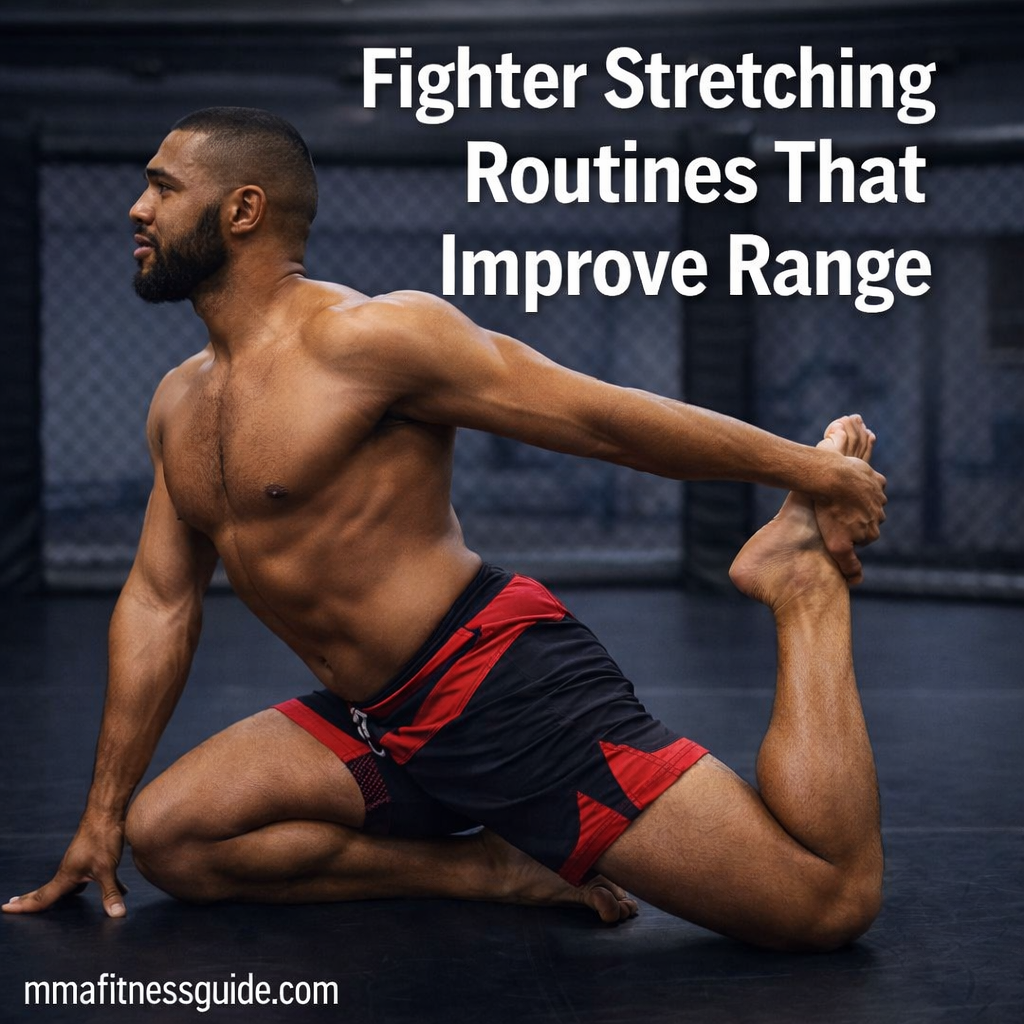
MMA fighter performing a stretching routine to improve hip mobility, flexibility, and usable range of motion.
Targeted stretching and mobility work can help fighters develop the controlled range needed for striking, grappling, footwork, and defensive movement.

A roundhouse kick requires the hip to rotate freely. A deep level change depends on usable motion through the hips and ankles. Even punching mechanics rely on enough movement through the upper back and shoulders to rotate without forcing the body into awkward positions.

When those areas are restricted, fighters often compensate somewhere else. The knee may collapse inward during a squat or shot, the lower back may contribute too much during a kick, or the shoulder may take additional stress when the upper back isn’t rotating well.

Stretching for MMA should therefore have a specific purpose: developing range of motion that a fighter can actually control during training and competition.

That means prioritizing the hips, ankles, hamstrings, thoracic spine, and shoulders while using different methods before and after training. Dynamic movements can prepare those areas for a session, while targeted mobility work and static stretching can be used separately to address restrictions over time.

The goal isn’t to see how far you can stretch. It’s to give your body enough controlled range to kick, punch, shoot, scramble, and grapple without unnecessary restrictions.

Continue reading “Fighter Stretching Routines That Improve Range”

MMA: Build Mental Stamina During Long Workouts

Female MMA athlete standing in a gym wearing a burgundy sports outfit, looking focused beside bold text about building mental stamina during long workouts.
Female MMA athlete standing in a gym with focused posture, shown next to bold text promoting mental stamina during long workouts.

Why Mental Stamina Matters in MMA

When most people think about long MMA workouts, they picture physical exhaustion—burning lungs, tired legs, heavy arms. But in reality, the mind gives out long before the body does. Mental stamina is what allows fighters to push through fatigue, stay sharp in later rounds, and train with intention when everyone else fades.

Building mental endurance isn’t just about “toughing it out.” It’s a skill that can be trained and strengthened like any muscle. With the right strategies, you can stay focused, composed, and disciplined even during long conditioning sessions or extended sparring rounds.

Continue reading “MMA: Build Mental Stamina During Long Workouts”

Training Camps vs Year-Round Conditioning

A male and female athlete shadowboxing separately inside an MMA gym, shown with the title “Training Camps vs Year-Round Conditioning” and the mmafitnessguide.com watermark.
A male and female fighter warming up with light shadowboxing in an MMA gym, representing the difference between training camps and year-round conditioning.

Most fighters think of training in two phases: the intense push during a training camp and the more relaxed period between fights. But as the sport evolves, more athletes are discovering that year-round conditioning is one of the biggest advantages you can have.
Both approaches have benefits — and both come with challenges. The key is knowing how each one fits into your goals, your schedule, and your style of fighting.

Understanding the difference can help you stay healthier, sharper, and more prepared all year long.

Continue reading “Training Camps vs Year-Round Conditioning”

The Ultimate Full-Body Fighter Workout

A tan-skinned male athlete performing a push-up while a blonde female athlete in colored shorts performs a squat behind him in an MMA gym, shown with the article title and mmafitnessguide.com watermark.
A male fighter doing push-ups alongside a female athlete performing squats, illustrating the intensity of a full-body fighter workout.

A great fighter isn’t just strong, or fast, or explosive — they’re all three. MMA demands full-body power, endurance, mobility, and resilience. Whether you’re a beginner or an experienced athlete, a well-designed full-body workout helps you build the strength and conditioning needed for striking, grappling, and everything in between.

This Ultimate Full-Body Fighter Workout is built to mimic real MMA demands: pushing, pulling, rotation, grip strength, explosive power, and sustainable cardio. You can use it on strength days, conditioning days, or as a complete standalone session.

Continue reading “The Ultimate Full-Body Fighter Workout”

MMA: Prevent Overtraining in MMA

A tired MMA athlete sitting against the padded gym wall with his hands wrapped, representing the importance of preventing overtraining in mixed martial arts.
A fatigued fighter resting against the gym wall, illustrating the need for smart training habits to avoid overtraining in MMA.

Overtraining is one of the biggest threats to a fighter’s long-term progress. When training volume, intensity, and stress stack up faster than your body can recover, performance drops — sometimes sharply.
For beginners and experienced fighters alike, learning how to recognize and prevent overtraining is essential for staying healthy, improving consistently, and avoiding unnecessary injuries.

Overtraining isn’t about being “weak” or “unmotivated.” It’s a physiological state where your body can’t keep up with the workload. The best fighters train hard — but they also train smart. This guide shows you how.

Continue reading “MMA: Prevent Overtraining in MMA”

Breathing Techniques for Better Cardio

A man standing inside an MMA gym practicing a breathing technique, used to illustrate how proper breathing improves cardio for combat sports.
A fighter demonstrating controlled breathing inside an MMA gym, representing the cardio-focused techniques covered in this guide.

Breathing is one of the most overlooked skills in MMA — yet it’s one of the most important factors in endurance, striking power, recovery, and overall fight performance. Poor breathing leads to early fatigue, sloppy technique, and slower reactions. Proper breathing helps you stay calm under pressure, maintain rhythm, and push harder for longer.

Whether you’re sparring, rolling, hitting pads, or grinding through conditioning, learning to breathe efficiently will dramatically improve your cardio.

Continue reading “Breathing Techniques for Better Cardio”

The Role of Flexibility in Martial Arts Performance

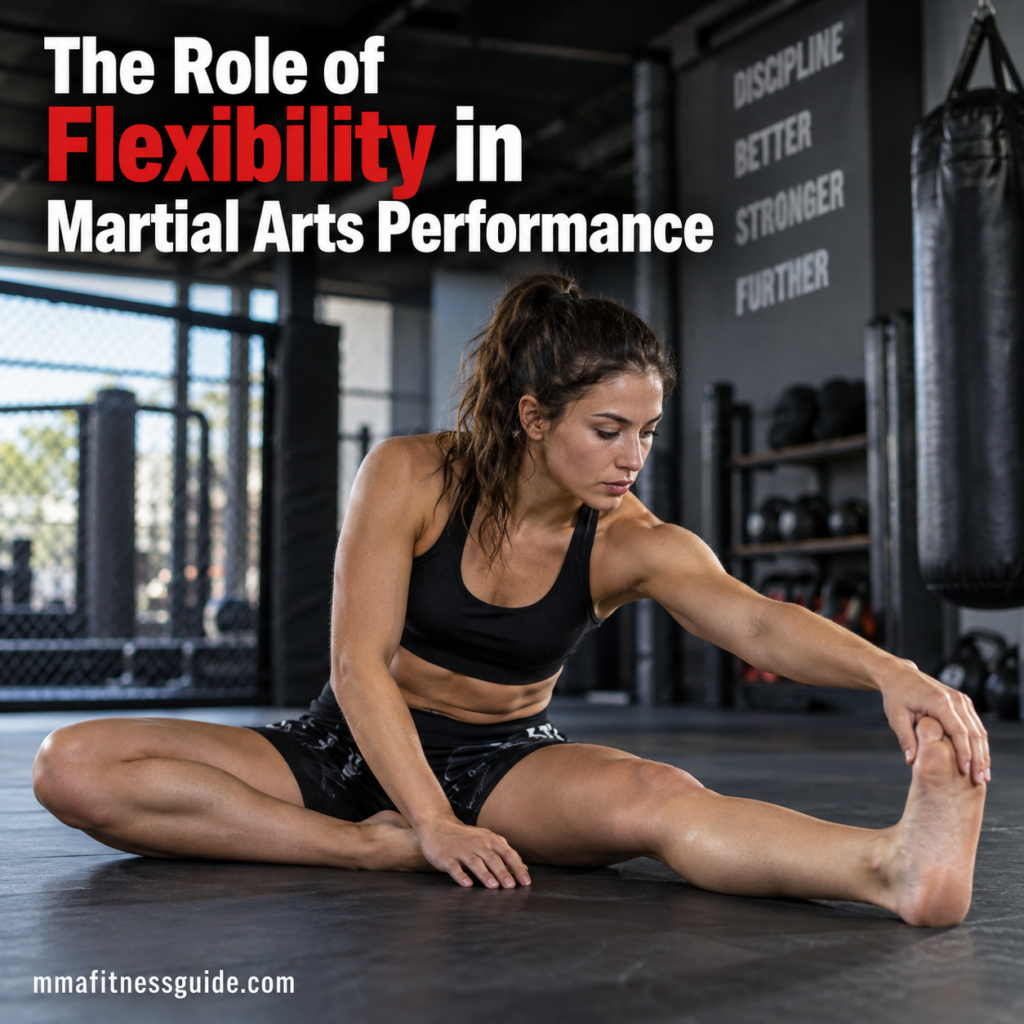
Female martial artist performing a seated hamstring stretch on an MMA gym mat to improve flexibility and mobility.
Flexibility and mobility training help martial artists develop usable range of motion for striking, grappling, and movement control.

A fighter throws a roundhouse kick, but their hips feel tight halfway through the movement. Instead of rotating smoothly, they lean backward to compensate, lose their balance, and struggle to return to their stance.

Another fighter attempts to recover guard during a grappling exchange but cannot comfortably bring their knees toward their chest. Their limited hip mobility makes an already difficult position even harder to escape.

These situations illustrate why flexibility matters in martial arts. It isn’t simply about performing head kicks or achieving impressive stretching positions. It’s about having enough freedom of movement to execute techniques efficiently while maintaining strength, balance, and control.

Whether you train in MMA, Brazilian jiu-jitsu, Muay Thai, karate, or another martial art, developing flexibility alongside strength and technical skill can help you move more comfortably and expand your available movement options.

The key is understanding what kind of flexibility your sport requires and how to develop it without sacrificing stability.

Continue reading “The Role of Flexibility in Martial Arts Performance”