A fighter throws a roundhouse kick, but their hips feel tight halfway through the movement. Instead of rotating smoothly, they lean backward to compensate, lose their balance, and struggle to return to their stance.
Another fighter attempts to recover guard during a grappling exchange but cannot comfortably bring their knees toward their chest. Their limited hip mobility makes an already difficult position even harder to escape.
These situations illustrate why flexibility matters in martial arts. It isn’t simply about performing head kicks or achieving impressive stretching positions. It’s about having enough freedom of movement to execute techniques efficiently while maintaining strength, balance, and control.
Whether you train in MMA, Brazilian jiu-jitsu, Muay Thai, karate, or another martial art, developing flexibility alongside strength and technical skill can help you move more comfortably and expand your available movement options.
The key is understanding what kind of flexibility your sport requires and how to develop it without sacrificing stability.
What Is Flexibility in Martial Arts?
Flexibility refers to the available range of motion in muscles and joints. However, being able to reach a particular position doesn’t necessarily mean you can control it during a fight.
For example, you might be able to pull your leg into a high kicking position while standing against a wall. That doesn’t guarantee you can raise it to the same height during a roundhouse kick without losing balance.
This distinction introduces another important concept: mobility.
Flexibility is the range of motion available to you, while mobility involves moving through that range with control.
Martial artists benefit from both.
A flexible hip allows a greater kicking range. Strength and coordination help you use that range while maintaining proper technique.
Similarly, shoulder flexibility may help a grappler access certain positions, but muscular control is necessary to keep the joint stable under resistance.
The goal isn’t to become as flexible as possible. It’s to develop the range of motion your techniques require and the strength to use it effectively.
Why Flexibility Matters for Martial Arts Performance
Martial arts involve movements that are difficult to replicate in ordinary daily activities.
High kicks, deep stances, sprawls, guard retention, wrestling scrambles, and rotational strikes all place different demands on the body.
When a fighter lacks the necessary range of motion, they may compensate by changing their technique.
For instance, limited hip mobility can cause someone to excessively lean their torso during a kick. Restricted ankle movement may make certain wrestling positions uncomfortable.
Improving relevant flexibility can provide several practical benefits.
Greater Freedom of Movement
Adequate flexibility allows you to reach positions without unnecessary restrictions.
A Muay Thai practitioner may find it easier to rotate the hips during a roundhouse kick, while a Brazilian jiu-jitsu practitioner may have more options when recovering guard.
However, additional flexibility is only useful when paired with the strength and technical ability to control those movements.
More Efficient Technique
Restricted movement sometimes forces fighters to compensate through other joints.
For example, limited thoracic spine rotation may encourage excessive movement through the lower back when performing rotational exercises.
Developing appropriate mobility can make it easier to practice the intended movement pattern.
Technique, timing, and strength still determine how effectively that movement translates into martial arts performance.
Better Control in Awkward Positions
Fighters frequently encounter positions that require movement near the limits of their comfortable range.
A grappler might need to bring a knee toward their chest while framing against an opponent. A striker may need to recover their stance after a missed kick.
Training controlled movement through these positions can help build confidence and stability.
Potential Injury-Risk Benefits
Flexibility training may help address movement restrictions and improve tolerance to certain positions, but stretching alone has not been shown to reliably prevent all sports injuries.
Injury risk also depends on training volume, fatigue, strength, technique, previous injuries, and contact with opponents.
A complete injury-risk management approach should combine appropriate mobility work with progressive strength training, technical practice, recovery, and sensible training loads.
The Four Types of Flexibility Martial Artists Should Understand
Not all flexibility training produces the same adaptations. Understanding the differences helps you choose exercises that match your goals.
1. Dynamic Flexibility
Dynamic flexibility involves moving through a range of motion repeatedly and under control.
Examples include:
- Forward and lateral leg swings
- Arm circles
- Controlled hip circles
- Walking lunges with rotation
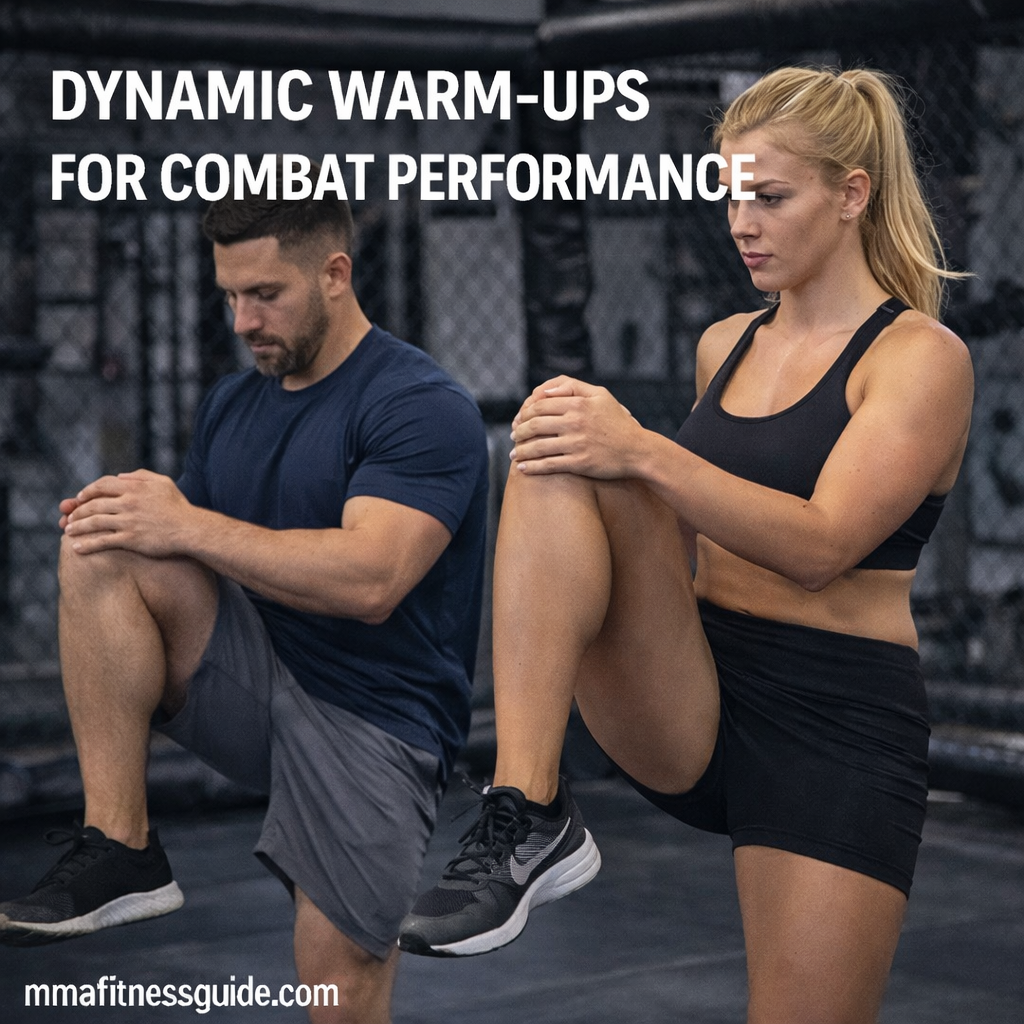
- Alternating knee raises
Dynamic movements are particularly useful during warm-ups because they prepare the body for the actions that follow.
A kickboxer might perform progressively higher leg swings before practicing kicks.
The objective is controlled movement, not forcing the leg as high as possible immediately.
2. Static Flexibility
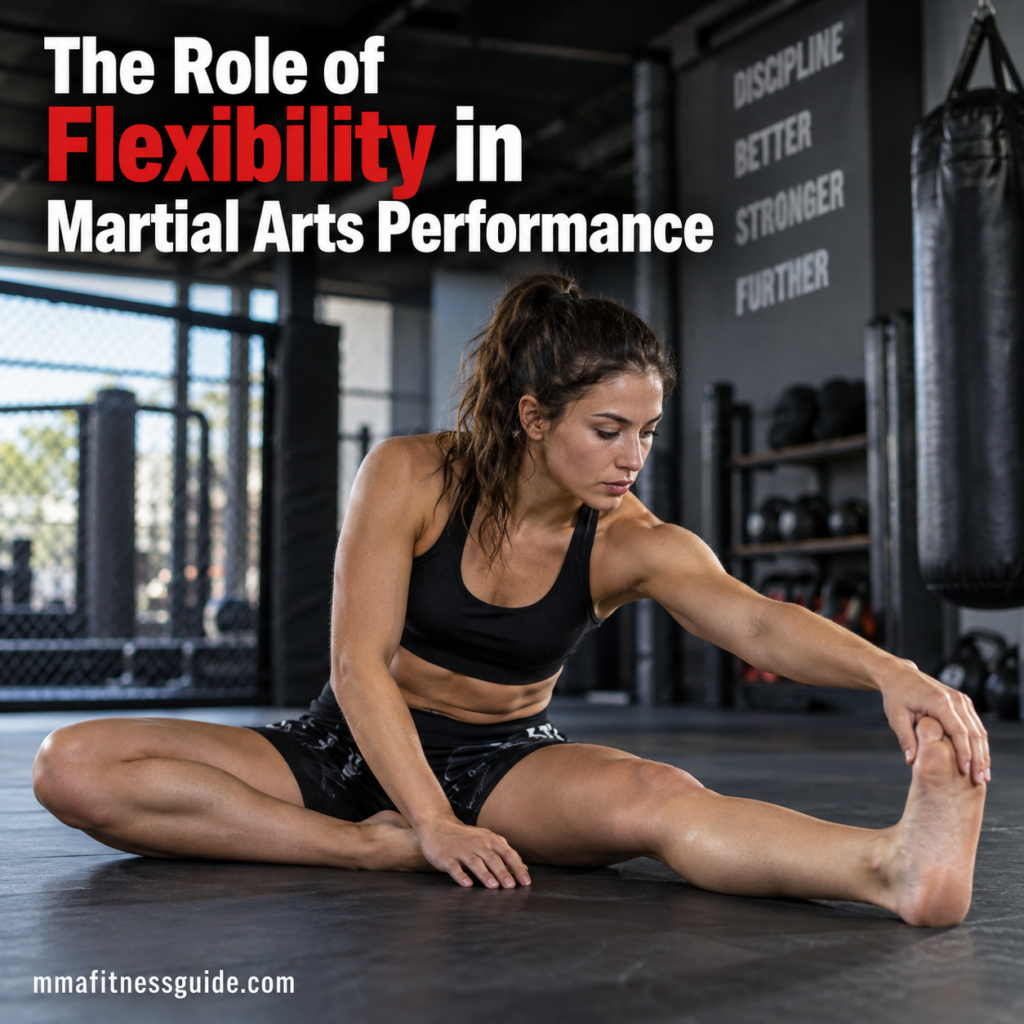
Static stretching involves holding a position that lengthens a muscle or muscle group.
Examples include seated hamstring stretches, kneeling hip flexor stretches, and calf stretches.
Static stretching can improve range of motion when performed consistently.
It is particularly convenient after training or during a separate flexibility session.
Long, intense static stretching immediately before explosive activity may temporarily reduce maximal power or strength, especially without a subsequent dynamic warm-up. Brief, moderate stretches followed by sport-specific movement are less concerning.
For fighters, this means saving extended stretching sessions for times when explosive performance isn’t immediately required.
3. Active Flexibility
Active flexibility involves reaching or holding a position using your own muscular effort rather than relying entirely on gravity or external assistance.
Consider two examples.
In the first, a fighter uses their hand to lift their leg into a high kicking position.
In the second, they raise the leg and hold it without assistance.
The second movement requires active flexibility.
Useful exercises include standing leg holds, controlled straight-leg raises, and slow chambered kicks.
Active flexibility is particularly relevant to martial artists because techniques require muscular control, not just passive range of motion.
4. Functional Flexibility
Functional flexibility describes the range of motion needed for a particular activity.
For martial artists, this might include hip movement during guard retention, shoulder mobility during defensive framing, or ankle mobility when changing levels for a takedown.
The required range varies by discipline and individual technique.
A taekwondo athlete may prioritize greater kicking range, while a wrestler may devote more attention to comfortable deep stances and controlled transitions.
Neither athlete needs to pursue extreme flexibility in every joint.
How Flexibility Supports Striking Performance
Striking demands a combination of rotation, balance, coordination, and rapid force production.
Flexibility can help remove movement restrictions that interfere with these qualities.
Kicking Height and Control
High kicks require adequate hip range of motion, particularly when the leg moves away from the body.
The hamstrings, hip adductors, hip flexors, and surrounding structures may all influence how comfortably someone performs different kicking techniques.
However, kicking height is not determined by flexibility alone.
A fighter also needs sufficient strength to lift the leg, stabilize the standing leg, rotate the hips, and return to their stance.
A practical progression is to begin with waist-height kicks, develop consistent mechanics, and gradually increase height without sacrificing balance.
There is little value in throwing a head kick if you must compromise your stance or experience pain to reach the target.
Hip Rotation and Roundhouse Kicks
Roundhouse kicks involve coordinated movement through the hips, pelvis, trunk, and supporting foot.
A fighter with restricted hip movement may struggle to rotate comfortably.
Useful exercises include controlled hip rotations, 90/90 hip transitions, and standing pivot drills.
Importantly, greater flexibility does not automatically create greater kicking power.
Power also depends on technique, speed, strength, timing, and effective force transfer.
Footwork and Direction Changes
Footwork requires coordinated movement through the ankles, knees, and hips.
Limited ankle dorsiflexion, for example, may make certain low stances or forward weight shifts more difficult.
Exercises such as ankle rocks, calf stretches, and controlled lateral lunges can help address relevant restrictions.
The objective is to develop enough mobility to move comfortably while maintaining the muscular stiffness and stability needed for quick reactions.
How Flexibility Supports Grappling and Brazilian Jiu-Jitsu
Grappling places different demands on flexibility because athletes must move while supporting their own weight or resisting an opponent.
Guard Retention
Guard retention frequently requires bringing the knees toward the torso, rotating the hips, and repositioning the legs.
Adequate hip mobility can make these movements more accessible.
For example, a grappler with comfortable hip flexion may find it easier to bring their knees between themselves and an opponent attempting to pass.
However, successful guard retention still depends heavily on framing, positioning, timing, and technical knowledge.
Wrestling and Takedowns
Wrestling movements frequently involve deep knee bends, hip flexion, ankle movement, and trunk control.
Restricted ankle mobility may make it difficult to maintain certain low positions without lifting the heels.
Limited hip mobility can also affect the comfort of level changes and transitions.
Practicing controlled squats, split squats, and sport-specific stance movements can help develop usable range of motion.
Escapes and Scrambles
During scrambles, grapplers often need to rotate, bridge, turn onto their sides, and move between awkward positions.
Mobility work can help athletes become more comfortable accessing these positions.
However, forcing a joint beyond its comfortable range while an opponent applies pressure can cause injury.
Flexibility should never be treated as permission to resist submissions beyond safe limits. Tap early when a joint is threatened, particularly during training.
Common Mobility Restrictions in Martial Artists
Different training habits can create different movement limitations.
Rather than assuming every fighter has tight hips or hamstrings, identify the specific movement that feels restricted.
Tight Hip Flexors
Prolonged sitting and repeated training positions may contribute to a feeling of tightness around the front of the hips.
This can make certain movements uncomfortable, particularly when extending the hip.
Try a half-kneeling hip flexor stretch while gently tucking the pelvis. Keep your torso upright and avoid excessively arching your lower back.
Limited Thoracic Spine Rotation
The thoracic spine is the middle and upper portion of your back.
Restricted rotation in this area can make certain rotational movements uncomfortable.
Try controlled open-book rotations while lying on your side. Rotate through your upper back without forcing your lower back into an uncomfortable position.
Hamstring Tightness
Restricted hamstring range may affect straight-leg movements, including certain kicks.
A lying hamstring stretch using a towel or strap can help you work on this area without placing unnecessary stress on your lower back.
You can also incorporate controlled leg raises to develop active range of motion.
Limited Ankle Mobility
Ankle dorsiflexion allows the knee to travel forward over the foot while the heel remains grounded.
Restrictions may interfere with certain wrestling stances, squats, and weight shifts.
Practice knee-to-wall ankle rocks by placing one foot a short distance from a wall and gently moving your knee forward while keeping your heel on the floor.
If a restriction involves persistent pain, instability, numbness, or a previous injury, consult an appropriate healthcare professional rather than attempting to stretch through it.
A Practical 15-Minute Flexibility Routine for Martial Artists
This routine combines dynamic movement, static stretching, and active mobility.
It is designed as a general session for healthy adults. Adjust the exercises according to your discipline, current mobility, and training experience.
Use the dynamic phase before training. Save the longer static stretches and active mobility work for after training or a separate session.
Phase 1: Dynamic Preparation (4 Minutes)
1. Leg Swings — 1 Minute
Stand beside a wall for balance.
Swing one leg forward and backward in a controlled motion for 30 seconds, then switch legs.
Start with a small range and gradually increase it as your muscles warm up.
Avoid swinging aggressively or arching your lower back.
2. Hip Circles — 1 Minute
Stand with your feet approximately shoulder-width apart.
Slowly rotate your hips in a circular motion for 30 seconds in each direction.
Keep your movements smooth and controlled.
3. Arm Circles — 1 Minute
Extend your arms out to your sides.
Perform small circles, gradually increasing their size. Change direction halfway through.
This helps prepare the shoulders for punching, framing, and grappling movements.
4. Walking Lunges — 1 Minute
Step forward into a comfortable lunge, keeping your front knee aligned with your foot.
Push through your front leg and step into the next repetition.
Alternate legs for one minute.
Maintain an upright torso and avoid forcing excessive depth.
Phase 2: Static Stretching (7 Minutes)
1. Hip Flexor Stretch — 90 Seconds
Begin in a half-kneeling position with one knee on the floor.
Gently tuck your pelvis and shift forward until you feel a stretch at the front of your rear hip.
Hold for 45 seconds per side.
Avoid leaning excessively forward or arching your lower back.
2. Hamstring Stretch — 90 Seconds
Lie on your back and raise one leg toward the ceiling.
Use a towel or strap if necessary.
Keep the opposite leg in a comfortable position and gently draw the raised leg toward your torso.
Hold for 45 seconds per side.
3. Figure-Four Glute Stretch — 90 Seconds
Lie on your back with both knees bent.
Cross one ankle over the opposite thigh.
Gently bring the supporting leg toward your chest until you feel a stretch around your glutes.
Hold for 45 seconds per side.
4. Calf Stretch — 1 Minute
Stand facing a wall with one foot behind you.
Keep the rear heel grounded and gently lean forward.
Hold for 30 seconds before switching sides.
5. Thoracic Rotation Stretch — 1 Minute
Lie on your side with your knees bent.
Extend your arms forward, then slowly rotate your upper arm and torso toward the opposite side.
Follow the movement with your eyes while keeping your knees relatively stable.
Hold a comfortable position for 30 seconds per side.
Use the remaining 30 seconds of this phase for relaxed breathing and transitions between exercises.
Phase 3: Active Mobility (4 Minutes)
1. Controlled Leg Raises — 1 Minute
Stand upright and lift one leg forward without using momentum.
Lower it slowly and repeat, alternating legs.
Focus on maintaining balance and avoiding excessive movement through your torso.
2. 90/90 Hip Transitions — 1 Minute
Sit on the floor with both knees bent at approximately 90 degrees, one leg positioned in front and the other to the side.
Slowly rotate both knees toward the opposite side.
Use your hands for support if necessary.
Move only through a comfortable range.
3. Slow Chambered Kicks — 1 Minute
Raise your knee into a controlled kicking chamber.
Slowly extend the leg within your available range, then return to the chamber before lowering it.
Alternate legs and maintain a stable stance.
4. Controlled Stance Transitions — 1 Minute
Move between your normal fighting stance and a slightly lower stance.
Shift your weight forward, backward, and laterally while maintaining balance.
Focus on smooth movement rather than speed.
For a pre-training warm-up, finish with progressively faster, sport-specific drills such as shadowboxing, light kicks, footwork, or technical grappling movements.
How Often Should Martial Artists Train Flexibility?
Consistency matters more than occasional extreme stretching sessions.
A practical starting point is dedicated flexibility work two or three days per week, with brief mobility exercises incorporated into regular warm-ups.
General flexibility recommendations commonly include stretching major muscle groups at least two to three days per week, accumulating approximately 60 seconds per exercise across repeated holds.
Athletes with specific mobility goals may benefit from additional sessions, provided the intensity and volume remain manageable.
For example, someone working toward higher kicks might perform controlled leg raises several times per week while completing longer hip and hamstring stretching sessions on selected days.
Track progress through movement quality rather than simply measuring how far you can stretch.
Can you kick slightly higher without leaning backward? Can you maintain a wrestling stance more comfortably? Are your guard-retention drills becoming smoother?
These observations are more relevant than achieving an impressive split that has little connection to your training.
Mistakes That Can Limit Flexibility Progress
Stretching Through Pain
Stretching should create manageable tension, not sharp discomfort.
Pain may indicate that the exercise is inappropriate for your current condition or that you’re applying too much force.
Back off rather than attempting to push through it.
Neglecting Strength
Increasing passive range without developing strength and control in that range may leave you unable to use it effectively.
Exercises such as split squats, Romanian deadlifts, controlled leg raises, and lateral lunges can complement stretching.
Use loads and ranges appropriate to your experience.
Forcing Extreme Positions
Not every martial artist needs to perform full splits or exceptionally high kicks.
Anatomical differences influence available joint motion, and forcing positions that your body cannot comfortably accommodate may cause problems.
Focus on the range required for your techniques.
Expecting Immediate Results
A single stretching session may temporarily improve range of motion, but lasting changes generally require repeated practice over several weeks.
Progress also varies depending on training history, anatomy, consistency, and the specific movement being trained.
Avoid comparing your flexibility with that of professional fighters or naturally hypermobile athletes.
Flexibility vs. Mobility: Which Should You Prioritize?
Both matter, but the answer depends on what is limiting your performance.
If you cannot comfortably reach a required position, flexibility training may help.
If you can reach the position with assistance but cannot maintain it independently, active mobility and strength training may deserve greater attention.
Consider a fighter who can pull their leg to head height but cannot kick above chest level without losing balance.
Additional passive stretching might not address the primary limitation. Controlled leg raises, hip-strengthening exercises, balance training, and technical kicking practice may be more useful.
The objective is to develop movement that transfers into actual martial arts practice.
Final Takeaway
Flexibility can make martial arts techniques more accessible, but it works best as part of a complete training approach.
Develop the range of motion required for your discipline, strengthen the muscles that control that range, and practice applying it during technical drills.
Use dynamic movements to prepare for training, static stretching to develop flexibility, and active mobility exercises to improve control.
Most importantly, measure progress by what you can do on the mats.
A slightly higher kick performed with good balance, a more comfortable wrestling stance, or a smoother guard recovery represents meaningful improvement.
You don’t need extreme flexibility to become a capable martial artist. You need enough usable range of motion to perform your techniques effectively, consistently, and with control.