
Prehab Routines to Build Resilience

MMA athletes performing prehab exercises in a gym, focusing on joint stability, core control, and injury prevention to build long-term resilience.
MMA athletes practice prehab routines that strengthen joints, improve stability, and build resilience for long-term training.

In MMA, injuries don’t usually happen in one dramatic moment—they build up quietly over time. Small movement limitations, weak stabilizers, and ignored imbalances eventually turn into pain, layoffs, or long-term issues. Prehab, or preventive rehabilitation, focuses on addressing these issues before they become injuries.

This article explains what prehab is, why it matters for MMA athletes, and how to build simple prehab routines that improve resilience, performance, and longevity.

Continue reading “Prehab Routines to Build Resilience”
Pain vs Soreness: Knowing the Difference

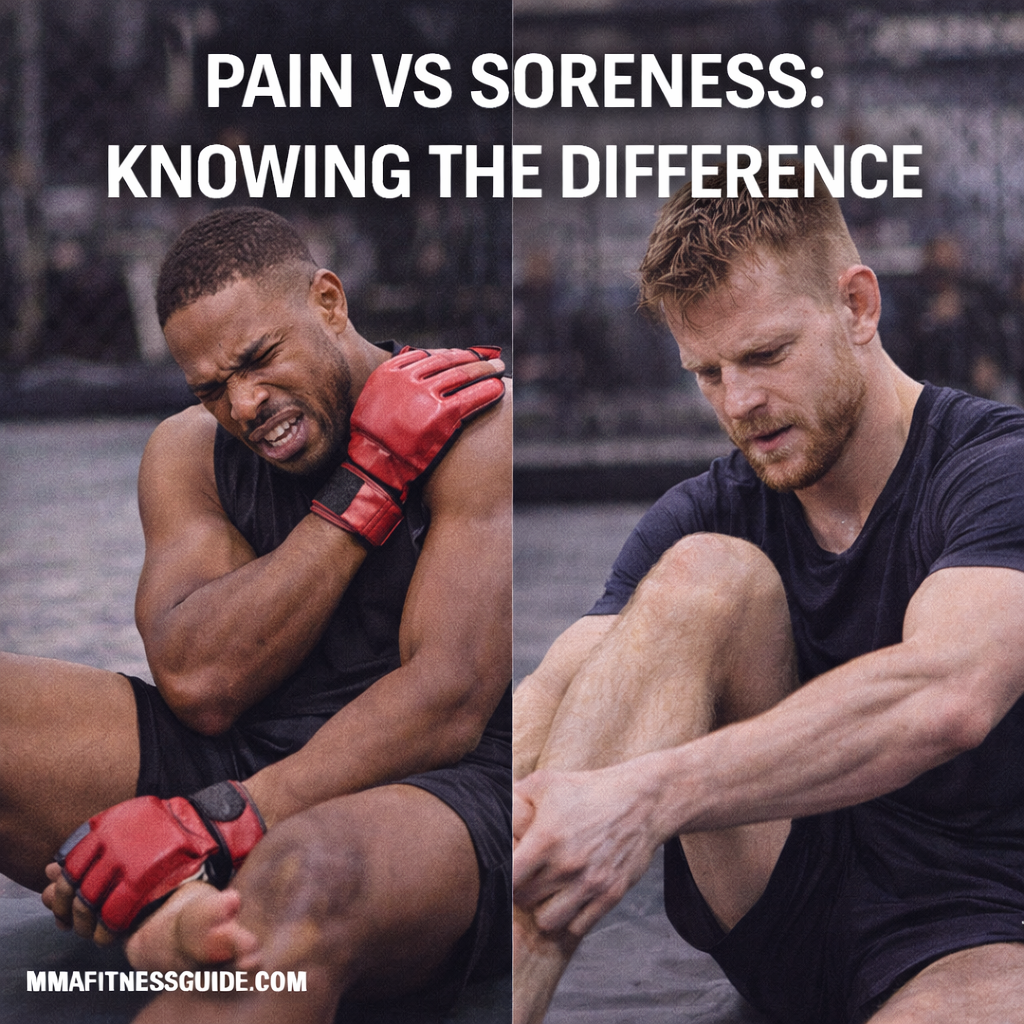
Split image of MMA athletes showing pain versus soreness, with one fighter holding an injured shoulder and another stretching muscles in a gym.
MMA athletes compare pain versus soreness to understand when to push training and when to prioritize recovery.

Discomfort is part of MMA training—but not all discomfort is the same. Understanding the difference between pain and soreness is essential for staying healthy, progressing consistently, and avoiding injuries that can sideline you for weeks or months. Many fighters push through warning signs simply because they don’t know what their body is telling them.

This article explains the difference between pain and soreness, how each feels, when it’s safe to train, and when it’s time to back off.

Continue reading “Pain vs Soreness: Knowing the Difference”

Returning to Sparring Safely After Injury

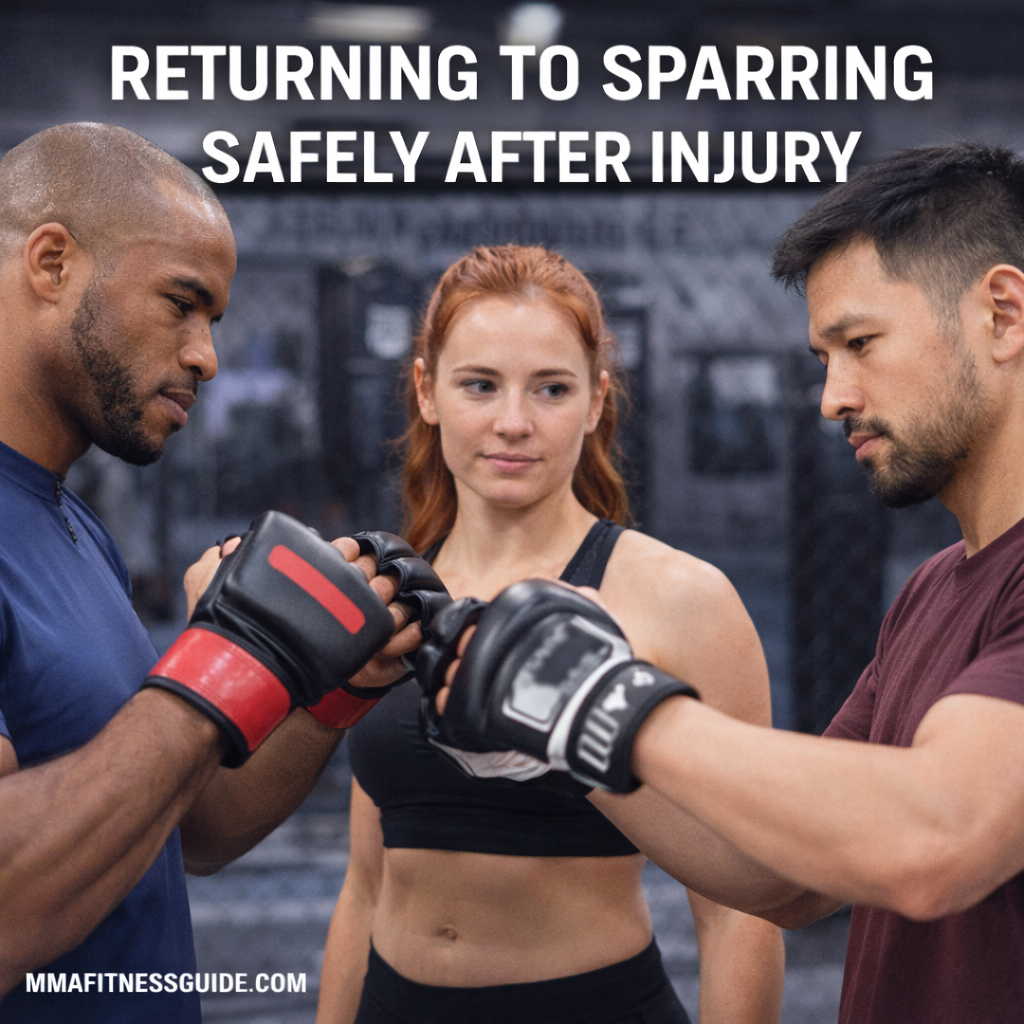
MMA athletes preparing to spar in a gym, demonstrating a safe and respectful return to sparring after injury.
MMA fighters prepare for controlled sparring as part of a safe return-to-training process after injury.

Returning to sparring after an injury is one of the most critical—and risky—phases of recovery for MMA athletes. Even when pain has subsided, the body and nervous system may not be fully prepared for live contact. Rushing back too soon increases the chance of reinjury, compensations, and long-term setbacks.

This guide explains how to return to sparring safely after injury, outlining smart progression steps, warning signs to watch for, and best practices that help fighters regain confidence without compromising recovery.

Continue reading “Returning to Sparring Safely After Injury”

Bruise and Swelling Management Basics

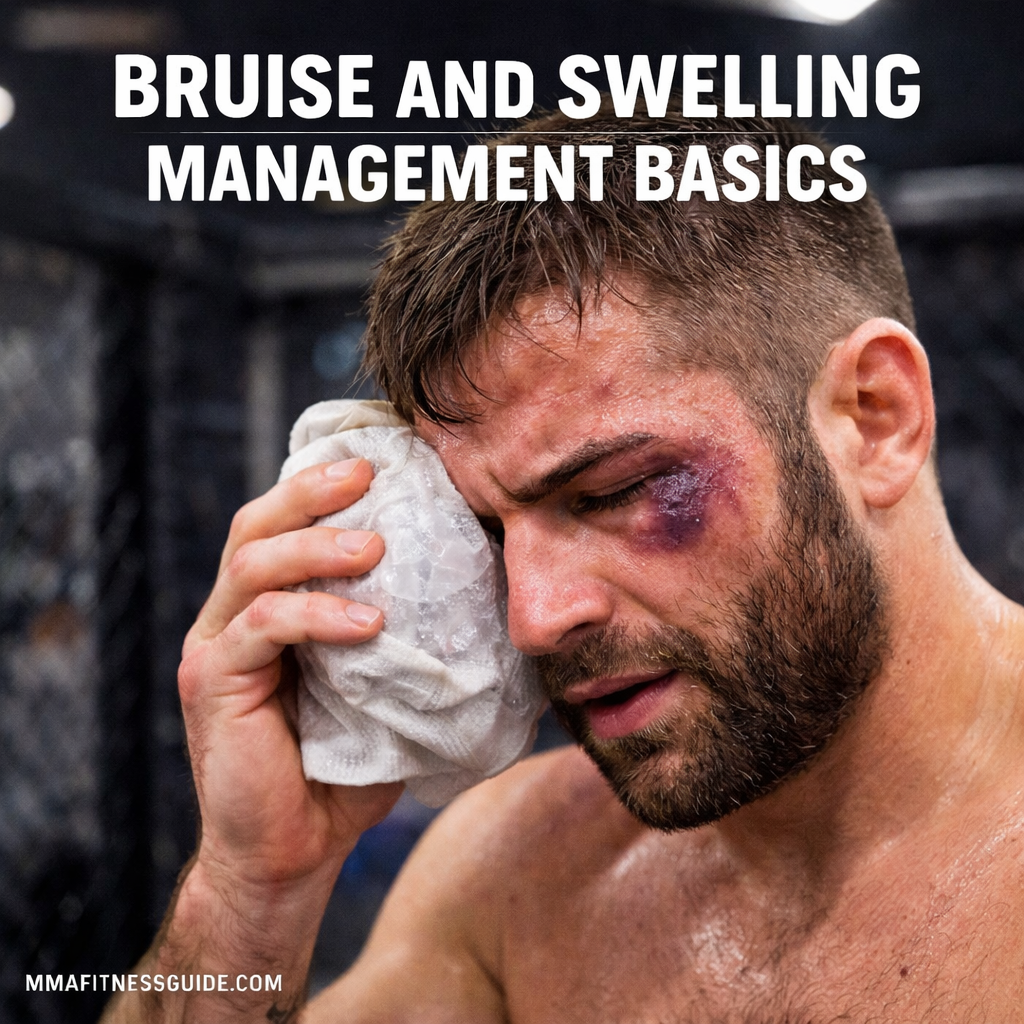
MMA fighter applying an ice pack to a bruised and swollen eye, demonstrating basic bruise and swelling management after training.
An MMA athlete uses cold therapy to manage facial bruising and swelling after intense training.

Bruises and swelling are common in MMA, boxing, Muay Thai, wrestling, and other combat sports. Strikes, takedowns, and clinch work all place stress on muscles, blood vessels, and soft tissue. While most bruises are minor, poor management can lead to prolonged pain, stiffness, reduced mobility, and delayed training return.

This guide covers bruise and swelling management basics, explaining what causes them, how to treat them effectively, and when to modify training to support proper recovery.

Continue reading “Bruise and Swelling Management Basics”

MMA: Sleep Better During Recovery

MMA athletes resting and sleeping after training, highlighting the importance of quality sleep for recovery, healing, and long-term performance.
MMA athletes prioritizing quality sleep during recovery to support healing, nervous system regulation, and consistent training.

Introduction

Sleep is one of the most powerful recovery tools available to MMA athletes—and one of the most overlooked. Hard training, late-night sessions, adrenaline from sparring, and mental stress can all disrupt sleep quality. When sleep suffers, recovery slows, injury risk increases, and performance declines.

Learning how to sleep better during recovery is essential for staying healthy, consistent, and competitive in MMA.

Continue reading “MMA: Sleep Better During Recovery”

Mobility Routines for Long-Term Fitness

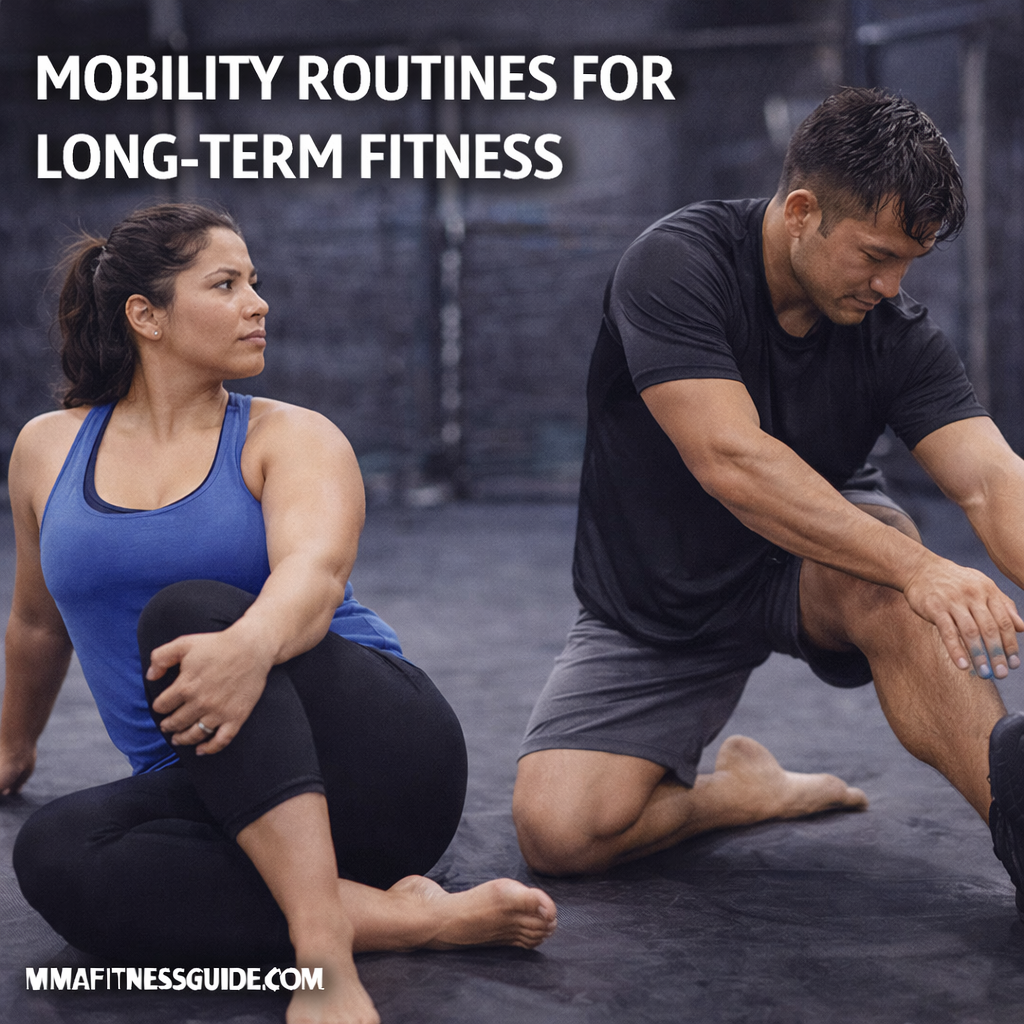
Athletes performing controlled mobility exercises on a gym mat to improve joint health, flexibility, and long-term fitness.
Athletes practicing mobility routines that support joint health, movement quality, and long-term fitness.

Introduction

Mobility is one of the most important—and most neglected—components of long-term fitness. While strength and conditioning often get the spotlight, mobility is what allows the body to keep training safely year after year. Without it, joints stiffen, movement quality declines, and injury risk increases.

A consistent mobility routine supports joint health, movement efficiency, and recovery, making it essential for anyone who wants to stay active long term.

Continue reading “Mobility Routines for Long-Term Fitness”

Breathwork During Rehab Sessions

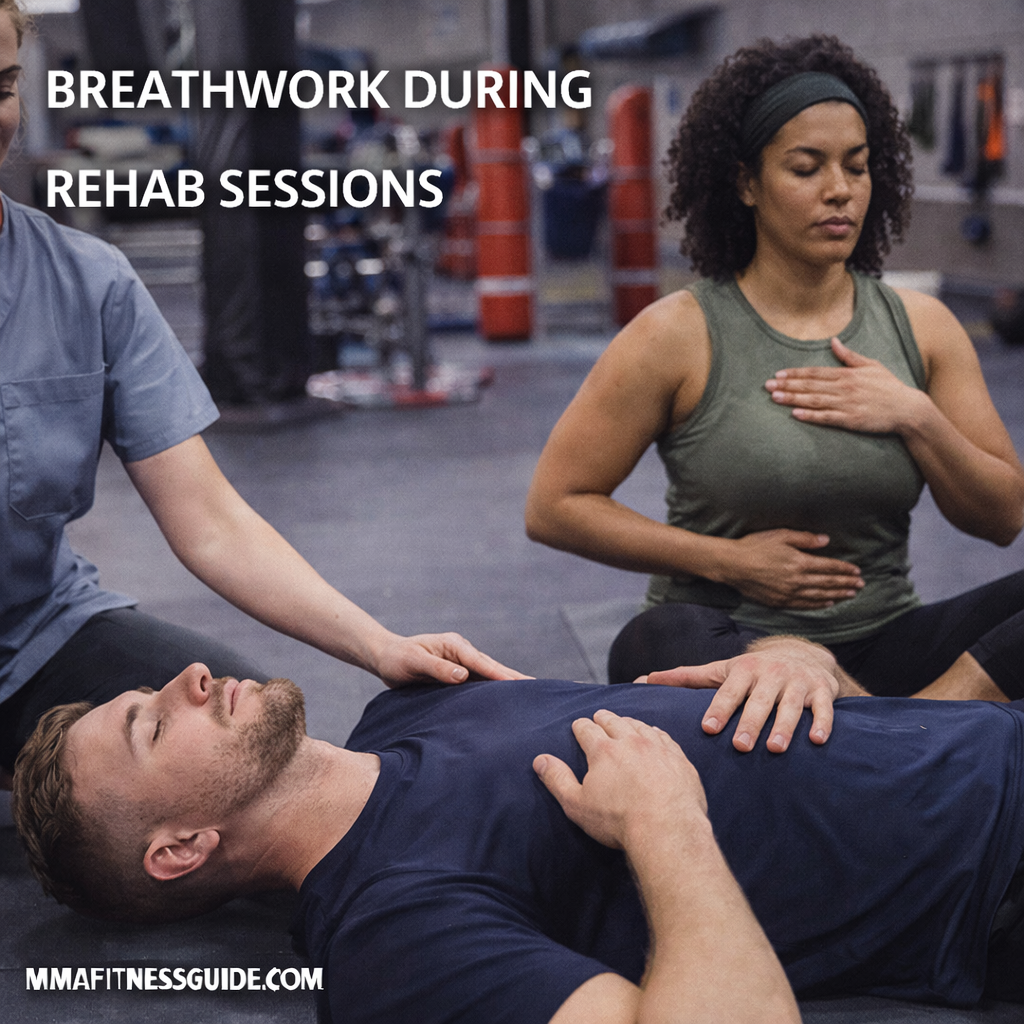
Athlete practicing guided breathwork during a rehabilitation session in a gym to support recovery, relaxation, and movement control.
An athlete using guided breathwork during a rehab session to support recovery, nervous system regulation, and safe return to training.

Introduction

Rehabilitation is not just about exercises—it’s about how the body heals, adapts, and regains confidence after injury. One of the most overlooked tools in rehab is breathwork. Proper breathing techniques can significantly improve recovery quality, reduce pain, and help athletes reconnect with movement safely.

For MMA fighters and active individuals, integrating breathwork into rehab sessions supports both physical healing and mental resilience.

Continue reading “Breathwork During Rehab Sessions”

Ear Care for Grapplers: Preventing Cauliflower Ear

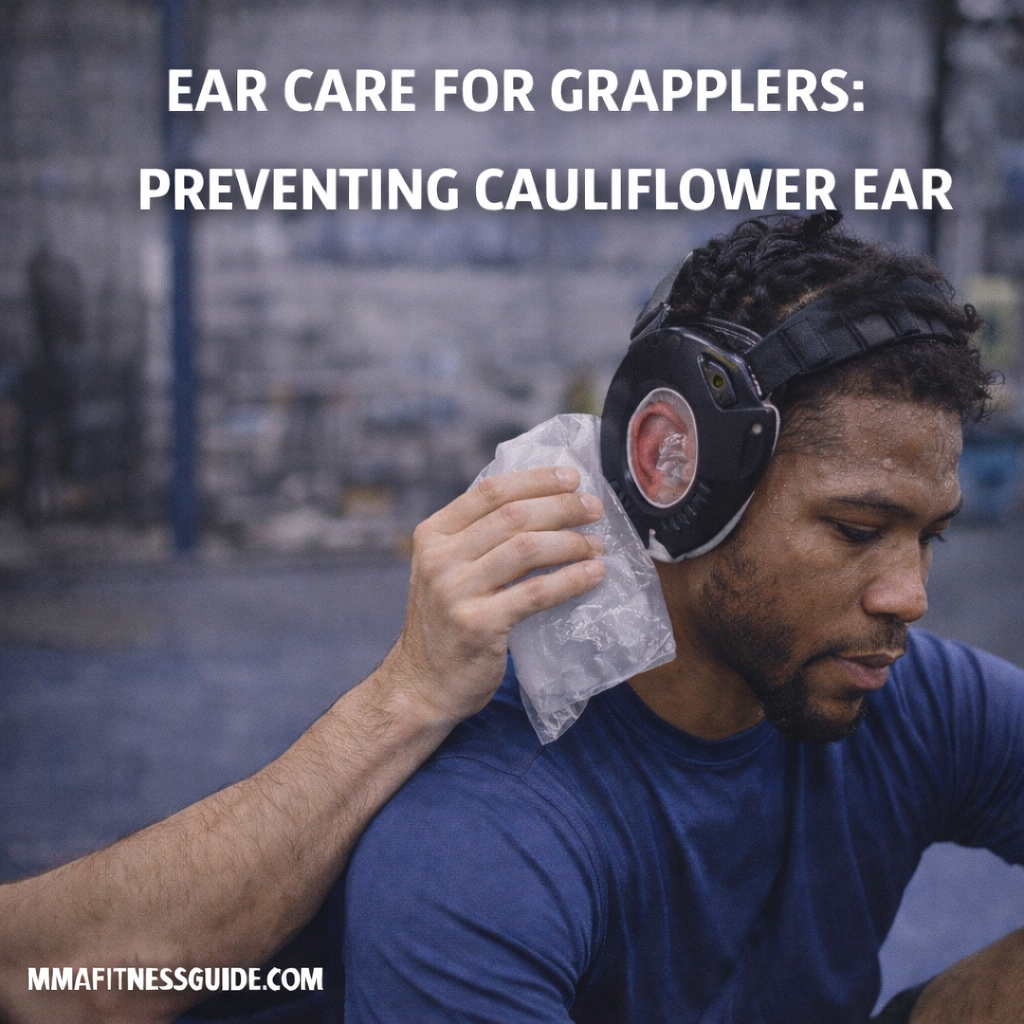
Male grappler applying an ice pack to a swollen ear while wearing headgear to prevent cauliflower ear during training.
A grappler treating early ear swelling and using protective headgear to help prevent cauliflower ear.

Introduction

Cauliflower ear is one of the most common—and most misunderstood—injuries in grappling sports like MMA, wrestling, BJJ, and judo. While some athletes view it as a badge of honor, untreated ear damage can lead to chronic pain, infection, hearing issues, and permanent deformity.

Proper ear care helps grapplers protect their health, extend their careers, and make informed decisions about prevention and treatment.

Continue reading “Ear Care for Grapplers: Preventing Cauliflower Ear”

Microfractures and Bone Stress in Fighters

MMA fighter examining shin pain during training, illustrating microfractures and bone stress injuries common in combat sports.
An MMA fighter addressing shin pain during training, highlighting the risks of microfractures and bone stress injuries.

Introduction

Fighters place extreme and repeated stress on their bodies. Striking, grappling, roadwork, and high-volume training create constant impact forces that bones must absorb and adapt to. When recovery falls behind workload, these stresses can accumulate into microfractures and bone stress injuries.

Understanding how microfractures develop, how to recognize early warning signs, and how to prevent progression is critical for long-term durability and career longevity in MMA and combat sports.

Continue reading “Microfractures and Bone Stress in Fighters”

The Psychology of Injury and Comebacks

MMA fighter sitting on the gym floor recovering from injury, reflecting on the mental challenges of injury and comeback.
An MMA athlete coping with injury and preparing mentally for a comeback after time away from training.

Introduction

Injuries affect more than just the body—they challenge identity, confidence, and motivation. For MMA athletes, time away from training or competition can feel isolating and mentally exhausting. While physical rehabilitation is essential, the psychological side of injury and comeback often determines how well an athlete truly returns.

Understanding the mental process behind injury recovery helps fighters rebuild confidence, manage fear, and come back stronger both mentally and physically.

Continue reading “The Psychology of Injury and Comebacks”