Build Your Engine Before You Step Into the Cage
MMA can expose poor conditioning quickly. Your punches lose speed, your stance gets sloppy, and even simple combinations become harder when you’re struggling to catch your breath.
Beginners can start addressing that with straightforward cardio sessions built around walking, running, cycling, jump rope, shadowboxing, bag work, and bodyweight exercises.
You don’t have to use all of them. Start with a few activities you can recover from consistently, then increase the workload as your conditioning improves.
Why Cardio Matters for Beginners
MMA repeatedly shifts between periods of movement, explosive effort, and brief opportunities to recover. Cardiovascular training helps your body handle those changing demands.
Better conditioning can support:
- Endurance – maintaining useful output as a workout or round continues
- Recovery between efforts – regaining control of your breathing between rounds or hard exchanges
- Training capacity – completing more technical work before fatigue begins affecting your movement
- Pacing – learning how hard you can work without exhausting yourself immediately
Cardio doesn’t replace MMA practice. It gives you more conditioning to work with when you’re striking, wrestling, grappling, or drilling.
Three Ways to Structure Cardio
Rather than doing every cardio session at the same pace, beginners can train at different intensities.
1. Easy Steady Cardio
Walking, easy jogging, cycling, swimming, or similar activities can be performed at a sustainable pace.
Example:
20–40 minutes at an intensity where you can still speak in short sentences without struggling for breath.
These sessions can help build general aerobic endurance without adding another extremely demanding workout to your week.
2. Moderate Cardio
Jump rope, shadowboxing, light bag work, and faster cycling can raise the intensity while remaining controlled.
Example:
- 3 minutes of work
- 1 minute of recovery
- Repeat for 3–5 rounds
This structure also introduces beginners to timed rounds.
3. High-Intensity Intervals
Intervals alternate short periods of harder work with recovery.
Activities might include:
- Running
- Cycling
- Heavy bag work
- Assault bike
- Rowing
A beginner could start with short hard efforts rather than immediately performing all-out sprints.
High-intensity sessions create more fatigue, so they should be used carefully alongside MMA classes, strength training, and other conditioning.
1. Jump Rope Workout
Jump rope combines cardiovascular work with repeated foot and ankle movement, coordination, and rhythm.
Beginner Routine
- Jump rope for 1 minute
- Rest for 30–60 seconds
- Repeat for 6–10 rounds
If one minute is too difficult, shorten the work period.
Keep your jumps low and relaxed instead of trying to jump as high or fast as possible.
As your coordination improves, you can experiment with:
- Alternating feet
- High knees
- Side-to-side movement
- Double unders
Add variations gradually. Calves and lower legs may need time to adapt to the repeated jumping.
2. Shadowboxing Rounds
Shadowboxing allows you to combine conditioning with striking movement without hitting a target.
Beginner Routine
- Shadowbox for 2–3 minutes
- Rest for 1 minute
- Complete 3–5 rounds
Instead of throwing nonstop punches, move as you would during technical practice.
Work on:
- Maintaining your stance
- Moving forward and backward
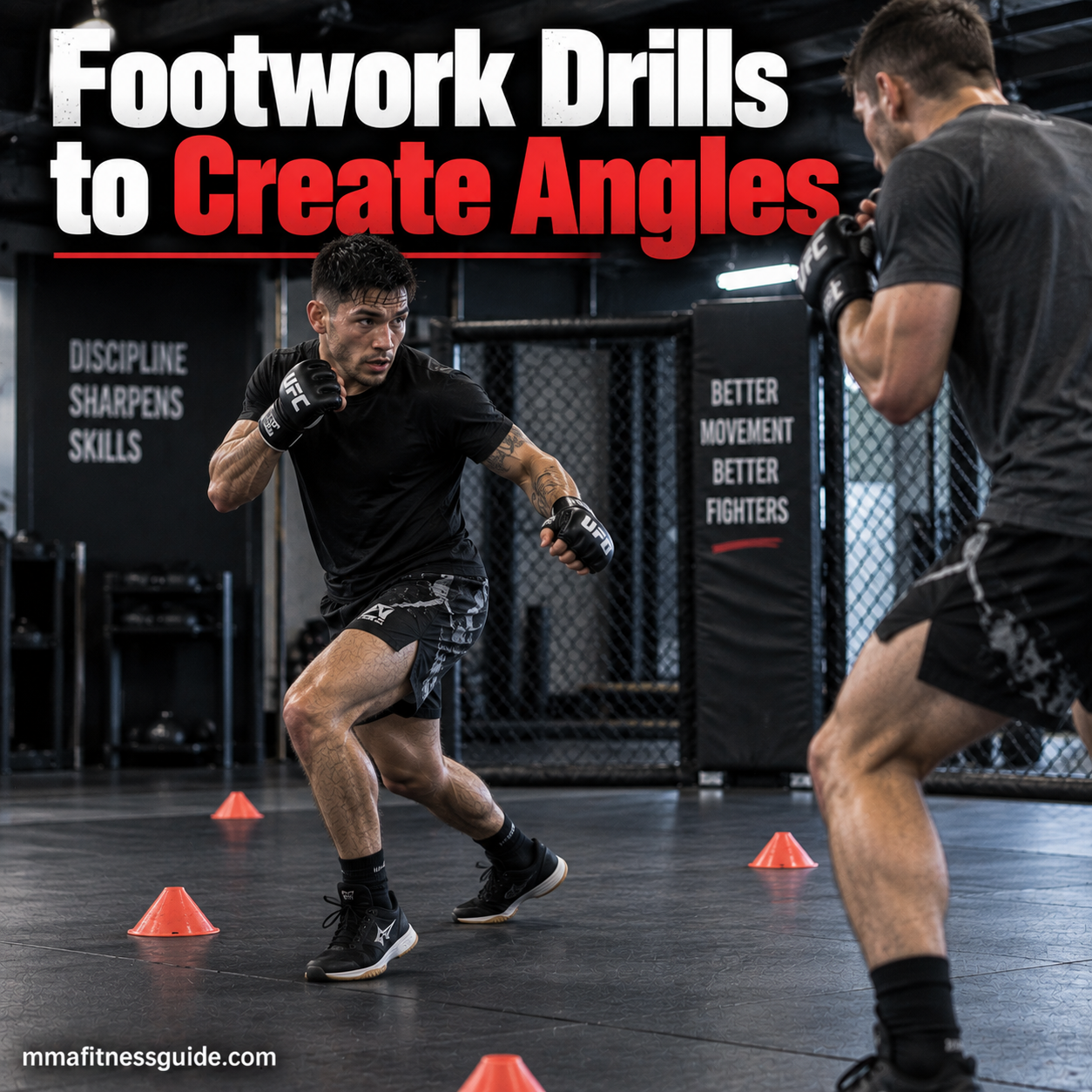
- Changing angles
- Throwing controlled combinations
- Returning your hands to position
- Breathing during combinations
If your technique becomes increasingly sloppy, reduce your pace. Turning shadowboxing into frantic arm swinging defeats much of its technical value.
3. Light-to-Moderate Heavy Bag Work
Heavy bag rounds can combine striking practice with cardiovascular conditioning.
Beginner Workout
- 2–3 minutes of controlled bag work
- 1 minute of recovery
- Complete 3 rounds
Use combinations you already understand rather than trying to throw as hard as possible.
For example:
- Jab-cross
- Jab-cross-hook
- Jab followed by movement
- Simple punch-kick combinations you’ve learned in training
Keep your stance organized and breathe as you strike.
As your conditioning and technique improve, gradually add rounds before dramatically increasing the intensity.
4. Bodyweight Cardio Circuit
Bodyweight circuits can raise your heart rate while training several movement patterns in one session.
Sample Circuit
- Bodyweight squats – 10–15 reps
- Push-ups – 5–10 reps
- Mountain climbers – 20 seconds
- Reverse lunges – 5–10 per side
- Rest – 60 seconds
- Repeat for 2–4 rounds
Burpees or jump squats can be added later if appropriate, but beginners don’t need every exercise to be explosive.
Keep the movements controlled. If fatigue causes your technique to deteriorate, increase the recovery period or reduce the number of repetitions.
5. Running, Walking, or Cycling
Steady aerobic work provides an easy way to accumulate conditioning outside MMA practice.
Beginner Approach
Aim for:
- 2–3 sessions per week
- Approximately 20–30 minutes initially
- An easy or moderate pace
- Recovery between harder sessions
Walking briskly is a valid starting point if you’re not accustomed to running.
Cycling can also be useful when you want cardiovascular work without the same repeated impact associated with running.
If you eventually add hills, faster runs, or intervals, introduce them gradually rather than changing your entire program at once.
6. Use a Round Timer
A round timer gives ordinary cardio a structure that resembles combat-sports training.
Example
Choose one activity:
- Shadowboxing
- Jump rope
- Heavy bag
- Stationary bike
- Bodyweight exercises
Then perform:
3 minutes work → 1 minute recovery → repeat for 3–5 rounds
The goal isn’t to go at maximum intensity for every second.
Practice controlling your pace so you can finish the final round with reasonable technique instead of exhausting yourself during the first one.
As your conditioning improves, you can gradually increase the number of rounds or the intensity within them.
7. Give Yourself Time to Recover
Adding cardio to MMA means adding another source of training stress.
After a cardio session, basic recovery can include:
- Walking for a few minutes while your breathing settles
- Drinking enough fluids
- Eating appropriately for your overall activity level
- Getting adequate sleep
- Leaving enough time between demanding workouts
Gentle stretching can be included if it feels good or helps maintain your mobility, but it isn’t necessary to treat every cardio session as something you need to “undo” afterward.
Pay attention to how your cardio affects your MMA sessions. If your legs are constantly exhausted, your striking feels unusually slow, or you’re struggling to recover between workouts, reduce the additional conditioning.
A Simple Beginner Cardio Week
You don’t need to perform every workout in this article.
A basic week could look like:
Monday: MMA class
Tuesday: 20–30 minutes easy cardio
Wednesday: Rest or MMA class
Thursday: 3–5 rounds of jump rope or shadowboxing
Friday: MMA class
Saturday: Easy walk, jog, or bike ride
Sunday: Rest
Adjust the schedule around the amount of MMA and strength training you’re already doing.
Three MMA classes plus three hard conditioning sessions can be excessive for someone who has only recently started exercising.
Key Takeaways
- Start with cardio sessions you can consistently recover from.
- Use easy aerobic work to build general endurance.
- Shadowboxing, jump rope, and bag rounds can combine conditioning with MMA-related movement.
- Treat high-intensity intervals as hard workouts rather than adding them casually after every session.
- Use timed rounds to practice pacing instead of trying to maintain maximum intensity.
- Increase duration, frequency, or intensity gradually rather than increasing everything at once.
- Reduce additional cardio if it begins interfering with the quality of your MMA training.
Final Thoughts
A beginner’s cardio program can be surprisingly simple: one or two easy aerobic sessions combined with a few controlled rounds of jump rope, shadowboxing, or bag work.
After several weeks, the difference often shows up during MMA practice rather than on a treadmill. You may recover your breathing sooner between rounds, maintain cleaner technique when tired, and finish sessions without fading as quickly.
Build from there. Conditioning that you can repeat week after week is far more useful than one brutal workout that leaves you too exhausted to train properly for the next several days.