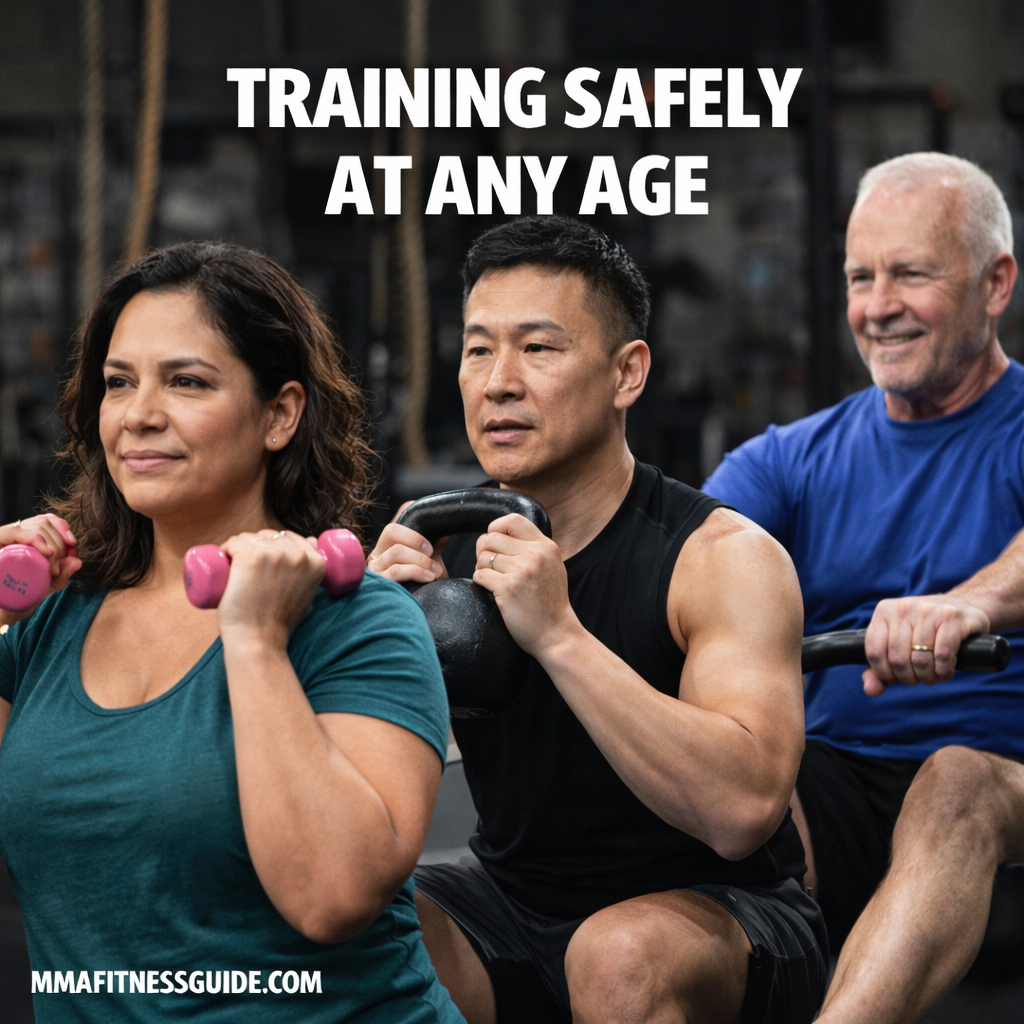
Training Safely at Any Age

Older adults training safely in a gym with strength exercises, focusing on proper form.
Adults of different ages training safely with strength exercises in a gym environment.

Introduction

Starting or continuing fitness training at any age is one of the best investments you can make in your long-term health. Whether you are new to exercise, returning after time off, or adapting your training as you get older, safety should always come first.

Training safely does not mean training lightly. It means understanding your body, respecting recovery, and building strength in a way that supports longevity, confidence, and consistent progress.

Continue reading “Training Safely at Any Age”
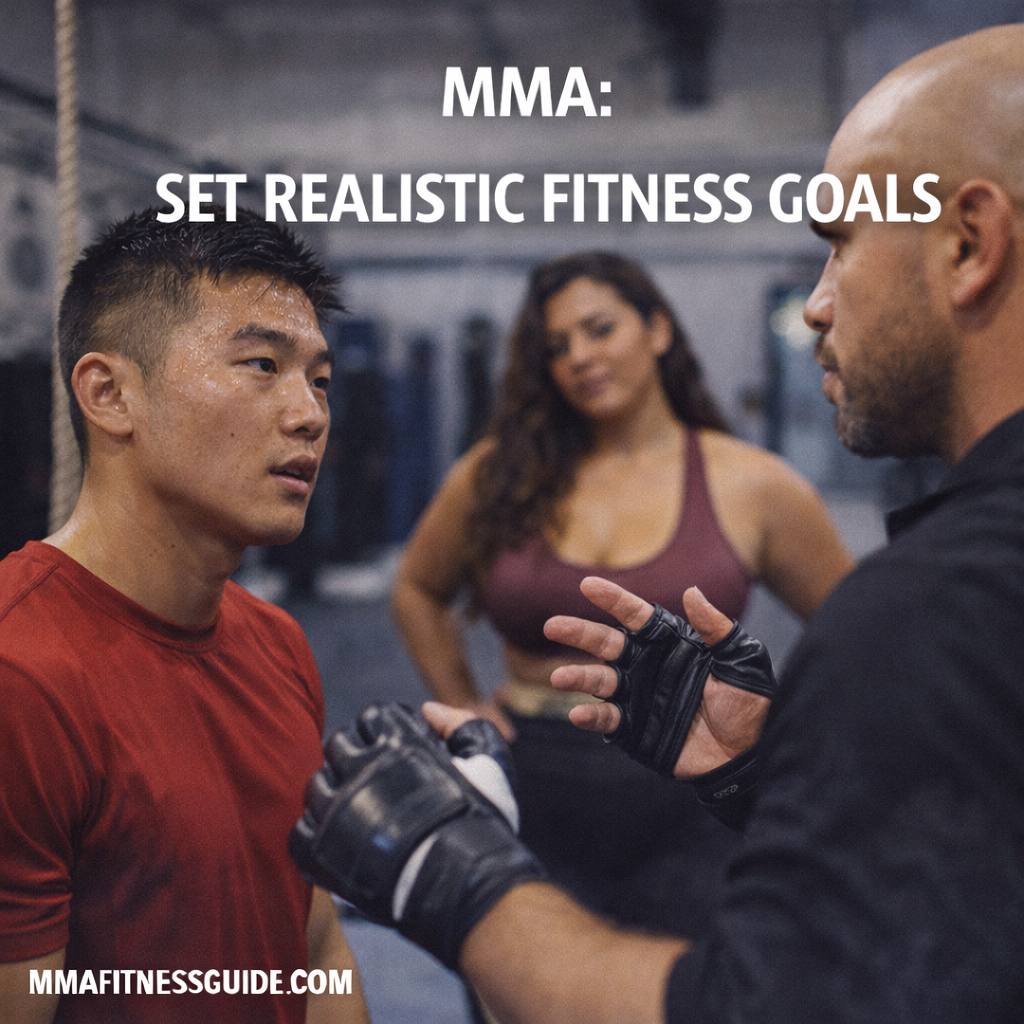
MMA: Set Realistic Fitness Goals

Asian male MMA beginner listening to a coach in a gym while a female athlete stands in the background, representing realistic fitness goal setting in MMA.
An MMA beginner receiving guidance on setting realistic fitness goals during training.

Starting MMA training is exciting, but many beginners struggle with one key issue: setting realistic fitness goals. New athletes often expect rapid transformation, compare themselves to experienced fighters, or push too hard too fast. This approach usually leads to frustration, burnout, or injury.

Setting realistic fitness goals helps beginners stay consistent, motivated, and healthy while building a strong foundation for long-term progress. This guide explains how to set MMA fitness goals that actually work — and how to adjust them as you grow.

Continue reading “MMA: Set Realistic Fitness Goals”

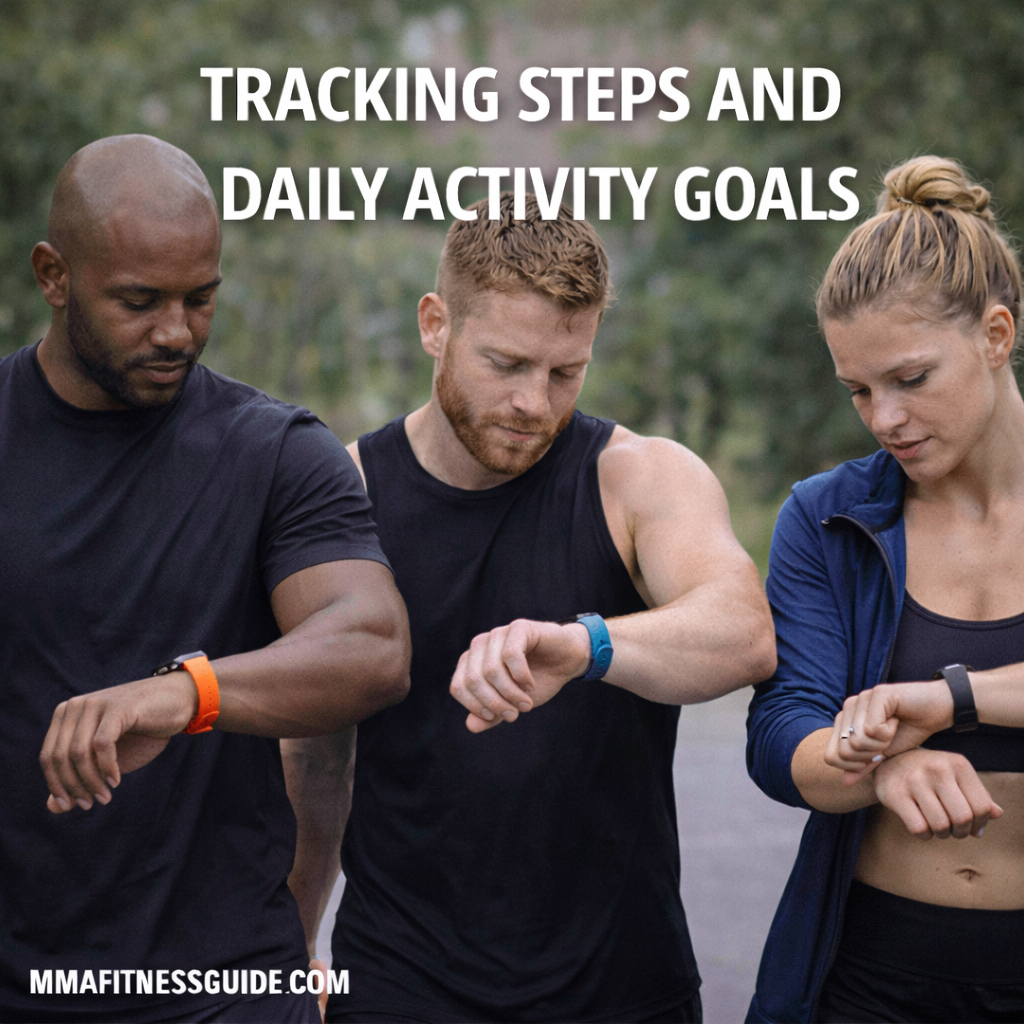
Tracking Steps and Daily Activity Goals

Three MMA fighters checking fitness trackers during a walk, illustrating step tracking and daily activity goals for combat athletes.
MMA athletes monitoring daily steps and activity levels as part of overall conditioning and recovery.

For beginners starting a fitness routine, consistency matters more than intensity. One of the simplest and most effective ways to stay consistent is tracking daily steps and activity goals. You don’t need intense workouts every day to make progress — steady movement builds habits, supports recovery, and improves overall health.

This guide explains how tracking steps and daily activity helps beginners stay active, how to set realistic goals, and how to use step tracking without overcomplicating fitness.

Continue reading “Tracking Steps and Daily Activity Goals”

Hydration Basics for New Athletes

Two athletes drinking water in a gym to stay hydrated during training, illustrating hydration basics for new athletes.
New athletes hydrating with water bottles during a training session.

Hydration is one of the most important — and most overlooked — parts of athletic performance. For new athletes, especially those starting MMA, boxing, grappling, or general fitness training, proper hydration directly affects energy levels, endurance, recovery, and safety.

This guide covers hydration fundamentals in simple, practical terms so new athletes can build healthy habits from day one.

Continue reading “Hydration Basics for New Athletes”

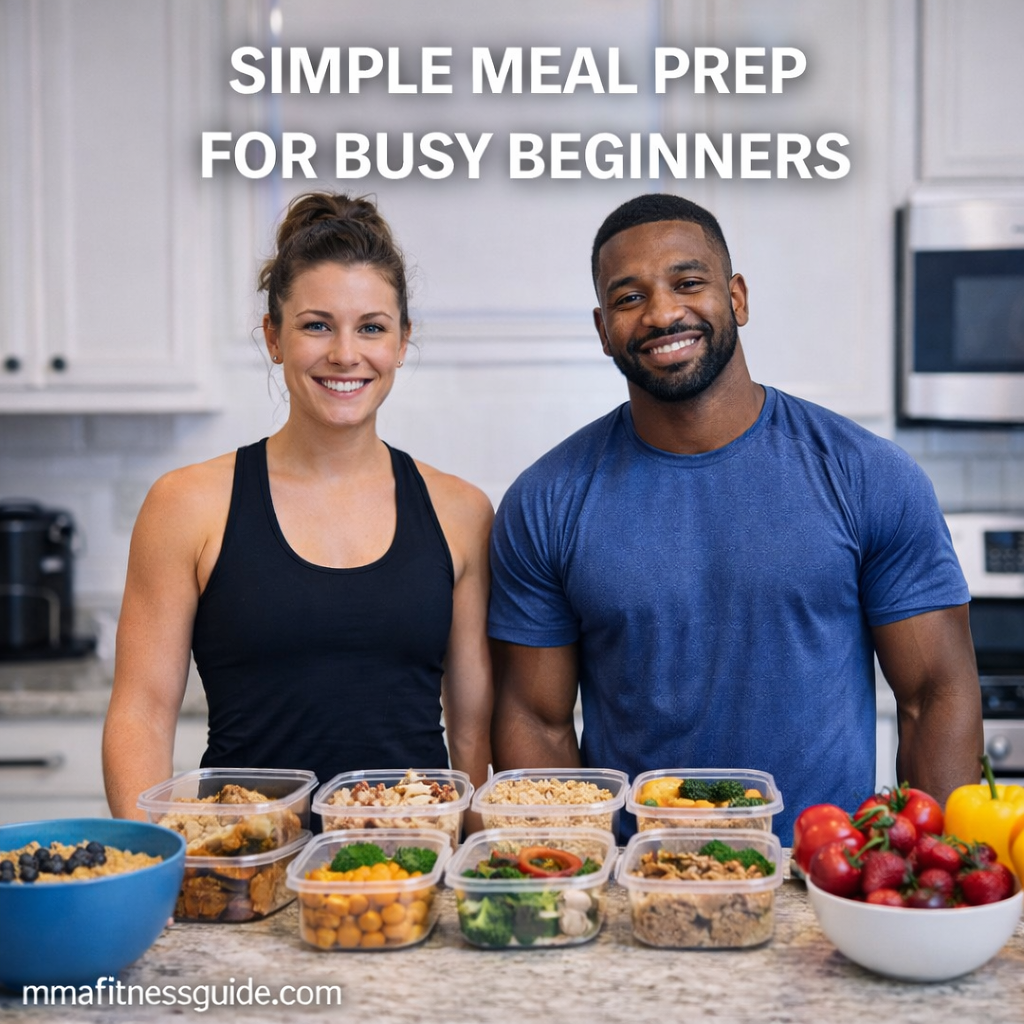
Simple Meal Prep for Busy Beginners

Male and female fitness beginners preparing healthy meals in a kitchen, showing simple meal prep for busy schedules.
Two fitness beginners preparing simple, healthy meals in advance to support consistent nutrition and training habits.

Eating well consistently is one of the hardest challenges for fitness beginners—especially those balancing work, family, and training. Many people start strong but fall off when time runs short, leading to skipped meals, poor food choices, or inconsistent energy levels.

Simple meal prep solves this problem. It doesn’t require complicated recipes, hours in the kitchen, or strict dieting. With a few basic strategies, busy beginners can prepare meals that support training, recovery, and overall health—without stress.

Continue reading “Simple Meal Prep for Busy Beginners”

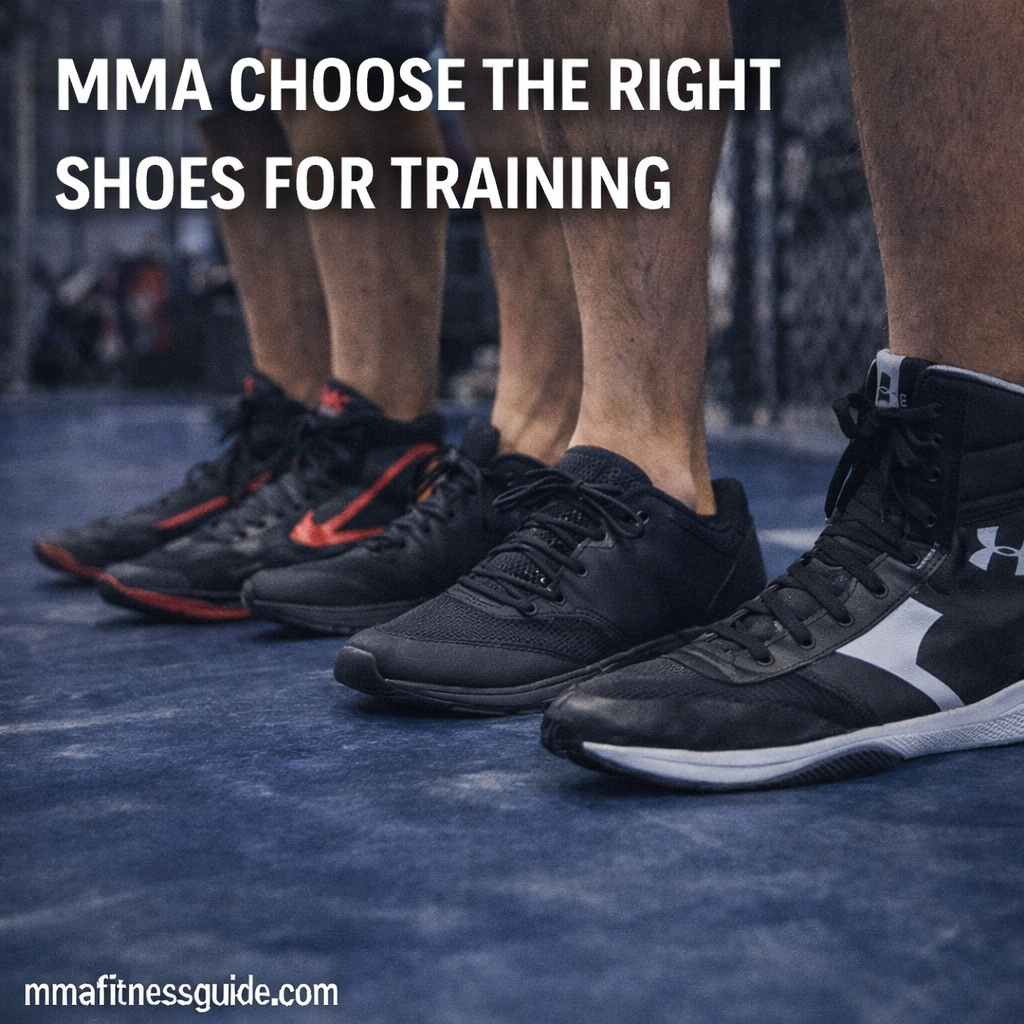
MMA: Choose the Right Shoes for Training

Different types of MMA training shoes on a gym floor, including cross-training, wrestling, and boxing shoes used for conditioning and fight training.
Various MMA training shoes shown on a gym floor, highlighting how proper footwear supports balance, footwork, and injury prevention.

Choosing the right shoes for MMA training is one of the most overlooked decisions beginners make. While MMA is often practiced barefoot for grappling, many training sessions involve conditioning, strength work, bag drills, and movement that require proper footwear. Wearing the wrong shoes can affect balance, footwork, comfort, and even increase injury risk.

This guide breaks down how beginners can choose the right MMA training shoes based on training type, foot support needs, and long-term comfort—without overcomplicating the process.

Continue reading “MMA: Choose the Right Shoes for Training”

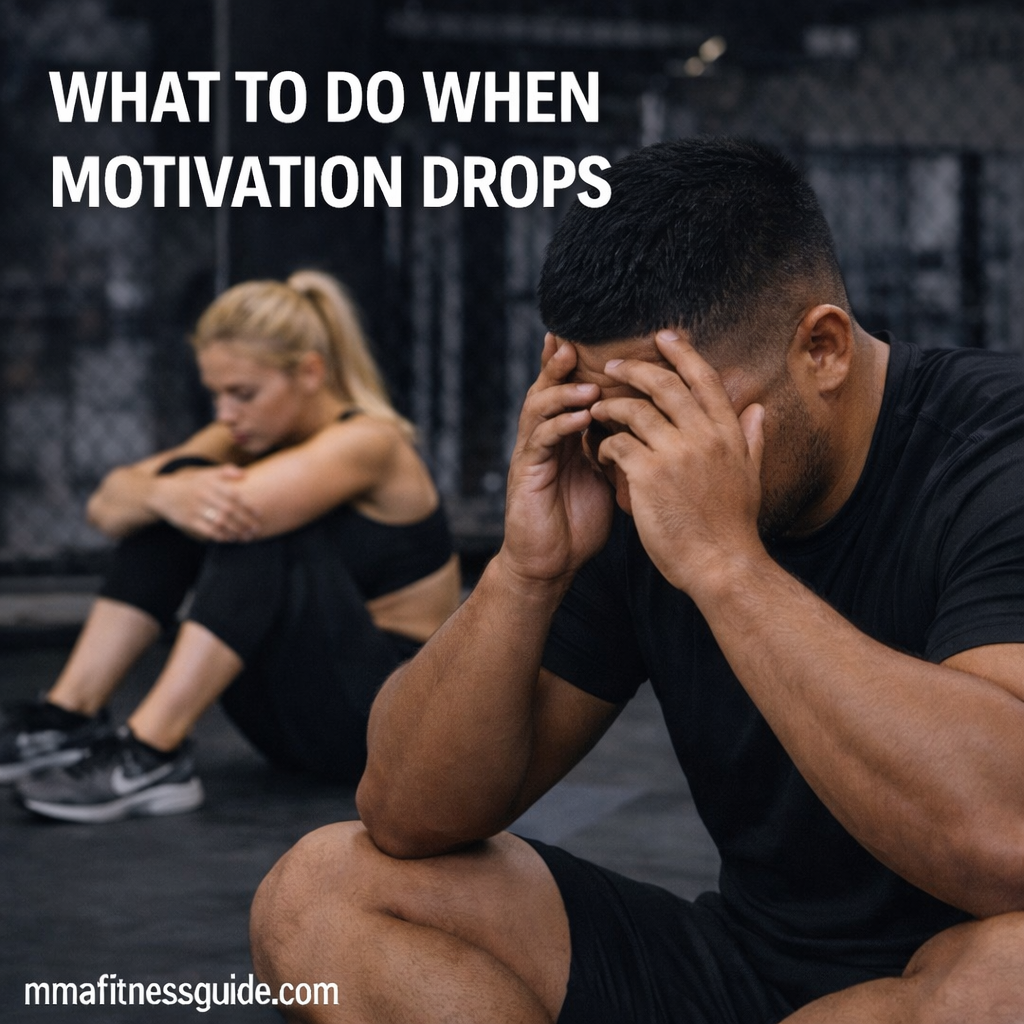
What to Do When Motivation Drops

MMA fighter sitting exhausted in the gym while a female athlete rests in the background, representing a drop in motivation.
MMA athletes experiencing a motivation slump during training, highlighting the mental challenges beginners face.

Every beginner experiences it. You start training with excitement and energy, then one day motivation disappears. Work feels heavier, soreness lingers, and training suddenly feels optional instead of exciting.

This doesn’t mean you’re failing—or that MMA isn’t for you. Motivation is unreliable by nature. What matters is knowing how to respond when it drops so you don’t lose momentum entirely. This guide breaks down why motivation fades and what beginners can do to stay consistent even when enthusiasm is low.

Continue reading “What to Do When Motivation Drops”

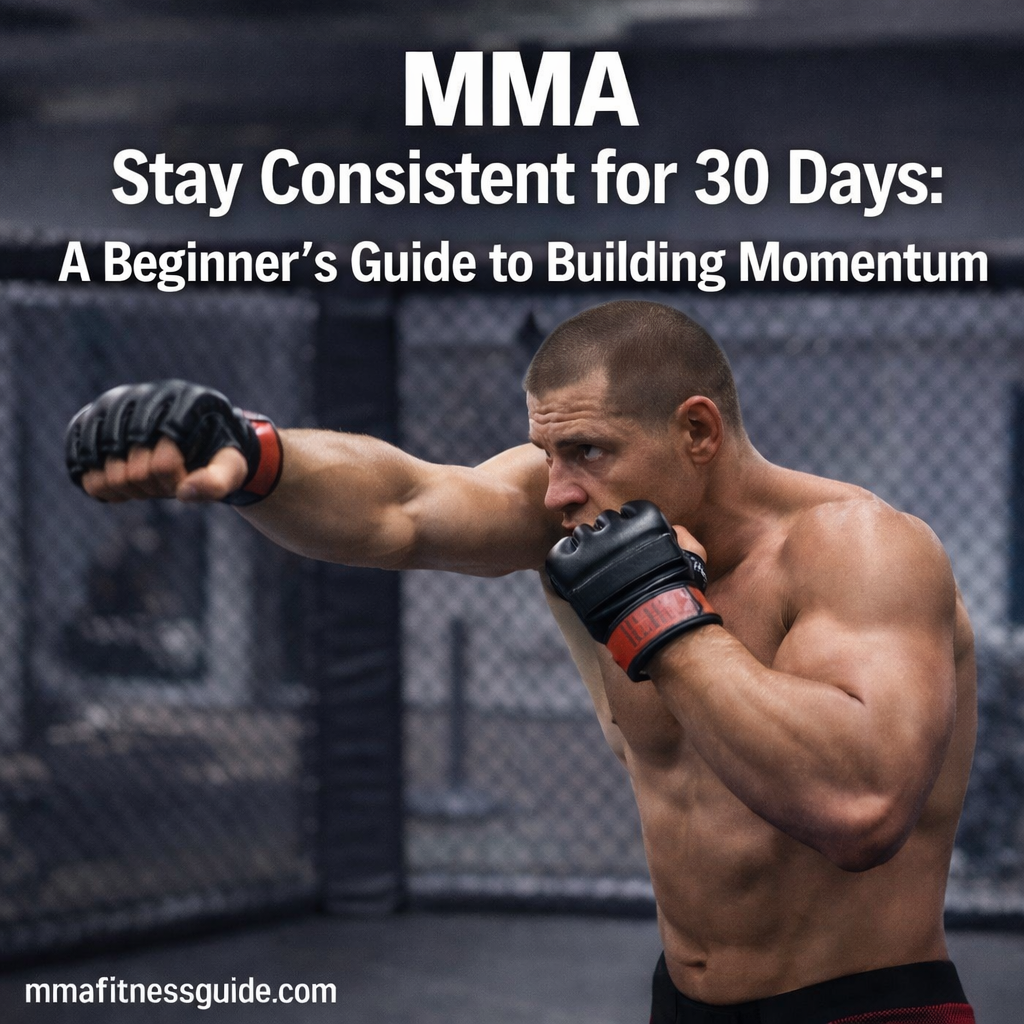
MMA: Stay Consistent for 30 Days: A Beginner’s Guide to Building Momentum

MMA fighter training alone in the gym, representing a beginner’s guide to staying consistent with MMA training for 30 days.
An MMA athlete training with focus and discipline, illustrating how beginners can build momentum through 30 days of consistent practice.

Starting MMA training is exciting—but staying consistent is where most beginners struggle. Motivation is high at the beginning, then life, soreness, self-doubt, and schedule conflicts slowly chip away at momentum.

The good news is this: you don’t need perfection to succeed. You only need consistency. This 30-day MMA consistency guide is designed specifically for beginners who want to build habits, confidence, and discipline without burnout.

Continue reading “MMA: Stay Consistent for 30 Days: A Beginner’s Guide to Building Momentum”

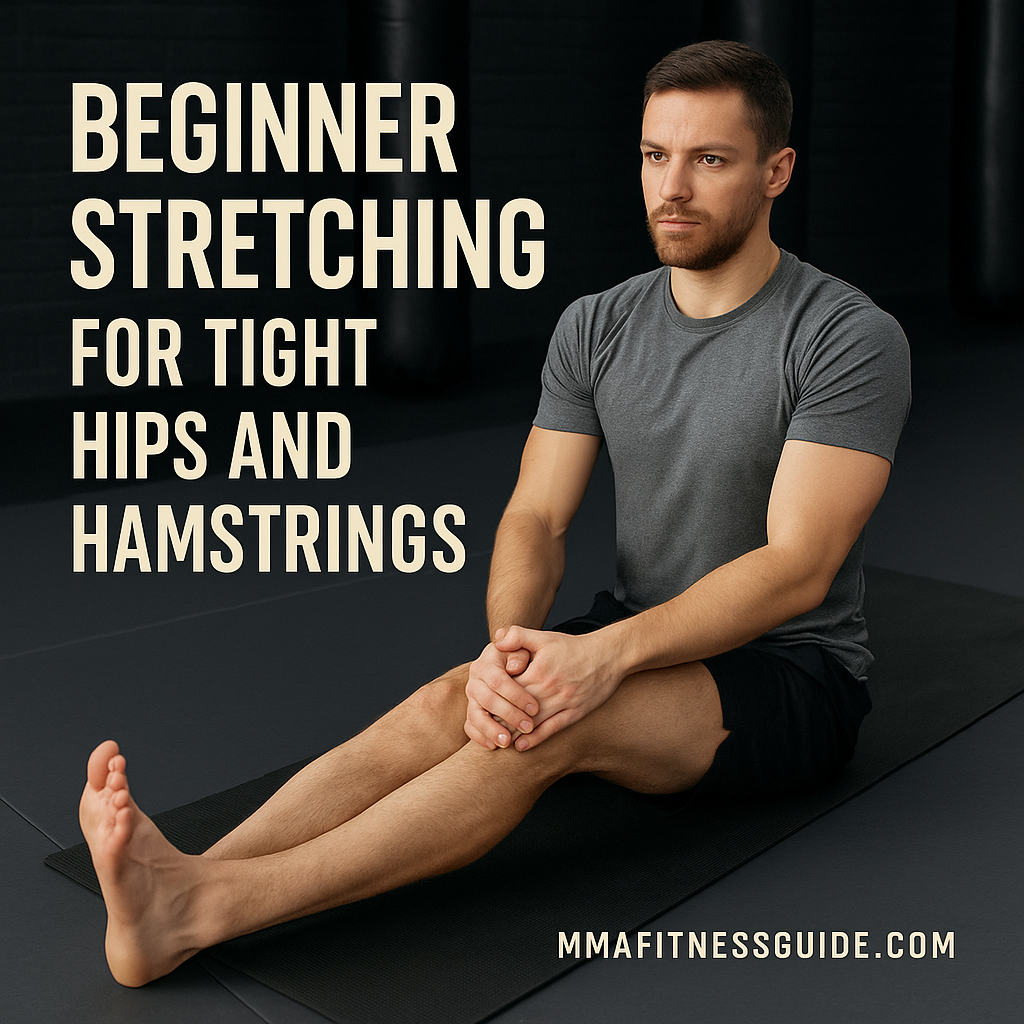
Beginner Stretching for Tight Hips and Hamstrings

Male athlete seated on a gym mat performing a beginner hip and hamstring stretch with instructional text on the left side.
Male athlete demonstrating a beginner-friendly hip and hamstring stretch with instructional text overlay.

Why Tight Hips and Hamstrings Are So Common

If you’re new to fitness or MMA-style training, chances are you’ve felt tightness in your hips or hamstrings. Sitting for long periods, lack of movement variety, or jumping too quickly into high-intensity workouts all contribute to stiffness.

Continue reading “Beginner Stretching for Tight Hips and Hamstrings”

MMA: Read Your Body’s Signals

A focused female athlete standing in an MMA gym with her hand on her hip, wearing teal shorts and a black tank top, shown with the text “MMA Read Your Body’s Signals” and the mmafitnessguide.com watermark.
A fighter standing confidently in an MMA gym, highlighting the importance of learning to read your body’s signals during training.

Learning to read your body’s signals is one of the most important skills for anyone beginning MMA training. Whether you’re drilling technique, doing conditioning rounds, or stepping into your first sparring session, your body is always giving you feedback.
The challenge is knowing what those signals mean — and how to respond without pushing too hard or backing off too early.

Understanding your body helps you stay consistent, avoid unnecessary injuries, and build long-term progress in the sport.

Continue reading “MMA: Read Your Body’s Signals”