Your trusted source for MMA fitness, nutrition, and fighter-level health.
Category: Business & Career in MMA
Business & Career in MMA covers the professional side of the sport, including gym operations, branding, coaching paths, retention strategies, and industry best practices for sustainable growth.
Planning a fight gym starts with mapping out costs, membership goals, staffing, marketing, and long-term growth.
Opening an MMA, Muay Thai, Brazilian Jiu-Jitsu, boxing, or other combat sports gym requires more than coaching experience and a suitable training space. Before signing a lease or purchasing mats and equipment, you need to understand how many members the gym must attract, what it will cost to operate, and how those members will find you.
A business plan puts those decisions in one place. It defines the gym’s concept, target market, programs, expenses, revenue model, staffing requirements, and growth targets.
If you’re applying for financing or bringing in business partners, the plan also gives lenders and investors something concrete to evaluate.
Here’s how to structure a business plan specifically for a fight gym.
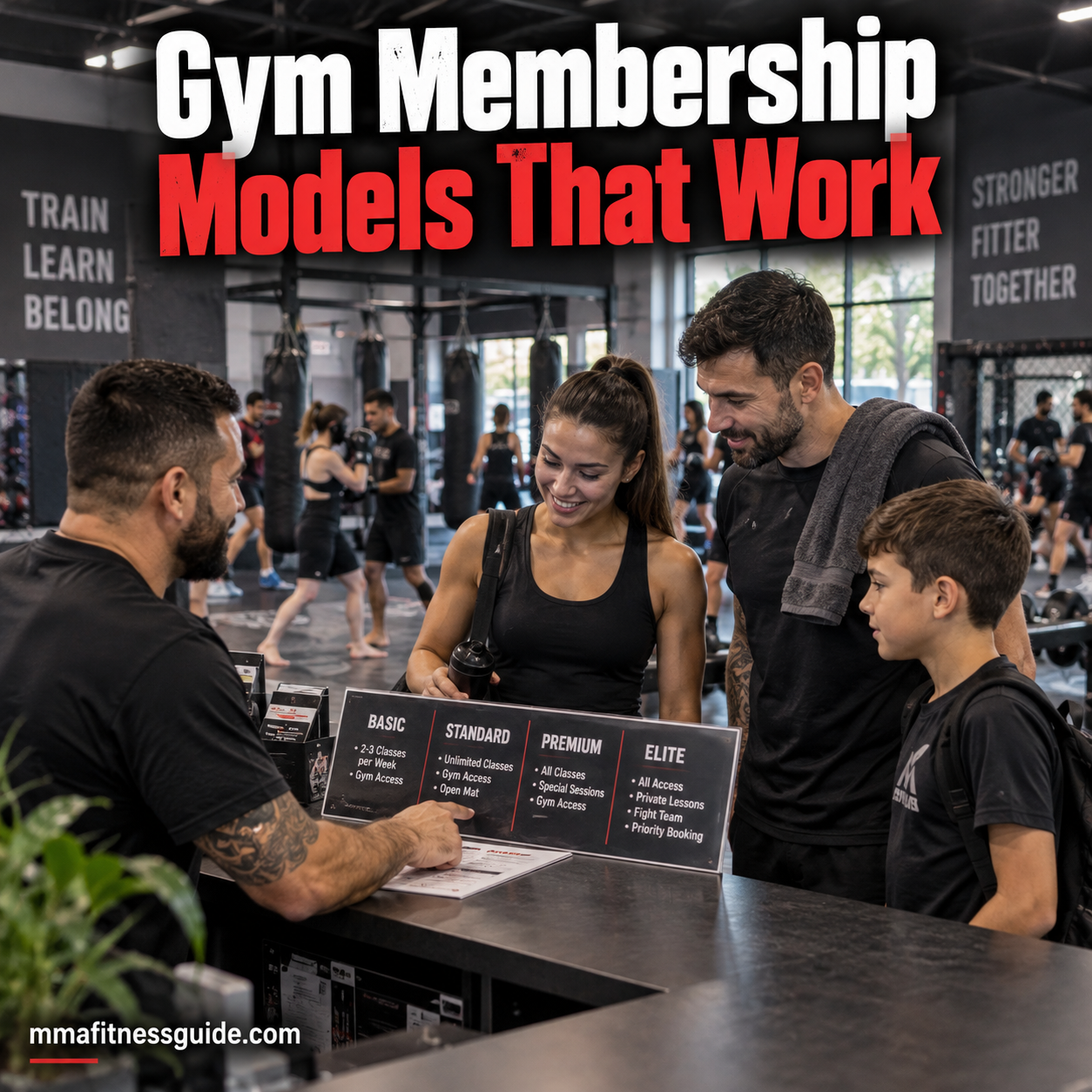
Choosing the right membership structure can help an MMA gym balance recurring revenue, member flexibility, class capacity, and long-term retention.
A gym with 200 members paying predictable monthly dues operates very differently from one that depends heavily on drop-ins, punch cards, and irregular payments. The classes may look similar, but recurring revenue gives the first gym much more certainty when paying coaches, maintaining equipment, planning schedules, and expanding programs.
MMA gyms also serve several types of customers at once. A typical facility might have recreational adults, competitive fighters, children, fitness-focused members, and people training only one discipline. A membership structure should account for those differences without becoming difficult to understand or manage.
The models below can be used individually or combined depending on the gym’s programs, capacity, and customer base.
MMA coach guiding a student during a private training session, illustrating how to price lessons fairly while offering professional value.
If you’re a martial arts instructor or fighter stepping into the business side of coaching, one of the hardest questions to answer is:
“What should I charge for private lessons?”
Pricing isn’t just about numbers — it’s about value, positioning, and sustainability. Charging too little can devalue your time, while charging too much too soon might scare off students. Here’s how to find your balance and price your private MMA lessons fairly.
MMA events, seminars, gyms, and competitions give fighters and coaches opportunities to build professional relationships throughout the combat sports community.
The Business Side of Fighting
A conversation after a local fight card can lead to an invitation to another training camp. A coach you meet at a seminar might recommend you when a promoter needs a replacement fighter. A relationship with a local business could eventually develop into sponsorship support.
MMA careers are built through more than fights and training sessions. Fighters, coaches, managers, promoters, gym owners, event organizers, media members, and sponsors operate within a relatively connected community.
The goal isn’t to meet as many people as possible. It’s to become someone people know, respect, and are comfortable working with.
Male MMA coach and entrepreneur guiding fighters in a gym, showing how passion for MMA can grow into a thriving business.
From Fighter to Founder
For many athletes, MMA starts as a passion — a drive to test limits, build discipline, and master the art of combat. But that same passion can evolve into something more: a career and a business.
The modern MMA world isn’t just about stepping into the cage; it’s about building opportunities around the sport — gyms, content, coaching, gear, online brands, and beyond.
Turning passion into a business doesn’t mean abandoning what you love — it means finding ways to share it sustainably.
Male MMA fighter recording his workout for a YouTube training video, combining martial arts and content creation.
Turning Training into a Brand
Modern fighters don’t just fight — they build audiences. Platforms like YouTube have opened new income streams, allowing MMA athletes to share their journey, teach techniques, and grow personal brands beyond the cage.
Whether you’re a professional fighter or just starting out, content creation is one of the smartest moves you can make for long-term success.
MMA fighters can build income beyond fight purses through coaching, content creation, sponsorships, seminars, digital products, and other opportunities tied to their skills and audience.
Beyond the Fight Purse
A fighter can spend months preparing for a bout and receive only a handful of fight checks each year. Meanwhile, gym fees, coaching, equipment, transportation, nutrition, medical expenses, and time away from other work continue between fights.
That makes relying entirely on fight purses difficult for many amateur and professional fighters.
The skills developed through MMA can generate income in other ways. Coaching, content creation, sponsorships, digital products, seminars, and related businesses can produce revenue between fights while also building opportunities for life after competition.
Female martial arts instructor recording a digital training course in a gym, blending expertise and technology for online learners.
Turning Martial Arts Knowledge into Income
In today’s digital age, martial artists can do more than coach in the gym — they can teach the world online. Creating a digital martial arts course allows you to share your knowledge, build authority, and earn passive income while helping others improve their skills.
Whether you’re a black belt instructor, a striking specialist, or a fitness-focused coach, digital education opens the door to scaling your impact far beyond your local gym.
Amateur MMA fighters can attract sponsorships by building their personal brand, creating professional proposals, and developing relationships with local businesses.
Turning Passion Into Partnership
Training for an amateur MMA career can become expensive long before you earn your first dollar from fighting.
Gym memberships, private coaching, protective equipment, medical examinations, travel, competition registration, and proper nutrition all require money. If you’re balancing training with a full-time job, covering those expenses can become an additional challenge.
That’s where sponsorships come in.
Even as an amateur MMA fighter, you can attract businesses willing to help fund your training, provide equipment, cover competition expenses, or support your development in exchange for promotional opportunities.
You don’t necessarily need a professional record, thousands of followers, or a championship belt to get started. Local businesses may be interested in supporting athletes who offer community visibility, consistent content, and genuine connections with potential customers.
However, securing sponsorships requires more than sending messages asking for free equipment or financial assistance.
You need to understand what businesses want, build a recognizable personal brand, prepare a professional proposal, and demonstrate that you can deliver value.
The key is to treat your fighting career like a brand, not just a hobby.
This guide explains how amateur MMA fighters can find sponsors, create sponsorship packages, negotiate agreements, and develop relationships that support their athletic careers.
It also covers common mistakes, amateur eligibility considerations, realistic financial expectations, and ways to build opportunities beyond competition.
Male MMA trainer teaching striking technique to a student, representing the path to becoming a certified MMA coach.
Turning Passion into a Profession
If you’ve spent years training in martial arts and love helping others grow, becoming a certified MMA trainer could be the next big step in your career. It’s a chance to turn your passion for combat sports into a sustainable business — guiding new fighters, fitness clients, or even future champions.
But coaching MMA is more than just holding pads or teaching combinations. It requires knowledge, certification, and leadership — skills that ensure your students progress safely and effectively.