Breathing is one of the most overlooked skills in MMA — yet it’s one of the most important factors in endurance, striking power, recovery, and overall fight performance. Poor breathing leads to early fatigue, sloppy technique, and slower reactions. Proper breathing helps you stay calm under pressure, maintain rhythm, and push harder for longer.
Whether you’re sparring, rolling, hitting pads, or grinding through conditioning, learning to breathe efficiently will dramatically improve your cardio.
Why Breathing Matters in Combat Sports
Fighting is chaotic, and your body constantly demands oxygen to fuel movement, power, and recovery. When your breathing is shallow or inconsistent, everything declines — your energy, your precision, your composure.
Good breathing improves:
- Cardiovascular endurance
- Striking rhythm
- Oxygen efficiency
- Recovery between exchanges
- Tension control
- Mental focus under stress
- Heart rate regulation
Better breathing → better cardio → better performance.
Common Breathing Mistakes Fighters Make
Many fighters unknowingly restrict their own stamina. The most common issues include:
1. Breath Holding During Strikes
Holding your breath reduces speed and drains energy fast.
2. Inhaling Through the Mouth Only
This leads to shallow breathing, a dry throat, and faster fatigue.
3. Poor Breathing Rhythm During Combinations
Irregular breaths break timing and footwork.
4. Over-Breathing When Tired
Hyperventilation spikes heart rate and kills efficiency.
5. Forgetting to Breathe During Transitions
Scrambles, takedowns, and clinch battles often shut down awareness.
Fixing these habits instantly improves stamina.
Foundational Breathing Techniques for Fighters
These methods help you develop more efficient, powerful breathing suitable for both striking and grappling.
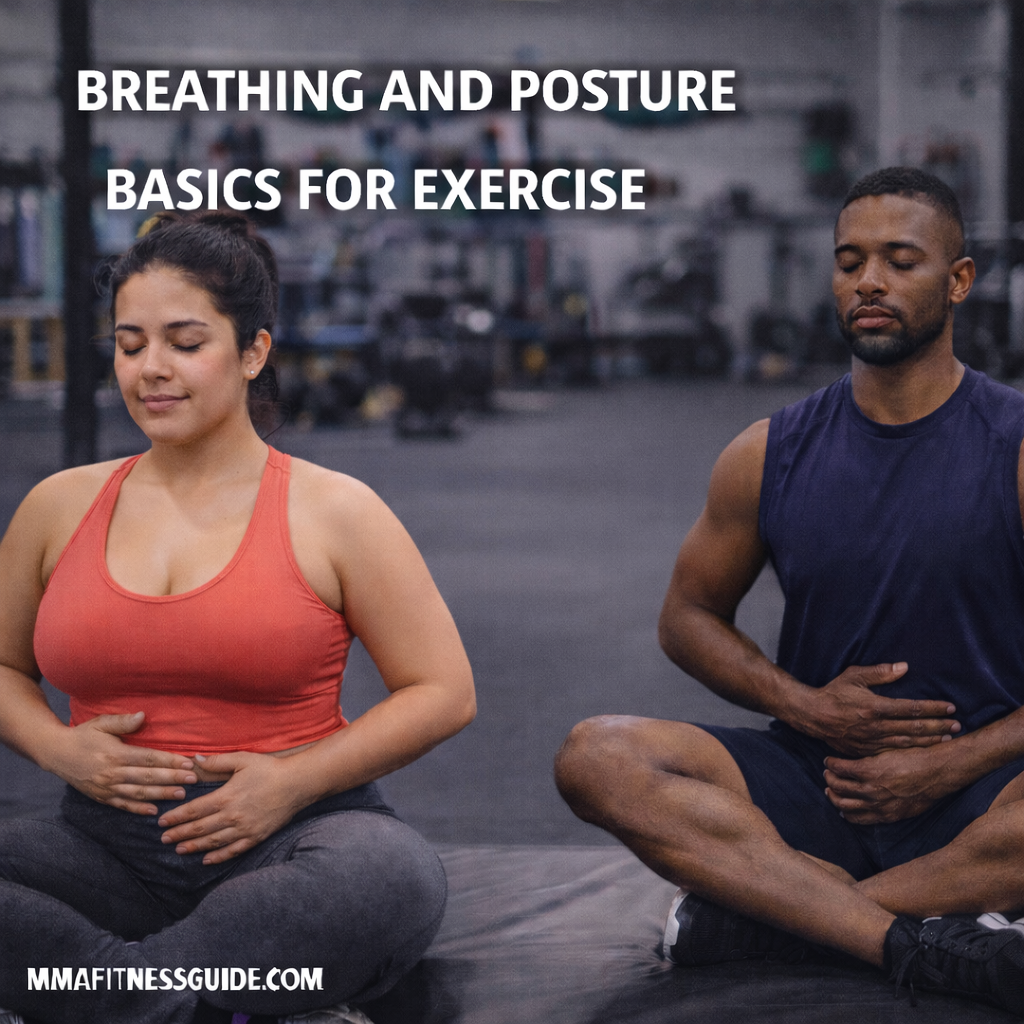
1. Diaphragmatic Breathing (Belly Breathing)
This technique teaches your body to use the diaphragm instead of shallow chest breaths.
How to practice:
- Lie on your back with one hand on your chest and one on your belly.
- Slowly inhale through your nose, expanding your belly.
- Exhale through your mouth, letting the belly fall.
- Practice for 3–5 minutes before training.
Benefits:
- Increases oxygen intake
- Stabilizes the core
- Lowers heart rate
- Reduces anxiety before sparring or fights
This should eventually become your natural breathing pattern during training.
2. Rhythmic Breathing for Striking
Breathing sets the timing of your combinations.
General guideline:
- Small exhale on every strike
- Sharp exhales for power shots
- Short nasal inhales between combinations
You’ve heard fighters make “tss” or “pss” sounds — that’s controlled exhalation.
Benefits:
- Keeps the core tight
- Increases power
- Prevents breath-holding
- Maintains striking rhythm
Rhythmic breathing = better flow.
3. Breathing for Grappling & Scrambles
Grappling requires calm, measured breathing to prevent early exhaustion.
Key points:
- Slow nasal inhales during control positions
- Longer exhales to stay relaxed
- Breathe through transitions — don’t freeze
- Small exhales when framing or escaping
When you panic-breathe on the ground, you gas out. When you breathe with intention, you last longer and think more clearly.
4. Recovery Breathing Between Rounds
This technique quickly resets your cardio so you start the next round fresh.
The “1–4–2” Method:
- Inhale through your nose for 1 second
- Hold for 4 seconds
- Exhale for 2 seconds
Repeat 5–8 cycles.
Why it works:
- Lowers heart rate
- Clears CO₂ buildup
- Restores calm
- Helps regulate adrenaline
Use this in the corner, after intense pad rounds, or when winded.
5. Pursed-Lip Breathing
Used by boxers and runners to avoid rapid energy loss.
How to practice:
- Inhale through your nose
- Exhale slowly through pursed lips (like blowing out a candle)
Benefits:
- Improves breathing efficiency
- Helps calm the body under stress
- Stops rapid hyperventilation
Perfect for sparring breaks and tough drill sessions.
6. Cadence Breathing for Running & Conditioning
Link your breath to your movement rhythm.
Example for running:
- Inhale for 2 steps
- Exhale for 2 steps
As stamina improves:
- Inhale for 3 steps
- Exhale for 2 steps
Cadence breathing increases endurance and makes conditioning feel easier.
Drills to Improve Breathing During Training
1. Shadowboxing With Exhale Cues
Throw combinations while emphasizing short, controlled exhales.
2. BJJ Positional Breathing
Practice breathing calmly while being pinned or controlled.
3. Jump Rope Breathing Rhythm
Exhale every 2–3 jumps — helps build flow.
4. Tempo Bag Work
Slow, controlled rounds focused on breathing instead of power.
5. Breathing Ladder Circuits
Inhale for 2 seconds → exhale for 2 seconds
Inhale for 3 → exhale for 3
Inhale for 4 → exhale for 4
This teaches control under fatigue.
How to Integrate Breathing Into Sparring
During live rounds:
- Exhale on every strike
- Slow-breathe during resets
- Avoid mouth-only breathing
- Use long exhales to stay relaxed
- Focus on posture — collapsed chest = poor breathing
Your goal is calm, efficient respiration even when pressured.
Final Takeaway
Mastering breathing techniques is one of the quickest ways to boost your cardio and performance in MMA. Controlled breathing improves stamina, sharpens your striking rhythm, keeps you calm during grappling scrambles, and helps you recover between rounds. With practice, smart breathing becomes automatic — and your gas tank will feel noticeably deeper.
Better breathing = better cardio = better fighting.