Stance Switching: When and Why to Use It

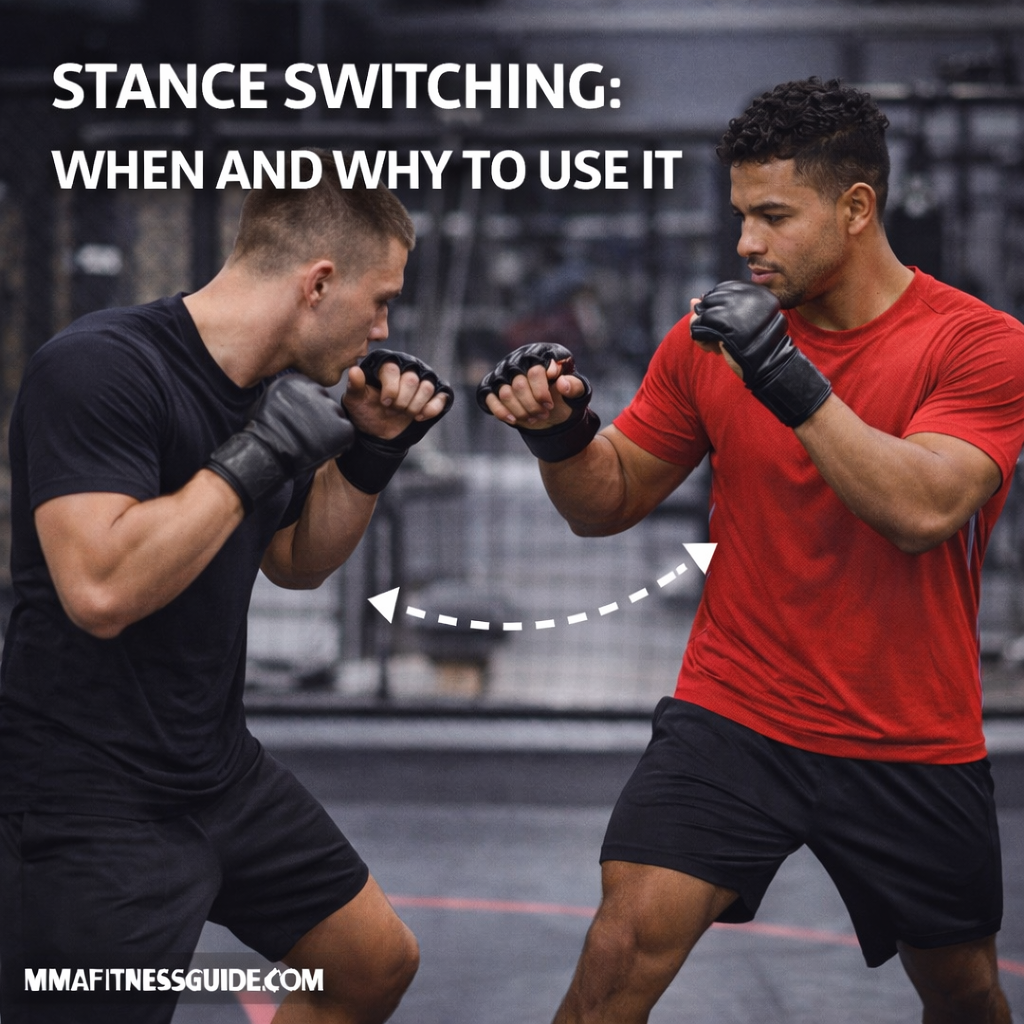
MMA fighters demonstrating stance switching during training, showing footwork changes and positioning used to create angles and tactical advantages.
MMA fighters practicing stance switching to create angles, disrupt timing, and expand striking options during training.

Introduction

Stance switching has become increasingly common in modern MMA and striking-based martial arts. Once considered an advanced or risky tactic, switching stances is now a fundamental skill used by elite fighters to create angles, confuse opponents, and open up attacks.

Understanding when and why to switch stances—and when not to—is essential for using this tool effectively rather than turning it into a liability.

Continue reading “Stance Switching: When and Why to Use It”


Fighter Diet Plans from Top Professionals

MMA fighters eating balanced, performance-focused meals in a gym setting, illustrating professional diet plans that support training, recovery, and strength.
MMA fighters following structured diet plans inspired by top professionals to fuel performance, recovery, and consistent training.

Introduction

When fans look at elite MMA fighters, they often focus on training camps, sparring footage, and highlight reels. What’s less visible—but just as important—is nutrition. Fighter diet plans used by top professionals are built around performance, recovery, and consistency, not extreme restriction or short-term fixes.

Understanding how professionals structure their diets helps everyday fighters and athletes make smarter, more sustainable nutrition choices.

Continue reading “Fighter Diet Plans from Top Professionals”

Balancing Cardio and Strength for Optimal Performance

MMA athletes training cardio and strength in a gym, showing the balance between conditioning work and resistance training for optimal performance.
MMA athletes balancing cardio conditioning and strength training to improve endurance, power, and overall performance.

Introduction

One of the most common challenges MMA athletes face is balancing cardio and strength without sacrificing either. Too much conditioning can lead to strength loss, while excessive lifting can leave fighters gassed during rounds. Optimal MMA performance requires both systems working together—not competing for priority.

Understanding how to balance cardio and strength allows fighters to train smarter, recover better, and perform consistently across rounds.

Continue reading “Balancing Cardio and Strength for Optimal Performance”

Hiring Your First Administrator

MMA gym owner meeting with an administrator candidate at a front desk, discussing operations and support roles inside a training facility.
An MMA gym owner collaborating with an administrator to streamline operations, communication, and day-to-day gym management.

Introduction

As an MMA gym grows, the owner often becomes the bottleneck. Between coaching, scheduling, billing, member communication, and marketing, administrative work can quietly consume time and energy. Hiring your first administrator is one of the most important steps toward sustainable growth and preventing burnout.

A well-chosen administrator frees you to focus on coaching, leadership, and long-term vision—while improving the day-to-day experience for members.

Continue reading “Hiring Your First Administrator”

Lessons From Legendary Coaches

MMA fighter receiving guidance from experienced coaches inside a training gym, illustrating mentorship, leadership, and coaching wisdom.
An MMA athlete receiving instruction from experienced coaches, highlighting the impact of mentorship and leadership in combat sports.

Introduction

Behind every great fighter stands a great coach. While athletes often receive the spotlight, legendary coaches shape careers, cultures, and entire eras of combat sports. Their influence extends beyond techniques and tactics—great coaches teach mindset, discipline, and resilience.

Studying lessons from legendary coaches offers valuable insight not only for fighters, but for anyone seeking long-term growth, leadership, and consistency.

Continue reading “Lessons From Legendary Coaches”

MMA: Progress From Walking to Jogging

Beginner MMA athletes jogging together outdoors, showing the transition from walking to jogging to build conditioning safely and progressively.
Beginner MMA athletes progressing from walking to jogging to build endurance, confidence, and long-term conditioning.

Introduction

For many beginners, the idea of running for MMA conditioning feels intimidating. Jogging can seem too demanding, especially if you’re new to fitness, returning after time off, or carrying extra body weight. The good news is that effective MMA conditioning doesn’t start with running—it starts with walking.

Progressing from walking to jogging builds aerobic fitness, joint resilience, and confidence in a way that supports long-term training rather than burnout or injury.

Continue reading “MMA: Progress From Walking to Jogging”

The Globalization of Amateur MMA

Two amateur MMA fighters from different backgrounds exchanging strikes inside an octagon, representing the global growth of mixed martial arts.
Amateur MMA fighters competing inside the octagon, symbolizing the worldwide expansion and cultural diversity of modern mixed martial arts.

Introduction

Mixed martial arts began as a niche spectacle dominated by a few regions, but today it is one of the most globally practiced combat sports in the world. While professional MMA often gets the spotlight, the true engine behind the sport’s worldwide growth is amateur MMA. Local gyms, regional promotions, and grassroots competitions have transformed MMA into a truly global discipline.

Understanding how amateur MMA globalized helps explain the sport’s depth, diversity, and long-term sustainability.

Continue reading “The Globalization of Amateur MMA”

Taming Perfectionism in Training

Athletes sitting thoughtfully after training in a gym, reflecting on mindset, self-expectations, and progress in athletic development.
Athletes taking a reflective pause after training, highlighting the mental work of managing perfectionism and maintaining a healthy training mindset.

Introduction

Perfectionism is often mistaken for dedication. In training, it can look like high standards, strong work ethic, and attention to detail. But when perfectionism goes unchecked, it becomes a barrier to progress—leading to frustration, burnout, and stalled performance.

Learning to tame perfectionism allows athletes to train with consistency, adaptability, and resilience rather than constant self-criticism.

Continue reading “Taming Perfectionism in Training”

Mobility Routines for Long-Term Fitness

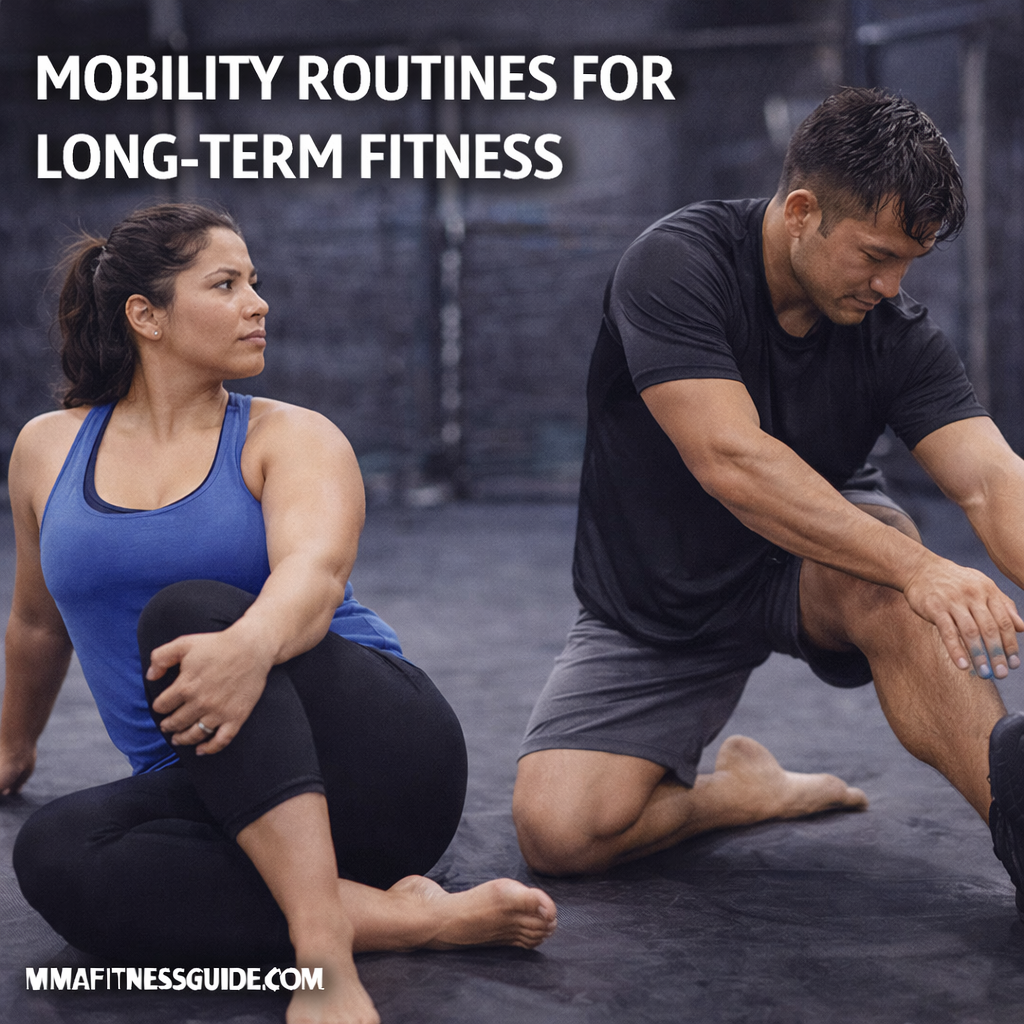
Athletes performing controlled mobility exercises on a gym mat to improve joint health, flexibility, and long-term fitness.
Athletes practicing mobility routines that support joint health, movement quality, and long-term fitness.

Introduction

Mobility is one of the most important—and most neglected—components of long-term fitness. While strength and conditioning often get the spotlight, mobility is what allows the body to keep training safely year after year. Without it, joints stiffen, movement quality declines, and injury risk increases.

A consistent mobility routine supports joint health, movement efficiency, and recovery, making it essential for anyone who wants to stay active long term.

Continue reading “Mobility Routines for Long-Term Fitness”

Budget vs Premium: Where to Spend First

MMA athletes comparing budget and premium training gear in a gym, deciding which equipment is worth investing in first for safety and performance.
MMA athletes comparing budget and premium gear to decide where spending more makes the biggest difference in training quality and safety.

Introduction

Every fighter eventually faces the same question: where should I spend more—and where can I save? MMA gear ranges from budget-friendly essentials to premium equipment with high price tags. While expensive gear isn’t always better, cutting costs in the wrong areas can affect safety, performance, and longevity.

Understanding when to invest in premium gear and when budget options are sufficient helps fighters train smarter without wasting money.

Continue reading “Budget vs Premium: Where to Spend First”