Defensive Shells: Peek-a-Boo, Philly, and More

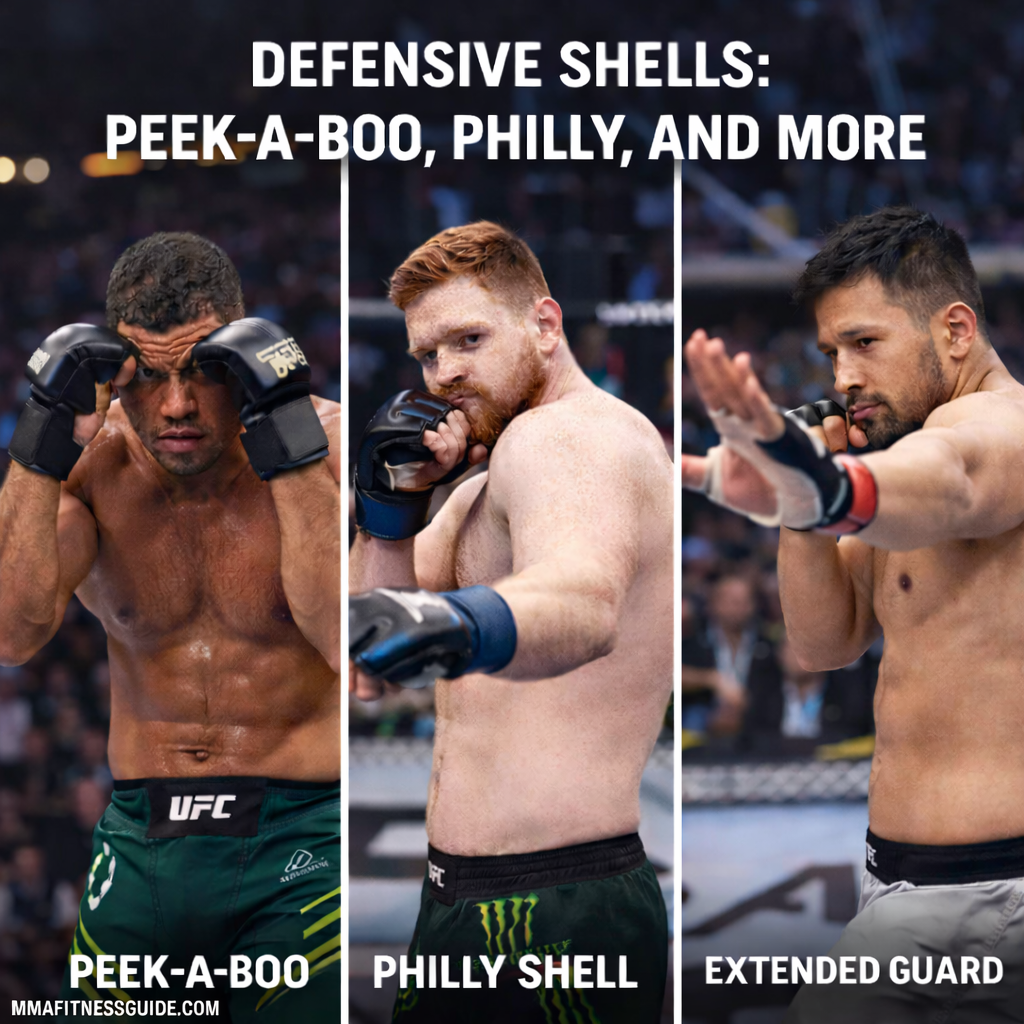
Split-screen image of professional MMA fighters demonstrating defensive shells including Peek-a-Boo, Philly Shell, and extended guard inside an octagon.
Professional MMA fighters demonstrate different defensive shells, including Peek-a-Boo, Philly Shell, and extended guard techniques.

Defensive shells are structured guard positions designed to protect the head and body while setting up counters, movement, and control of distance. In boxing and MMA, understanding different defensive shells—such as the Peek-a-Boo and the Philly Shell—helps fighters reduce damage, manage pressure, and turn defense into offense.

This article breaks down the most common defensive shells, how they work, their strengths and weaknesses, and how they translate into modern MMA and striking-based combat sports.

Continue reading “Defensive Shells: Peek-a-Boo, Philly, and More”
The Role of Gut Fitness in Fighter Performance

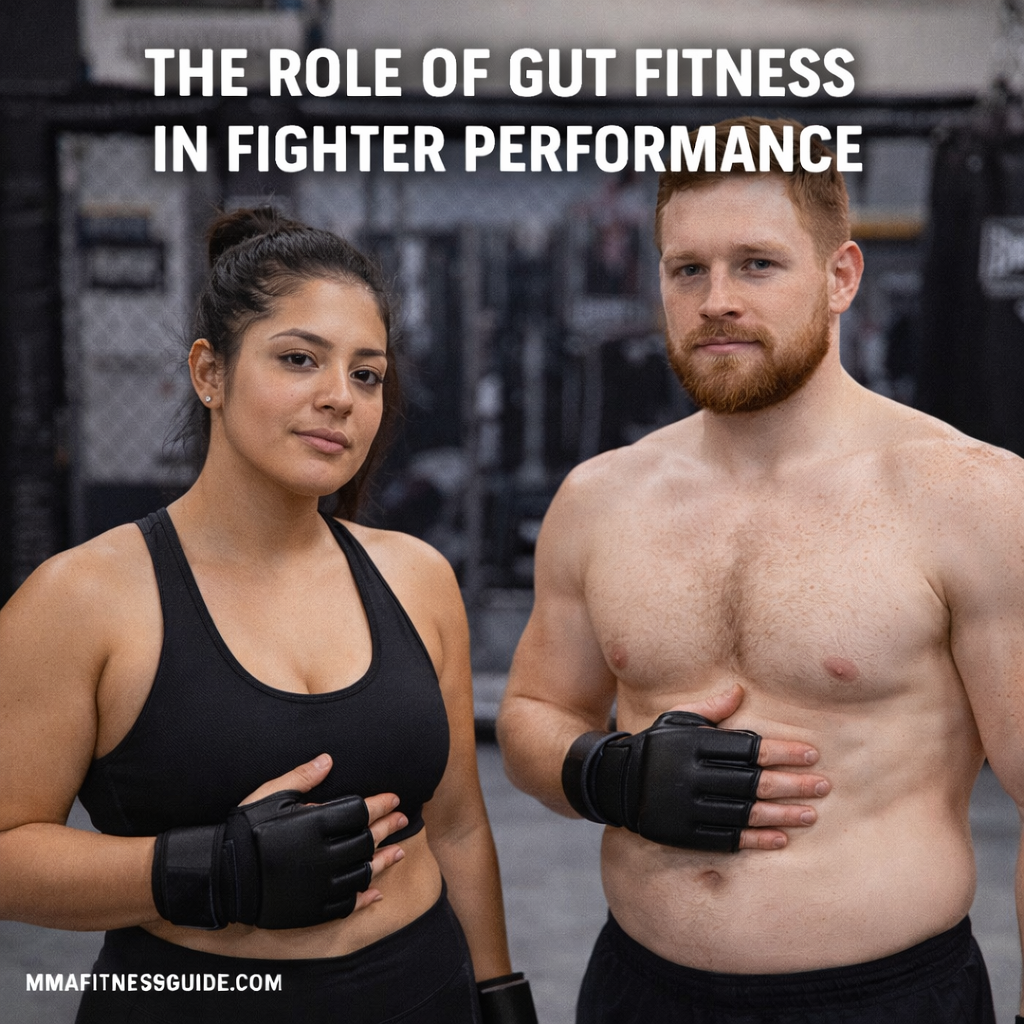
MMA fighters standing in a gym with hands on their midsection, representing the role of gut fitness in fighter performance and recovery.
MMA athletes highlight the importance of gut fitness in supporting energy, recovery, and overall performance.

Fighter performance isn’t determined only by strength, skill, and conditioning. What happens inside the gut plays a major role in energy levels, recovery, immune function, and even mental clarity. For MMA athletes, gut fitness can be the difference between consistent training and frequent setbacks.

This article explains the role of gut fitness in fighter performance, how digestive health affects training outcomes, and practical ways fighters can support their gut for better results inside and outside the cage.

Continue reading “The Role of Gut Fitness in Fighter Performance”

MMA: Structure a 12-Week MMA Training Plan

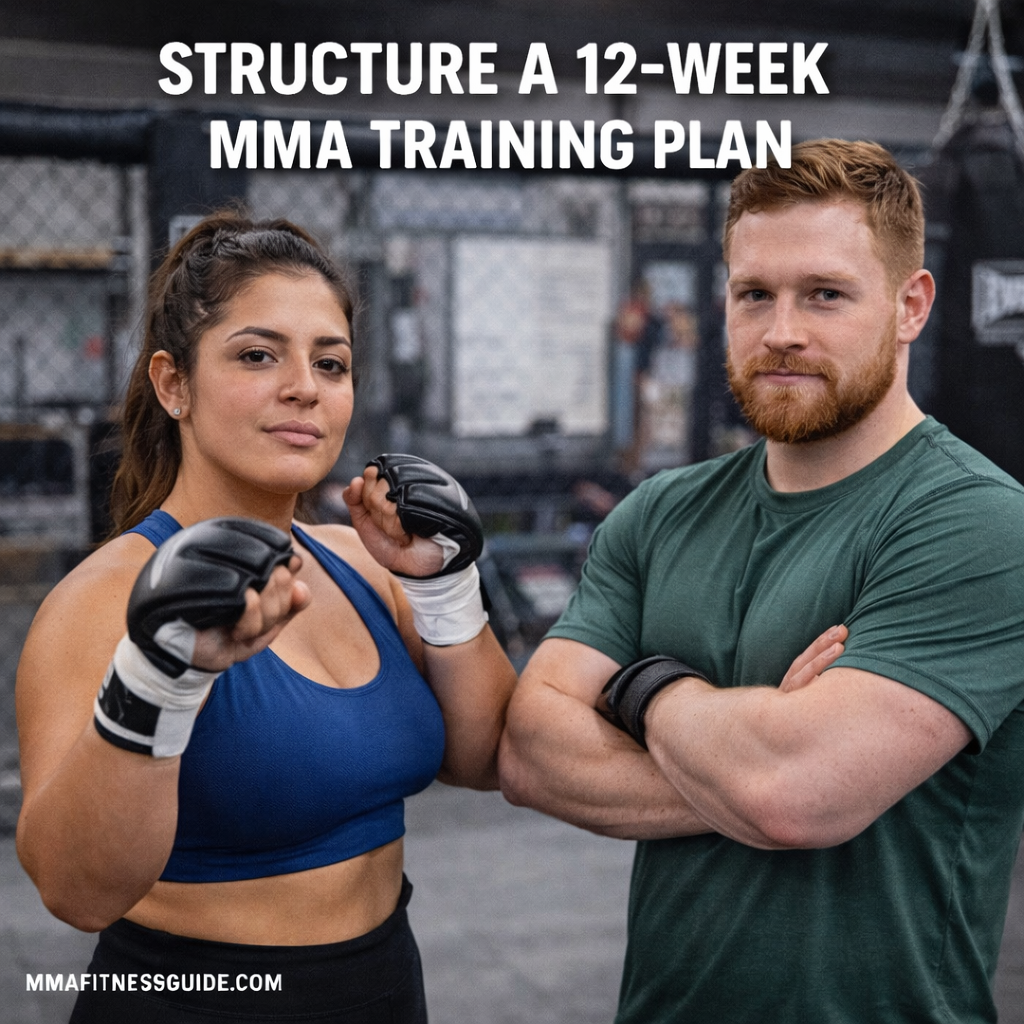
MMA athletes standing in a gym representing a structured 12-week MMA training plan focused on conditioning, skill development, and fight preparation.
MMA athletes prepare for structured training as part of a 12-week MMA training plan designed to build skills, conditioning, and fight readiness.

A well-structured 12-week MMA training plan is one of the most effective ways to build skills, conditioning, and confidence without burning out or overtraining. Whether you’re preparing for an amateur fight, sharpening your overall game, or returning to structured training, a clear plan provides direction, balance, and measurable progress.

This guide explains how to structure a 12-week MMA training plan, breaking it into logical phases that develop technique, strength, conditioning, and recovery in the right order.

Continue reading “MMA: Structure a 12-Week MMA Training Plan”

Creating a Retention Plan That Works

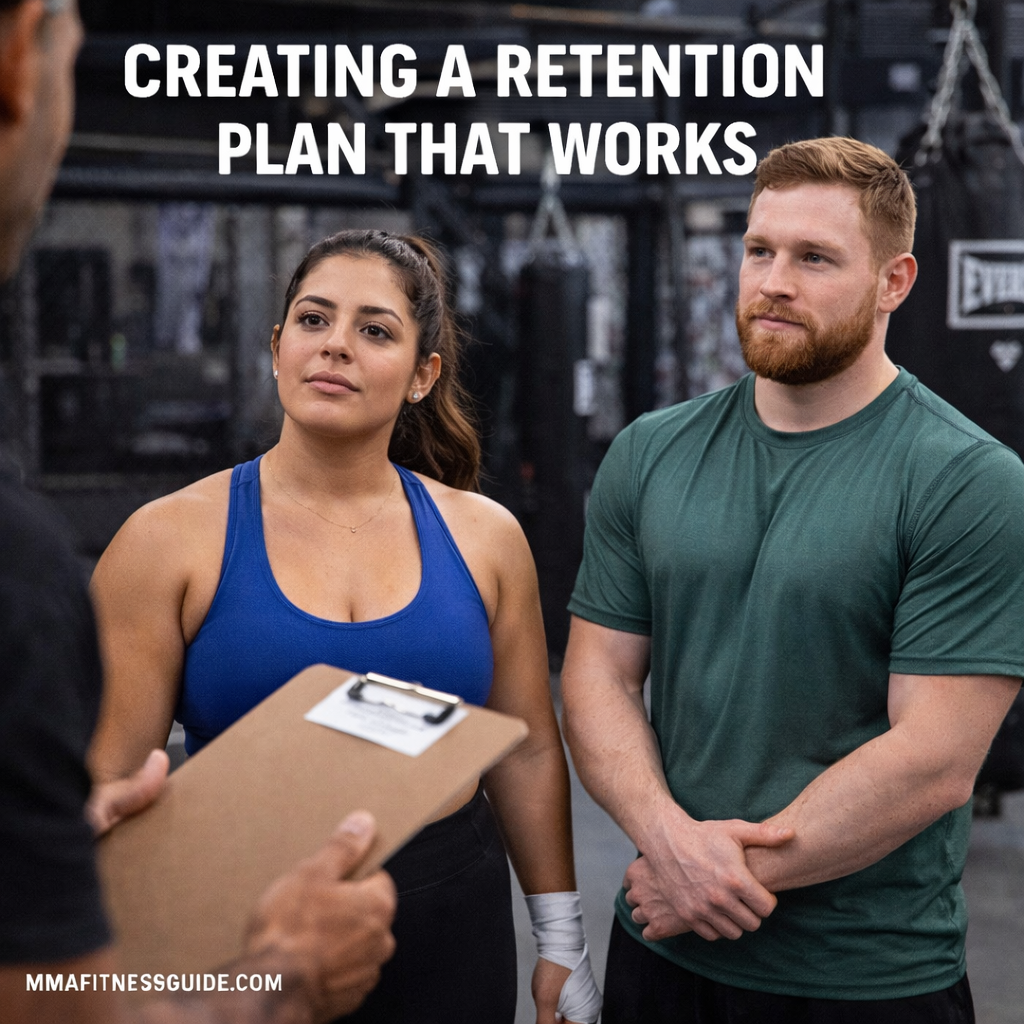
MMA gym members listening to a coach discuss training goals, representing strategies for creating a retention plan that keeps athletes engaged.
MMA gym members engage with coaching staff as part of a structured retention plan that supports long-term training commitment.

In the MMA business, attracting new members is important—but retaining existing ones is what keeps gyms profitable, stable, and growing long term. High turnover drains revenue, disrupts culture, and forces constant marketing just to stay afloat. A strong retention plan creates consistency, improves member satisfaction, and turns casual trainees into long-term supporters of your gym.

This guide explains how to create a retention plan that actually works for MMA gyms, covering systems, communication, culture, and practical strategies that keep athletes training month after month.

Continue reading “Creating a Retention Plan That Works”

Simple Meal Rituals That Reduce Stress

A calm couple practicing mindful eating at home, showing simple meal rituals that reduce stress and support relaxation.
A relaxed meal ritual helps reduce stress and create a calmer, more intentional eating experience.

Meals are more than just fuel—they’re daily opportunities to slow down, reset, and support mental well-being. In a fast-paced world where eating often happens distracted, rushed, or on the go, simple meal rituals can significantly reduce stress and improve how you feel throughout the day.

This article explores practical, low-effort meal rituals that help calm the nervous system, improve digestion, and create a healthier relationship with food—without requiring strict diets or complicated routines.

Continue reading “Simple Meal Rituals That Reduce Stress”

Beginner Kettlebell Movements

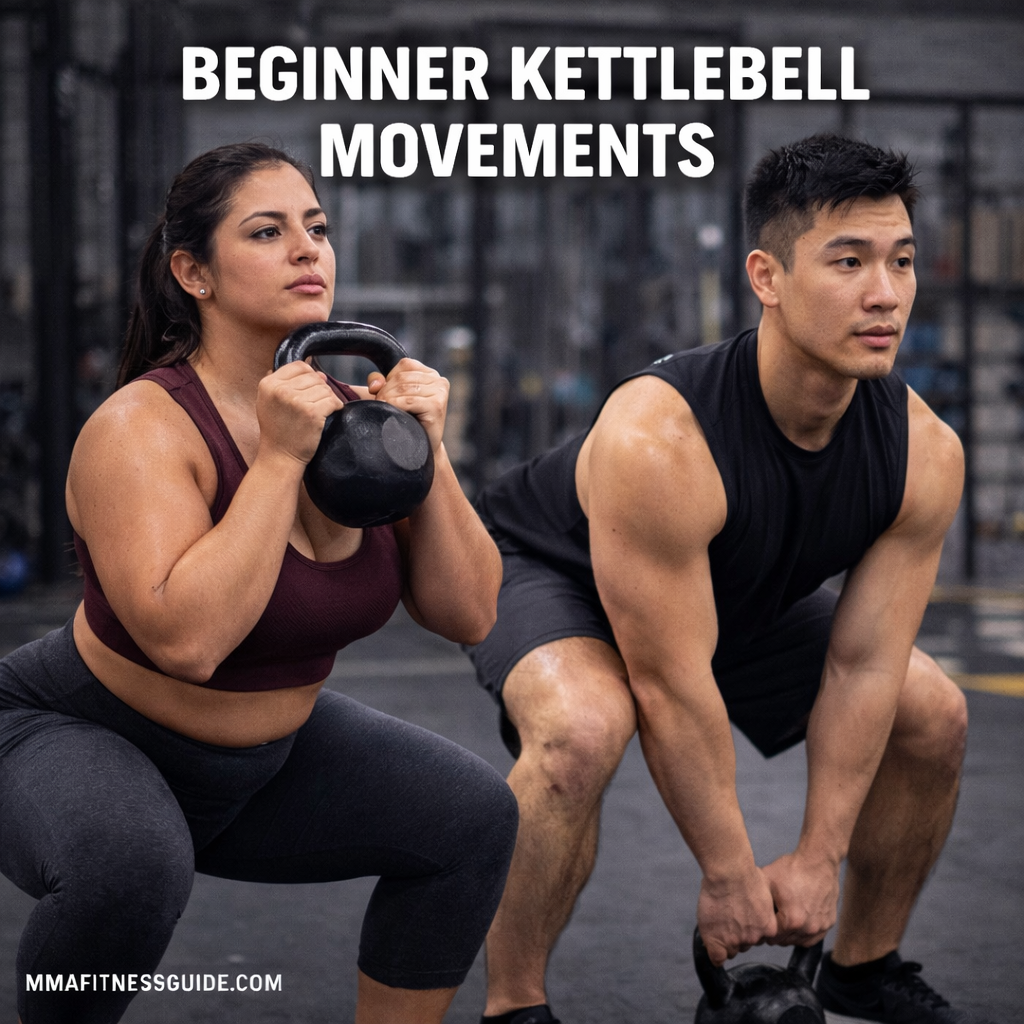
Beginner athletes performing basic kettlebell exercises in a gym, demonstrating goblet squats and deadlifts for strength and conditioning.
Beginners practice foundational kettlebell movements to build strength, coordination, and full-body fitness.

Kettlebells are one of the most effective tools for building strength, conditioning, and coordination—especially for beginners. Unlike traditional dumbbells, kettlebells challenge balance, grip strength, and core stability at the same time, making them ideal for full-body training and functional fitness.

This guide covers beginner kettlebell movements, explains proper technique, and shows how new trainees can safely build strength and confidence using simple, foundational exercises.

Continue reading “Beginner Kettlebell Movements”

The Business of Superfights: History and Hype

Two elite MMA fighters facing off inside a packed octagon arena, representing the hype and business of major superfight events.
A cinematic octagon faceoff captures the intensity, history, and hype behind MMA superfights.

Superfights are the biggest money-makers in combat sports. They transcend rankings, titles, and sometimes even weight classes, drawing massive audiences based on star power, narrative, and spectacle. From boxing’s golden eras to modern MMA mega-events, superfights have shaped the business side of fighting as much as the sport itself.

This article explores the history of superfights, how hype is built, why they generate enormous revenue, and how they’ve influenced the evolution of MMA and combat sports culture.

Continue reading “The Business of Superfights: History and Hype”

When to Seek a Sports Psychologist

MMA fighter speaking with a sports psychologist in a gym setting, representing mental performance support and emotional preparation in combat sports.
An MMA athlete consults with a sports psychologist to improve focus, confidence, and mental resilience.

Mental strength is just as important as physical conditioning in MMA and other competitive sports. While fighters spend countless hours improving technique, strength, and cardio, mental performance often goes unaddressed until it starts affecting results. Knowing when to seek a sports psychologist can be a turning point for athletes struggling with confidence, focus, motivation, or performance anxiety.

This guide explains what sports psychologists do, common signs it’s time to seek support, and how mental training can improve both performance and well-being.

Continue reading “When to Seek a Sports Psychologist”

Bruise and Swelling Management Basics

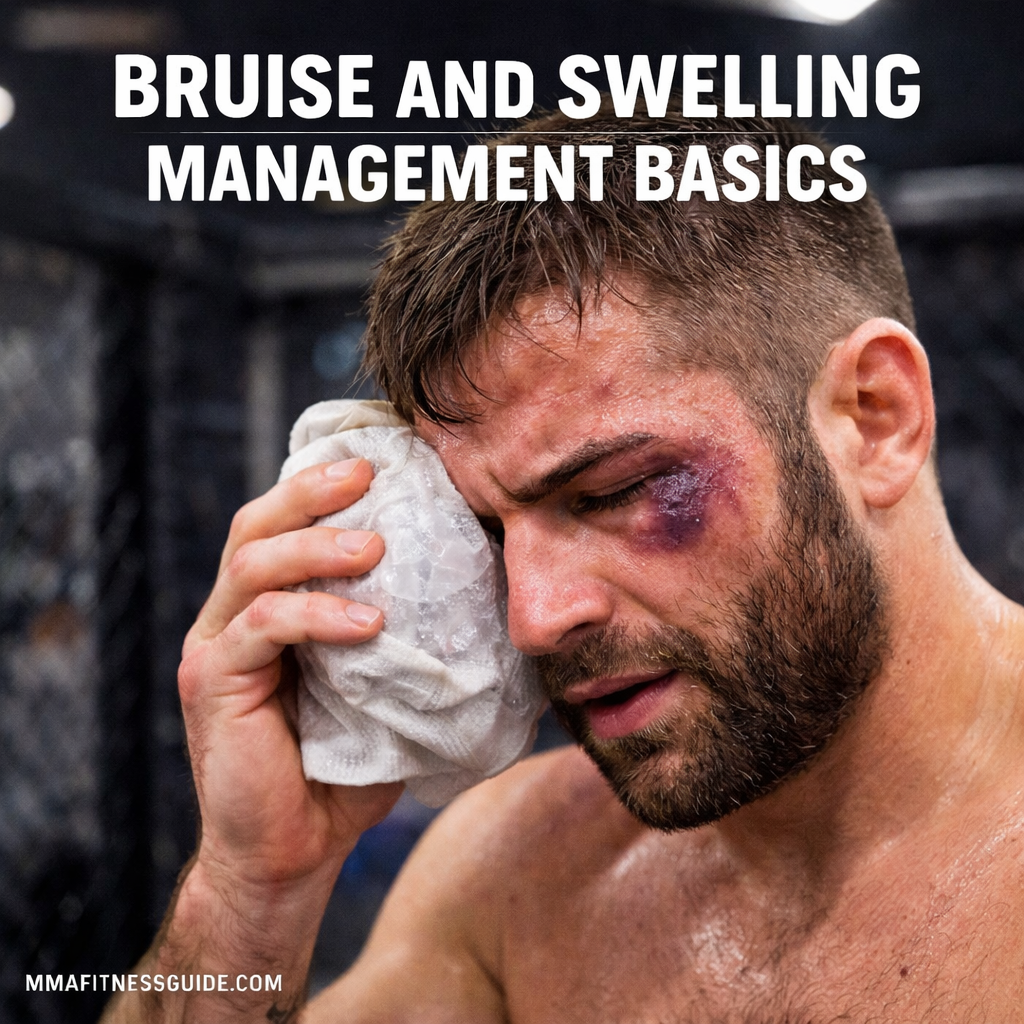
MMA fighter applying an ice pack to a bruised and swollen eye, demonstrating basic bruise and swelling management after training.
An MMA athlete uses cold therapy to manage facial bruising and swelling after intense training.

Bruises and swelling are common in MMA, boxing, Muay Thai, wrestling, and other combat sports. Strikes, takedowns, and clinch work all place stress on muscles, blood vessels, and soft tissue. While most bruises are minor, poor management can lead to prolonged pain, stiffness, reduced mobility, and delayed training return.

This guide covers bruise and swelling management basics, explaining what causes them, how to treat them effectively, and when to modify training to support proper recovery.

Continue reading “Bruise and Swelling Management Basics”

MMA Sanitize Shared Gym Equipment

MMA gym members sanitizing shared training equipment, showing proper cleaning practices to prevent bacteria and infections in combat sports gyms.
MMA athletes clean and disinfect shared gym equipment to reduce infection risk and maintain a safe training environment.

Shared gym equipment is part of everyday life for MMA athletes. Gloves, mats, pads, cages, and strength equipment are used by dozens of fighters daily, creating the perfect environment for bacteria, fungi, and viruses to spread. Learning how to properly sanitize shared MMA gym equipment isn’t just about cleanliness—it’s essential for injury prevention, skin health, and long-term training consistency.

This guide explains why sanitation matters, what risks exist in MMA gyms, and how fighters and gym owners can effectively sanitize shared equipment without damaging gear.

Continue reading “MMA Sanitize Shared Gym Equipment”