A man and woman planning content together, illustrating how fighters and coaches can build a Patreon or membership community.
For fighters, coaches, and content creators, a Patreon or membership community can become one of the most reliable income streams in the MMA world. It turns your knowledge, experience, and personality into long-term, recurring revenue — without needing millions of followers or constant brand sponsorships.
The best part? You control the content, the pricing, and the relationship with your audience. A small, committed community can support your training, your career, and your creative work far more consistently than any algorithm.
Whether you’re a fighter documenting your journey or a coach sharing drills and breakdowns, a membership platform can elevate your entire career.
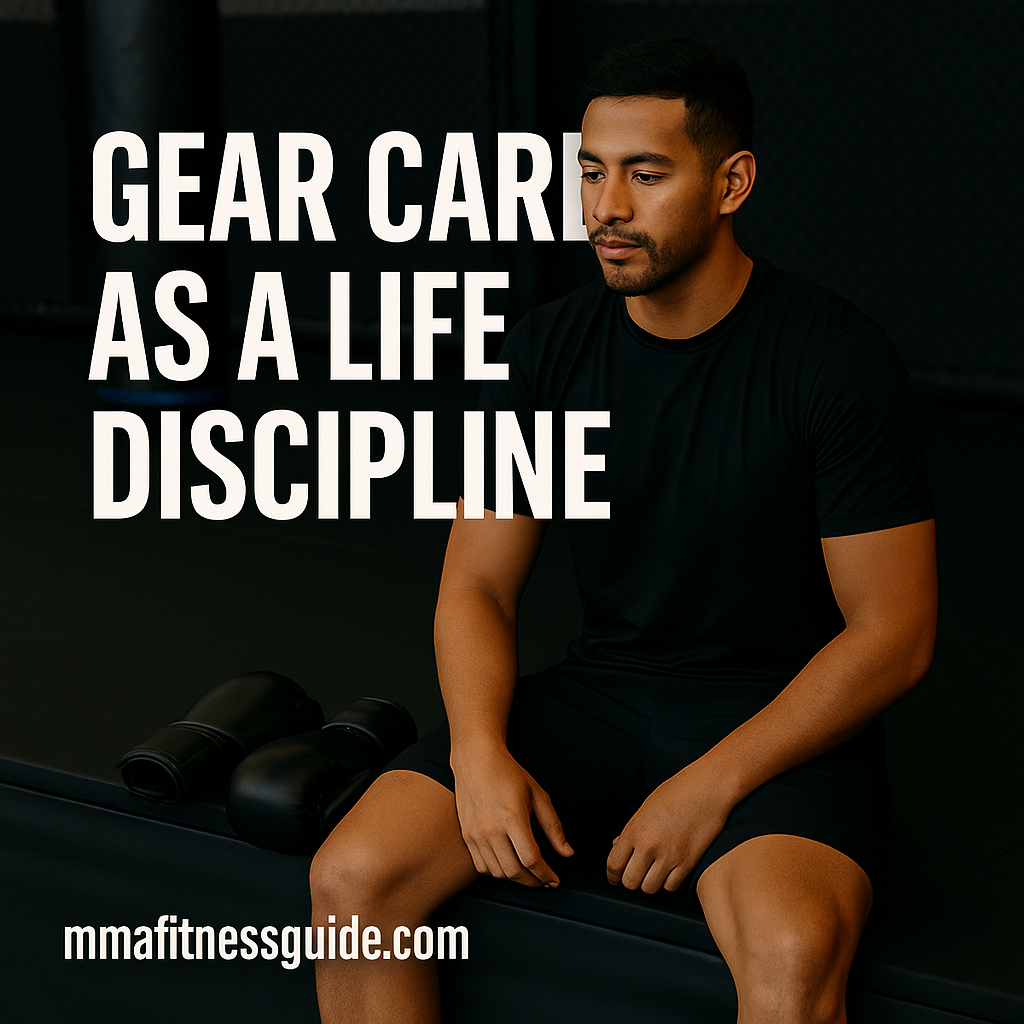
A fighter sitting on the gym mats with his gloves nearby, representing the idea of treating gear care as part of personal discipline.
Taking care of your training gear isn’t just about keeping it clean — it’s about building discipline, respect, and consistency. The way you maintain your gloves, wraps, shin guards, mouthguards, and gym clothes reflects the way you approach your training and, in many ways, your life.
For fighters and hobbyists alike, gear care is a direct expression of mindset: responsibility, attention to detail, and pride in the craft. When you build the habit of caring for your equipment, you naturally develop the same approach toward your body, your training, your environment, and your goals.
This is why gear care becomes more than a chore — it becomes a discipline.
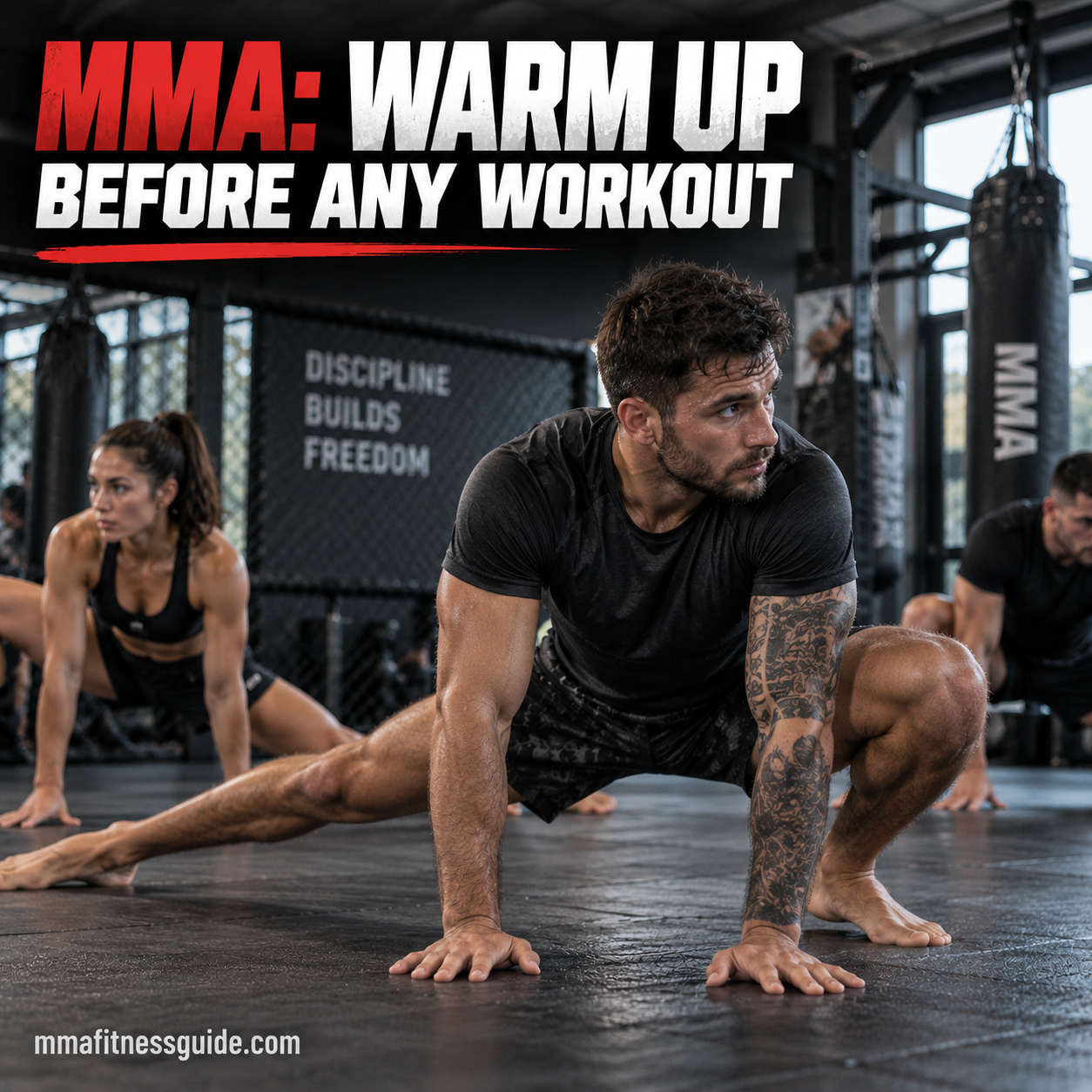
Prepare your body for MMA training with a proper warm-up that improves mobility, activates key muscles, and builds movement readiness.
A proper warm-up sets up everything that follows in an MMA session, yet it’s often the first thing beginners skip when they’re short on time.
Whether you’re hitting pads, lifting weights, drilling takedowns, practicing Brazilian jiu-jitsu, or completing a conditioning circuit, your body needs time to transition from everyday activity into demanding exercise.
Mixed martial arts places significant demands on your shoulders, hips, knees, ankles, and spine. A single training session might involve throwing punches, rotating through kicks, changing levels for takedowns, and repeatedly getting up from the ground.
Going directly from sitting at a desk to performing explosive movements isn’t an ideal way to prepare for those demands.
A structured MMA warm-up gradually raises your heart rate, increases muscle temperature, moves your joints through comfortable ranges of motion, and introduces the movement patterns you’ll use during training.
It can improve readiness and performance and may contribute to injury prevention as part of a broader training program. However, warming up cannot eliminate injury risk, particularly in contact sports.
The good news is that beginners don’t need an elaborate routine.
A well-designed 5–10-minute warm-up can prepare you for most general MMA workouts. Hard sparring, heavy lifting, and particularly demanding sessions may require additional preparation.
This guide explains why warming up matters, provides a complete beginner routine, and shows you how to adjust your preparation for striking, grappling, strength training, and conditioning.
A title graphic highlighting major MMA fights that led to rule changes, set against a blurred arena backdrop.
Mixed martial arts was built through trial, error, and unforgettable fights that forced athletic commissions and promotions to rethink what was allowed inside the cage. In the early days of modern MMA, rules were minimal, fighters relied on raw experimentation, and controversial moments shaped the future of the sport.
Some fights pushed the limits of safety. Others exposed loopholes. A few created new standards that still define MMA today.
These are the fights that changed the rules — and helped MMA evolve into the highly regulated, globally respected sport it is today.
Managing social media habits can help fighters reduce distractions, handle online pressure, and maintain focus on their training goals.
You finish a difficult sparring session, check your phone, and see another fighter posting a highlight reel of flawless combinations and dominant takedowns. Suddenly, the progress you made today feels insignificant. You start questioning your technique, comparing your training schedule, and wondering whether you’re falling behind.
Social media can help MMA athletes study techniques, connect with training partners, and build their personal brands. But constant comparison, negative comments, and pressure to document every achievement can also interfere with confidence, concentration, and recovery. Learning when to engage, what content to consume, and when to put your phone away allows you to benefit from social media without letting it dictate how you evaluate your progress as a fighter.
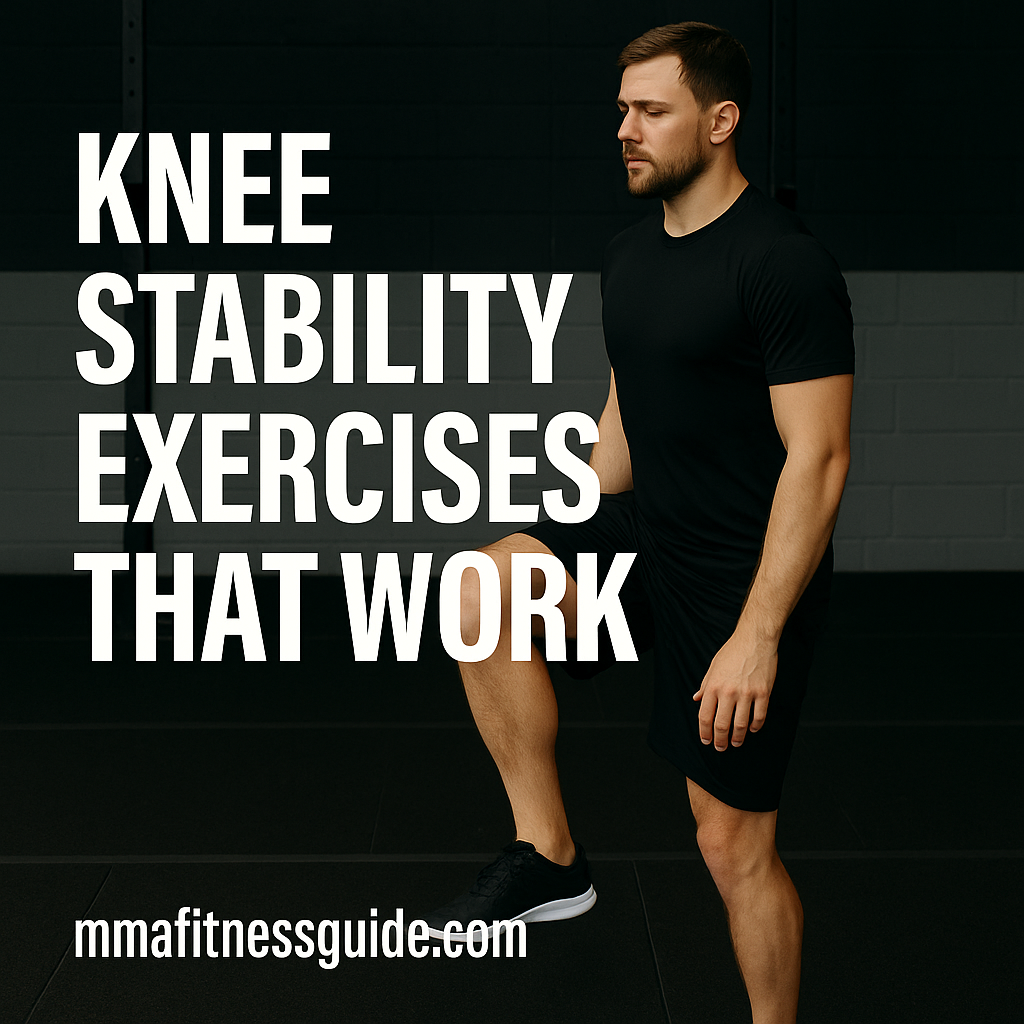
A fighter practicing a single-leg knee stability exercise in the gym, highlighting movements that support stronger and safer knees.
Strong, stable knees are essential for every fighter. Whether you’re shooting takedowns, checking kicks, pivoting on strikes, or scrambling on the ground, your knees take a beating in MMA. Without proper stability training, the risk of sprains, ACL injuries, and chronic pain goes way up.
The good news: you can build strong, resilient knees with simple exercises that improve balance, joint control, and the strength of the muscles surrounding the knee.
These knee stability exercises work for fighters at every level — and they take just a few minutes a day.
Two fighters working dirty boxing techniques in an MMA gym, highlighting short-range striking tactics.
Dirty boxing is one of the most underrated — yet highly effective — striking styles used in MMA, Muay Thai clinch exchanges, and self-defense situations. It focuses on short-range punches, framing, off-balancing, and hand fighting inside the clinch. While the techniques aren’t “illegal,” they’re called “dirty” because they push right up against the edge of what’s allowed in combat sports.
Elite fighters use dirty boxing to control the clinch, land short damaging shots, wear down opponents, and create openings for takedowns or exits. When mastered, it becomes one of the most efficient ways to strike safely while maintaining positional advantage.
A man drinking beer, representing the impact alcohol can have on fighter performance and training consistency.
Alcohol is a normal part of social life for many athletes — but for fighters, it carries specific performance consequences that can hurt conditioning, recovery, and fight readiness. You don’t need to swear off alcohol forever, but understanding its effects helps you make smarter decisions during training camps, recovery weeks, and downtime.
Even small amounts of alcohol can influence reaction time, hydration, sleep quality, and muscle repair — all of which matter in MMA, Muay Thai, boxing, and grappling.
A fighter demonstrating controlled breathing inside an MMA gym, representing the cardio-focused techniques covered in this guide.
Breathing is one of the most overlooked skills in MMA — yet it’s one of the most important factors in endurance, striking power, recovery, and overall fight performance. Poor breathing leads to early fatigue, sloppy technique, and slower reactions. Proper breathing helps you stay calm under pressure, maintain rhythm, and push harder for longer.
Whether you’re sparring, rolling, hitting pads, or grinding through conditioning, learning to breathe efficiently will dramatically improve your cardio.
Detailed MMA gear reviews can help athletes compare equipment while giving publishers an opportunity to earn commissions through disclosed affiliate links.
Someone searching for “best MMA gloves for beginners” or comparing two pairs of shin guards is often much closer to making a purchase than someone casually browsing training content. If your review answers their questions about fit, protection, durability, price, and who the product is suited for, an affiliate link gives them a direct path to the product while giving you a chance to earn a commission.
That makes gear reviews a natural fit for affiliate marketing. MMA athletes regularly purchase gloves, shin guards, mouthguards, rashguards, training equipment, and replacement gear, creating opportunities for blogs, YouTube channels, and social accounts that publish useful buying advice.
The business model is straightforward: create genuinely helpful product content, connect readers with relevant retailers or brands through tracked links, disclose the affiliate relationship, and earn a commission when qualifying purchases are made.