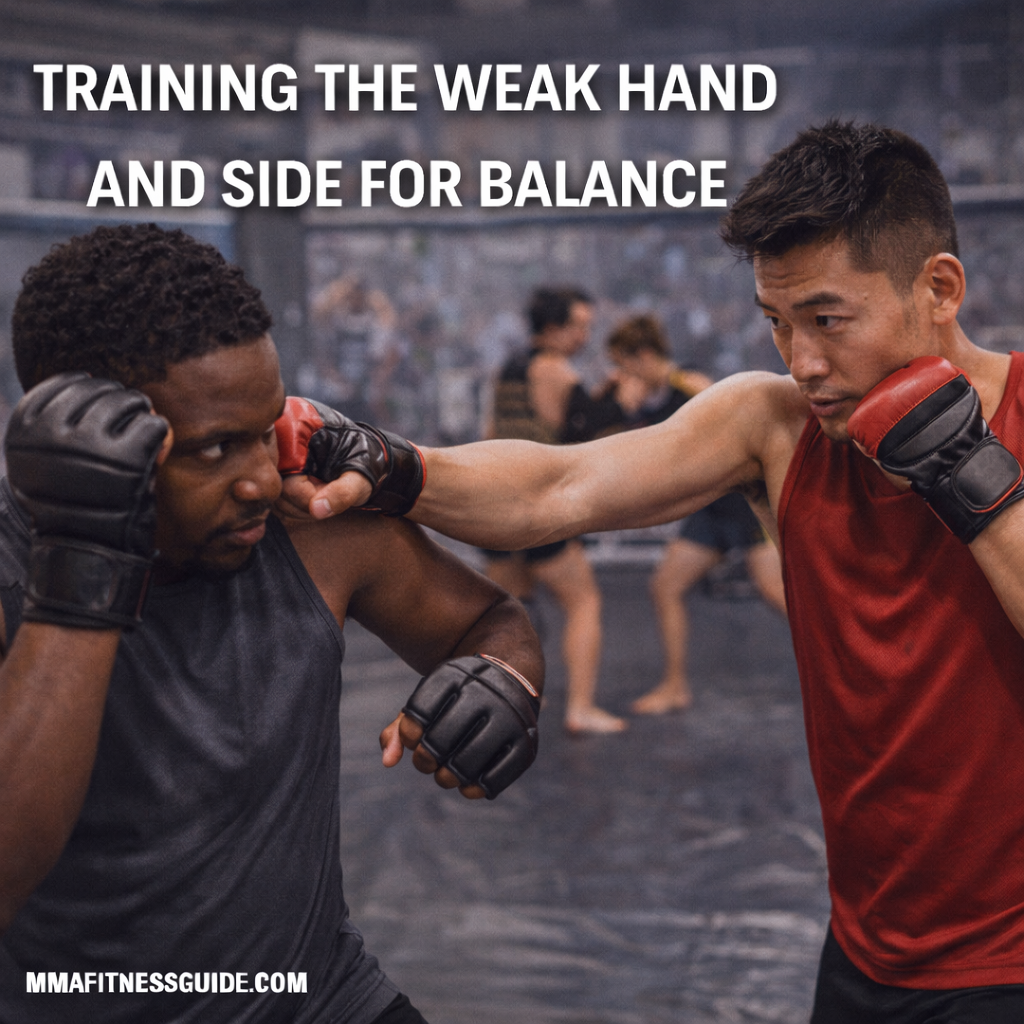
Training the Weak Hand and Side for Balance

MMA fighters practicing weak-hand striking and defensive balance during sparring, demonstrating training the non-dominant side for improved coordination.
MMA athletes train their weak hand and side to improve balance, coordination, and adaptability in striking and defense.

Every fighter has a strong side—and a weak one. While it’s natural to favor your dominant hand and lead side, overreliance creates predictable patterns, defensive gaps, and long-term imbalances. In MMA and striking arts, training the weak hand and side isn’t about becoming ambidextrous overnight—it’s about building balance, resilience, and adaptability.

This article explains why training your weak side matters, how it improves performance, and practical ways to develop it without stalling progress.

Continue reading “Training the Weak Hand and Side for Balance”


Best Foods for Hydration and Recovery

Athletic woman and man enjoying hydrating recovery foods like fruit, yogurt, and balanced meals, illustrating best foods for hydration and recovery.
Athletes refuel with hydrating, nutrient-dense foods that support recovery and performance after training.

Hydration isn’t just about drinking water—what you eat plays a major role in how well your body rehydrates, recovers, and performs after MMA training. Intense sessions lead to fluid loss, electrolyte depletion, muscle breakdown, and nervous system fatigue. Choosing the right foods can speed recovery, improve energy levels, and help fighters return to training feeling stronger instead of drained.

This article covers the best foods for hydration and recovery, why they work, and how MMA athletes can use them effectively.

Continue reading “Best Foods for Hydration and Recovery”

Fighter Conditioning Mistakes to Stop Making

MMA fighters exhausted during a conditioning session in the gym, illustrating common fighter conditioning mistakes that reduce performance and recovery.
MMA athletes pause during an intense conditioning session, highlighting common conditioning mistakes fighters need to stop making.

Conditioning is one of the most misunderstood aspects of MMA training. Many fighters work extremely hard but still gas out, feel flat in later rounds, or struggle to recover between sessions. The issue is rarely effort—it’s usually avoidable conditioning mistakes that limit progress and increase injury risk.

This article breaks down common fighter conditioning mistakes to stop making, explains why they hurt performance, and shows how smarter conditioning leads to better endurance, sharper execution, and longer careers.

Continue reading “Fighter Conditioning Mistakes to Stop Making”

When to Rebrand Your Gym or Program

MMA gym owner and coaches discussing strategy inside a training facility, representing decisions around when to rebrand a gym or program.
MMA gym leaders discuss strategy and direction, illustrating key moments when rebranding a gym or program may be necessary.

Rebranding an MMA gym or training program is a major decision. Done at the right time, it can revitalize growth, attract new members, and better reflect what your gym has become. Done too early—or for the wrong reasons—it can confuse your audience and damage hard-earned trust.

This article explains when to rebrand your gym or program, the warning signs that signal it may be time, and how to approach rebranding strategically without losing your identity or community.

Continue reading “When to Rebrand Your Gym or Program”

Why Fitness Is a Lifelong Practice

People of different ages exercising together outdoors, representing fitness as a lifelong practice that supports health, strength, and well-being over time.
People of different ages stay active together, illustrating why fitness is a lifelong practice that supports health and resilience.

Fitness isn’t a 30-day challenge, a short-term goal, or something you “finish.” It’s a lifelong practice that evolves with your body, priorities, and circumstances. People who stay active for decades don’t do so because they’re always motivated—they do it because fitness becomes part of who they are and how they live.

This article explains why fitness works best as a lifelong practice, how mindset matters more than intensity, and how shifting your perspective can help you stay active at every stage of life.

Continue reading “Why Fitness Is a Lifelong Practice”

MMA: Recover After Your First Week of Training

Beginner MMA athletes resting in a gym after training, showing recovery and fatigue following a first week of MMA workouts.
Beginner MMA athletes recover after their first week of training, focusing on rest, hydration, and muscle recovery.

Your first week of MMA training is exciting—but it can also leave your body feeling sore, fatigued, and overwhelmed. New movements, unfamiliar conditioning, and constant muscle engagement place stress on areas you may not have used much before. Recovery after your first week is essential for preventing injury, improving performance, and ensuring you actually want to keep training.

This guide explains how beginners can recover properly after their first week of MMA, what sensations are normal, and how to set yourself up for long-term progress.

Continue reading “MMA: Recover After Your First Week of Training”

Most Memorable Coaching Corners in MMA

MMA fighter sitting in the corner between rounds as coaches give intense instructions, highlighting iconic coaching corners in MMA history.
An intense coaching moment between rounds captures the strategy, trust, and emotion that define the most memorable MMA coaching corners.

In MMA, fighters may be alone in the cage—but they’re never truly alone. Between rounds, the coaching corner becomes a crucial source of strategy, motivation, clarity, and emotional grounding. Some corners have become legendary, not just for what they said, but for how perfectly their guidance shaped the outcome of historic fights.

This article explores the most memorable coaching corners in MMA history, why they mattered, and what fighters and coaches can learn from them.

Continue reading “Most Memorable Coaching Corners in MMA”

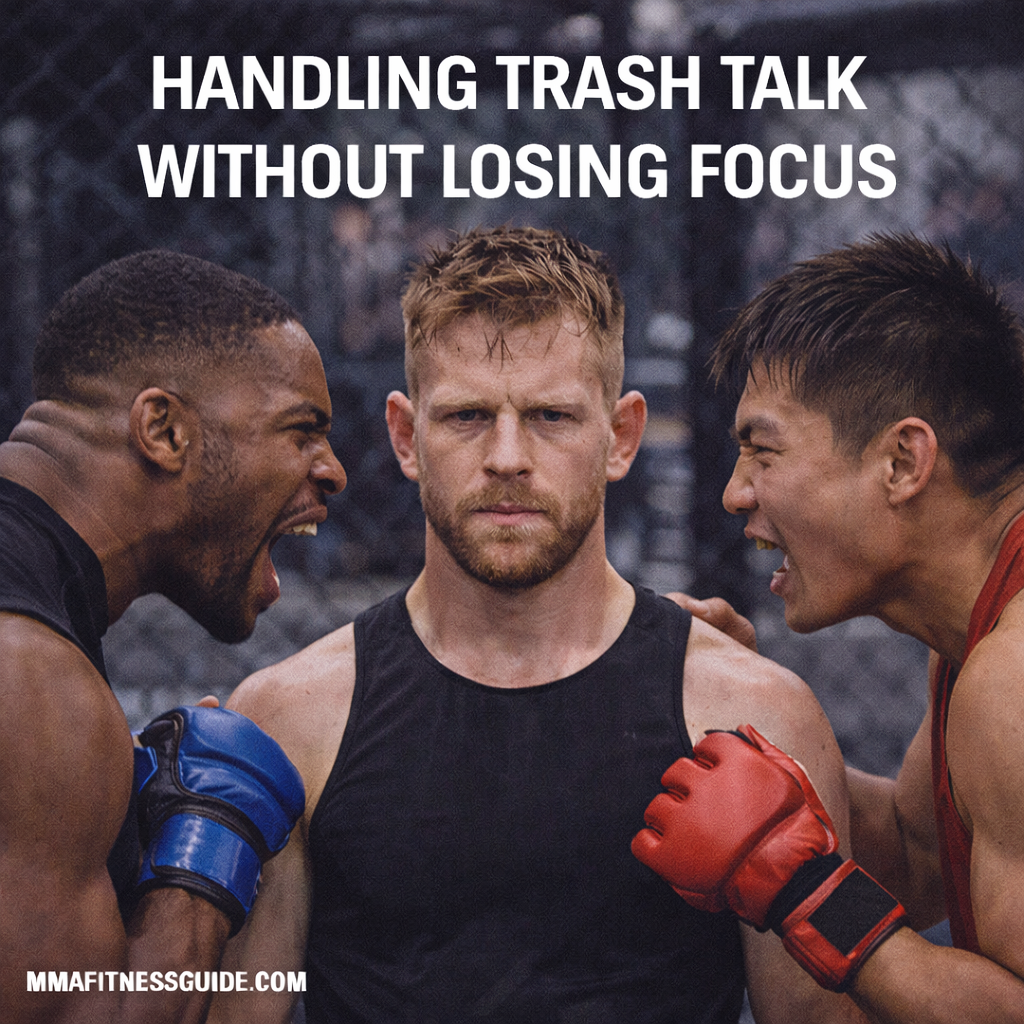
Handling Trash Talk Without Losing Focus

MMA fighter maintaining composure in a gym environment, representing handling trash talk without losing focus during training and competition.
MMA athlete stay calm and focused, demonstrating how to handle trash talk without letting it affect preparation or performance.

Trash talk has always been part of combat sports. Whether it comes from opponents, teammates, social media, or even spectators, verbal jabs can distract, frustrate, or motivate—depending on how they’re handled. For MMA athletes, learning to manage trash talk without losing focus is a critical mental skill that directly affects performance.

This article explains why trash talk works, how it impacts mindset, and practical strategies fighters can use to stay composed, confident, and locked in on what matters.

Continue reading “Handling Trash Talk Without Losing Focus”

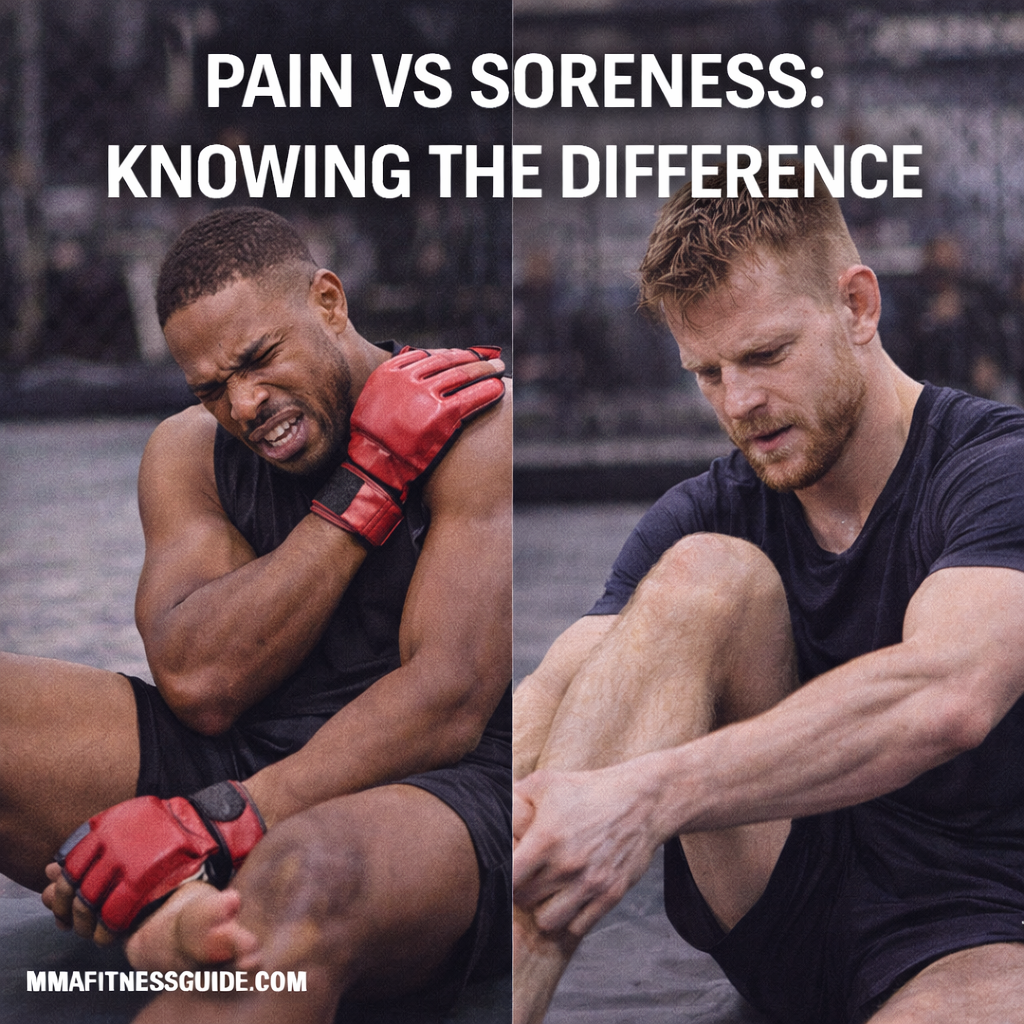
Pain vs Soreness: Knowing the Difference

Split image of MMA athletes showing pain versus soreness, with one fighter holding an injured shoulder and another stretching muscles in a gym.
MMA athletes compare pain versus soreness to understand when to push training and when to prioritize recovery.

Discomfort is part of MMA training—but not all discomfort is the same. Understanding the difference between pain and soreness is essential for staying healthy, progressing consistently, and avoiding injuries that can sideline you for weeks or months. Many fighters push through warning signs simply because they don’t know what their body is telling them.

This article explains the difference between pain and soreness, how each feels, when it’s safe to train, and when it’s time to back off.

Continue reading “Pain vs Soreness: Knowing the Difference”

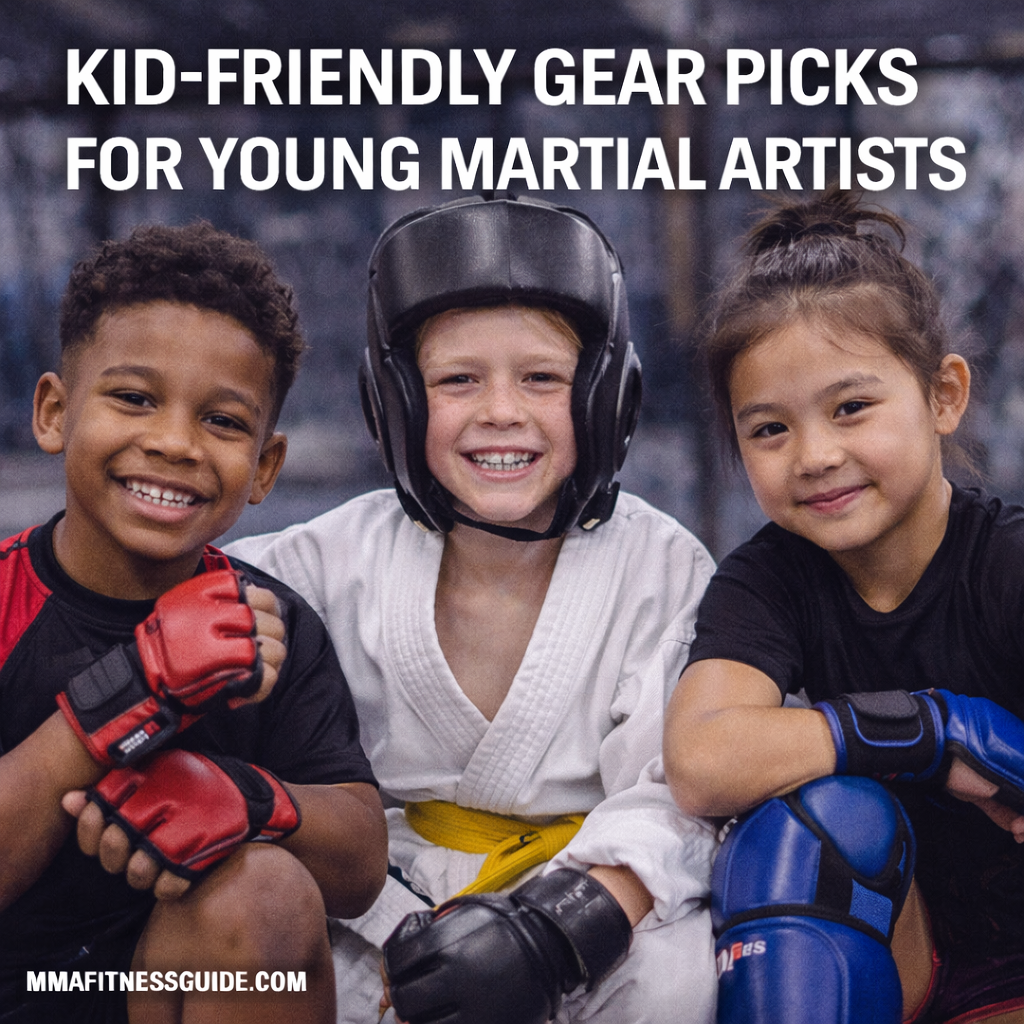
Kid-Friendly Gear Picks for Young Martial Artists

Young martial artists wearing kid-friendly MMA and martial arts protective gear, showing safe and comfortable training equipment for children.
Young martial artists train confidently using kid-friendly protective gear designed for safety, comfort, and enjoyment.

Introducing kids to martial arts can build confidence, discipline, coordination, and healthy habits—but safety and comfort must come first. Choosing kid-friendly gear ensures young martial artists can train safely, enjoy the experience, and develop skills without unnecessary risk or frustration.

This guide covers kid-friendly gear picks for young martial artists, explaining what equipment matters most, how to choose the right fit, and what parents and coaches should prioritize.

Continue reading “Kid-Friendly Gear Picks for Young Martial Artists”