Chaining Takedowns: Single to Double Variations

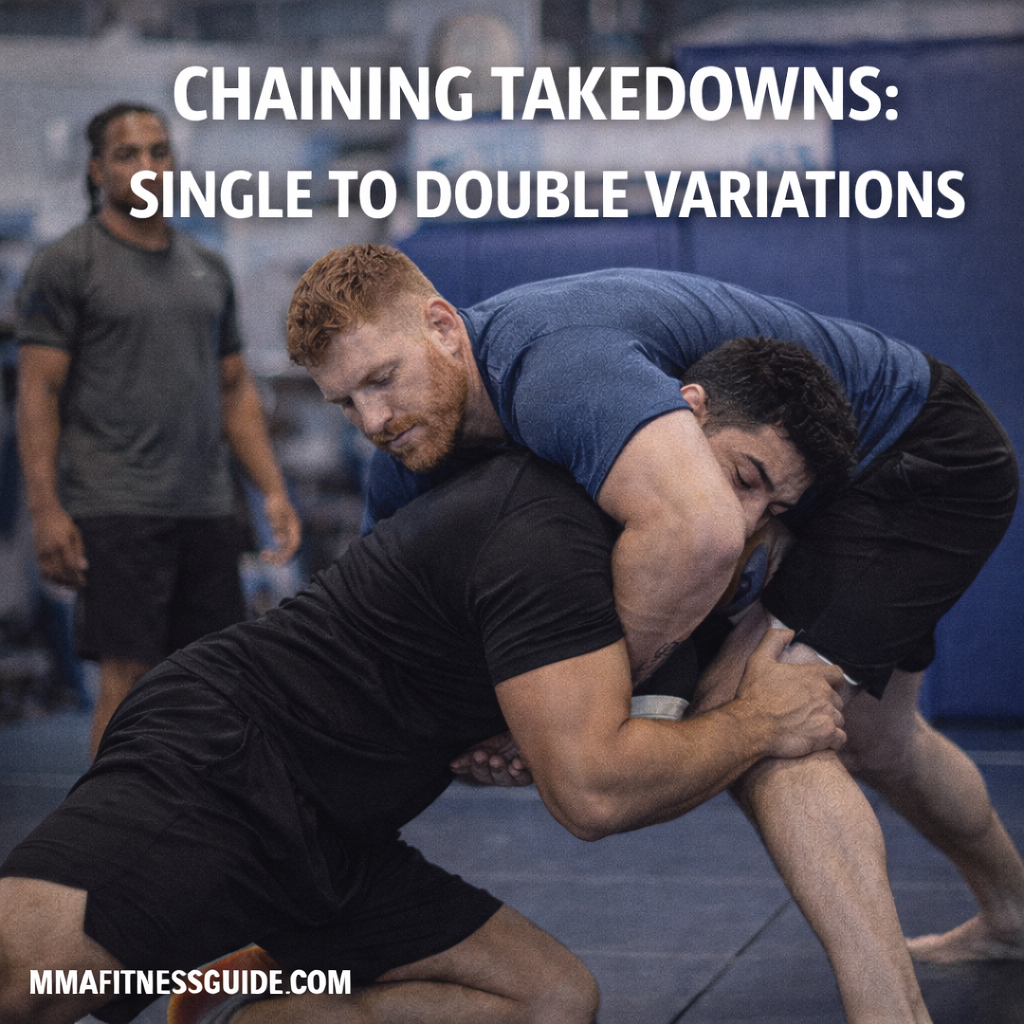
MMA fighters practicing a single-leg to double-leg takedown transition during wrestling training inside a gym.
MMA fighters drilling single to double leg takedown chains during grappling practice.

In MMA and wrestling-based grappling, the difference between failed shots and consistent takedowns often comes down to one skill: chaining attacks. Rarely does a clean takedown happen on the first attempt against a skilled opponent. Fighters who learn to flow from a single-leg into a double-leg dramatically increase their success rate and control where the fight takes place.

This guide breaks down how to chain single-leg attacks into double-leg finishes, why the transition works, and how to apply these variations in MMA without stalling or burning energy.

Continue reading “Chaining Takedowns: Single to Double Variations”


Smart Carb Loading for Peak Performance

MMA fighters eating carbohydrate-rich meals together to support smart carb loading and peak athletic performance.
MMA athletes fueling with balanced, carb-focused meals to support energy, recovery, and peak performance.

Carbohydrates are one of the most misunderstood parts of athletic nutrition. Some fighters avoid them out of fear of weight gain, while others overload without a plan. Smart carb loading sits in the middle — using carbohydrates strategically to maximize performance, energy, and recovery without unnecessary bulk or digestive issues.

This guide explains how fighters can use carb loading intelligently to support peak performance in training and competition.

Continue reading “Smart Carb Loading for Peak Performance”

How Altitude Training Benefits Fighters

MMA fighters training at high altitude with mountains in the background, demonstrating conditioning and endurance benefits of altitude training.
MMA fighters training at high altitude to improve endurance, recovery, and conditioning.

Altitude training has long been associated with endurance athletes, but it’s increasingly used by MMA fighters looking to improve conditioning, recovery, and mental toughness. Training at altitude introduces unique stressors that can enhance performance when applied correctly — and cause setbacks when misunderstood.

This article explains how altitude training works, why it can benefit MMA fighters, and how to use it safely and effectively.

Continue reading “How Altitude Training Benefits Fighters”

Negotiating Fight Purses and Contracts

MMA fighters reviewing and negotiating fight contracts with a manager at a table, representing business discussions in professional MMA.
MMA fighters discussing fight purses and contract terms with a manager during a negotiation meeting.

For most MMA fighters, negotiating fight purses and contracts is one of the most intimidating parts of the sport. Many athletes focus exclusively on training and leave negotiations to chance, accepting whatever terms are offered. Over time, this can limit earnings, create unfavorable obligations, and slow career growth.

Understanding how fight purses and contracts work empowers fighters to protect their value, plan long-term, and build sustainable careers. This guide breaks down key negotiation principles every MMA fighter should know.

Continue reading “Negotiating Fight Purses and Contracts”

MMA: Balance Social Life and Fitness

MMA athletes enjoying a social outing while maintaining a healthy fitness-focused lifestyle, representing balance between training and social life.
MMA athletes spending time together socially while maintaining balance between training and everyday life.

Training MMA requires commitment, structure, and consistency — but it doesn’t mean giving up your social life. Many fighters struggle to balance relationships, work, social events, and demanding training schedules, especially as intensity increases.

The key isn’t choosing between fitness and a social life. It’s learning how to balance both without burning out, losing motivation, or sacrificing progress. This guide breaks down realistic strategies to help MMA athletes stay disciplined while still enjoying life outside the gym.

Continue reading “MMA: Balance Social Life and Fitness”

Tracking Steps and Daily Activity Goals

Three MMA fighters checking fitness trackers during a walk, illustrating step tracking and daily activity goals for combat athletes.
MMA athletes monitoring daily steps and activity levels as part of overall conditioning and recovery.

For beginners starting a fitness routine, consistency matters more than intensity. One of the simplest and most effective ways to stay consistent is tracking daily steps and activity goals. You don’t need intense workouts every day to make progress — steady movement builds habits, supports recovery, and improves overall health.

This guide explains how tracking steps and daily activity helps beginners stay active, how to set realistic goals, and how to use step tracking without overcomplicating fitness.

Continue reading “Tracking Steps and Daily Activity Goals”

From Vale Tudo to MMA: A Brief History

Two MMA fighters exchanging strikes inside a cage, representing the evolution from Vale Tudo to modern mixed martial arts.
MMA fighters engaging in a controlled exchange that reflects the evolution from Vale Tudo to modern MMA.

Modern MMA didn’t appear overnight. It evolved through decades of experimentation, cultural exchange, and real-world fighting challenges. At the heart of MMA’s origins is Vale Tudo, a no-holds-barred combat style that tested martial arts in the rawest way possible.

Understanding how Vale Tudo transformed into modern MMA helps explain why today’s fighters train the way they do — and why versatility, conditioning, and adaptability are essential in the sport.

Continue reading “From Vale Tudo to MMA: A Brief History”

Impostor Syndrome in Amateur Fighters

Amateur MMA fighters sitting in a gym showing self-doubt and reflection, representing impostor syndrome in combat sports.
Amateur MMA fighters reflecting on self-doubt and confidence challenges during training.

Impostor syndrome is far more common in combat sports than most fighters admit. Many amateur fighters train hard, compete regularly, and continue to improve — yet still feel like they don’t belong, aren’t “real” fighters, or will eventually be exposed as frauds.

These thoughts can quietly undermine confidence, enjoyment, and performance. Understanding impostor syndrome and learning how to manage it is an essential part of mental development for amateur fighters.

Continue reading “Impostor Syndrome in Amateur Fighters”

MMA: Use a Massage Gun Effectively

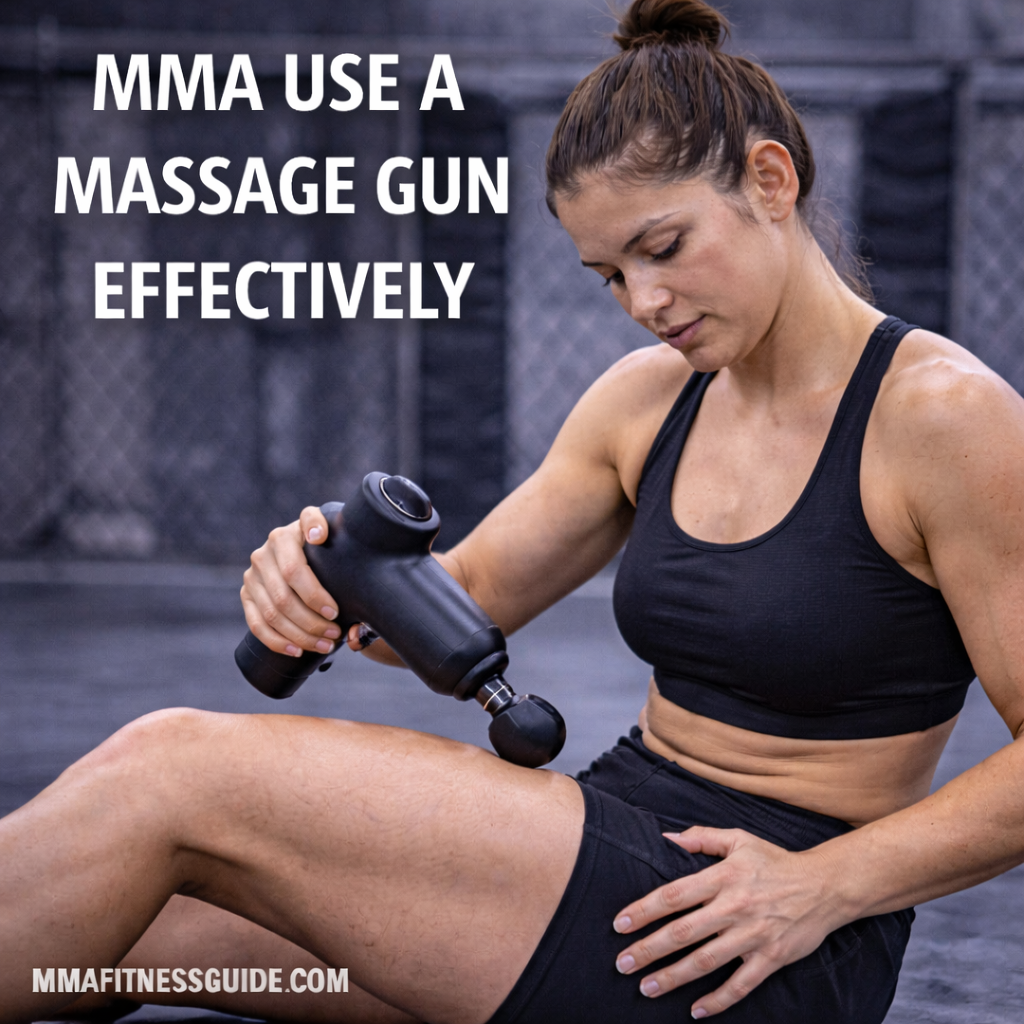
Female MMA athlete using a massage gun on her thigh for muscle recovery inside a training gym.
MMA athlete using a massage gun to support muscle recovery after training.

Massage guns have become a common recovery tool in MMA gyms, fight camps, and locker rooms. When used correctly, they can help fighters reduce soreness, improve circulation, and stay mobile between intense sessions. When used incorrectly, they can irritate tissue, delay recovery, or even increase injury risk.

This guide explains how MMA fighters can use a massage gun effectively — when to use it, where to apply it, and how to avoid common mistakes.

Continue reading “MMA: Use a Massage Gun Effectively”

Upgrading Your Gear as You Progress

MMA fighters comparing and upgrading training gear in a gym, including gloves, shin guards, and protective equipment.
MMA athletes reviewing and upgrading their training gear as they advance in skill level.

When you first start training MMA, basic gear is enough to get moving. But as your skill level, training intensity, and goals increase, your equipment needs change. Gear that once felt fine may start limiting performance, comfort, or safety.

Knowing when and how to upgrade your MMA gear helps you train smarter, reduce injury risk, and get more out of every session. This guide explains what to upgrade, when it matters, and how to make smart gear decisions as you progress.

Continue reading “Upgrading Your Gear as You Progress”