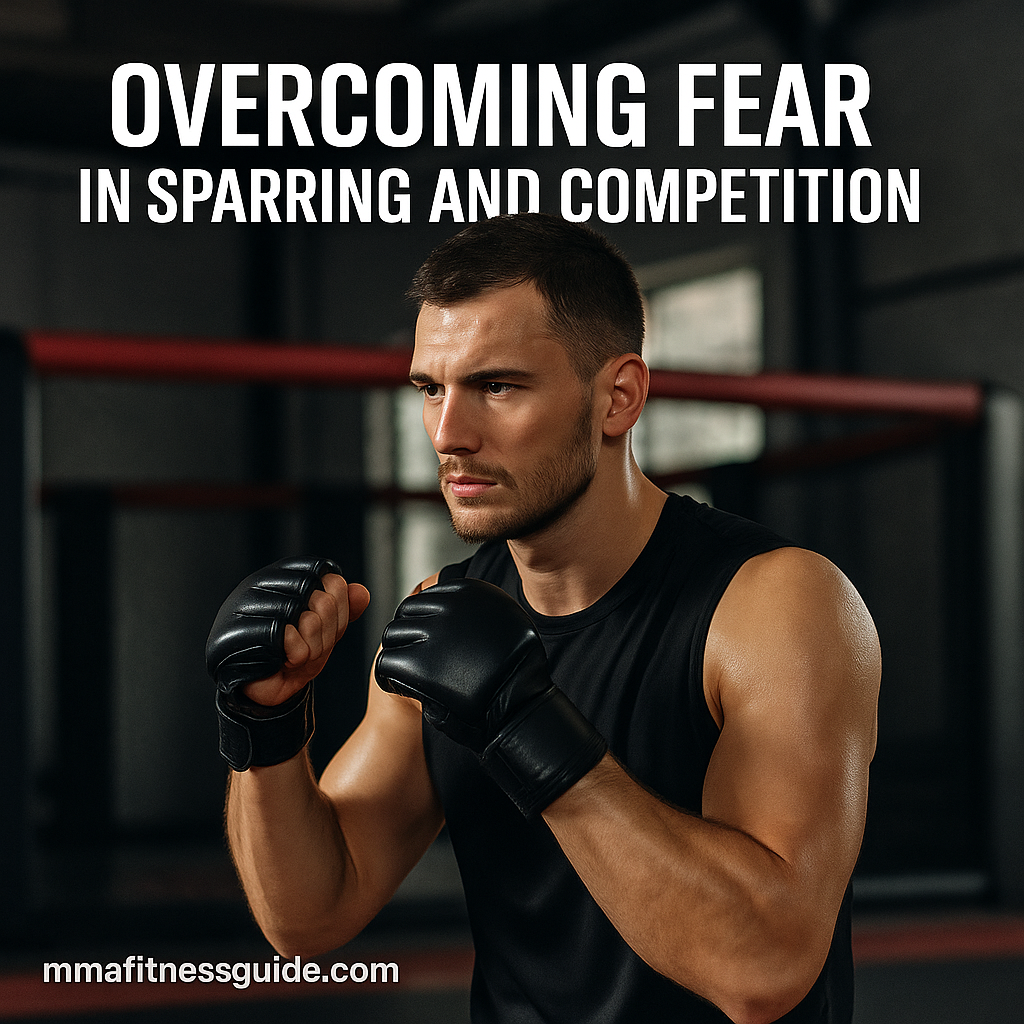
Fear Is Normal — Even for Fighters
Every fighter, from the newest amateur to the UFC veteran, has felt it — the nerves before sparring or stepping into the cage. Your heart races, palms sweat, and doubt creeps in.
Here’s the truth: fear isn’t weakness. It’s your body preparing to perform. The key is learning how to control it rather than let it control you.
Understanding the Nature of Fear
Fear in combat sports usually comes from three sources:
- Fear of getting hurt
- Fear of failure or embarrassment
- Fear of the unknown
These are all natural human responses. What separates elite fighters from the rest is not the absence of fear — it’s their ability to act in spite of it.
Why Fear Exists — and How It Helps You
Physiologically, fear triggers an adrenaline surge. Your body becomes faster, stronger, and more alert.
The problem comes when that adrenaline turns into panic or hesitation.
When controlled, fear becomes fuel — sharpening focus, awareness, and timing.
As Georges St-Pierre once said:
“Fear is good. It makes you more alert, sharp, and prepared.”
Step 1: Acknowledge the Fear
Pretending you’re not afraid only makes it stronger.
Instead, name it — “I’m nervous because I don’t want to get hit,” or “I’m afraid of freezing up.”
Once you identify the source, you can address it logically. Awareness turns emotion into information.
Step 2: Control the Breath
Your breath is your anchor. When fear spikes, breathing often becomes shallow and rapid.
Use deep, slow breaths to regulate your nervous system:
- Inhale through your nose for 4 seconds
- Hold for 2 seconds
- Exhale slowly for 6 seconds
Repeat this during warmups or between rounds. Calm breath = calm mind.
Step 3: Reframe the Situation
Instead of thinking, “I might lose,” think:
- “This is just another round of practice.”
- “I’m here to learn, not to prove.”
- “Everyone feels fear — but not everyone faces it.”
Your brain listens to your inner dialogue. Speak to yourself like a coach, not a critic.
Step 4: Build Confidence Through Preparation
Confidence doesn’t come from hype — it comes from repetition.
The more you train smart, the more trust you build in your abilities.
- Drill your weaknesses until they feel natural.
- Spar with partners who challenge you but don’t overwhelm you.
- Reflect after every session — what went right, and what to improve.
Consistency breeds calmness.
Step 5: Visualize Success
Before sparring or a fight, visualize yourself moving smoothly, landing strikes, defending confidently, and staying composed.
Mental imagery trains your nervous system the same way physical reps do.
Top fighters use visualization daily — it’s a mental warm-up for performance.
Step 6: Manage Expectations
You don’t need to “win” every sparring round.
Sparring is for learning, not ego. Some days you’ll get caught — that’s part of growth.
Detach your identity from the outcome. Focus on progress, not perfection.
Step 7: Use Exposure Gradually
Fear fades through familiarity.
If you dread sparring, start small:
- Watch others spar
- Do controlled technical rounds
- Gradually increase intensity
Each exposure teaches your brain that fear doesn’t equal danger — it equals opportunity.
Step 8: Post-Spar Reflection
After each session, take a few minutes to reflect:
- What did I handle better than last time?
- What triggered my fear the most?
- What can I adjust next session?
Self-awareness transforms fear into feedback.
Step 9: Build a Supportive Environment
Surround yourself with coaches and training partners who emphasize learning, not humiliation.
A supportive gym culture builds courage faster than toxic pressure ever could.
When fighters lift each other up, everyone improves.
Step 10: Accept the Unknown
No matter how prepared you are, there’s always uncertainty in combat sports.
That unpredictability is what makes MMA exciting — and rewarding.
True fighters embrace it. They trust their preparation and let go of what they can’t control.
Key Takeaways
- Fear is normal — even for world champions.
- Breathe, prepare, and reframe your mindset.
- Gradual exposure reduces anxiety over time.
- True confidence comes from consistent training and reflection.
As the saying goes:
“Courage isn’t the absence of fear. It’s acting despite it.”
Face the nerves — and you’ll find strength on the other side.