Mixed martial arts has grown far beyond competition and entertainment. Today, MMA plays an increasing role in youth development, education, and community building. For fighters, coaches, and gym owners, community outreach and school programs offer meaningful ways to create impact while also building sustainable business and career opportunities.
From after-school training programs to anti-bullying initiatives, MMA outreach helps strengthen communities and establish long-term professional pathways beyond the cage.
Why Community Outreach Matters in MMA
MMA gyms naturally promote discipline, respect, accountability, and physical fitness—values that align closely with educational and community goals.
Community outreach helps MMA professionals:
- Improve public perception of the sport
- Build trust with parents and schools
- Establish credibility outside competition
- Create long-term income opportunities
- Give back in a structured, meaningful way
Outreach turns MMA into a tool for positive social development.
The Role of MMA in Youth and Education
Youth programs are at the core of most MMA outreach efforts. Martial arts training provides structure and guidance that many young people lack in traditional sports settings.
MMA-based programs support:
- Confidence and self-esteem development
- Emotional regulation and discipline
- Physical fitness and coordination
- Respect for rules and authority
- Conflict management and anti-bullying skills
Schools value programs that reinforce these outcomes without promoting aggression.
Types of Community Outreach and School Programs
Outreach programs vary widely depending on experience, location, and resources. Successful programs are flexible and tailored to community needs.
School-Based Martial Arts Programs
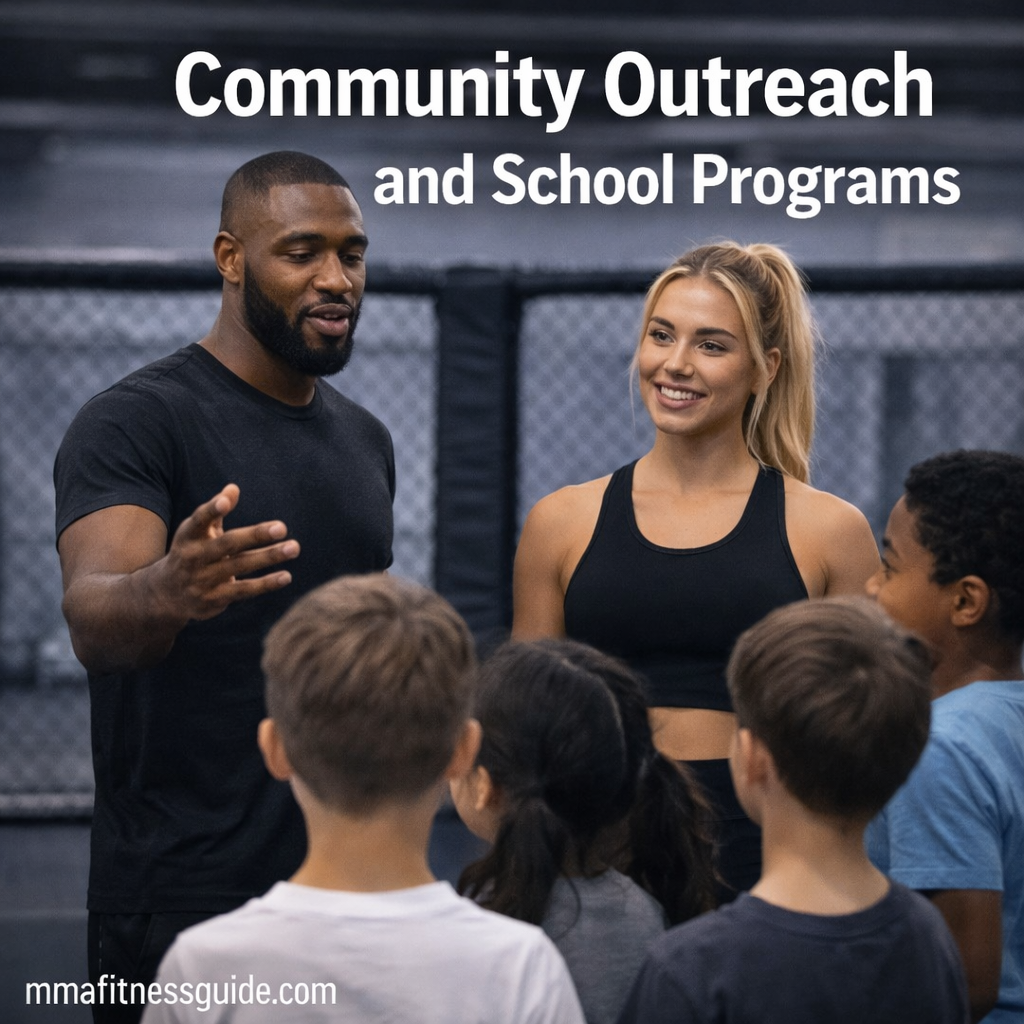
Many MMA professionals partner directly with schools to offer:
- Martial arts units within physical education classes
- After-school MMA or self-defense clubs
- Confidence and discipline workshops
- Fitness and movement education sessions
These programs introduce MMA in a safe, age-appropriate environment.
Anti-Bullying and Self-Defense Workshops
Anti-bullying initiatives are among the most requested school programs.
They focus on:
- Situational awareness
- De-escalation strategies
- Confidence building
- Boundary setting and personal safety
These workshops emphasize prevention and empowerment rather than physical confrontation.
Community Center and Youth Organization Programs
MMA gyms often collaborate with:
- Community centers
- Boys & Girls Clubs
- Recreation departments
- Nonprofit youth organizations
These partnerships expand reach and reduce the need for expensive marketing.
Business Benefits of Outreach for MMA Gyms
Community outreach is not only impactful—it’s also a smart business strategy.
Increased Brand Trust and Visibility
Parents and educators who see MMA professionals working in schools are more likely to:
- Trust the gym
- Enroll children in classes
- Recommend the gym to others
Outreach builds credibility before any sales conversation occurs.
Additional Revenue Streams
School and community programs can generate income through:
- School contracts
- Paid workshops and seminars
- Grants and sponsorships
- Long-term youth memberships
Diversified income reduces reliance on competition and private training alone.
Long-Term Student Retention
Outreach creates a natural pipeline:
- School program participation
- Gym enrollment
- Long-term training progression
Students who start young often remain involved for years.
Career Opportunities Created by Outreach Programs
Community programs open doors beyond fighting and coaching traditional classes.
Coaching and Program Leadership Roles
Outreach creates positions such as:
- Youth program coaches
- Community coordinators
- Curriculum developers
- Outreach directors
These roles provide stable, long-term career options.
Speaking and Educational Opportunities
Experienced MMA professionals often expand into:
- School assemblies
- Motivational speaking
- Mental resilience workshops
- Fitness education seminars
These roles increase visibility and professional credibility.
Personal Brand Growth
Community involvement often leads to:
- Local media coverage
- Sponsorship opportunities
- Social media growth
- Public recognition
Outreach builds reputation organically and ethically.
How to Start a Community or School Program
Launching an outreach program doesn’t require massive resources.
Identify Community Needs
Start by researching:
- Local school priorities
- Youth challenges in your area
- Existing wellness or fitness programs
Successful outreach solves real problems.
Create a Clear Program Structure
Schools and organizations prefer programs with:
- Defined goals
- Age-appropriate activities
- Clear safety guidelines
- Professional presentation
Structure builds trust.
Build Relationships With Schools
Effective outreach starts with communication:
- Contact school administrators or PE departments
- Present benefits clearly
- Offer pilot or trial sessions
Consistency and professionalism matter more than credentials alone.
Safety, Legal, and Professional Considerations
Working with youth requires strict standards.
Insurance and Liability Coverage
Ensure:
- Proper liability insurance
- Clear waivers and consent forms
- Documented safety procedures
Protection builds confidence for schools and parents.
Background Checks and Certifications
Most schools require:
- Background checks
- CPR and first-aid certification
- Coaching or training credentials
Meeting these standards is essential for credibility.
Measuring Program Impact
Schools and partners value measurable results.
Track:
- Attendance and participation
- Student engagement
- Feedback from parents and educators
- Enrollment growth linked to outreach
Data helps improve programs and secure long-term partnerships.
Outreach as a Long-Term MMA Career Path
Outreach provides career longevity in a sport where competition windows are short.
Benefits include:
- Reduced reliance on fight income
- Stable schedules
- Community respect
- Personal fulfillment
Many former fighters successfully transition into outreach-based careers.
Changing the Public Image of MMA
Community programs help redefine MMA.
They demonstrate:
- Discipline over violence
- Structure over chaos
- Education over aggression
This broader acceptance benefits gyms, athletes, and the sport as a whole.
Final Thoughts
Community outreach and school programs allow MMA professionals to extend their impact beyond competition while building sustainable careers. By supporting youth, partnering with schools, and serving communities, MMA becomes a platform for long-term growth and positive change.
In a sport rooted in discipline and resilience, outreach is one of the most powerful ways to create a lasting legacy.