
MMA: Avoid Crashing After Cutting Weight

A tan-skinned blonde female athlete standing in an MMA gym holding a sports drink, wearing colored shorts, with the article title “MMA Avoid Crashing After Cutting Weight” and the mmafitnessguide.com watermark.
MMA athlete holding a sports drink after training, symbolizing smart post–weight cut recovery and hydration strategies.

Cutting weight is one of the hardest parts of a fighter’s journey — physically, mentally, and emotionally. But the biggest danger isn’t always the cut itself.

It’s what happens after the weigh-in.

Many fighters experience the post-cut crash:

  • Extreme fatigue
  • Brain fog
  • Weakness
  • Stomach discomfort
  • Emotional drop-offs
  • Poor fight-night performance

The good news? Crashing isn’t guaranteed. With the right rehydration and refueling plan, you can stabilize energy, restore strength, and feel sharp when you step into the cage.

This guide shows you how to avoid the crash and recover the right way after cutting weight.

Continue reading “MMA: Avoid Crashing After Cutting Weight”

Managing Weight Between Fights

A title graphic reading “Managing Weight Between Fights” displayed over a dimly lit MMA gym background with the mmafitnessguide.com watermark.
Managing weight between fights, set over a blurred MMA gym background.

One of the most overlooked parts of a fighter’s career is what happens between fights. While fight camp gets all the attention, the weeks and months outside of camp often determine how easy (or painful) your next weight cut will be.
Staying within a healthy, manageable range allows you to train better, feel better, recover faster, and start camp without the panic of losing 25+ pounds.

Managing weight between fights isn’t about dieting year-round — it’s about consistency, smart habits, and avoiding extremes.

This guide breaks down how fighters can maintain a healthy walking weight without sacrificing strength, performance, or sanity.

Continue reading “Managing Weight Between Fights”

How Alcohol Impacts Fighter Performance

A man drinking a glass of beer against a dark background, used to illustrate how alcohol affects a fighter’s performance and recovery.
A man drinking beer, representing the impact alcohol can have on fighter performance and training consistency.

Alcohol is a normal part of social life for many athletes — but for fighters, it carries specific performance consequences that can hurt conditioning, recovery, and fight readiness. You don’t need to swear off alcohol forever, but understanding its effects helps you make smarter decisions during training camps, recovery weeks, and downtime.

Even small amounts of alcohol can influence reaction time, hydration, sleep quality, and muscle repair — all of which matter in MMA, Muay Thai, boxing, and grappling.

Continue reading “How Alcohol Impacts Fighter Performance”

Best Supplements for Joint Fitness

A set of supplement bottles and capsules arranged on a gym surface with kettlebells in the background, featuring the text Best Supplements for Joint Fitness.
Supplement bottles and capsules

Joint health is one of the most overlooked parts of MMA and combat sports training — until pain shows up. Whether you’re striking, sprawling, grappling, or grinding through conditioning, your joints take constant impact. Supporting them with the right supplements can reduce inflammation, improve mobility, and help you recover faster between sessions.

This guide breaks down the best supplements for keeping your joints strong, stable, and fight-ready.

Continue reading “Best Supplements for Joint Fitness”

Plant-Based Diets for MMA Fighters

Male MMA fighter sitting at a table with assorted plant-based foods, promoting clean nutrition for athletic performance.
Male MMA athlete fueling training with a plant-based diet.

More MMA athletes are turning to plant-based nutrition to improve endurance, recovery, and overall performance. While old-school training culture often emphasized meat-heavy diets, today’s fighters are proving that you can fuel strength and explosiveness with plants — and do it without sacrificing power.

Continue reading “Plant-Based Diets for MMA Fighters”

MMA: Fuel Your Body Before Sparring

A fit, attractive female MMA athlete eating a banana while holding a rice cake inside a gym, with the title “Fuel Your Body Before Sparring” displayed.
A fighter fueling her body with quick, clean energy before stepping into sparring rounds.

Introduction

Sparring demands the highest combination of skills you’ll use in MMA — speed, timing, explosiveness, cardio, focus, and reaction time. But even skilled fighters underperform when they show up under-fueled. The right pre-sparring meal can make the difference between sharp and sluggish, between controlled rounds and getting gassed halfway through.

Fueling your body properly isn’t complicated, but it does require timing and smart choices. Here’s how to eat before sparring so you feel powerful, focused, and conditioned when the rounds begin.

Continue reading “MMA: Fuel Your Body Before Sparring”

Healthy Snacks for Fighters on the Go

A muscular male MMA athlete sitting on a gym bench and grabbing a healthy snack from his training bag, with the title “Healthy Snacks for Fighters on the Go” displayed.
A fighter choosing quick, portable snacks to stay fueled between training sessions.

Introduction

Fighters have busy schedules. Between training sessions, work, school, and recovery, there isn’t always time for full meals. That’s why having healthy, portable snack options is crucial. Good snacks keep your energy steady, support muscle repair, and prevent you from reaching for junk food when you’re hungry and rushed.

Here are the best grab-and-go snacks for fighters who need fuel fast — without sacrificing nutrition.

Continue reading “Healthy Snacks for Fighters on the Go”

The Importance of Electrolytes in Combat Sports

Fit female MMA athlete drinking an electrolyte mix inside the gym, with the title “The Importance of Electrolytes in Combat Sports” displayed.
A fighter replenishing electrolytes to stay hydrated and maintain strong performance during training.

Introduction

Combat sports demand a unique level of intensity. Fighters sweat more, push harder, and train longer than most athletes — which means they lose more than just water. They lose electrolytes, the minerals that keep the body functioning smoothly. When electrolyte levels drop, performance drops with them.

Understanding electrolytes is one of the simplest ways to improve endurance, reduce cramping, and prevent fatigue during training. This guide breaks down why they matter and how fighters can manage them correctly.

Continue reading “The Importance of Electrolytes in Combat Sports”

Balancing Macros for Strength and Endurance

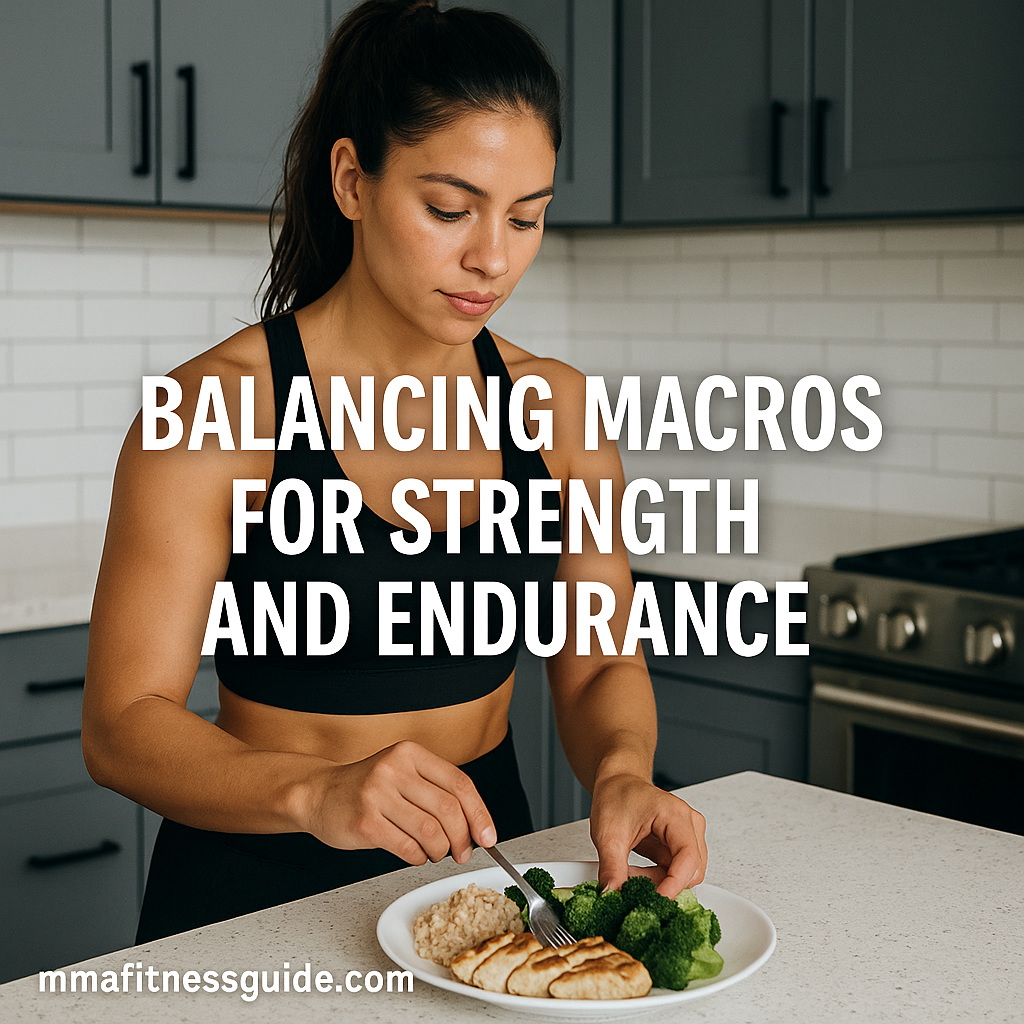
Fit female MMA athlete preparing a balanced meal with protein, carbs, and vegetables, with the title “Balancing Macros for Strength and Endurance” displayed.
A fighter preparing a balanced macro-focused meal to support both strength and endurance training.

Introduction

Fighters need a unique mix of strength, power, and endurance. That means your nutrition has to support heavy lifting, explosive movements, long training sessions, and fast recovery. Balancing your macros — protein, carbs, and fats — helps your body perform at its best without feeling sluggish or burned out.

You don’t need a strict diet or complicated formulas. With a basic understanding of how each macro works and how to mix them, you can fuel every session and stay consistent week after week.

Here’s a simple guide to balancing macros for strength and endurance.

Continue reading “Balancing Macros for Strength and Endurance”

What Fighters Eat on Rest Days

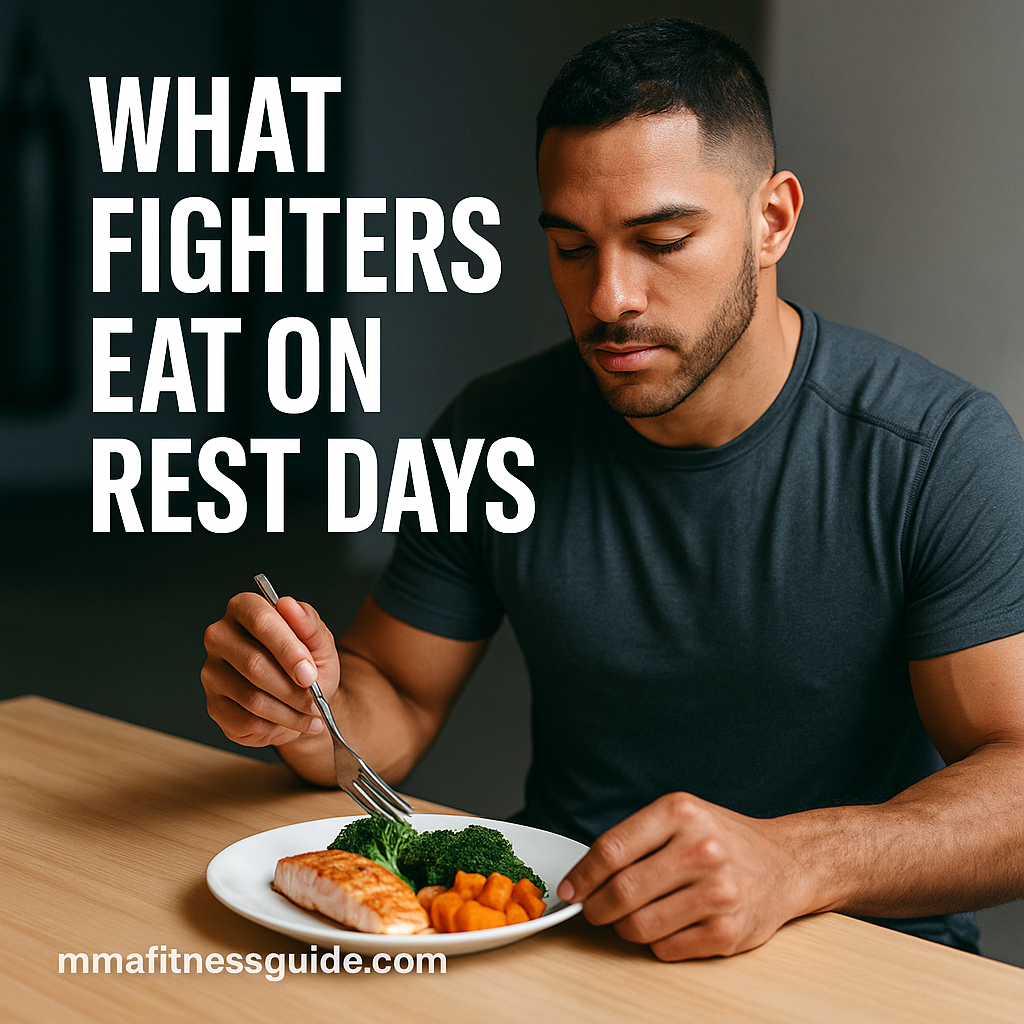
Male MMA athlete eating a clean rest-day meal with the title “What Fighters Eat on Rest Days” displayed.
A fighter enjoying a simple, balanced meal to support recovery on his rest day.

Introduction

Rest days are just as important as training days. Your body repairs muscle, restores energy, and recovers from the stress of hard workouts. But many fighters aren’t sure how to eat when they’re not training. Do you cut calories? Eat normally? Change macros?

The good news is that rest-day nutrition is straightforward. You don’t need strict rules — just a few simple adjustments to support recovery while keeping energy levels steady.

Here’s what fighters typically eat on rest days and how you can structure your meals.

Continue reading “What Fighters Eat on Rest Days”