
Fighter Conditioning Mistakes to Stop Making

MMA fighters exhausted during a conditioning session in the gym, illustrating common fighter conditioning mistakes that reduce performance and recovery.
MMA athletes pause during an intense conditioning session, highlighting common conditioning mistakes fighters need to stop making.

Conditioning is one of the most misunderstood aspects of MMA training. Many fighters work extremely hard but still gas out, feel flat in later rounds, or struggle to recover between sessions. The issue is rarely effort—it’s usually avoidable conditioning mistakes that limit progress and increase injury risk.

This article breaks down common fighter conditioning mistakes to stop making, explains why they hurt performance, and shows how smarter conditioning leads to better endurance, sharper execution, and longer careers.

Continue reading “Fighter Conditioning Mistakes to Stop Making”

Training for Longevity: How to Stay Fit Past 40

Middle-aged MMA athletes training in a gym, representing longevity-focused MMA conditioning and staying fit past age 40.
MMA athletes over 40 focus on smart training and recovery to maintain long-term fitness and performance.

Training MMA past 40 isn’t about proving toughness—it’s about staying capable, healthy, and consistent for the long run. While recovery slows and injuries take longer to heal, many athletes discover that smarter training actually improves performance and enjoyment. Longevity-focused training allows you to keep sharpening skills, staying fit, and enjoying MMA without burning out or breaking down.

This guide explains how to train for longevity past 40 by adjusting intensity, recovery, mindset, and conditioning—without giving up progress or purpose.

Continue reading “Training for Longevity: How to Stay Fit Past 40”

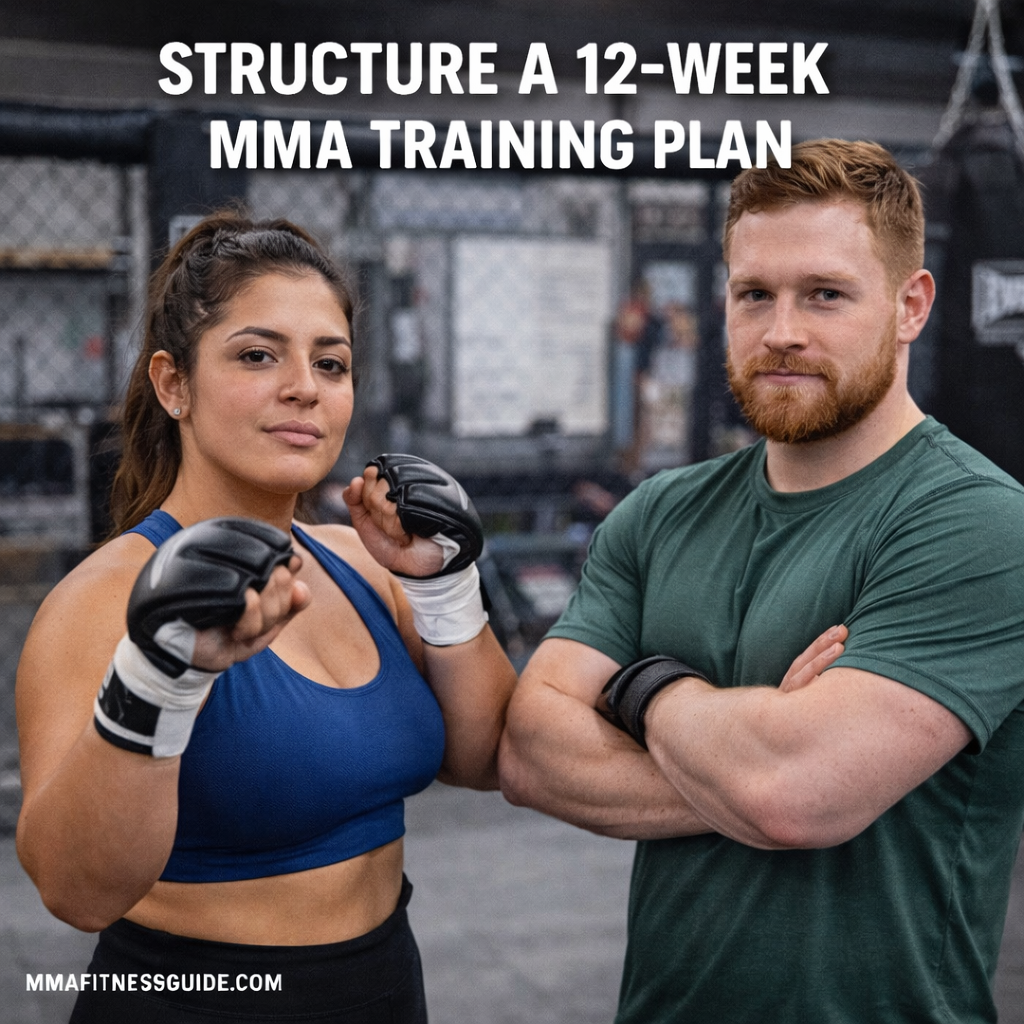
MMA: Structure a 12-Week MMA Training Plan

MMA athletes standing in a gym representing a structured 12-week MMA training plan focused on conditioning, skill development, and fight preparation.
MMA athletes prepare for structured training as part of a 12-week MMA training plan designed to build skills, conditioning, and fight readiness.

A well-structured 12-week MMA training plan is one of the most effective ways to build skills, conditioning, and confidence without burning out or overtraining. Whether you’re preparing for an amateur fight, sharpening your overall game, or returning to structured training, a clear plan provides direction, balance, and measurable progress.

This guide explains how to structure a 12-week MMA training plan, breaking it into logical phases that develop technique, strength, conditioning, and recovery in the right order.

Continue reading “MMA: Structure a 12-Week MMA Training Plan”

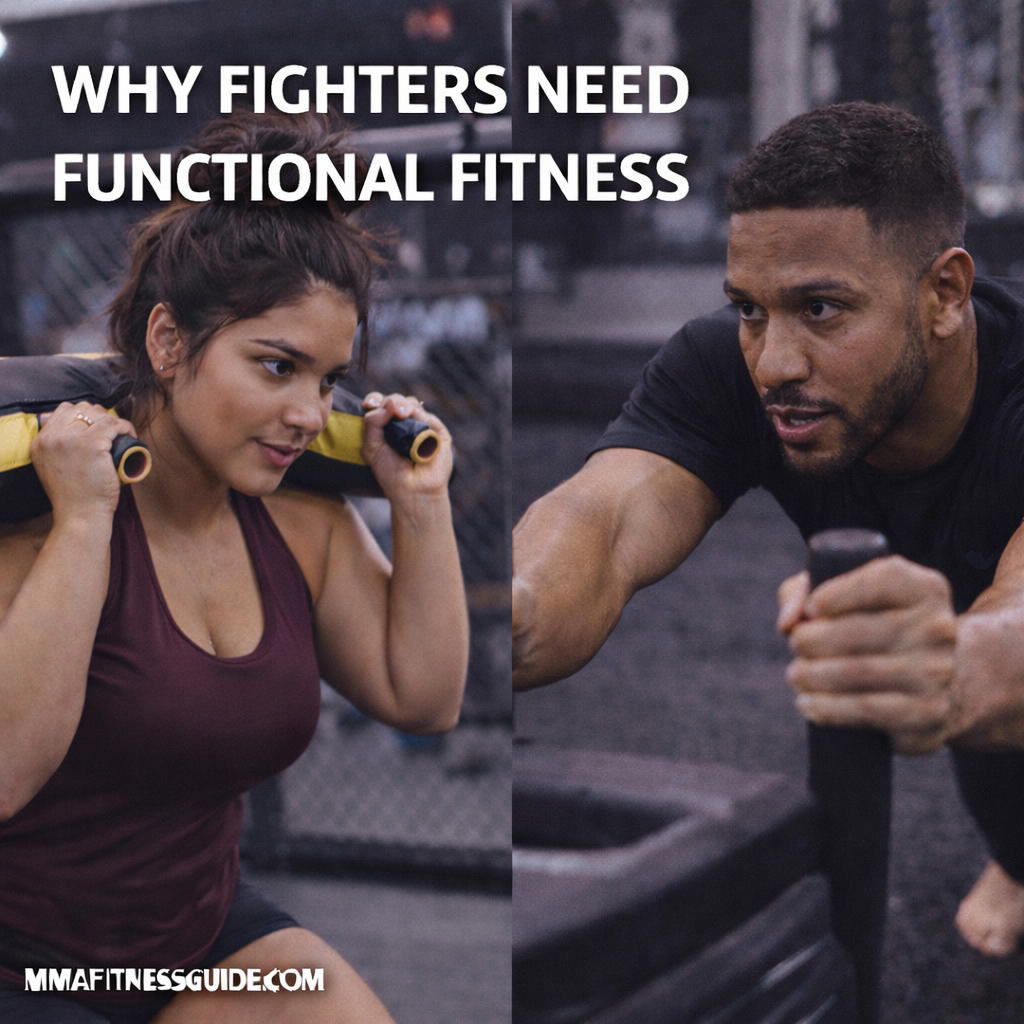
Why Fighters Need Functional Fitness

MMA fighters performing functional fitness exercises in a gym, showing sandbag training and sled pushes to build real-world strength and conditioning.
MMA athletes training functional fitness with sandbags and sleds to improve strength, coordination, and performance inside the cage.

Introduction

MMA is unpredictable. Fighters strike, wrestle, scramble, clinch, and defend under constant fatigue and pressure. Because of this, traditional gym training alone isn’t enough. Fighters need functional fitness—training that improves how the body moves, produces force, and resists fatigue in real-world combat situations.

Functional fitness isn’t about looking strong. It’s about being strong, coordinated, and resilient when it matters most.

Continue reading “Why Fighters Need Functional Fitness”

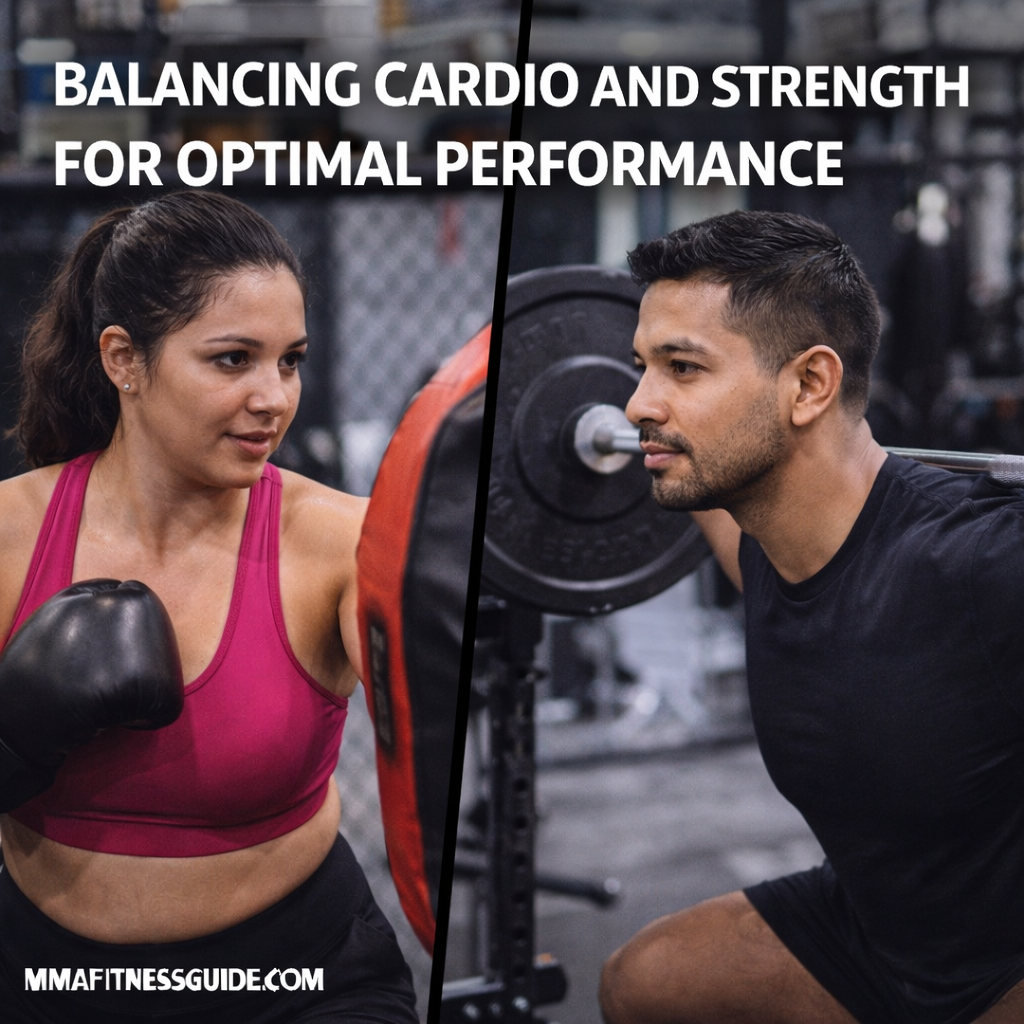
Balancing Cardio and Strength for Optimal Performance

MMA athletes training cardio and strength in a gym, showing the balance between conditioning work and resistance training for optimal performance.
MMA athletes balancing cardio conditioning and strength training to improve endurance, power, and overall performance.

Introduction

One of the most common challenges MMA athletes face is balancing cardio and strength without sacrificing either. Too much conditioning can lead to strength loss, while excessive lifting can leave fighters gassed during rounds. Optimal MMA performance requires both systems working together—not competing for priority.

Understanding how to balance cardio and strength allows fighters to train smarter, recover better, and perform consistently across rounds.

Continue reading “Balancing Cardio and Strength for Optimal Performance”

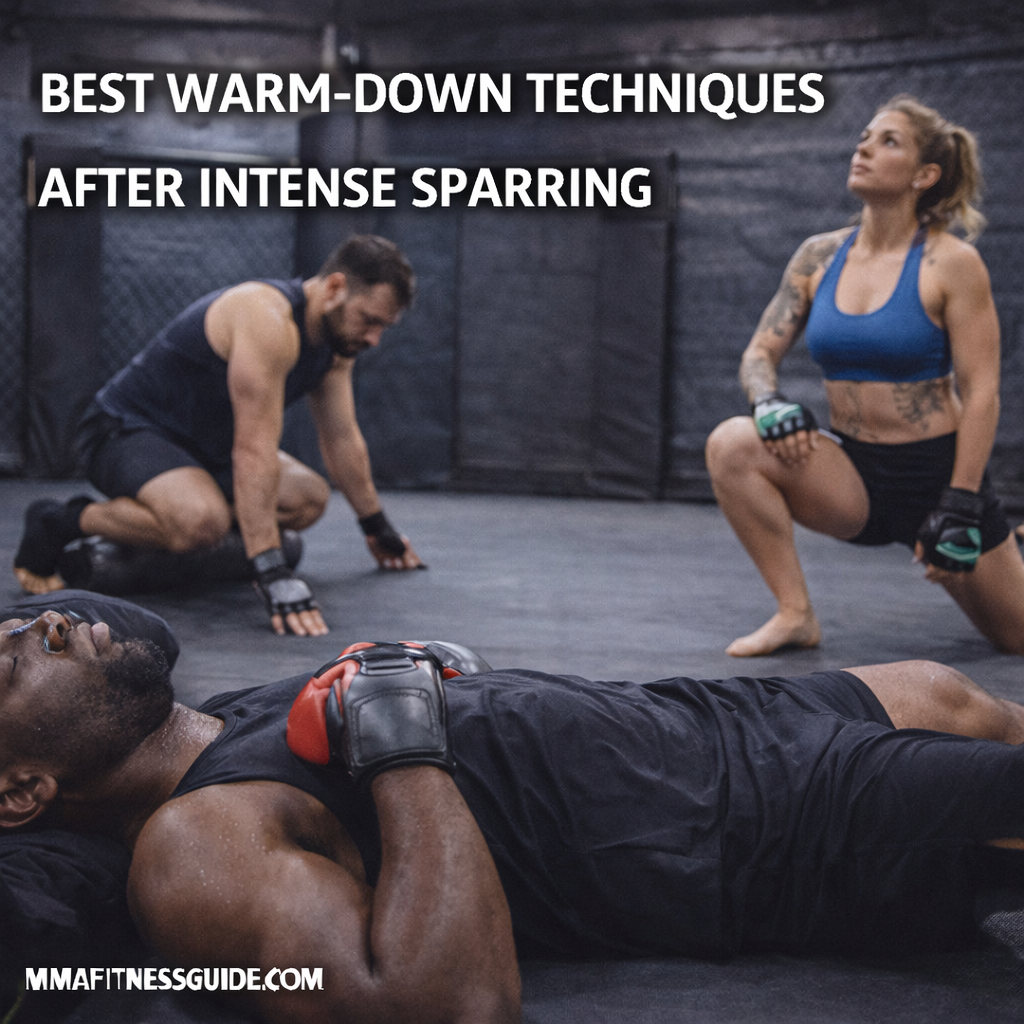
Best Warm-Down Techniques After Intense Sparring

MMA fighters performing warm-down activities after intense sparring, including breathing, stretching, and light mobility work in a gym.
MMA athletes cooling down after intense sparring with breathing, mobility, and recovery-focused movement.

Introduction

After intense sparring, most fighters focus on what went wrong in the round—but far fewer focus on what happens immediately after training. Skipping a proper warm-down can slow recovery, increase soreness, and raise the risk of lingering stiffness or injury. A structured warm-down helps the body transition out of high intensity and prepares it to recover efficiently.

For MMA athletes, warm-downs are not optional extras—they are a key part of staying healthy, consistent, and sharp.

Continue reading “Best Warm-Down Techniques After Intense Sparring”

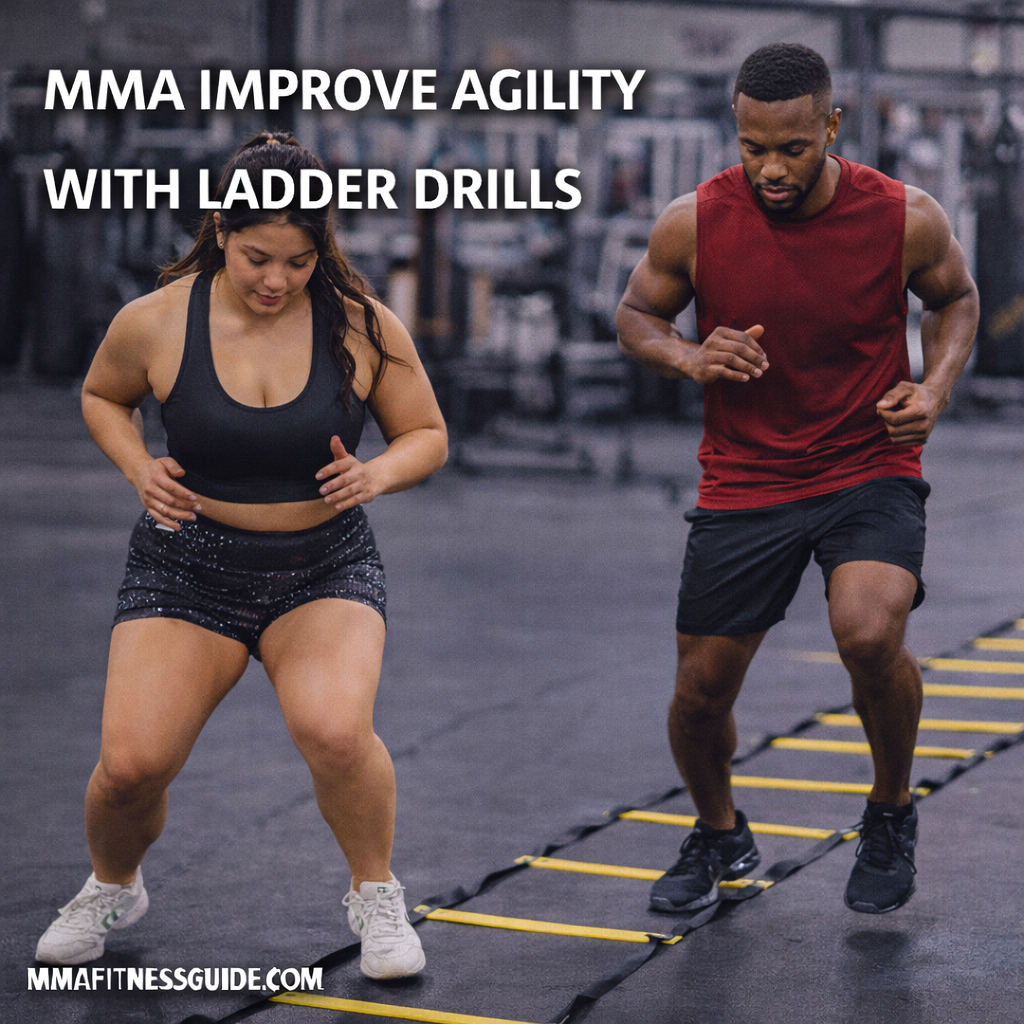
MMA Improve Agility with Ladder Drills

MMA athletes performing agility ladder drills in a gym to improve foot speed, coordination, and movement efficiency.
MMA athletes training with ladder drills to improve agility, balance, and footwork for better performance.

Introduction

Agility is a critical physical quality in MMA. Fighters must change direction quickly, maintain balance during exchanges, and react instantly to unpredictable movement. Ladder drills are one of the most effective and accessible tools for improving agility, foot speed, coordination, and movement efficiency.

When used correctly, ladder drills enhance how fighters move—not just how fast they move—making them a valuable addition to MMA training and conditioning programs.

Continue reading “MMA Improve Agility with Ladder Drills”

Core Workouts That Protect Against Injury

MMA athletes performing plank-based core exercises in a gym to improve stability and reduce injury risk during training.
MMA athletes performing core stability exercises designed to protect against injury and support safer training.

Introduction

A strong core is one of the most important injury-prevention tools for MMA athletes. The core does far more than create visible abs—it stabilizes the spine, transfers force between the upper and lower body, and protects joints during explosive, unpredictable movements.

Core workouts that focus on stability, control, and endurance help fighters stay resilient under pressure, reduce injury risk, and maintain performance throughout long training camps.

Continue reading “Core Workouts That Protect Against Injury”

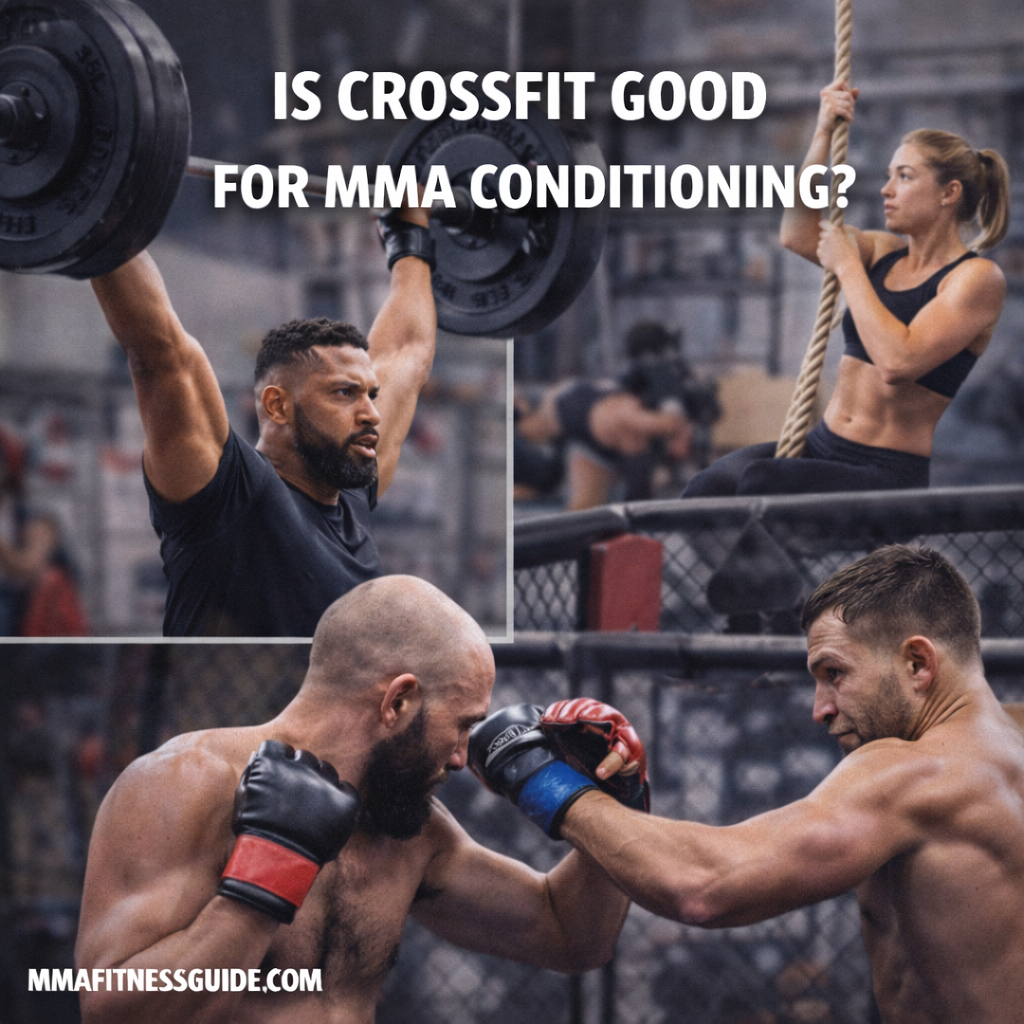
Is CrossFit Good for MMA Conditioning?

MMA fighters sparring in the cage alongside CrossFit-style strength training movements, comparing conditioning methods for fight performance.
CrossFit-style strength training contrasted with MMA sparring to evaluate conditioning benefits for fighters.

Introduction

CrossFit has become one of the most popular strength and conditioning systems in the world. Its high-intensity workouts, functional movements, and competitive atmosphere attract athletes from many sports—including MMA. But is CrossFit actually good for MMA conditioning, or does it create more problems than benefits?

The answer depends on how it’s used. Understanding where CrossFit helps—and where it falls short—can help fighters make smarter conditioning choices.

Continue reading “Is CrossFit Good for MMA Conditioning?”

Partner Workouts for Fighters and Trainers

MMA fighters training together with pad work in a gym, demonstrating partner workouts for skill and conditioning development.
MMA fighters and trainers performing partner pad drills to improve timing, technique, and conditioning.

Introduction

Partner workouts are a cornerstone of effective MMA training. From pad work and grappling drills to conditioning circuits, training with a partner improves timing, accountability, and fight realism in ways solo workouts cannot. When structured correctly, partner workouts help fighters build skill, conditioning, and mental toughness while strengthening coach–athlete relationships.

For trainers, partner-based sessions also create dynamic, engaging environments that mirror real fight demands.

Continue reading “Partner Workouts for Fighters and Trainers”