Finding Joy in Daily Movement

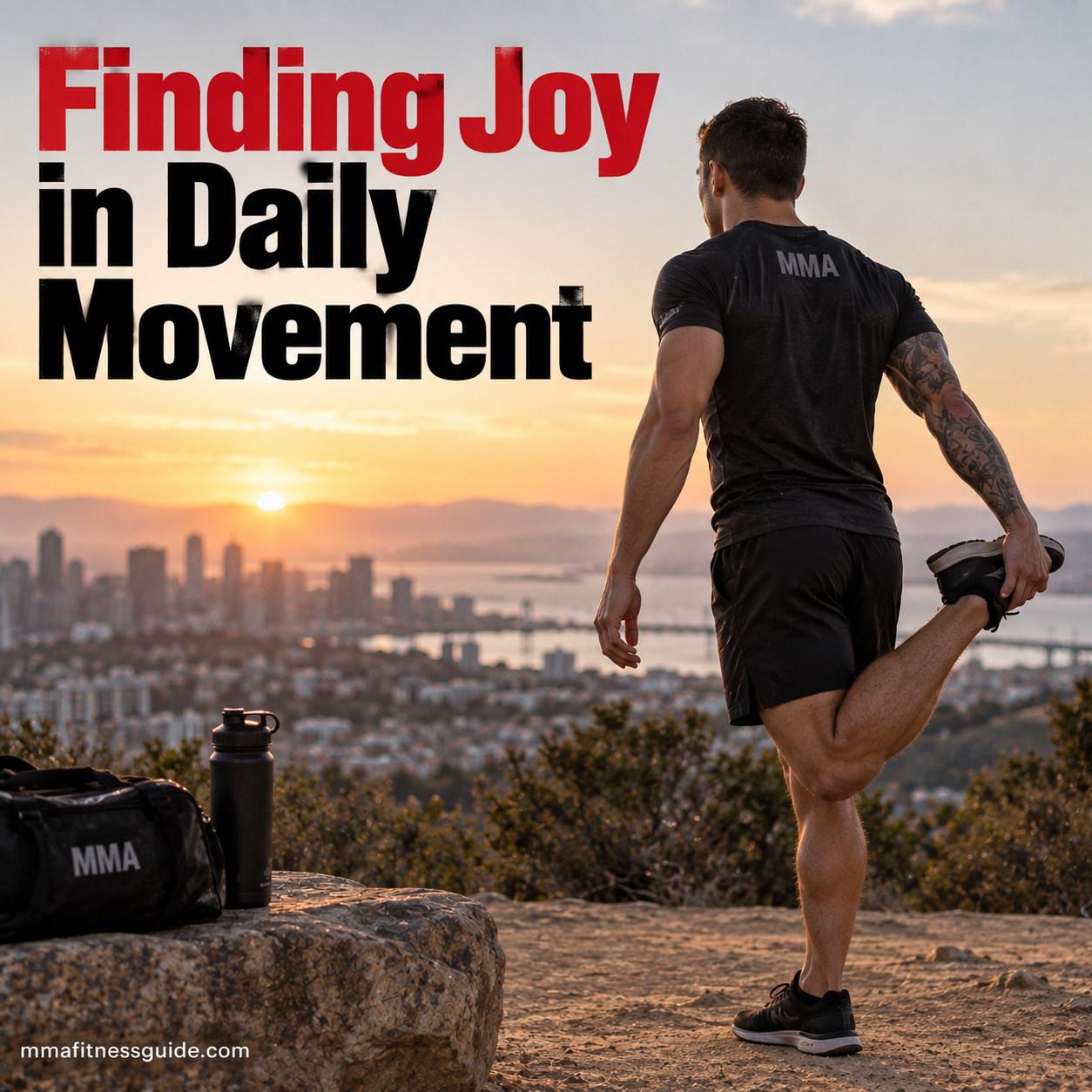
MMA athlete stretching outdoors at sunset while enjoying light daily movement and recovery.
Walking, stretching, mobility work, and other enjoyable activities can keep you moving between harder training sessions.

Introduction

Some days, movement might mean an hour of MMA training. On others, it could be a 20-minute walk, a few rounds of relaxed shadowboxing, or stretching your hips and shoulders while dinner cooks.

All of those days count.

When every activity has to burn a certain number of calories, improve performance, or leave you exhausted, staying active can start feeling like another obligation. Giving yourself more ways to move changes that relationship.

Walking somewhere you enjoy, practicing a technique because it feels good, playing a sport with friends, or doing mobility work after sitting all day can make physical activity something you naturally return to.

The goal is to find forms of movement that leave you glad you did them.

Continue reading “Finding Joy in Daily Movement”


Decluttering Your Fitness Routine

MMA athletes organizing training gear in a gym, representing a simplified and focused fitness routine.
MMA athletes organizing their training gear to simplify and declutter their fitness routine.

Many athletes believe progress comes from doing more — more workouts, more exercises, more programs, more tracking. In reality, excess complexity often leads to confusion, burnout, and stalled results. Decluttering your fitness routine means stripping away what doesn’t serve you so you can focus on what actually drives progress.

For MMA athletes and fitness enthusiasts alike, a simpler routine is often more effective, sustainable, and mentally freeing. This guide explains how to declutter your training without sacrificing results.

Continue reading “Decluttering Your Fitness Routine”

MMA: Balance Social Life and Fitness

MMA athlete leaving the gym and meeting friends while balancing training, fitness, and social life.
Planning social time around training and recovery can help MMA athletes maintain relationships without sacrificing consistency.

Your friends want to go out Friday night, but Saturday morning is sparring. A family event lands on the same afternoon as class. Someone invites you to dinner just as you’re supposed to start strength training.

Those conflicts are part of training MMA while having a life outside the gym.

The solution isn’t automatically choosing training every time—or skipping workouts whenever something more enjoyable comes along. It’s deciding which sessions matter most, protecting your recovery, and making room for friends and family when your schedule allows.

During fight camp, that may mean turning down late nights for several weeks. During normal training, it might mean moving a workout, meeting friends after class, or deliberately keeping one evening free.

A good balance won’t look the same every week. The goal is to train consistently without allowing MMA to crowd out the relationships and experiences you still want in your life.

Continue reading “MMA: Balance Social Life and Fitness”

Gratitude Practices That Improve Training

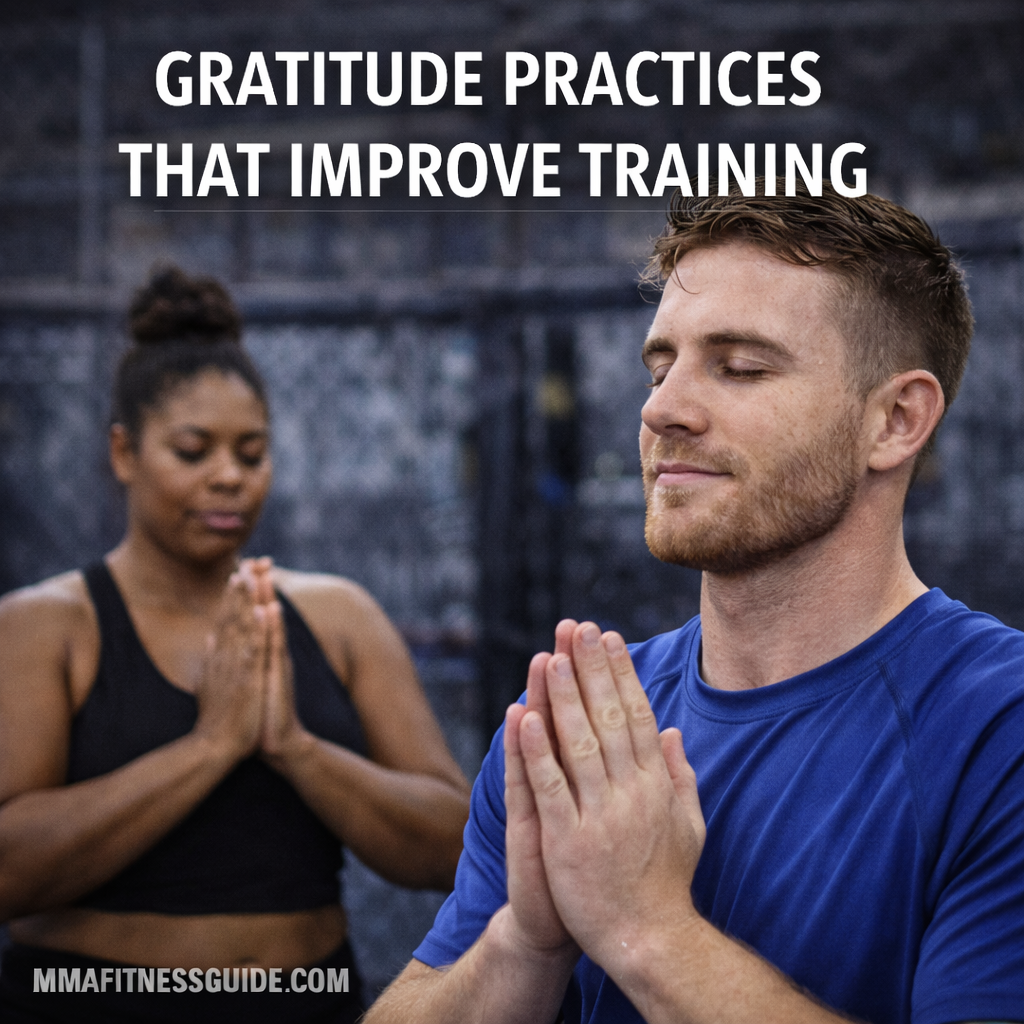
MMA athlete writing in a gratitude journal after training inside a combat sports gym.
A brief post-training reflection can help athletes recognize progress, learn from difficult sessions, and appreciate the people who contribute to their development.

After a frustrating sparring session, it’s easy to replay the punches you ate, the takedown you couldn’t finish, or the rounds where your conditioning fell apart. What’s harder is noticing that a skilled teammate gave you honest work, your coach spotted something you can fix, and you walked away knowing exactly where you need to improve.

That shift in attention is where gratitude can become useful for an athlete.

It doesn’t mean pretending a bad session was good or lowering your competitive standards. It means recognizing what training is giving you alongside what still needs work.

A brief post-training reflection, thanking a training partner, or acknowledging one small improvement can help keep difficult sessions and setbacks in perspective. Practiced consistently, gratitude becomes less about forced positivity and more about developing a healthier, steadier relationship with training.

Continue reading “Gratitude Practices That Improve Training”

MMA: Build a Personal Motto

MMA fighter sitting in a combat sports gym and mentally refocusing after a difficult training session.
A short personal motto can give fighters a familiar mental cue for maintaining focus during fatigue, pressure, and setbacks.

The final minute of a hard round is a bad time to search for motivation. Your breathing is heavy, your reactions are slowing, and the opponent in front of you is still applying pressure. In that moment, a short phrase you have repeated hundreds of times can give your attention somewhere specific to go.

That is the purpose of a personal motto in MMA. It might reinforce composure when a fighter starts rushing, persistence when fatigue sets in, or discipline when skipping training sounds easier than showing up.

The words themselves do not create toughness or skill. Their value comes from connecting a simple phrase to a behavior you have practiced repeatedly—something you can recall quickly during hard rounds, difficult training camps, setbacks, and the pressure surrounding competition.

Continue reading “MMA: Build a Personal Motto”

Reading Lists for Fighter Mindsets

MMA fighter reading a mindset book in a combat sports gym after training.
Reading about sports psychology, habits, resilience, and philosophy can give fighters ideas to apply during training and competition.

A fighter can spend two hours drilling combinations and still have twenty-two hours left in the day to influence how they think, recover, and approach the next session. Reading is one way to use some of that time deliberately.

A sports psychology book might provide a better way to handle competition nerves. A fighter’s biography can show how another athlete responded to injury or defeat. A book about habits can help turn training from something dependent on motivation into something built into the week.

The value is not in collecting books or motivational quotes. It comes from finding ideas that change how you approach training, pressure, setbacks, and life outside the gym.

Continue reading “Reading Lists for Fighter Mindsets”

Community Outreach and School Programs

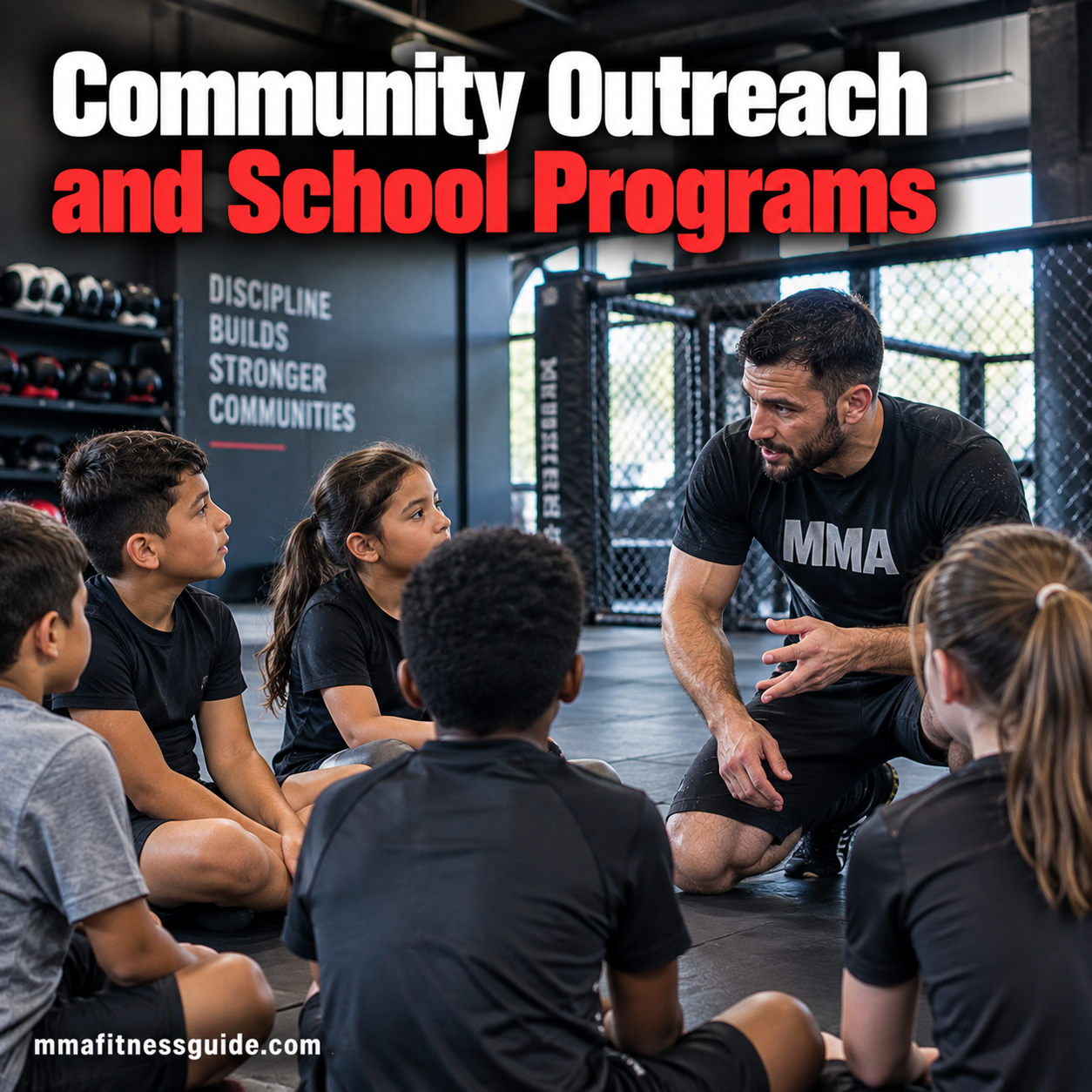
MMA coach leading a group of young students during a community martial arts program in a training gym.

An MMA coach does not have to teach takedowns or submissions to introduce martial arts concepts in a school. A 45-minute session might involve stance and movement drills, coordination exercises, basic fitness, discussions about avoiding confrontation, and simple partner activities built around control and respect.

Programs like these give gyms, coaches, and fighters a way to work with families and organizations that may never otherwise enter an MMA facility.

They can also create professional opportunities outside competition, from after-school coaching and youth programs to workshops, community partnerships, and contracted instruction.

Continue reading “Community Outreach and School Programs”

Training Partners and Accountability

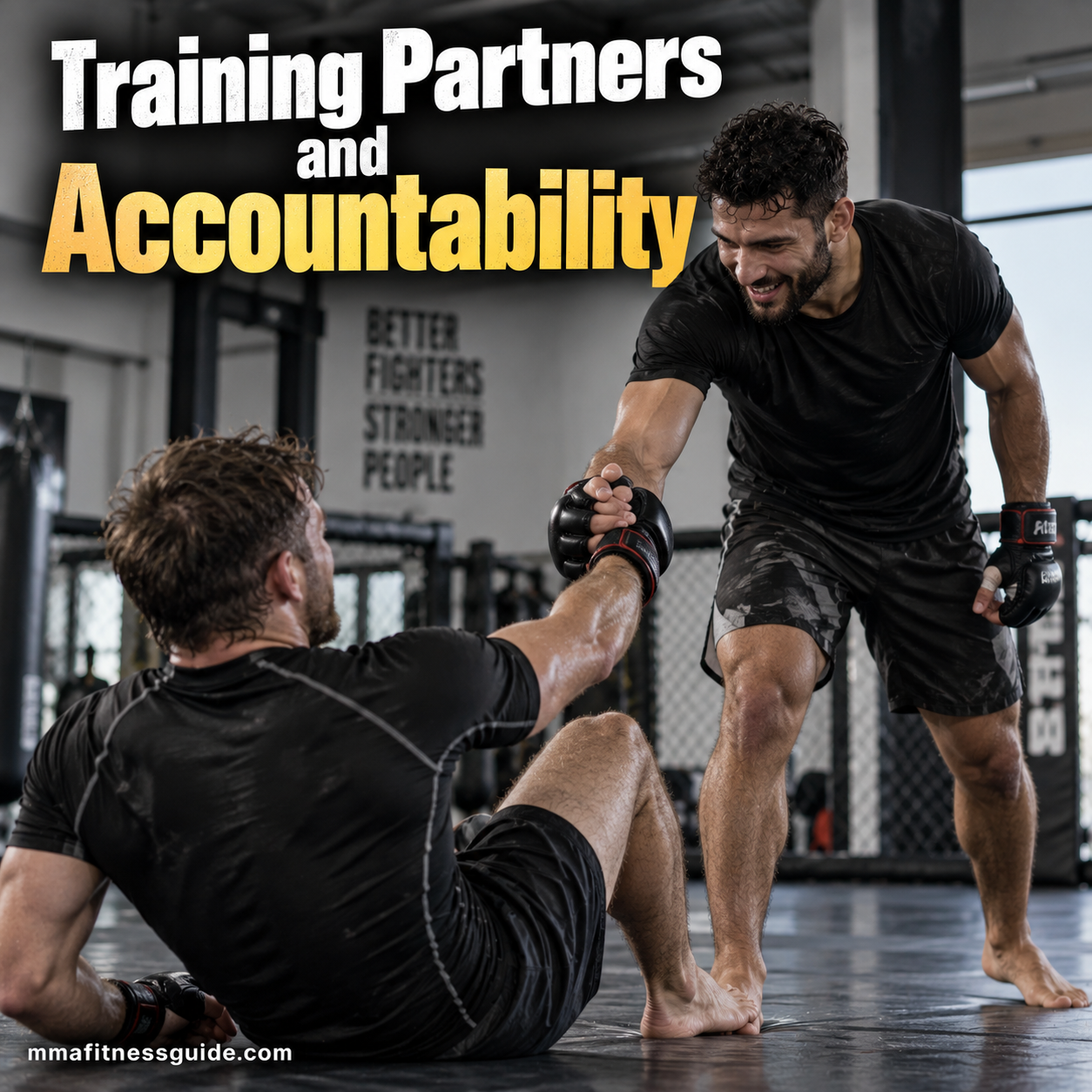
MMA training partners helping each other during a training session at an MMA gym.
Reliable training partners can build accountability, encourage consistency, and help MMA athletes stay committed to their training.

It’s much harder to skip a 6:00 p.m. training session when you know someone is already at the gym wrapping their hands and expecting you to show up. That simple expectation can be more powerful than waiting for motivation to strike.

In MMA, training partners do more than provide someone to drill, spar, or grapple with. The right partners help keep your schedule consistent, your effort honest, and your standards high—especially on the days when you’re tired, distracted, or tempted to stay home.

Over time, that accountability can turn sporadic training into a dependable routine. And when a regular partner isn’t available, the same principles can be built into your schedule, coaching relationships, and solo training habits.

Continue reading “Training Partners and Accountability”

MMA: Stick to Goals During Holidays

MMA fighter training on a heavy bag while traveling during the holiday season.
Short workouts and a flexible training plan can help MMA athletes maintain their routine when holiday travel and commitments disrupt normal training.

Why Holidays Make Goal-Sticking Hard

A normal training week can disappear quickly once holiday travel, family dinners, closed gyms, late nights, and changing schedules start competing for the same hours. Missing one practice is rarely the problem. The bigger issue is allowing several disrupted days to turn into several weeks without training.

For MMA athletes, the goal during the holidays does not have to be setting conditioning records or following a fight-camp schedule. Maintaining a few key habits—short training sessions, mobility work, reasonable nutrition, and regular movement—can make returning to a normal schedule much easier.

Instead of trying to force your usual routine into an unusual week, decide which parts of your training are worth protecting and build a smaller holiday version around them.

Continue reading “MMA: Stick to Goals During Holidays”

Small Wins: The Secret to Big Results

A smiling, tan-skinned male athlete standing confidently in an MMA gym with his hands on his hips, wearing yellow shorts, with the title “Small Wins: The Secret to Big Results” and the mmafitnessguide.com watermark.
A happy MMA athlete standing confidently in the gym, symbolizing how small daily wins lead to big long-term results.

Big goals in MMA don’t happen overnight. Fighters often focus on major milestones — earning a belt, winning a tournament, mastering a complex technique — but the real progress happens in the small, consistent wins that stack up over time.
Small wins build confidence, momentum, and discipline. They keep you moving forward on days when motivation is low and training feels tough. Over weeks and months, those tiny steps add up to massive changes in your skill level, conditioning, and mindset.

Continue reading “Small Wins: The Secret to Big Results”