Brand Partnerships the Right Way

MMA fighter wrapping his hands in a training gym, illustrating brand partnerships and sponsorship opportunities for fighters.
Building authentic brand partnerships can help MMA fighters support their training, develop their careers, and create income beyond competition.

Brand partnerships can be a powerful income stream and career accelerator for MMA fighters, but only when approached correctly. The wrong partnerships can damage credibility, alienate fans, and limit future opportunities. The right partnerships can help cover training expenses, strengthen a fighter’s public image, and create income that continues long after their competitive career ends.

For fighters balancing gym fees, coaching expenses, travel, recovery, and everyday living costs, sponsorships can provide valuable financial support. However, building successful partnerships requires more than posting a company’s logo on Instagram or wearing branded clothing during training.

Fighters need to understand what businesses expect, how to communicate their value, how to negotiate agreements, and how to protect their reputation.

Whether you’re an amateur looking for your first local sponsor or a professional developing relationships with established brands, this guide explains how to build authentic, financially worthwhile, and sustainable brand partnerships.

Continue reading “Brand Partnerships the Right Way”
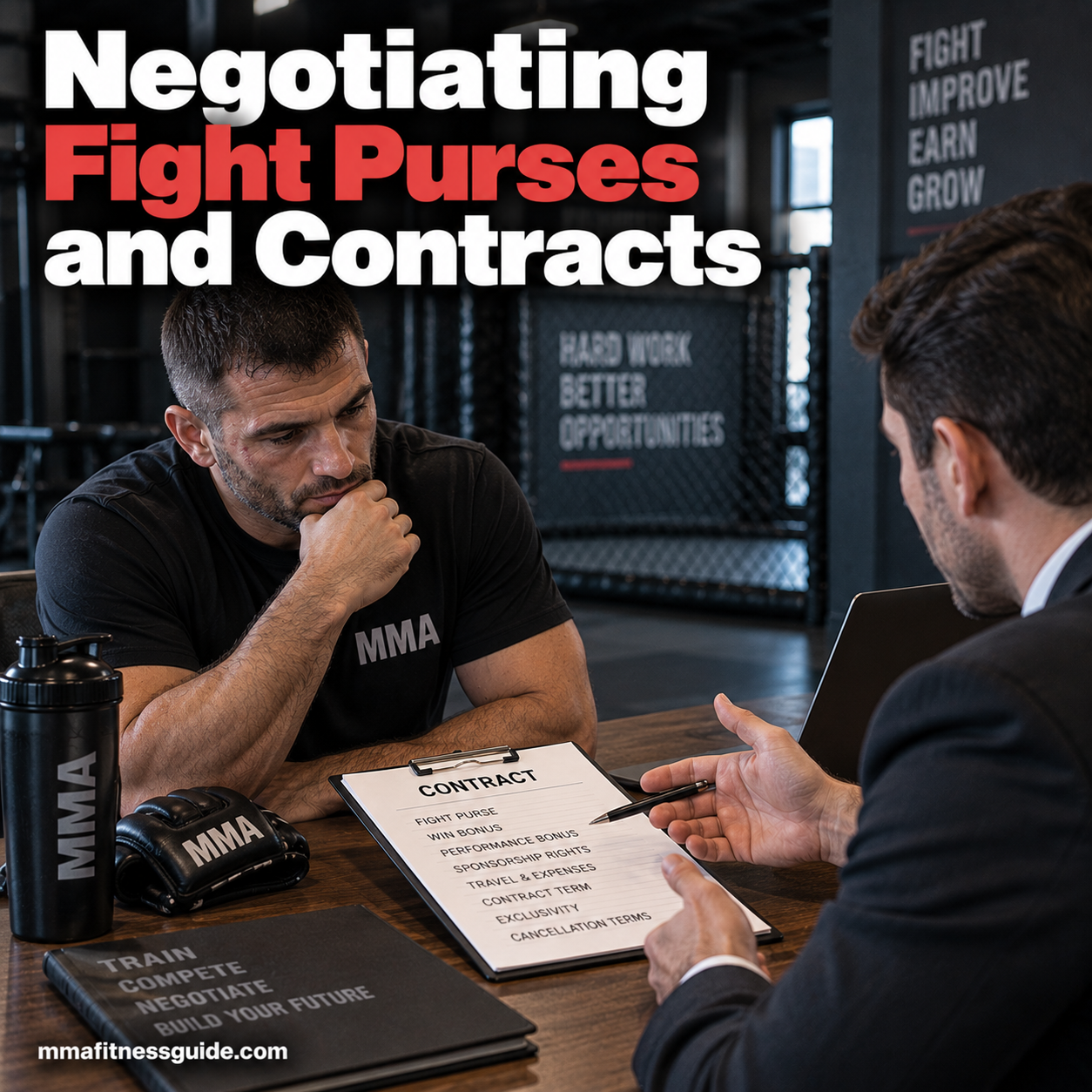

Negotiating Fight Purses and Contracts

MMA fighter reviewing fight purse and contract terms with a representative inside a training gym.
Fight contracts can address more than purse amounts, including bonuses, expenses, exclusivity, sponsorship rights, and cancellation terms.

A fighter can spend months preparing for a bout and only a few minutes discussing the agreement that determines how much they’re paid, who covers travel, what happens if the fight is canceled, and whether they’re free to compete elsewhere afterward.

Those details can affect far more than the paycheck from one night.

Before accepting a bout, fighters should know the guaranteed compensation, bonus conditions, payment timing, expenses, promotional obligations, exclusivity provisions, cancellation terms, and any restrictions that continue after the event.

You don’t have to turn every offer into a confrontation. The objective is to understand what you’re agreeing to, identify terms worth negotiating, and avoid discovering important restrictions after you’ve already signed.

Continue reading “Negotiating Fight Purses and Contracts”

MMA: Host Amateur Events and Smokers

Male MMA fighters competing in an amateur cage match while an athletic female official observes in the background during a local MMA event.
Amateur MMA fighters competing inside the cage as part of a local event or smoker, showcasing grassroots competition and gym-hosted fight nights.

Amateur MMA events and smokers give developing fighters a chance to compete under pressure before moving into higher-level competition. For gyms, these events can strengthen relationships with other teams, attract local attention, and give coaches a better way to evaluate fighters outside the training room.

Running an event, however, involves much more than matching fighters and setting up a cage. Regulations, medical coverage, insurance, matchmaking, staffing, venue requirements, and event-day logistics all need to be addressed before the first bout begins.

This guide covers the practical considerations behind hosting amateur MMA events and smokers, from choosing an event format to managing fighters safely on event day.

Continue reading “MMA: Host Amateur Events and Smokers”

Expanding to a Second Location: Checklist

MMA gym owners reviewing documents inside a training facility while planning expansion to a second location.
MMA gym owners reviewing an expansion checklist while planning a second training location and long-term business growth.

Opening a second MMA gym location is one of the biggest milestones in a coach or gym owner’s career. It can dramatically increase revenue, brand reach, and long-term stability—but only if done strategically. Expanding too early or without structure can stretch resources thin and damage both locations.

This checklist walks through the critical steps MMA gym owners should evaluate before expanding to a second location, helping ensure growth is sustainable rather than risky.

Continue reading “Expanding to a Second Location: Checklist”

Corporate Workshops: Selling Self-Defense

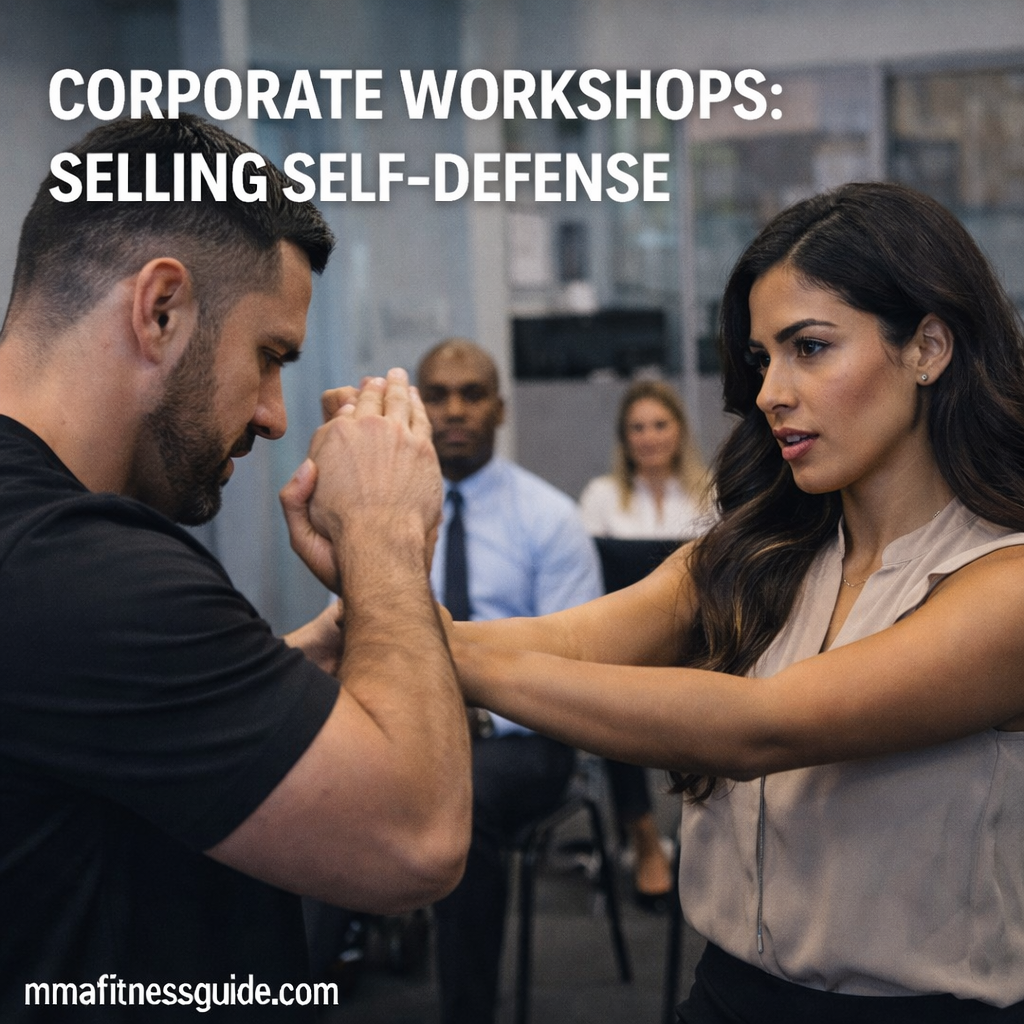
MMA instructor teaching self-defense techniques to corporate employees during a professional workplace workshop.
An MMA professional leading a corporate self-defense workshop focused on awareness, confidence, and personal safety.

As MMA continues to gain mainstream acceptance, fighters, coaches, and gym owners are finding career opportunities far beyond competition and traditional training. One of the fastest-growing options is corporate workshops focused on self-defense, awareness, and personal safety.

Corporate self-defense workshops allow MMA professionals to monetize expertise, build credibility, and create stable income streams—while delivering real value to businesses and employees. This guide explains how MMA professionals can successfully sell, structure, and scale corporate self-defense workshops.

Continue reading “Corporate Workshops: Selling Self-Defense”

Managing Screen Time for Better Recovery

Male MMA athlete and attractive female using smartphones in bed at night, highlighting the impact of screen time on recovery and sleep.
MMA athletes winding down with their phones, illustrating how screen habits affect recovery and sleep quality. mmafitnessguide.com.

MMA training places demands on the body and the brain. Hard sparring, strength work, conditioning, drilling, and weight management all require adequate recovery between sessions. What happens during the hours outside the gym can determine how prepared a fighter feels when the next session begins.

Screen habits are part of that equation. Phones, computers, tablets, televisions, gaming, and social media can extend mental stimulation late into the evening, encourage later bedtimes, and make it harder to establish a consistent wind-down routine.

The goal isn’t to eliminate screens. It’s to use them in ways that don’t compete with sleep, relaxation, and training readiness.

Continue reading “Managing Screen Time for Better Recovery”

Photography and Video Training Tips for Promotions

Male photographer filming a female MMA athlete in a gym, with bold promotional text on the left side.
Male photographer capturing video of a female MMA athlete in a gym, shown with bold text promoting photography and video tips for MMA promotions.

Why High-Quality Photos and Videos Matter in MMA

Whether you’re an amateur fighter trying to build a name or a coach promoting your gym, strong visuals are your most powerful marketing tool. In today’s MMA world, people discover fighters on Instagram, TikTok, YouTube, and gym websites long before seeing them compete live.

Continue reading “Photography and Video Training Tips for Promotions”

MMA: Use Testimonials and Case Studies

A man and woman sitting at a table in an MMA gym reviewing notes on a laptop, with the text “MMA Use Testimonials and Case Studies” and the mmafitnessguide.com watermark.
A male and female coach reviewing testimonials and case studies together inside an MMA gym, illustrating how real student stories build trust in martial arts businesses.

In the MMA world, trust is everything. Whether you run a gym, coach fighters privately, or offer online instruction, potential students want proof that your training actually works. Testimonials and case studies transform your results into credible, relatable stories that help people feel confident choosing you.

Done correctly, these tools become some of the most powerful marketing assets for any coach, gym, or martial arts business.

Continue reading “MMA: Use Testimonials and Case Studies”

Building a Website That Converts Students

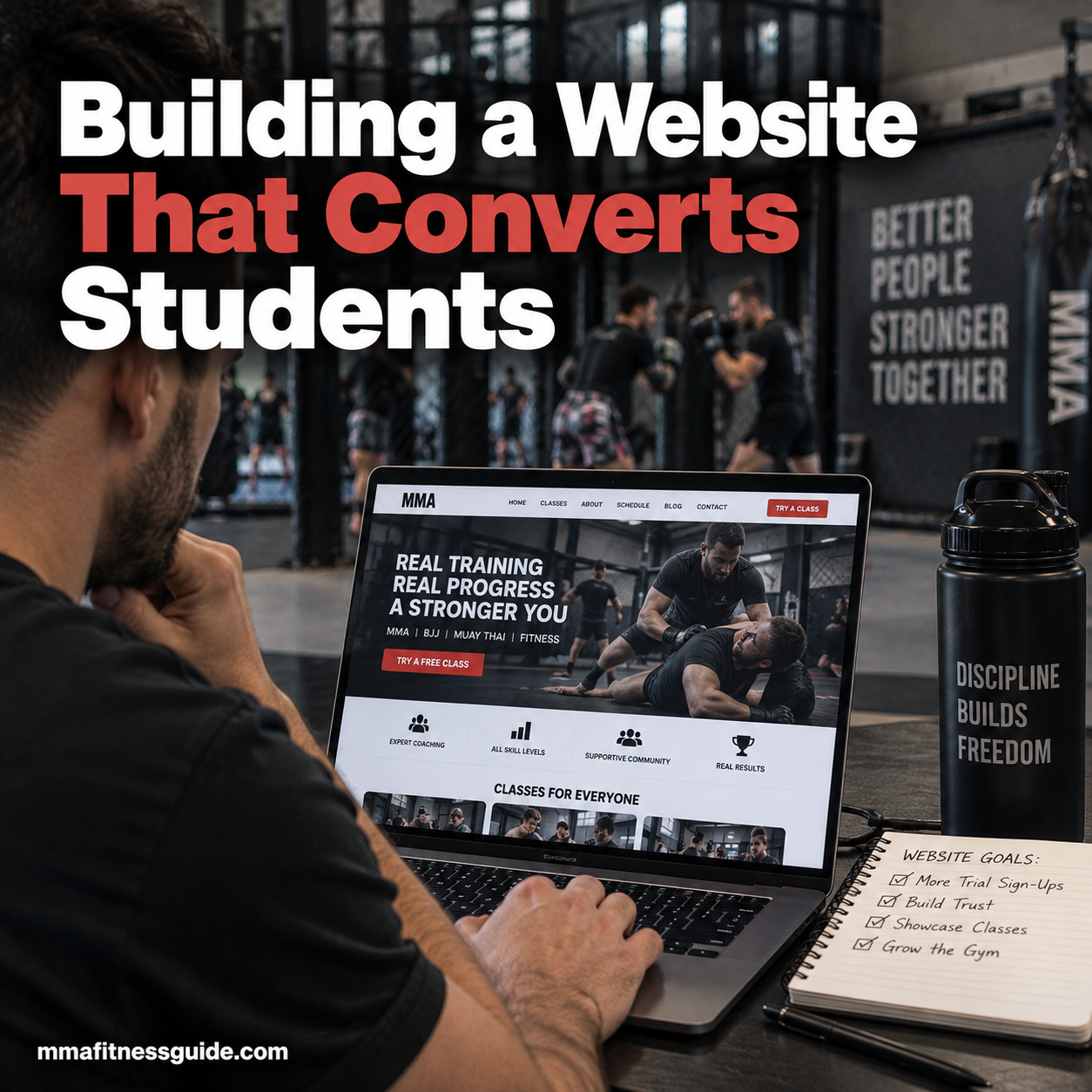
MMA gym owner reviewing a website designed to attract new students while athletes train in the background.
A clear MMA gym website can help prospective students find classes, learn about coaches, and take the next step toward booking a trial.

A potential student searches for MMA training in their area, opens your website, and starts looking for answers. What classes do you offer? Are beginners welcome? When are classes held? Who are the coaches? How much does training cost? And most importantly, how do they get started?

If those answers are difficult to find, that visitor may leave and check another gym.

For MMA gyms, martial arts academies, and personal trainers, a website should make the path from interested visitor to trial student as straightforward as possible. Clear class information, authentic training photos, visible calls to action, reviews, and an easy way to book or make contact all help remove uncertainty.

Every major section of the site should move a prospective student closer to one decision: “I’m ready to try a class.”

Continue reading “Building a Website That Converts Students”

Creating a Patreon or Membership Community

A male and female athlete sitting at a table while working on a laptop and notebook, representing the process of creating a Patreon or membership community.
A man and woman planning content together, illustrating how fighters and coaches can build a Patreon or membership community.

For fighters, coaches, and content creators, a Patreon or membership community can become one of the most reliable income streams in the MMA world. It turns your knowledge, experience, and personality into long-term, recurring revenue — without needing millions of followers or constant brand sponsorships.

The best part? You control the content, the pricing, and the relationship with your audience.
A small, committed community can support your training, your career, and your creative work far more consistently than any algorithm.

Whether you’re a fighter documenting your journey or a coach sharing drills and breakdowns, a membership platform can elevate your entire career.

Continue reading “Creating a Patreon or Membership Community”