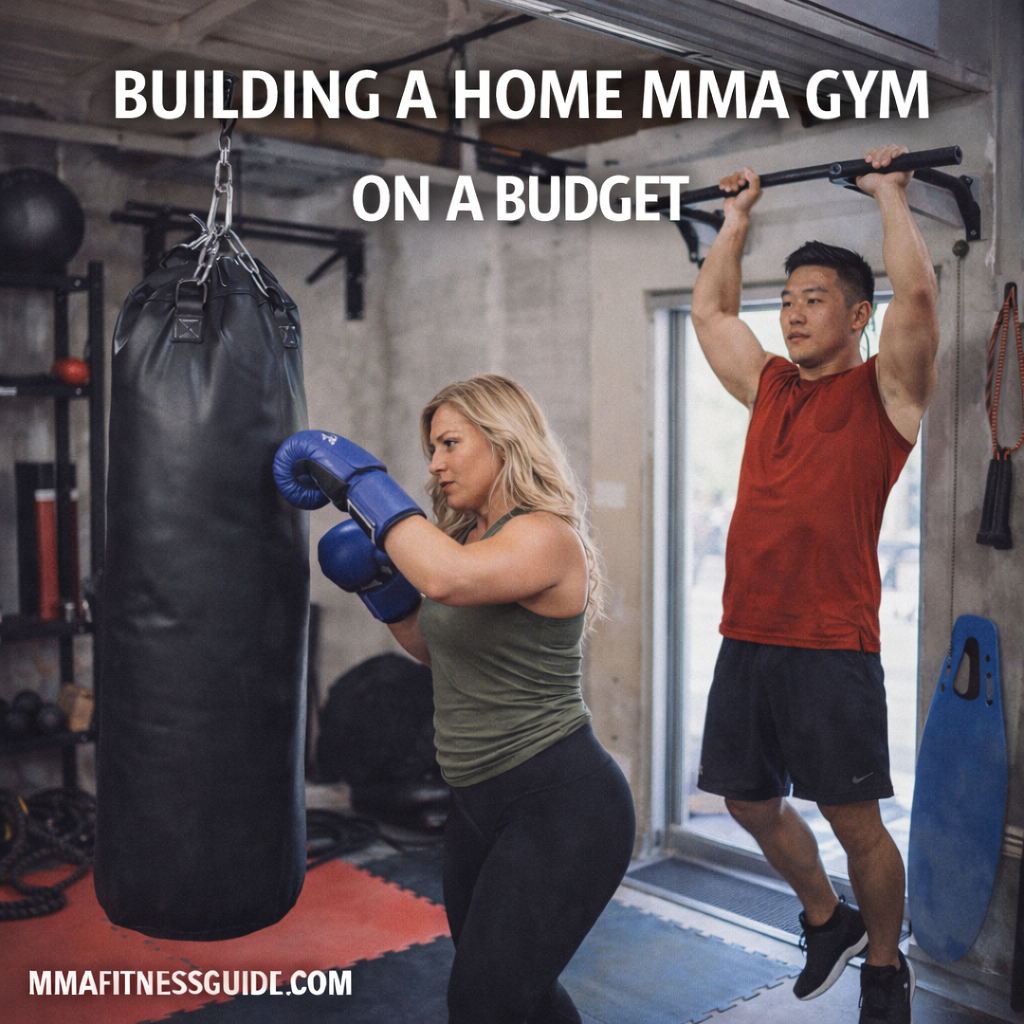
Training MMA doesn’t require an expensive commercial gym membership or high-end equipment. With smart planning, you can build an effective home MMA gym on a budget that supports conditioning, strength, skill development, and recovery — without wasting money on unnecessary gear.
This guide breaks down how to build a functional home MMA gym affordably, what equipment actually matters, and how to prioritize purchases based on training goals.
Why a Home MMA Gym Makes Sense
A home gym offers flexibility and consistency.
Key benefits include:
- No commute time
- Training on your schedule
- Easier consistency
- Cost savings over time
- Private skill development space
Even minimal setups can produce strong results when used consistently.
Start With Your Training Goals
Before buying equipment, define what you need.
Ask yourself:
- Am I focusing on conditioning, strength, or skills?
- Do I need space for striking, grappling, or both?
- How much space is realistically available?
- What movements do I train most often?
Clear goals prevent wasted spending.
Prioritize Space Over Equipment
Space matters more than gear.
You don’t need much, but you do need:
- Enough room to move freely
- A safe, non-slip surface
- Ceiling height for jumping or shadowboxing
- Clear walls for drills
An open area beats a crowded one.
Budget-Friendly Flooring Options
Flooring is one of the most important investments.
Affordable options include:
- Puzzle mats
- Gym rubber mats
- Thick yoga mats layered
- Used wrestling mats (if available)
Protecting joints and preventing slips should come first.
Essential Equipment for a Budget MMA Gym
You don’t need everything — just the basics.
Resistance and Strength Tools
Affordable essentials include:
- Resistance bands
- Adjustable dumbbells
- Kettlebells (one or two)
- Pull-up bar (doorway or wall-mounted)
These tools cover most strength needs.
Conditioning Equipment
Conditioning doesn’t require machines.
Effective low-cost options include:
- Jump rope
- Medicine ball
- Battle ropes (optional)
- Interval timer app
Bodyweight conditioning goes a long way.
Striking and Skill Training
For striking practice at home:
- Focus mitts or Thai pads (if training with a partner)
- Shadowboxing space
- Heavy bag (optional if space allows)
Shadowboxing builds skill without equipment.
What You Can Skip (At First)
Avoid unnecessary purchases early.
Common items to delay include:
- Expensive machines
- Specialty bars
- Multiple heavy bags
- Trendy fitness gadgets
Buy only what supports your current training.
Using Bodyweight Training Effectively
Bodyweight training is highly effective for MMA.
Key movements include:
- Push-ups and variations
- Pull-ups
- Squats and lunges
- Planks and carries
- Mobility drills
Progression matters more than equipment.
Budget-Friendly Conditioning Circuits
Simple circuits build fight-ready conditioning.
Example circuit elements:
- Jump rope intervals
- Burpees
- Shadowboxing rounds
- Sprawls
- Medicine ball slams
Minimal equipment, maximum return.
Buying Used Equipment Safely
Used gear can save money.
Tips include:
- Inspect padding and seams
- Avoid heavily worn gloves or mouthguards
- Clean thoroughly before use
- Prioritize safety gear quality
Some items are worth buying new.
Organizing Your Home MMA Gym
Organization improves consistency.
Helpful tips:
- Wall-mounted storage
- Minimal clutter
- Clear zones for movement
- Easy equipment access
A clean space encourages use.
Training Alone vs With a Partner
Home gyms support both.
Consider:
- Solo drills and shadowboxing
- Partner pad work
- Light grappling drills
- Conditioning sessions
Adjust expectations based on setup.
Recovery Tools on a Budget
Recovery doesn’t need luxury tools.
Affordable recovery options include:
- Foam roller
- Lacrosse ball
- Stretching routines
- Mobility flows
Consistency beats expensive gadgets.
Safety Considerations
Safety should never be compromised.
Remember to:
- Warm up properly
- Secure equipment
- Use proper flooring
- Train within your limits
Injuries stall progress and cost more long-term.
Scaling Your Gym Over Time
Build gradually.
Upgrade when:
- Training volume increases
- Goals change
- Budget allows
- Equipment limits progress
Smart scaling prevents regret purchases.
Final Thoughts
Building a home MMA gym on a budget is entirely possible with thoughtful planning and realistic expectations. Focus on space, safety, and versatile equipment that supports your actual training needs — not trends or aesthetics.
Consistency, creativity, and discipline matter far more than expensive gear. Start simple, train smart, and let your home gym grow alongside your skills.