Your trusted source for MMA fitness, nutrition, and fighter-level health.
Author: Ryan Mitchell
Ryan Mitchell is a writer and contributor at MMA Fitness Guide, covering mixed martial arts training, strength and conditioning, fitness fundamentals, performance nutrition, injury prevention, and mindset. His work focuses on practical, research-informed training principles presented in a clear and approachable way for athletes and everyday fitness enthusiasts.
Content published by Ryan is intended for informational and educational purposes and should not replace professional coaching, medical advice, diagnosis, or treatment.
Beginner MMA athletes progressing from walking to jogging to build endurance, confidence, and long-term conditioning.
Introduction
For many beginners, the idea of running for MMA conditioning feels intimidating. Jogging can seem too demanding, especially if you’re new to fitness, returning after time off, or carrying extra body weight. The good news is that effective MMA conditioning doesn’t start with running—it starts with walking.
Progressing from walking to jogging builds aerobic fitness, joint resilience, and confidence in a way that supports long-term training rather than burnout or injury.
Amateur MMA fighters competing inside the octagon, symbolizing the worldwide expansion and cultural diversity of modern mixed martial arts.
Introduction
Mixed martial arts began as a niche spectacle dominated by a few regions, but today it is one of the most globally practiced combat sports in the world. While professional MMA often gets the spotlight, the true engine behind the sport’s worldwide growth is amateur MMA. Local gyms, regional promotions, and grassroots competitions have transformed MMA into a truly global discipline.
Understanding how amateur MMA globalized helps explain the sport’s depth, diversity, and long-term sustainability.
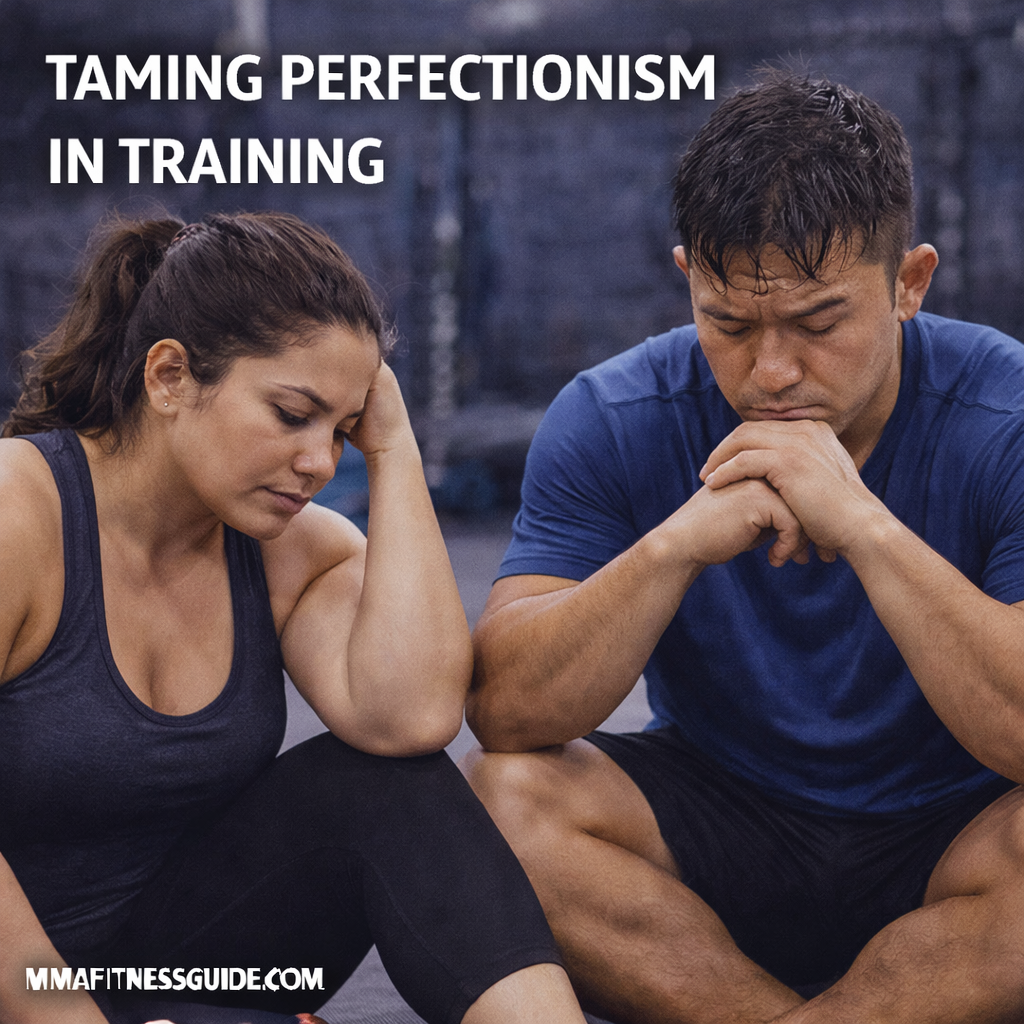
Athletes taking a reflective pause after training, highlighting the mental work of managing perfectionism and maintaining a healthy training mindset.
Introduction
Perfectionism is often mistaken for dedication. In training, it can look like high standards, strong work ethic, and attention to detail. But when perfectionism goes unchecked, it becomes a barrier to progress—leading to frustration, burnout, and stalled performance.
Learning to tame perfectionism allows athletes to train with consistency, adaptability, and resilience rather than constant self-criticism.
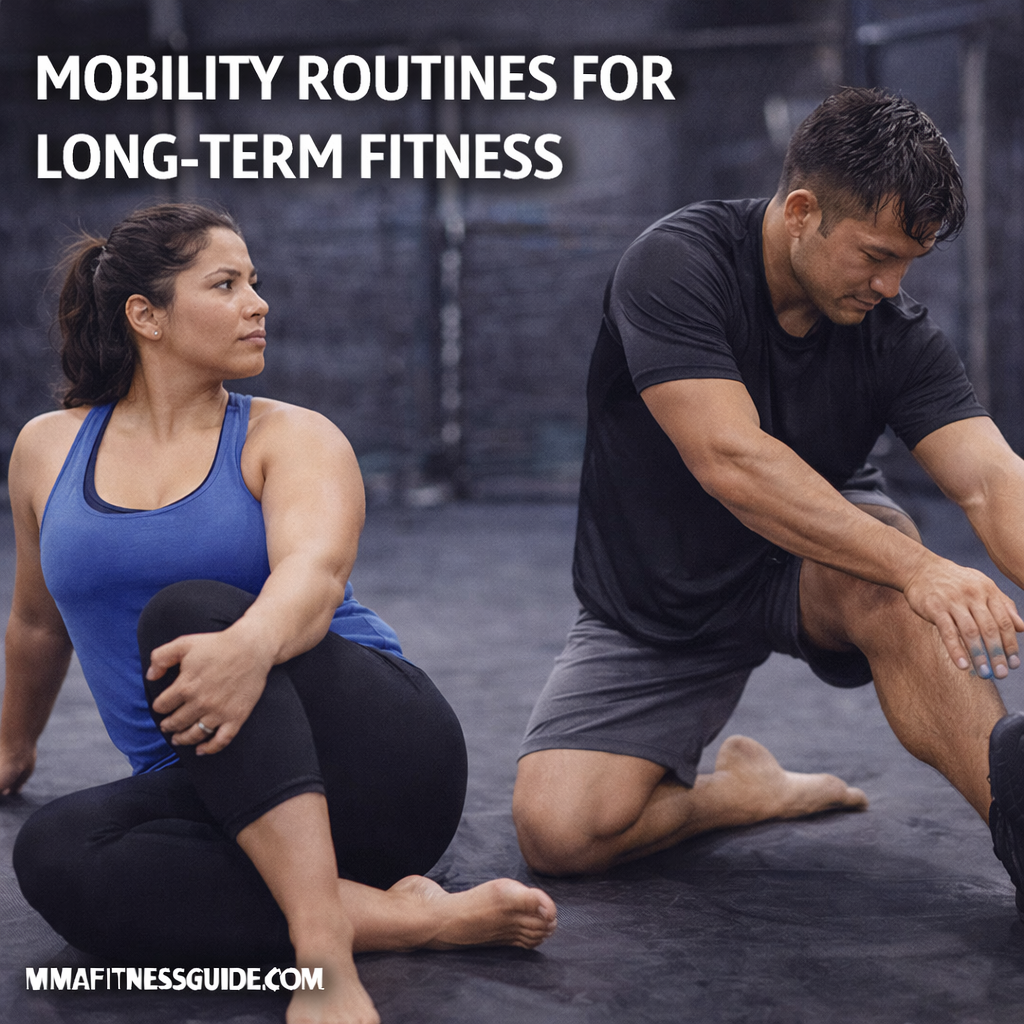
Regular mobility work helps maintain usable range of motion and control through the hips, ankles, shoulders, and spine.
Strength and conditioning can improve what your body produces, but you still need enough joint range and control to use that strength effectively.
Years of lifting, running, combat sports, desk work, and repetitive movement can gradually change how comfortably the hips, shoulders, ankles, and spine move. A fighter might notice it when rotating into a kick. A lifter may struggle to reach a comfortable squat depth. Someone returning from time off may simply feel stiff during movements that once felt natural.
Mobility training addresses these limitations through controlled movement, active range-of-motion work, and exercises that build strength within the ranges you use.
Budget vs premium MMA gear: Learn where to invest in quality equipment, where to save money, and how to build a reliable training kit.
Building an MMA training kit can get expensive quickly. Between boxing gloves, MMA gloves, shin guards, mouthguards, rash guards, and training accessories, even a beginner can spend several hundred dollars before stepping onto the mats.
The challenge isn’t simply finding the cheapest equipment. It’s understanding which purchases deserve more of your budget and which can be kept affordable without sacrificing comfort, protection, or training quality.
A $150 pair of gloves might last significantly longer than a poorly constructed $40 pair. On the other hand, a $100 training shirt might offer little practical advantage over a comfortable $25 alternative.
The goal is to spend more where quality makes a meaningful difference and save where it doesn’t.
Here’s how budget and premium MMA equipment actually compare, what to look for in each category, and how to build a purchasing strategy around your experience, training frequency, and budget.
Whether you’re preparing for your first MMA class or replacing equipment after years of training, understanding the difference between price and value will help you make better decisions.
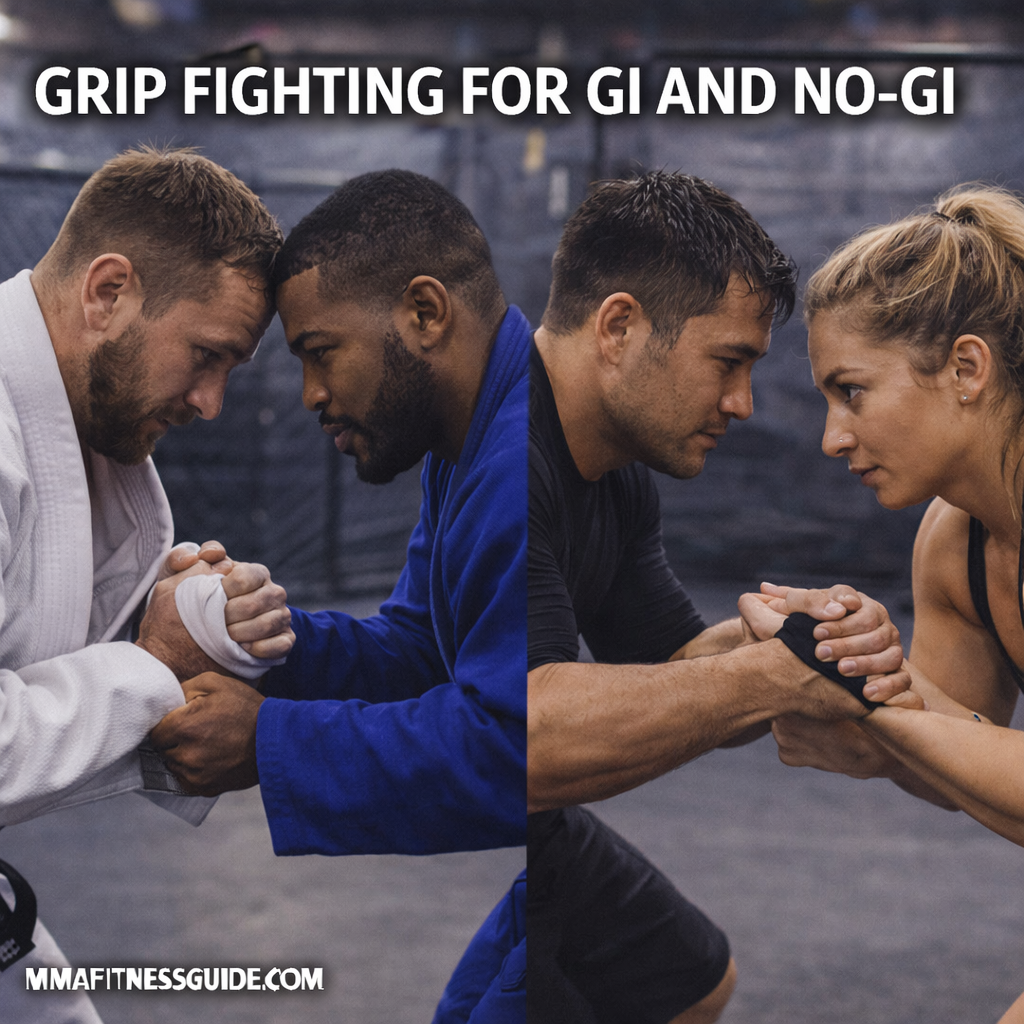
Athletes demonstrating grip fighting techniques for gi and no-gi grappling, highlighting hand control and positional dominance.
Introduction
Grip fighting is one of the most decisive—and often underestimated—skills in grappling. Whether you train in gi or no-gi, the ability to establish, break, and transition grips determines who controls distance, tempo, and positioning. Many exchanges are effectively won or lost before a takedown, pass, or submission even begins.
Understanding the differences between gi and no-gi grip fighting helps fighters adapt their strategy, conserve energy, and impose their game more consistently.
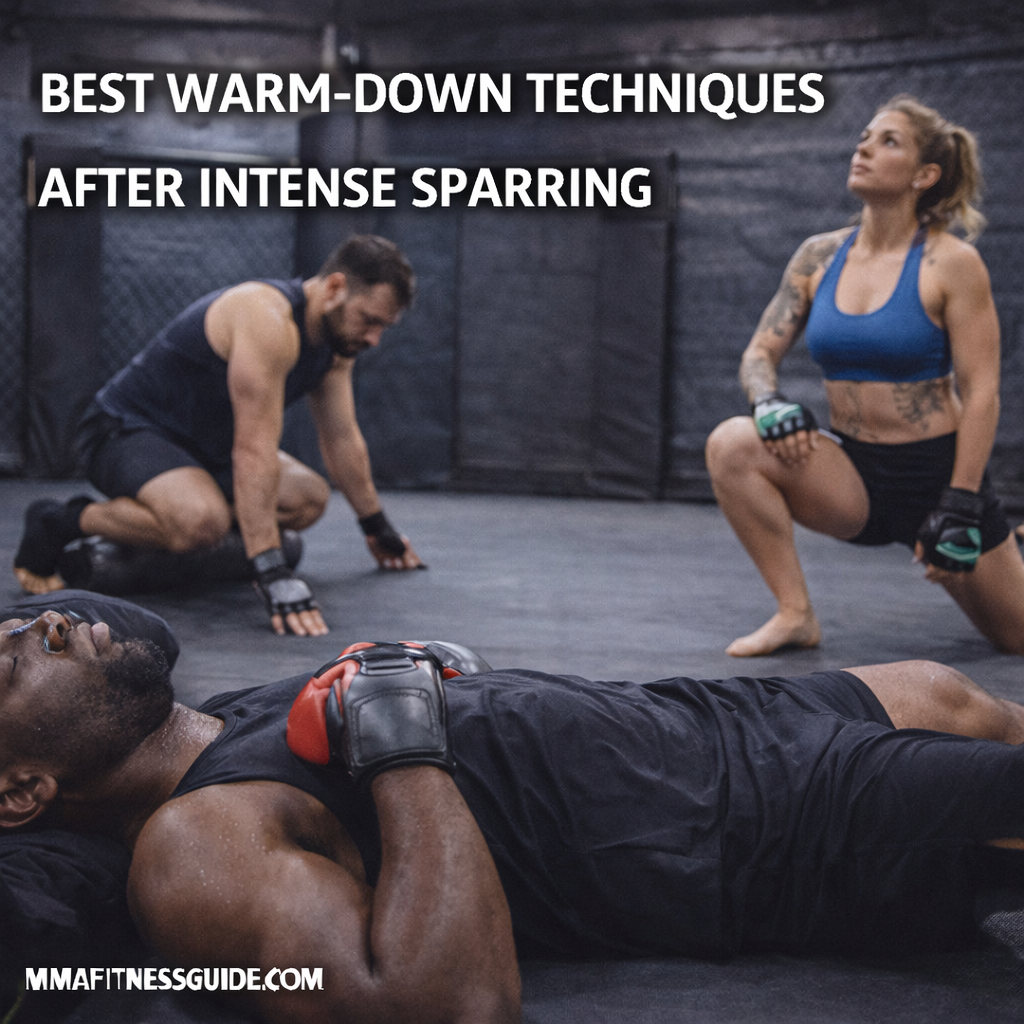
MMA athletes cooling down after intense sparring with breathing, mobility, and recovery-focused movement.
Introduction
After intense sparring, most fighters focus on what went wrong in the round—but far fewer focus on what happens immediately after training. Skipping a proper warm-down can slow recovery, increase soreness, and raise the risk of lingering stiffness or injury. A structured warm-down helps the body transition out of high intensity and prepares it to recover efficiently.
For MMA athletes, warm-downs are not optional extras—they are a key part of staying healthy, consistent, and sharp.
An MMA gym owner managing stress while athletes train, highlighting the importance of preventing burnout for long-term business success.
Introduction
Owning an MMA gym is often driven by passion—but passion alone doesn’t protect against burnout. Many gym owners start with energy and vision, only to find themselves mentally exhausted, physically drained, and emotionally disconnected years later. Long hours, financial pressure, member expectations, and constant decision-making take a toll.
Learning how to avoid burnout as a gym owner is essential not just for personal well-being, but for the long-term success of the business itself.
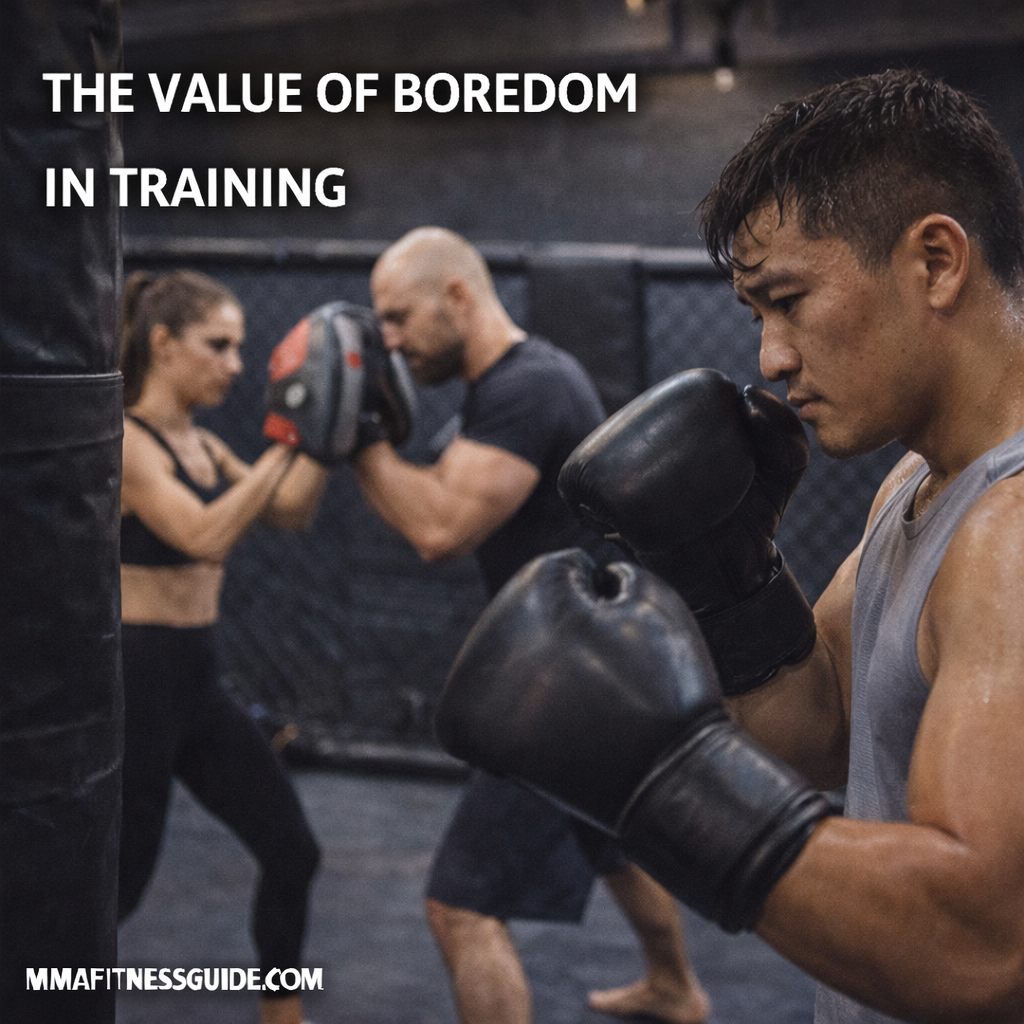
MMA athletes training fundamentals through repetition, showing how boredom in training builds discipline, focus, and long-term performance.
Introduction
In a world obsessed with constant stimulation, boredom is often seen as something to avoid. In training, however—especially in MMA, fitness, and skill development—boredom is not a flaw. It’s a feature. Some of the most meaningful progress happens during repetitive, unglamorous work that feels anything but exciting.
Understanding the value of boredom in training can change how you approach consistency, discipline, and long-term improvement.
Gentle stretching, mobility, walking, and easy cardio can provide movement on days when a demanding workout isn’t the right fit.
After a stressful day, another demanding workout may be the last thing you want. Your shoulders are tight, you’ve been sitting for hours, your mind is still running through work or responsibilities, and an intense conditioning session sounds more draining than helpful.
A 20-minute walk, a few slow mobility exercises, or an easy bike ride gives you another option. The purpose isn’t to chase a personal record or finish exhausted. It’s to move at a comfortable pace, loosen areas that feel stiff, and give your attention something other than the day’s stress.
For beginners—and for MMA trainees between harder sessions—gentle movement can provide useful activity without turning every workout into another physical challenge.