MMA Bounce Back After a Tough Loss

Male MMA athlete sitting on gym mats with overlay title “Bounce Back After a Tough Loss”
A reflective MMA fighter with a motivational title overlay, emphasizing resilience after a tough loss.

Introduction

Every fighter, whether amateur or professional, experiences tough losses. Even when you prepare well, train hard, and feel ready, a bad night can happen. Losses can shake confidence, make you question your abilities, and drain motivation — but they can also be powerful turning points.

Bouncing back doesn’t require dramatic changes. Small, steady mental resets help you refocus and return to training with a healthier mindset. Below are simple steps to help you recover mentally and move forward.

Continue reading “MMA Bounce Back After a Tough Loss”

Concussion Awareness and Protocols

Female MMA athlete sitting on the mats with a coach checking on her to emphasize concussion awareness.
A fighter taking a moment to assess symptoms and follow proper concussion safety protocols.

Introduction

Concussions are one of the most serious risks in combat sports. Even light sparring, accidental clashes, or unexpected falls can cause head impacts that affect your brain. While MMA training can be done safely, it’s important for every athlete — beginner or advanced — to understand what concussions look like and how to respond to them.

You don’t need medical training to spot warning signs. A little awareness helps protect both yourself and your training partners.

Below is a simple, practical guide to concussion basics and safe protocols to follow.

Continue reading “Concussion Awareness and Protocols”

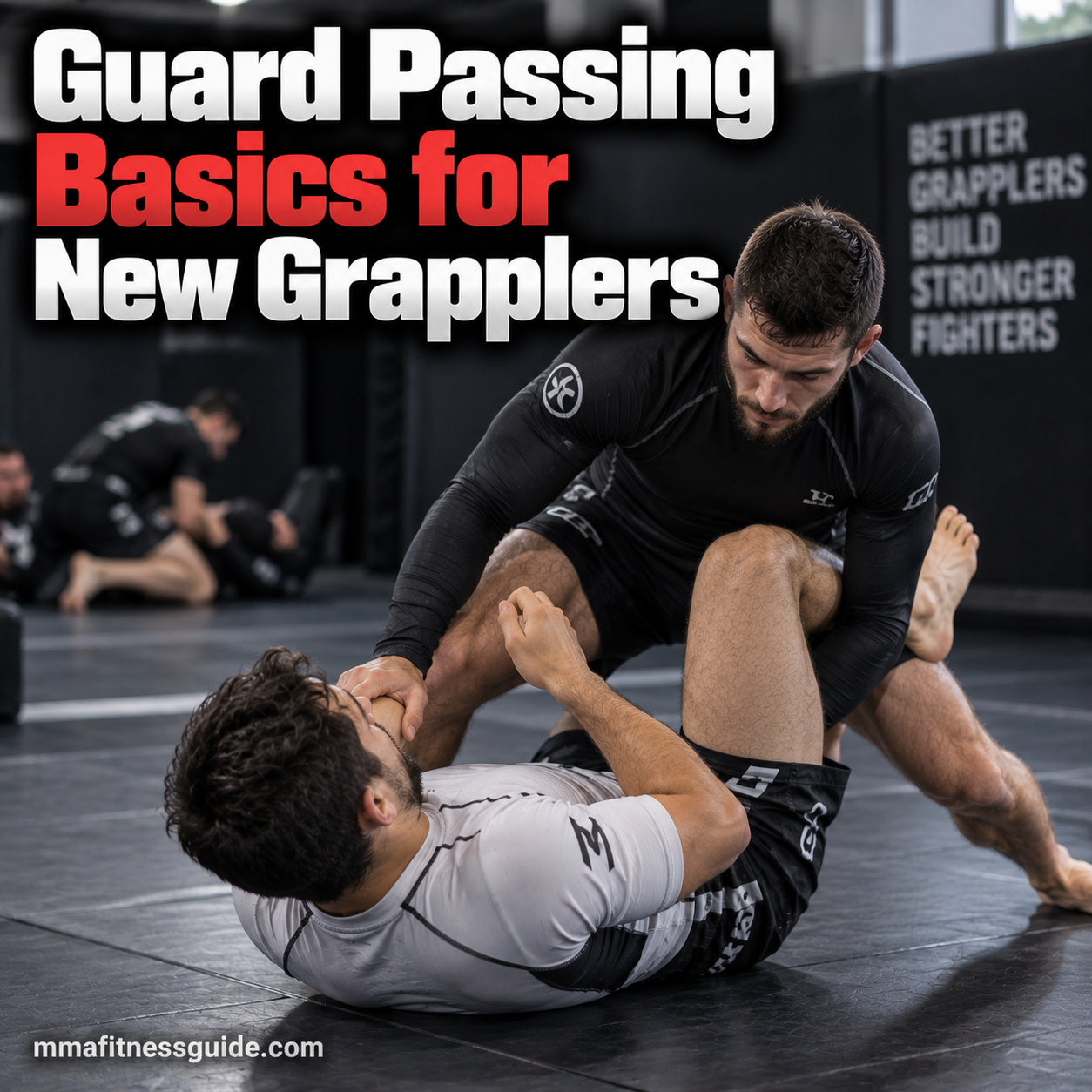
Guard Passing Basics for New Grapplers

Two grapplers practicing basic guard passing techniques during a BJJ and MMA training session.
New grapplers can build their guard passing around posture, leg control, positioning, and a small number of reliable passes.

A new grappler often gets stuck before the pass even begins. They lean forward, reach for the legs, and immediately get pulled off balance or caught between their opponent’s knees. The problem usually is not a lack of techniques—it is trying to move around the guard before establishing posture, controlling distance, and dealing with the legs.

Guard passing becomes easier to understand when you give each step a purpose. Establish your base, prevent the bottom player from controlling your posture, open or clear the guard, control the legs or hips, and then move into a stable top position.

Start with a small number of passes and learn what makes them work. Once those mechanics become familiar, variations are much easier to add.

Continue reading “Guard Passing Basics for New Grapplers”

The Best Vitamins for Combat Athletes

Male combat athlete holding essential vitamins in a gym to support training and recovery.
A combat athlete using key vitamins to support performance, recovery, and overall training health.

Introduction

Combat sports training puts a lot of stress on your body. Hard sessions, sparring, conditioning, and weight cuts all increase your need for certain nutrients—especially vitamins. While a balanced diet should always come first, the right vitamins can support energy levels, recovery, and general health so you can train more consistently.

Below is a simple, clear breakdown of the vitamins that matter most for fighters and how they help your body handle the demands of MMA training.

Continue reading “The Best Vitamins for Combat Athletes”

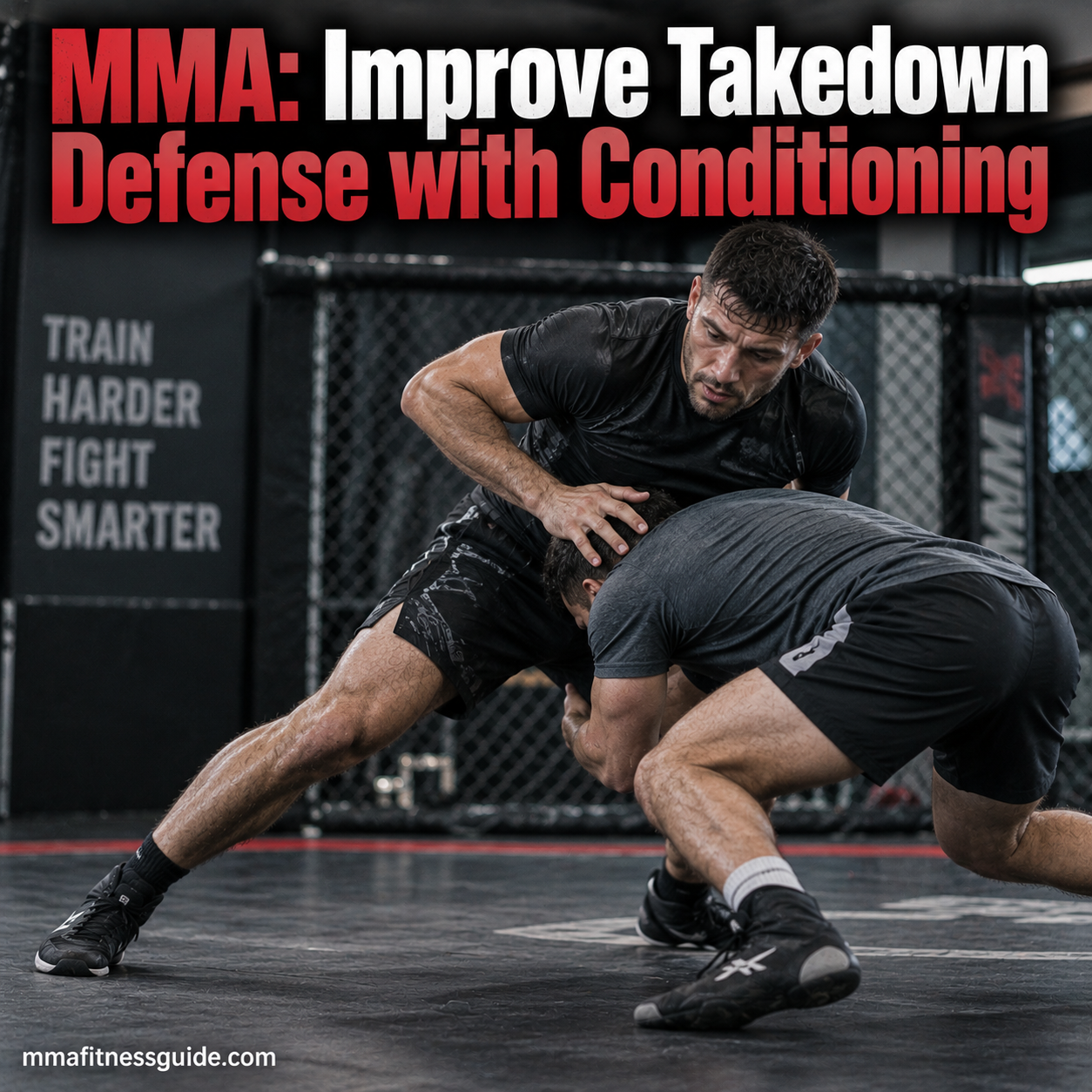
MMA: Improve Takedown Defense with Conditioning

MMA fighters practicing takedown defense conditioning and sprawl technique in a combat sports gym
Takedown defense conditioning develops the hip strength, balance, leg drive, and scrambling endurance needed to defend repeated wrestling attacks.

Introduction

Defending a takedown often happens in a matter of seconds. You may need to drop your hips into a sprawl, establish an underhook, absorb forward pressure, circle away from the cage, or scramble back to your feet.

Technique determines how you perform those actions, but fatigue can make even well-practiced movements slower and less precise.

Conditioning for takedown defense should therefore focus on the physical demands behind the technique: hip extension, balance, leg drive, trunk stability, repeated sprawls, and short bursts of scrambling.

The following drills can be added to MMA practice or strength training to develop those qualities.

Continue reading “MMA: Improve Takedown Defense with Conditioning”

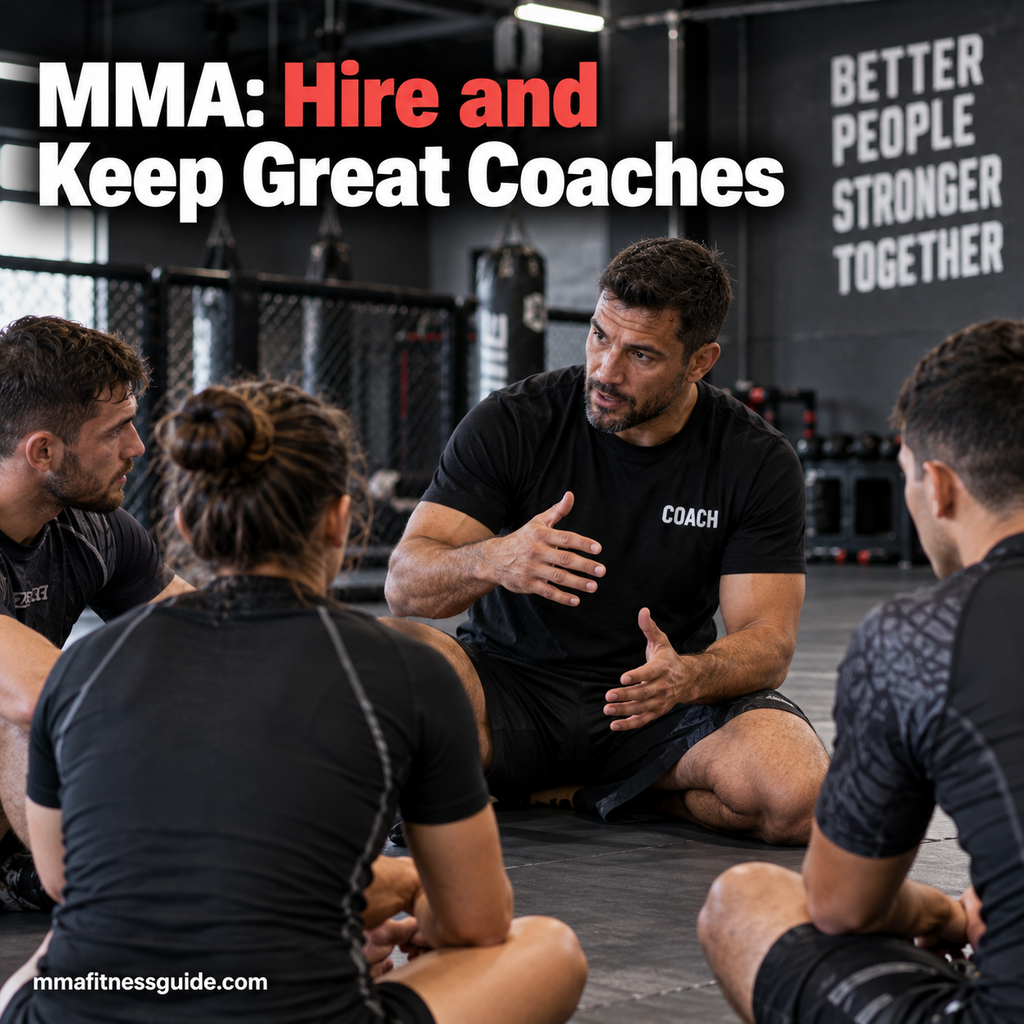
MMA: Hire and Keep Great Coaches

MMA coach talking with a group of fighters during a training session at a fight gym.
Reliable MMA coaches combine technical knowledge with communication, professionalism, safety awareness, and the ability to work with different types of students.

A coach can have excellent fight credentials and still be the wrong person to lead a class. If they struggle to explain techniques, show up inconsistently, ignore beginners, or create tension with other instructors, members notice—and some eventually leave.

For an MMA gym owner, coaching decisions affect far more than the quality of instruction. Coaches influence member retention, class attendance, fighter development, safety, referrals, and the atmosphere people experience every time they walk through the door.

Hiring should therefore start with clearly defined coaching roles and measurable expectations rather than competition records alone. From there, gym owners need a practical system for evaluating candidates, setting compensation, managing responsibilities, and giving strong instructors reasons to stay.

Continue reading “MMA: Hire and Keep Great Coaches”

Budget Fitness: Staying Fit for Less

Athlete performing box jumps outdoors using simple, affordable fitness equipment for a budget-friendly workout.
Bodyweight exercises, outdoor spaces, resistance bands, and basic equipment can provide challenging workouts without a costly gym setup.

A flight of stairs can handle your conditioning. A patch of floor is enough for push-ups, squats, lunges, and core work. Add a $15 jump rope or a set of resistance bands, and you already have enough equipment for dozens of workouts.

Fitness expenses climb when memberships, supplements, workout clothes, apps, and home equipment start feeling like requirements. Most of them aren’t.

For fighters and everyday athletes working with a limited budget, the basics still deliver: bodyweight strength work, running and walking, shadowboxing, simple conditioning, affordable food, and consistent training.

Spend where it genuinely improves your training and use free options everywhere else. A limited fitness budget may change where and how you train, but it doesn’t have to stop you from getting stronger, fitter, and better conditioned.

Continue reading “Budget Fitness: Staying Fit for Less”

Low-Impact Conditioning for Joint Fitness

Female athlete performing a low-impact conditioning stretch on a gym mat with bold white text reading Low-Impact Conditioning for Joint Fitness.
A focused female martial artist demonstrating low-impact conditioning to support joint-friendly fitness.

Not all conditioning has to be high-impact or high-intensity. For beginners, older athletes, or martial artists recovering from injury, low-impact conditioning is one of the safest and most effective ways to build endurance, strength, and movement confidence without stressing the joints.

Whether you’re dealing with knee pain, tight hips, sore ankles, or just want sustainable cardio, this guide breaks down the best low-impact conditioning options that protect your joints while still improving your fitness.

Continue reading “Low-Impact Conditioning for Joint Fitness”

Greatest Rivalries in MMA History

Collage of four intense fictional MMA fighters inside the cage with bold white title text reading Greatest Rivalries in MMA History.
A dramatic collage of four fictional MMA athletes representing the passion and intensity behind the greatest rivalries in MMA history.

Jon Jones and Daniel Cormier brawled at a press event before ever settling their feud inside the cage. Nate Diaz shocked the MMA world by submitting Conor McGregor, setting up a massive rematch. Chael Sonnen spent months provoking Anderson Silva before coming within minutes of ending one of the sport’s greatest championship reigns.

Moments like these show why a great MMA rivalry can become bigger than any single fight. Championship stakes, contrasting personalities, stylistic matchups, rematches, and genuine personal tension can transform two fighters into opponents whose careers become permanently connected.

From respectful battles between generational greats to feuds fueled by genuine animosity, MMA’s greatest rivalries have sold major events, elevated divisions, created new stars, and produced some of the most memorable moments in the sport’s history.

Continue reading “Greatest Rivalries in MMA History”

Goal Setting for Training Camps and Seasons

Focused female fighter sitting on gym mats writing in a notebook, with bold white title text about goal setting for training camps and seasons.
A dedicated female martial artist planning her goals for training camps and competitive seasons.

Training camps and competitive seasons demand structure, discipline, and clarity. Without clear goals, fighters fall into random training, overtraining, or focusing too much on what feels hard instead of what actually matters. Creating strategic goals gives you direction, confidence, and a methodized approach to improving your skills, cardio, strength, mindset, and overall performance.

This guide shows you how to set goals that actually work — whether you’re entering a full fight camp, an off-season, or a long-term development phase.

Continue reading “Goal Setting for Training Camps and Seasons”