You’re halfway through a hard sparring round when your opponent takes you down and settles into side control. You’re tired, your breathing is getting faster, and your first escape attempt fails. Your coach is shouting instructions, but all you can think about is how badly the round is going.
You have several choices. You could panic and waste energy pushing against your opponent. You could become frustrated and make a reckless movement. Or you could recognize the position, protect yourself, establish your frames, and work toward an escape.
That third response illustrates what mental toughness can look like in MMA.
It isn’t the absence of fear, frustration, or fatigue. It’s the ability to respond effectively when those experiences appear.
Mental toughness develops through preparation, realistic training, emotional awareness, and the ability to adapt. It also requires knowing when to rest, ask for help, or stop training because something is unsafe.
For fighters preparing for competition, the goal is not to become emotionless. It’s to build reliable habits that remain useful when the pressure increases.
What Is Mental Toughness in MMA?
Mental toughness is a broad term used to describe psychological qualities associated with maintaining effort, focus, and effective behavior during challenging situations.
In combat sports, it can involve several related skills:
- Maintaining attention during demanding exchanges.
- Responding constructively after making a mistake.
- Managing nervousness before competition.
- Following a tactical plan while remaining adaptable.
- Continuing to make appropriate decisions when fatigued.
- Recovering psychologically from losses and setbacks.
These abilities overlap, but they aren’t identical.
A fighter might be excellent at maintaining concentration during training yet struggle with anxiety before competition. Another athlete may handle losses well but become frustrated when a sparring partner disrupts their game plan.
This is why mental toughness is more useful when treated as a collection of trainable skills rather than a permanent personality trait.
It also shouldn’t be confused with ignoring pain or pushing through every obstacle. An athlete who recognizes a possible concussion and stops training is making a sound decision, not demonstrating weakness.
1. Build Confidence Through Evidence, Not Empty Reassurance
Imagine preparing for your first amateur MMA fight.
Your opponent has several bouts of experience, and you’ve started wondering whether you’re ready.
Repeating “I’m going to win” might briefly make you feel better, but it doesn’t address your uncertainty.
A more reliable approach is to examine your preparation.
Have you completed your planned training sessions? Can you defend common takedown entries? Have you practiced escaping difficult positions? Can you maintain your technique during appropriately demanding rounds?
These questions direct attention toward evidence.
Create a Preparation Checklist
Work with your coach to identify a few essential areas:
| Area | Questions to consider |
|---|---|
| Striking | Can I maintain my stance and defense during exchanges? |
| Wrestling | Can I recognize and respond to common takedown attempts? |
| Grappling | Can I protect myself and work toward safer positions? |
| Conditioning | Have I prepared for the expected duration and intensity? |
| Competition routine | Have I practiced warming up and managing delays? |
The purpose isn’t to prove that you’re unbeatable.
It’s to identify what you’ve prepared for and what still needs attention.
When confidence is grounded in actual training, you don’t have to rely entirely on motivational statements.
Keep a Training Record
After each session, write down one thing you executed well and one area to improve.
For example:
“I defended the first takedown attempt, but I stopped moving my feet when pressured against the cage. Next session, I’ll work on circling and maintaining my stance.”
Over time, this record provides a clearer picture of progress than your emotional reaction to one difficult training day.
2. Learn to Manage Emotions Without Suppressing Them
Fear, frustration, and excitement are normal responses to competition.
A fighter might feel nervous before a bout, angry after being caught with a clean punch, or disappointed when a technique fails.
The problem isn’t necessarily experiencing these emotions.
It’s allowing them to dictate your next action.
Consider a fighter who gets taken down early in a round.
Frustration may lead them to scramble recklessly, exposing their back or neck.
A more controlled response is to recognize the emotion while returning attention to the immediate technical problem.
Practice the Notice–Reset–Act Method
Use this three-step process during training.
Notice: Identify what’s happening.
“I’m frustrated because I lost the position.”
Reset: Take a natural breath when the situation allows and identify your immediate priority.
“Protect my neck and establish a frame.”
Act: Execute the appropriate response.
This process won’t make frustration disappear instantly. Its purpose is to prevent an emotion from becoming the sole basis for your decisions.
Practice it during positional sparring before expecting to use it effectively in competition.
3. Train Your Focus Under Pressure
MMA demands continuous attention.
A fighter must monitor distance, recognize attacks, respond to changes in position, and follow instructions when appropriate.
Competition introduces additional distractions: spectators, unfamiliar surroundings, judges, cameras, and the importance of the result.
Trying to think about everything simultaneously can become overwhelming.
A useful alternative is to narrow your attention to a small number of actionable cues.
Use Short Performance Cues
For striking, you might choose:
- Maintain your stance.
- Keep your eyes on your opponent.
- Reset after combinations.
For grappling:
- Protect your position.
- Establish your frames.
- Create an angle.
These cues should reflect your coach’s technical guidance.
Avoid trying to remember ten different instructions during an active exchange.
One relevant cue is often more practical than a complicated mental checklist.
Drill: One-Cue Sparring
During a controlled technical round, choose one specific focus.
For example, concentrate on returning your hands to a defensive position after every combination.
Ask your partner to work at an appropriate intensity while you practice.
After the round, assess whether you maintained that focus.
Repeat with a different cue during another session.
This teaches you to direct attention toward a useful task rather than constantly evaluating whether you’re winning or losing the round.
4. Develop Resilience Through Gradual Exposure to Difficulty
A fighter cannot learn to manage pressure solely by reading about it.
Mental skills need to be practiced in situations that resemble the demands of competition.
However, this doesn’t mean every session should be exhausting or that athletes should be forced into unsafe sparring.
The objective is to introduce manageable challenges and increase complexity as skills develop.
Start With Technical Resistance
Practice a familiar technique against a cooperative partner.
Once the movement becomes reliable, ask your partner to add realistic defensive reactions.
For example, when drilling a takedown entry, your partner might gradually increase their ability to defend.
This creates a problem you must solve without immediately introducing the full intensity of sparring.
Progress to Positional Sparring
Positional sparring is particularly useful for developing composure.
A grappler might begin underneath side control with the goal of recovering guard.
The partner on top provides appropriate resistance.
Because the starting position and objective are clear, the athlete can focus on responding to pressure.
Over time, the coach can increase resistance or vary the starting position.
Use Full Sparring Appropriately
Open sparring introduces more uncertainty and requires athletes to make decisions across a wider range of situations.
It can be valuable, but intensity should match experience, readiness, and training goals.
Hard sparring is not a substitute for technical development.
Repeatedly exposing an overwhelmed beginner to excessive pressure may simply reinforce panic or unsafe habits.
Effective progression builds skill alongside confidence.
5. Practice Recovering After Mistakes
Every fighter makes mistakes.
You might miss a takedown, lose a dominant position, or get caught with a counterpunch.
What matters next is whether you can return your attention to the current situation.
A common mistake is mentally replaying the previous exchange while the opponent is already initiating another attack.
This divides attention between something you cannot change and something that requires an immediate response.
A Simple Between-Exchange Reset
When there’s an appropriate opportunity:
- Recognize the mistake without exaggerating its significance.
- Identify the next technical priority.
- Return your attention to your opponent and position.
For example:
“I rushed the combination. Reset my stance and manage distance.”
Save detailed technical analysis for the break between rounds or the post-training review.
During an exchange, your immediate responsibility is to respond to what’s happening now.
Review Mistakes Without Attacking Yourself
After training, distinguish between behavior and identity.
Instead of saying, “I’m terrible at wrestling,” identify the specific problem.
“I allowed my opponent to establish inside control before the takedown.”
The second statement gives you something concrete to practice.
It also prevents one mistake from becoming a sweeping judgment about your ability.
6. Use Visualization to Rehearse Realistic Responses
Mental imagery allows athletes to rehearse situations without physically performing them.
For MMA fighters, visualization can be used to review familiar techniques, prepare for competition environments, and practice responding to setbacks.
However, imagining yourself winning isn’t a replacement for training.
A useful visualization session includes realistic challenges rather than a perfect sequence in which every technique succeeds.
Five-Minute Competition Visualization
Find a quiet place where you can sit comfortably.
Begin by imagining yourself arriving at the venue.
Picture the environment, your equipment, and the beginning of your warm-up.
Next, imagine entering the cage and establishing your stance.
Visualize an opening exchange in which you perform a familiar technique.
Then introduce a manageable problem.
Perhaps your opponent defends your first takedown or lands a jab.
Imagine responding with the appropriate movement: maintaining your defense, adjusting your position, and returning to your tactical plan.
Finish by picturing yourself continuing to compete with attention and composure.
The purpose is to rehearse effective responses, not convince yourself that the fight will unfold exactly as imagined.
7. Manage Pre-Fight Nerves Instead of Fighting Them
Even experienced athletes may feel nervous before competition.
A racing heart, sweaty palms, or restless thoughts do not automatically indicate poor preparation.
These sensations can occur when your body responds to a demanding situation.
The challenge is finding a level of activation that allows you to remain alert without becoming overwhelmed.
Some fighters prefer a calm, quiet warm-up.
Others feel more prepared after gradually increasing their movement intensity.
There is no universal emotional state that guarantees peak performance.
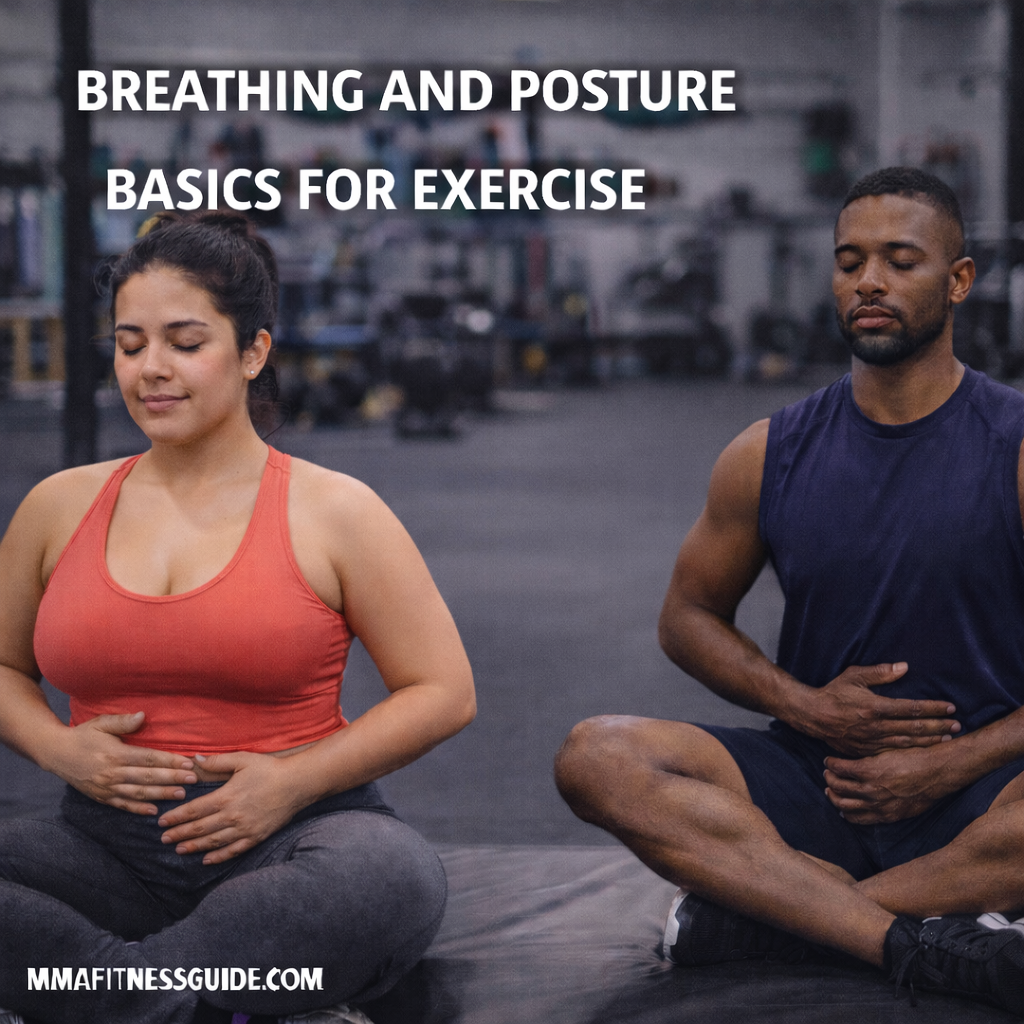
Try Comfortable, Slow Breathing
Before your warm-up, practice the following:
- Relax your shoulders and jaw.
- Inhale gently for approximately four seconds.
- Exhale comfortably for approximately six seconds.
- Repeat for one or two minutes.
- Return to natural breathing.
Avoid forcing deep breaths or continuing if you feel dizzy.
This exercise may help you direct attention and manage tension.
It shouldn’t be used to force your heart rate as low as possible immediately before competition.
You still need to prepare for intense physical activity.
Reframe Nervous Thoughts
Instead of:
“I’m nervous, so I’m not ready.”
Try:
“I’m feeling nervous. I can still follow my preparation and make appropriate decisions.”
This statement acknowledges the feeling without treating it as a prediction of failure.
8. Build Discipline Through a Flexible Routine
A consistent routine can reduce unnecessary decisions during fight week.
If you already know how you’ll prepare your equipment, warm up, and review your tactical priorities, you have fewer last-minute choices to make.
However, routines should remain adaptable.
A fighter who believes they cannot perform without a specific song or an exact sequence of actions may become distressed when something changes.
Competition schedules are unpredictable.
Bouts get delayed, warm-up areas become crowded, and equipment problems occur.
A useful routine provides structure without requiring perfect conditions.
Example Pre-Competition Routine
| Stage | Action |
|---|---|
| Before leaving | Check equipment and necessary documents |
| On arrival | Confirm the schedule and locate the warm-up area |
| Early preparation | Begin familiar mobility and light movement |
| Warm-up | Progress toward competition-specific intensity |
| Final preparation | Review one or two tactical cues |
Practice a version of this routine before demanding training sessions.
That way, competition day doesn’t become the first time you’ve attempted it.
9. Learn the Difference Between Persistence and Recklessness
Mental toughness is sometimes portrayed as the willingness to continue regardless of pain, exhaustion, or danger.
That interpretation can be harmful in combat sports.
A fighter needs to distinguish between manageable discomfort and signs that continuing may cause injury.
Muscle fatigue during a planned conditioning session is different from sudden joint pain.
Feeling nervous before sparring is different from being pressured to train with an injury.
Dizziness, confusion, severe headache, or other symptoms following a head impact require immediate attention.
Continuing to train through a suspected concussion is not mental toughness.
Stop participation and seek appropriate medical assessment.
The same principle applies to persistent pain, illness, and severe fatigue.
Rest and medical care are sometimes the correct decisions.
Mental resilience includes the judgment to protect your long-term ability to train and compete.
10. Respond Constructively to Losses and Setbacks
Losing a fight can be emotionally difficult.
An athlete may feel disappointed, embarrassed, frustrated, or uncertain about their future.
Those reactions are understandable, particularly after months of preparation.
However, a loss does not provide a complete assessment of your ability.
It provides information about one performance under a particular set of conditions.
Use a Structured Post-Fight Review
After allowing time for immediate recovery, review the performance with your coach.
Consider three questions:
What worked?
Identify effective decisions and techniques, even if the overall result was disappointing.
What needs improvement?
Choose specific technical or tactical problems.
What should change in training?
Translate those observations into a manageable plan.
For example, if you repeatedly struggled to escape the cage, your next training block might include focused positional drilling.
Avoid making major career decisions during the immediate emotional aftermath of a fight.
Give yourself time to recover physically and psychologically.
If distress persists or significantly affects daily life, a qualified mental health professional or sports psychologist can provide support.
A Four-Week Mental Toughness Training Plan
Mental skills become more useful when practiced consistently.
This four-week plan can be integrated into normal MMA training without adding unnecessary physical intensity.
Week 1: Build awareness
Goal: Recognize your responses to pressure.
After each session, record one challenging moment, how you reacted, and what you could try next time.
Practice one or two minutes of comfortable breathing before training.
Week 2: Improve focus
Goal: Direct attention toward useful actions.
Choose one performance cue for each technical session.
After training, assess whether the cue helped you maintain focus.
Week 3: Practice under resistance
Goal: Apply mental skills during manageable pressure.
Use controlled positional sparring to practice the Notice–Reset–Act method.
Increase resistance only when appropriate for your experience and safety.
Week 4: Rehearse competition
Goal: Combine your preparation habits.
Follow a familiar warm-up, use brief visualization, and practice your chosen performance cues during a supervised training session.
Review what worked and identify one adjustment for the next training block.
This plan is a starting point, not a guarantee of psychological improvement within four weeks.
Continue practicing the skills that prove useful and adjust them with your coach.
Common Mental Toughness Mistakes
Trying to Feel Confident All the Time
Confidence naturally fluctuates.
You can perform useful actions even when you’re uncertain.
Focus on preparation and behavior rather than trying to maintain a perfect emotional state.
Treating Every Training Session Like a Fight
Constantly training at maximum intensity can increase fatigue and injury risk.
Technical sessions, controlled sparring, and recovery all have important roles.
Using Negative Self-Talk as Motivation
Some athletes respond to harsh self-criticism, but repeatedly attacking yourself may increase anxiety and distract from learning.
Specific feedback is more useful than broad insults.
Refusing to Ask for Help
Coaches, teammates, sports psychologists, and healthcare professionals can all contribute to an athlete’s development.
Seeking appropriate support is compatible with competitive ambition.
Confusing Pain Tolerance With Good Judgment
Ignoring injuries doesn’t make you a better fighter.
Learn when to continue, when to modify training, and when to stop.
Frequently Asked Questions About Mental Toughness in MMA
Can mental toughness be trained?
Many of the skills associated with mental toughness, including attention control, emotional regulation, and responses to setbacks, can be practiced. Progress varies between individuals and situations.
Does mental toughness mean never being afraid?
No. Fear is a normal response to perceived danger or uncertainty. The objective is to respond appropriately rather than eliminate every uncomfortable feeling.
How do I stop panicking during sparring?
Work with your coach to reduce intensity, improve the relevant defensive skills, and gradually increase resistance. Practice specific responses in controlled situations before progressing to open sparring.
Is visualization enough to build confidence?
No. Visualization can supplement preparation, but technical practice and realistic experience provide the foundation for confidence.
Should I push through every difficult training session?
No. Manageable effort and discomfort differ from injury, illness, and unsafe training conditions. Appropriate rest and medical assessment are sometimes necessary.
Final Takeaway
Mental toughness in MMA isn’t about being fearless, emotionless, or willing to endure unlimited punishment.
It’s about developing reliable responses to difficult situations.
Confidence grows from preparation. Composure improves when you practice recognizing emotions and returning attention to useful actions. Resilience develops through manageable challenges, constructive reflection, and appropriate recovery.
Start with one skill.
Choose a performance cue, practice resetting after mistakes, or keep a brief training record. Apply that habit consistently before adding another.
When competition arrives, you won’t be able to control every exchange or eliminate every nervous thought.
You can, however, prepare yourself to recognize the situation, make the next appropriate decision, and continue adapting as the fight unfolds.