
Introduction
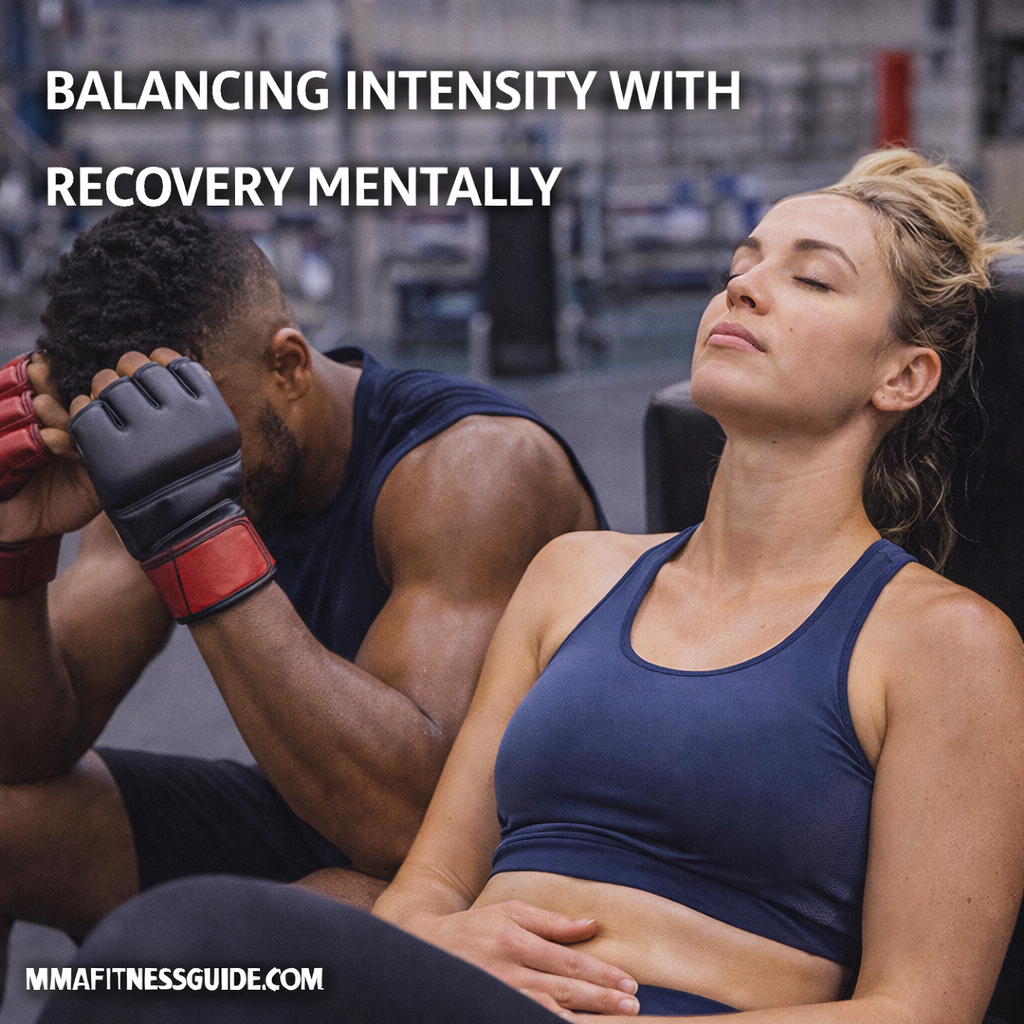
MMA culture often celebrates nonstop intensity—hard rounds, relentless conditioning, and pushing through discomfort. While physical recovery is increasingly understood, mental recovery is still frequently overlooked. Without proper mental recovery, intensity becomes unsustainable, leading to burnout, anxiety, poor performance, and stalled progress.
Learning to balance mental intensity with recovery helps fighters stay sharp, motivated, and emotionally resilient across long training cycles.
Why Mental Recovery Is Just as Important as Physical Recovery
The brain drives every movement, decision, and reaction in training.
Without mental recovery, athletes may experience:
- Decreased focus and reaction time
- Heightened irritability or anxiety
- Loss of motivation
- Poor decision-making in sparring
- Emotional exhaustion
Mental fatigue often appears before physical breakdown.
Understanding Training Intensity Beyond the Body
Intensity isn’t only physical.
Mental intensity includes:
- Pressure to perform
- Fear of losing or underperforming
- Constant self-evaluation
- Competition within the gym
- External expectations
These stressors accumulate even when the body feels fine.
The Cost of Staying “Switched On” Too Long
Staying mentally activated without recovery keeps the nervous system in a heightened state.
Long-term effects include:
- Difficulty relaxing outside the gym
- Trouble sleeping
- Increased injury risk
- Emotional flatness or mood swings
Performance suffers when the mind never downshifts.
Recognizing Signs of Mental Overload
Early awareness prevents burnout.
Common warning signs:
- Loss of enjoyment in training
- Constant tension or frustration
- Overthinking during sparring
- Poor emotional control
- Feeling drained despite adequate sleep
Ignoring these signals delays recovery.
Separating Training Identity from Self-Worth
Many fighters tie identity directly to performance.
This creates mental strain when:
- Training sessions go poorly
- Injuries interrupt progress
- Confidence fluctuates
Healthy athletes separate who they are from how they perform on a given day.
Intentional Mental Intensity
Not every session needs the same mental load.
Intentional intensity means:
- Choosing when to push mentally
- Allowing lighter cognitive days
- Matching focus demands to session goals
This prevents chronic mental stress.
Mental Recovery Is Not Mental Weakness
Recovery is often misunderstood as disengagement.
In reality, mental recovery:
- Restores clarity
- Improves learning
- Enhances emotional control
- Supports consistency
Recovery is a performance strategy, not avoidance.
Simple Mental Recovery Practices for Fighters
Mental recovery doesn’t require long routines.
Effective options include:
- Quiet walks without stimulation
- Breath-focused relaxation
- Short mindfulness sessions
- Journaling thoughts post-training
- Unstructured downtime
Low-effort practices often work best.
Reducing Cognitive Load Outside the Gym
Recovery improves when mental clutter decreases.
Helpful habits:
- Limiting constant content consumption
- Creating device-free time
- Simplifying daily decisions
- Maintaining consistent routines
Less noise creates more mental space.
Learning to Downshift After Training
Many fighters struggle to mentally “turn off.”
Downshifting strategies include:
- Breathing exercises post-session
- Stretching with controlled breathing
- Changing environments after training
- Listening to calming audio
Transition rituals signal safety to the nervous system.
Balancing Self-Critique With Self-Compassion
Growth requires honesty—but not harshness.
Healthy reflection includes:
- Identifying lessons without judgment
- Viewing mistakes as information
- Avoiding constant rumination
Self-compassion supports learning and resilience.
Mental Recovery During Fight Camp
Fight camp increases psychological pressure.
During camp, mental recovery should focus on:
- Sleep protection
- Reduced decision fatigue
- Simplified routines
- Emotional regulation
Clarity matters more than constant intensity.
Coaches and Gym Culture Matter
Environment shapes mental load.
Supportive gym cultures:
- Normalize recovery
- Encourage communication
- Reduce unnecessary comparison
- Value long-term development
Healthy environments produce durable athletes.
Mental Recovery Improves Confidence
Rested minds make better decisions.
Benefits include:
- Improved reaction time
- Better emotional control
- Clearer tactical thinking
- Increased trust in training
Confidence grows when the mind feels stable.
Long-Term Sustainability in MMA
Careers are built over years, not weeks.
Sustainable fighters:
- Train hard when appropriate
- Recover intentionally
- Respect mental limits
- Adjust intensity intelligently
Longevity requires balance.
Final Thoughts
Balancing intensity with mental recovery is essential for consistent progress in MMA. Pushing hard without recovery leads to burnout, while intentional mental rest enhances focus, confidence, and resilience. Fighters who learn to downshift mentally perform better when it’s time to turn intensity back on.
True toughness isn’t staying tense—it’s knowing when to recover so you can rise again stronger.