Introduction
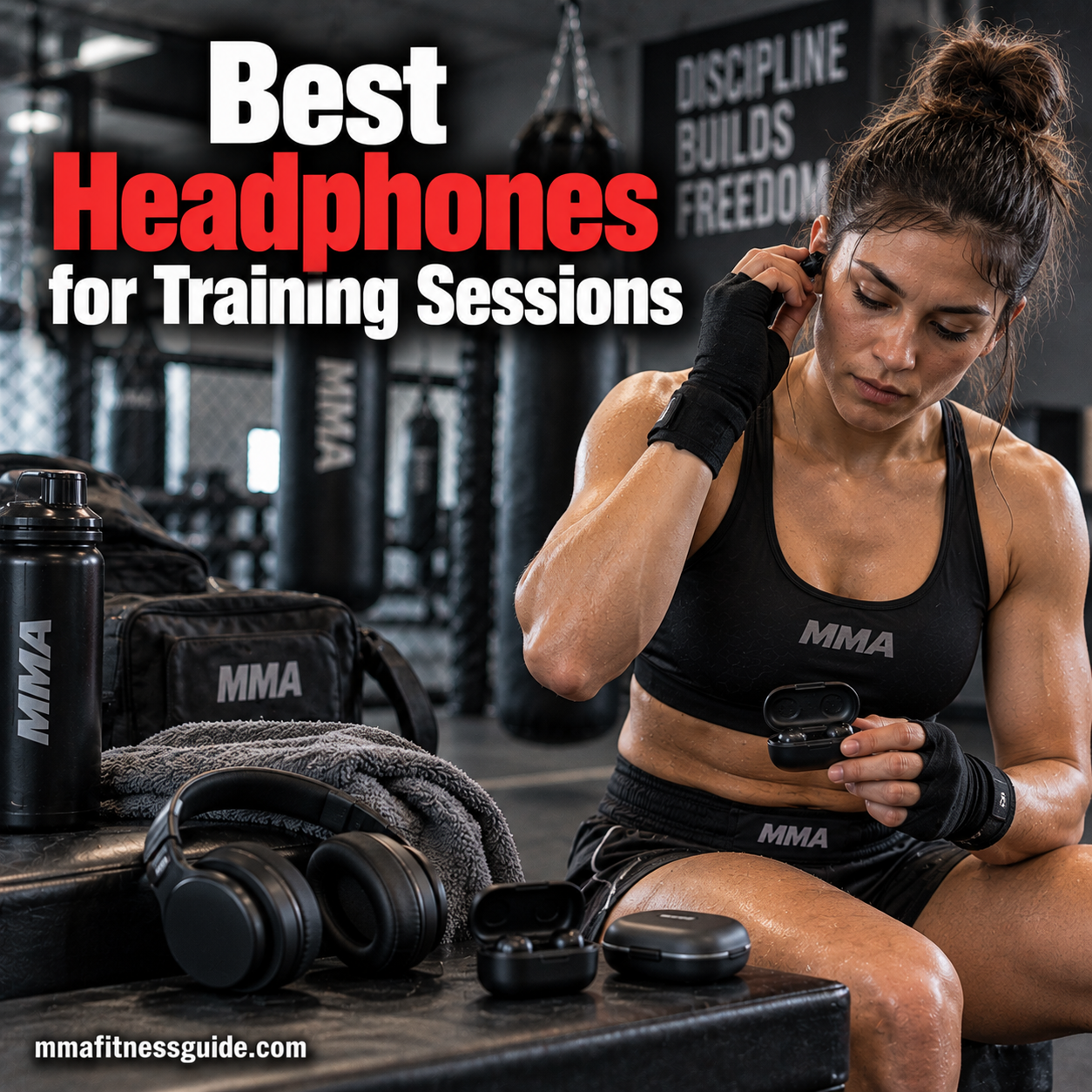
Burpees, jump rope, heavy-bag rounds, sprints, and strength work expose headphone problems quickly. Loose earbuds fall out, over-ear headphones trap heat, touch controls misfire when your hands are sweaty, and poorly protected electronics can struggle after repeated exposure to moisture.
For MMA athletes, headphones make the most sense during solo conditioning, lifting, roadwork, warm-ups, and recovery—not during sparring or drills where communication and awareness are required.
Secure fit, sweat resistance, battery life, straightforward controls, and awareness of your surroundings should drive the buying decision. Sound quality still matters, but headphones that stay put through a conditioning circuit are generally more useful in the gym than a feature-heavy pair designed primarily for stationary listening.
Why MMA Athletes Use Headphones
Audio can serve different purposes depending on the workout.
During solo training, fighters may use headphones to:
- Maintain a steady pace during running or cardio
- Follow timed conditioning workouts
- Listen to music during strength sessions
- Follow guided mobility or recovery sessions
- Reduce distractions during independent workouts
They become less useful once training requires communication with coaches or partners.
Key Features to Look for in Training Headphones
Sweat and repeated movement create different demands than everyday listening.
Prioritize:
- A fit that stays secure during rapid movement
- An appropriate sweat or water-resistance rating
- Materials that tolerate frequent cleaning
- Controls that are easy to operate with sweaty hands
- Enough battery capacity for your typical sessions
- Audio settings that still allow awareness when necessary
For conditioning work, stability usually matters more than premium audio features.
Over-Ear vs In-Ear Headphones
Over-Ear Headphones
Over-ear models surround the ears and often provide fuller sound and stronger passive noise isolation.
They can work well for:
- Weight training
- Stationary cardio
- Warm-ups
- Mobility sessions
- Post-training recovery
Their size becomes a drawback when exercises involve rapid head or body movement.
Common disadvantages include:
- Ear cups retaining heat and sweat
- Headbands shifting during explosive exercises
- Extra bulk in a gym bag
- More surface area requiring cleaning
In-Ear Headphones
Earbuds take up less space and generally interfere less with movement.
They are better suited to:
- Running
- Jump rope
- Conditioning circuits
- Agility exercises
- Strength training
Fit varies considerably between users, so interchangeable ear tips, stabilizing wings, or ear hooks can be useful.
Wireless vs Wired Headphones
Wireless Headphones
Removing the cable eliminates something that can catch on clothing, equipment, or your arms during exercise.
For dynamic training, wireless models offer:
- Greater movement freedom
- Less cable interference
- Easier transitions between exercises
- Compact storage, particularly with true wireless earbuds
The tradeoff is another device that needs charging.
Check both battery life and how much listening time a quick charge provides.
Wired Headphones
Wired models avoid battery concerns and can still work for stationary exercise.
During MMA-style conditioning, however, a dangling cable can become annoying during:
- Burpees
- Jump rope
- Medicine-ball work
- Sprints
- Agility drills
They are generally better suited to low-movement activities.
Secure Fit During Movement
A pair of earbuds might feel secure while walking and come loose as soon as you start jumping rope.
Test fit with movements such as:
- Jogging
- Jumping
- Rapid head turns
- Burpees
- Bodyweight squats
Useful design features include:
- Multiple ear-tip sizes
- Ear hooks
- Stabilizing wings
- Low-profile housings
- Lightweight construction
The goal is to complete a workout without repeatedly pushing the earbuds back into place.
Understand Sweat and Water-Resistance Ratings
Rather than relying on marketing terms such as “sweatproof,” check the manufacturer’s IP rating when one is provided.
IP ratings indicate tested resistance to water and, in some cases, dust. Higher water-resistance ratings may be useful for athletes who sweat heavily or train outdoors.
Remember that water resistance has limits. Sweat resistance does not necessarily mean headphones can be submerged or washed under running water.
Follow the manufacturer’s cleaning instructions for the specific model.
Sound Quality vs Hearing Safety
A noisy gym can tempt you to keep increasing the volume.
Instead, aim for enough volume to hear your audio clearly without drowning out everything around you.
During training:
- Keep volume at a reasonable level
- Lower it when moving through shared areas
- Use transparency or ambient modes when appropriate
- Remove headphones when a coach or partner needs your attention
If gym noise forces you to continually increase the volume, changing where or when you use headphones may be a better solution.
Noise Cancellation and Situational Awareness
Active noise cancellation can make cardio, stretching, and independent strength sessions more enjoyable by reducing background noise.
That same isolation can become a problem on a busy training floor.
Noise cancellation makes more sense during:
- Stationary cardio
- Independent lifting
- Mobility work
- Recovery sessions
Use greater awareness around:
- Heavy bags being shared
- Moving training partners
- Coaches giving instructions
- Busy weight areas
- Outdoor running near traffic
Transparency or ambient-sound modes can provide a useful middle ground when supported by the headphones.
Battery Life for Training Sessions
Consider your actual training schedule rather than chasing the largest advertised battery number.
For most workouts, several hours of battery life provides plenty of margin. A charging case can extend the usable time of wireless earbuds between sessions.
Useful features include:
- Quick charging
- Battery indicators
- Charging cases
- Automatic power management
If you frequently forget to charge devices, quick charging may matter more than exceptionally long total battery life.
Controls and Ease of Use
Sweaty fingers can make small touch-sensitive controls frustrating.
During exercise, you may need to:
- Pause audio
- Adjust volume
- Skip a track
- Switch listening modes
Physical buttons can sometimes be easier to operate without looking, although well-designed touch controls can also work.
Whatever the design, you should be able to perform basic functions without repeatedly stopping your workout.
Comfort During Longer Sessions
Pressure that feels insignificant after five minutes can become distracting after an hour.
For earbuds, check for:
- Correct ear-tip size
- Minimal pressure inside the ear
- Stable positioning without excessive force
For over-ear headphones, consider:
- Headband pressure
- Ear-cup heat
- Cushion material
- Overall weight
Comfort becomes especially noticeable during longer lifting, cardio, or recovery sessions.
Match Headphones to the Workout
Different sessions place different demands on headphones.
Strength Training
Either secure earbuds or over-ear headphones can work well because movement is generally more controlled.
Conditioning and Agility
Low-profile wireless earbuds with a secure fit reduce bulk during sprints, jumps, and rapid transitions.
Running
Prioritize stability, sweat resistance, and enough environmental awareness for the route.
Mobility and Recovery
Comfort takes priority because movement is slower and impact is minimal.
Bag Work
Earbuds may work during solo technical rounds, but they should remain secure through head movement and combinations. Keep enough awareness to hear activity around you.
Keep Headphones Clean
Earbuds and ear cushions repeatedly come into contact with sweat and skin oils.
After training:
- Wipe exterior surfaces according to manufacturer instructions
- Clean removable ear tips when appropriate
- Allow everything to dry before closing the charging case
- Avoid leaving damp headphones inside a sealed gym bag
- Inspect ear tips and cushions for deterioration
Do not soak electronic components unless the manufacturer specifically states that the device supports it.
Common Training Mistakes
Headphones can become a distraction when they are used in the wrong setting.
Common problems include:
- Constantly readjusting loose earbuds
- Ignoring the manufacturer’s water-resistance rating
- Turning the volume up excessively in noisy gyms
- Putting wet earbuds directly into a charging case
- Wearing bulky headphones during explosive exercises
- Using noise cancellation when environmental awareness is necessary
Changing how you use the headphones can sometimes solve these problems without requiring a new pair.
When to Leave the Headphones Off
Some parts of MMA training require your full attention.
Remove headphones during:
- Live sparring
- Grappling rounds
- Partner drills
- Pad work with a coach
- Technique instruction
- Clinch training
- Any exercise where hearing commands or warnings matters
Headphones belong primarily in independent portions of training.
Balancing Audio and Awareness
Music can set the pace for a run or conditioning circuit, while podcasts may make lower-intensity cardio more enjoyable. Guided audio can also fit naturally into stretching or mobility sessions.
Once other athletes, coaches, moving equipment, or traffic enter the equation, environmental awareness takes priority.
Choose headphones that make switching between those situations easy rather than isolating you from everything around you.
Final Thoughts
For MMA training, start with the conditions the headphones will actually face: repeated movement, heavy sweating, frequent handling, and a noisy gym.
Secure wireless earbuds generally make sense for running and conditioning, while over-ear models can work well for lifting and slower sessions. Check the water-resistance rating, battery life, controls, and fit before paying extra for features you may rarely use.
And when training shifts from solo work to sparring, coaching, or partner drills, put the headphones away. At that point, hearing what’s happening around you matters more than the playlist.