Introduction
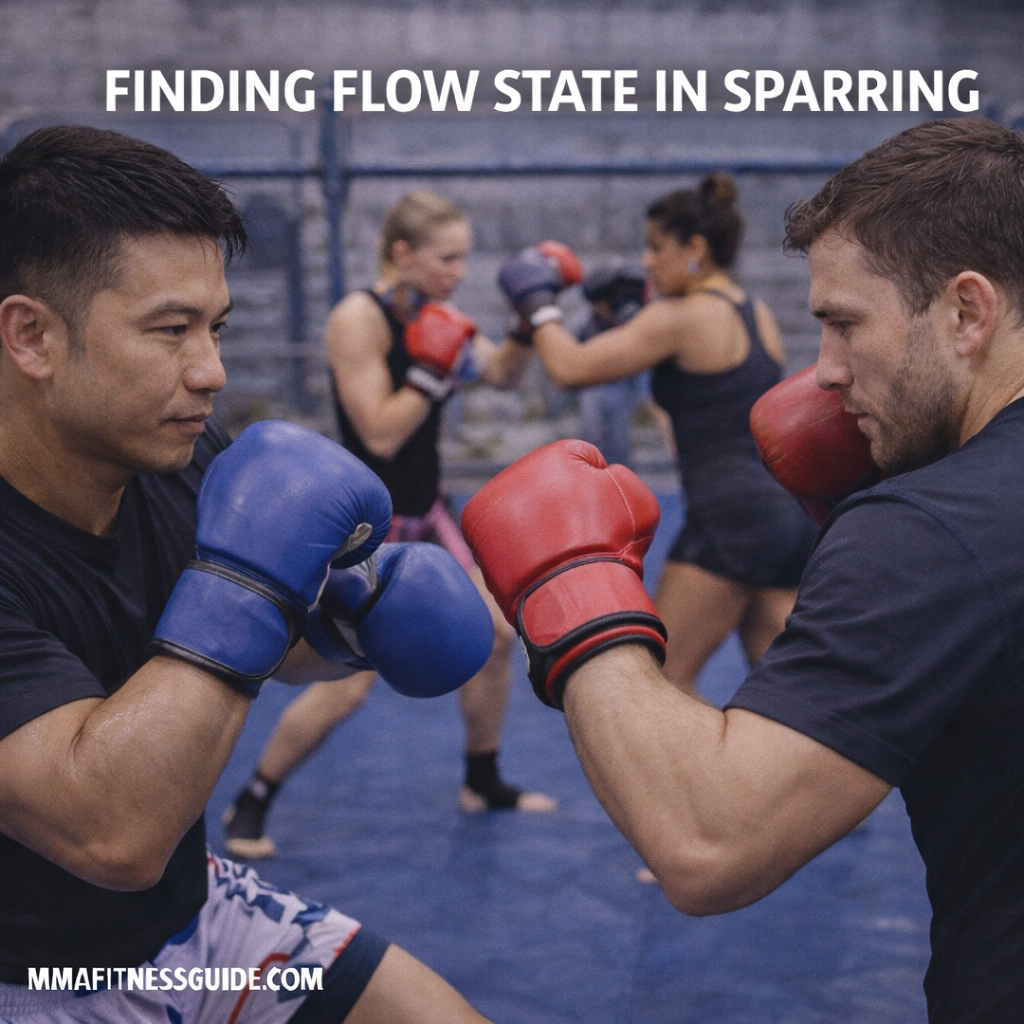
Sparring is where technique, conditioning, and mindset collide. Some rounds feel forced and chaotic, while others feel effortless—movements flow, reactions are sharp, and time seems to slow down. That optimal mental zone is known as flow state.
Learning how to access flow state in sparring helps fighters train more effectively, reduce mental fatigue, and perform closer to their true ability under pressure.
What Is Flow State?
Flow state is a mental condition where focus, awareness, and action align seamlessly. In this state, athletes are fully immersed in the task without overthinking or distraction.
Key characteristics of flow include:
- Heightened focus
- Smooth, automatic movement
- Reduced self-consciousness
- Clear decision-making
- Strong mind-body connection
Flow is not luck—it’s a trainable mental skill.
Why Flow State Matters in Sparring
Sparring is unpredictable and fast-paced. Overthinking slows reactions and increases mistakes.
Flow state allows fighters to:
- React instinctively instead of hesitating
- Maintain composure under pressure
- Conserve mental energy
- Improve learning and retention
- Enjoy training more fully
Training in flow accelerates development.
Common Mental Blocks That Prevent Flow
Many fighters struggle to access flow due to mental interference.
Common blockers include:
- Fear of making mistakes
- Ego-driven sparring
- Excessive self-criticism
- Over-focusing on winning rounds
- Anxiety about performance
Flow disappears when attention turns inward instead of outward.
The Role of Skill-Challenge Balance
Flow occurs when skill level matches the challenge.
If sparring is:
- Too easy → boredom
- Too hard → anxiety
The ideal zone sits just beyond comfort but below overwhelm. Adjusting sparring intensity and partner selection helps maintain this balance.
Breathing and Nervous System Regulation
A calm nervous system supports flow.
Helpful breathing strategies:
- Slow nasal breathing between rounds
- Extended exhales to reduce tension
- Conscious breathing resets after exchanges
Relaxation improves awareness and reaction speed.
Staying Present in the Round
Flow depends on staying in the moment.
Ways to stay present:
- Focus on immediate cues, not outcomes
- Reset attention after every exchange
- Avoid replaying mistakes mid-round
Each moment is independent.
Letting Go of Ego During Sparring
Ego disrupts flow by creating tension and fear.
Healthy sparring mindset:
- View rounds as practice, not tests
- Allow yourself to experiment
- Accept being hit as part of learning
Flow thrives when curiosity replaces judgment.
Using Simple Focus Cues
Flow improves with simple mental anchors.
Examples include:
- “Breathe and move”
- “See and respond”
- “Stay loose”
Short cues prevent overthinking.
Rhythm and Timing Awareness
Flow often feels rhythmic.
Develop rhythm by:
- Matching breathing to movement
- Finding a consistent pace
- Allowing exchanges to develop naturally
Forcing speed breaks rhythm.
Trusting Your Training
Flow requires trust.
Trust includes:
- Trusting muscle memory
- Trusting conditioning
- Trusting preparation
Doubt pulls attention away from the present.
Sparring Intentionally, Not Aggressively
Flow is not about intensity—it’s about clarity.
Intentional sparring focuses on:
- Clean execution
- Awareness over power
- Control over dominance
Relaxed intensity creates better flow than brute force.
Resetting When Flow Is Lost
Flow comes and goes naturally.
If flow breaks:
- Take a breath
- Reset posture
- Refocus on simple movement
Forcing flow usually prevents it.
Training Flow Outside of Sparring
Flow can be practiced beyond sparring.
Helpful methods include:
- Shadowboxing with awareness
- Visualization exercises
- Controlled drilling
- Breath-focused warm-ups
Mental training supports physical flow.
Flow State and Learning Efficiency
Training in flow improves skill acquisition.
Benefits include:
- Faster pattern recognition
- Better adaptation
- Reduced mental fatigue
- Stronger confidence
Flow enhances learning, not just performance.
Signs You’re Entering Flow
Recognizing flow helps reinforce it.
Common signs:
- Movements feel effortless
- You stop tracking time
- Awareness feels expanded
- Reactions feel automatic
Noticing flow helps recreate it.
Final Thoughts
Finding flow state in sparring is about removing obstacles, not forcing perfection. By regulating breathing, releasing ego, staying present, and trusting your training, fighters can access a mental state that improves both performance and enjoyment.
Flow doesn’t happen when you chase it—it appears when you’re fully engaged in the moment.