Introduction
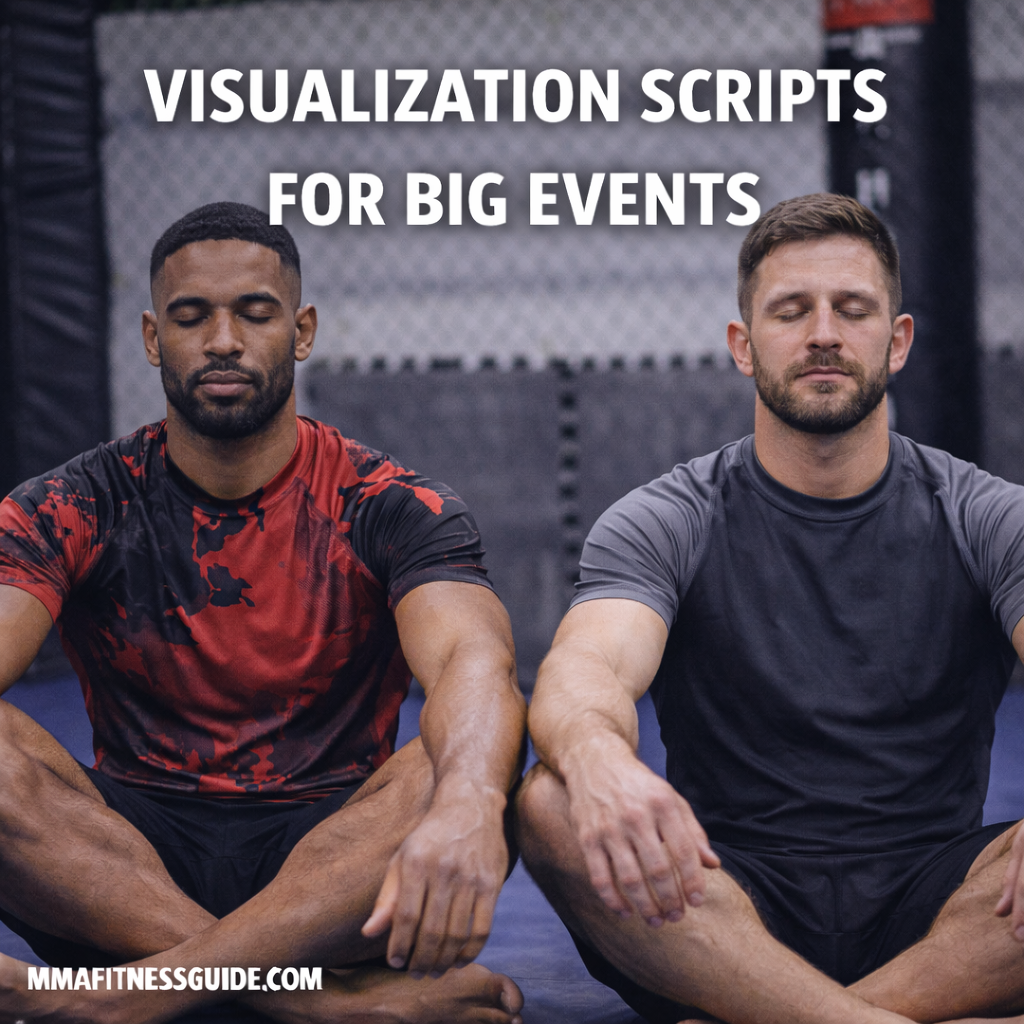
Big events bring heightened pressure. Whether it’s a fight, competition, public performance, or high-stakes personal milestone, the mind often experiences stress before the body ever does. Visualization scripts are powerful mental tools that help athletes and performers prepare emotionally, mentally, and neurologically before stepping into important moments.
When practiced consistently, visualization can reduce anxiety, sharpen focus, and increase confidence—making big events feel familiar instead of overwhelming.
What Is Visualization?
Visualization is the mental rehearsal of an experience using imagination and sensory detail. The brain responds to vividly imagined scenarios in ways similar to real experiences, strengthening neural pathways associated with performance and emotional regulation.
Effective visualization involves:
- Seeing the environment clearly
- Feeling physical sensations
- Hearing sounds and cues
- Experiencing emotions intentionally
It is not daydreaming—it is structured mental training.
Why Visualization Works for High-Pressure Events
Visualization prepares the nervous system for stress before it arrives.
Benefits include:
- Reduced performance anxiety
- Improved emotional control
- Increased confidence and composure
- Faster decision-making under pressure
- Greater sense of familiarity
The mind performs best when it has already “been there.”
When to Use Visualization Scripts
Visualization is most effective when used consistently and strategically.
Ideal times include:
- Weeks leading up to a major event
- The night before competition
- Morning of the event
- During recovery from injury
- When confidence feels shaky
Short, repeated sessions outperform occasional long ones.
How Visualization Scripts Are Structured
A visualization script guides the mind through a sequence of mental images and sensations.
Most scripts include:
- Calm breathing to enter a focused state
- Sensory-rich environment details
- Emotional regulation cues
- Performance execution imagery
- A strong, confident ending
Structure keeps the mind from drifting into anxiety.
Visualization Script for Pre-Event Calm
Use this script to reduce nerves and settle the body.
Script:
Take a slow breath in through your nose and let it out gently.
Feel your body grounded and supported.
Picture yourself arriving at the venue calm and centered.
You move with confidence and clarity.
Your breathing stays steady.
You feel prepared, focused, and present.
Repeat for 2–5 minutes.
Visualization Script for Confidence and Control
This script reinforces self-belief before big moments.
Script:
See yourself standing tall and relaxed.
Feel strength in your posture and calm in your breathing.
You trust your preparation completely.
Challenges feel manageable.
You remain composed, alert, and confident.
You belong in this moment.
Confidence grows through repetition.
Visualization Script for Performance Execution
This script focuses on performing under pressure.
Script:
Visualize the opening moments of your event.
You react smoothly and decisively.
Movements feel natural and controlled.
You adapt quickly and stay focused.
Each action flows into the next.
You stay calm even when intensity rises.
Execution imagery strengthens automatic responses.
Visualization Script for Handling Adversity
Big events rarely go perfectly.
Script:
Picture a challenge or unexpected moment.
You pause, breathe, and reset instantly.
Emotion stays controlled.
You respond with intelligence and composure.
You regain momentum and stay focused.
Obstacles sharpen your awareness instead of shaking it.
This builds emotional resilience.
Visualization Script for Post-Event Relief
This script helps release tension after the event.
Script:
See yourself finishing the event.
Feel relief and pride in your effort.
Your body relaxes completely.
You breathe deeply and let go of tension.
Regardless of outcome, you feel grounded and at peace.
Closure supports recovery.
Sensory Detail: The Key to Effective Visualization
The more senses involved, the stronger the effect.
Include:
- Visual details (lighting, colors, movement)
- Sounds (crowd noise, instructions, breathing)
- Physical sensations (muscle tension, balance, temperature)
- Emotional states (calm, confidence, focus)
Emotion anchors memory.
How Long Visualization Should Last
Short sessions are effective and sustainable.
Recommended duration:
- 5–10 minutes per session
- 1–2 sessions daily leading up to an event
- Brief 1–2 minute resets on event day
Consistency matters more than length.
Common Mistakes in Visualization
Avoid these pitfalls:
- Visualizing failure without resolution
- Rushing through scripts
- Using visualization only when anxious
- Expecting instant results
- Being overly critical during practice
Visualization improves with repetition.
Combining Visualization With Breathing
Breathing enhances mental imagery.
Helpful breathing techniques:
- Slow nasal breathing
- Extended exhales
- Box breathing before visualization
A calm body allows a focused mind.
Visualization During Injury or Setbacks
Visualization keeps the mind engaged when physical training is limited.
Benefits include:
- Maintaining confidence
- Preserving neural patterns
- Reducing fear of return
- Supporting motivation
Mental reps maintain momentum.
Making Visualization a Habit
Visualization works best when routine.
Build the habit by:
- Scheduling sessions
- Using the same quiet environment
- Pairing visualization with existing routines
- Keeping scripts simple
Habits remove resistance.
Final Thoughts
Visualization scripts are powerful tools for navigating big events with calm, confidence, and clarity. They don’t replace preparation—they enhance it. When the mind has already experienced success, the body follows with greater trust and composure.
Big moments feel smaller when you’ve already lived them in your mind.