Introduction
Some days, movement might mean an hour of MMA training. On others, it could be a 20-minute walk, a few rounds of relaxed shadowboxing, or stretching your hips and shoulders while dinner cooks.
All of those days count.
When every activity has to burn a certain number of calories, improve performance, or leave you exhausted, staying active can start feeling like another obligation. Giving yourself more ways to move changes that relationship.
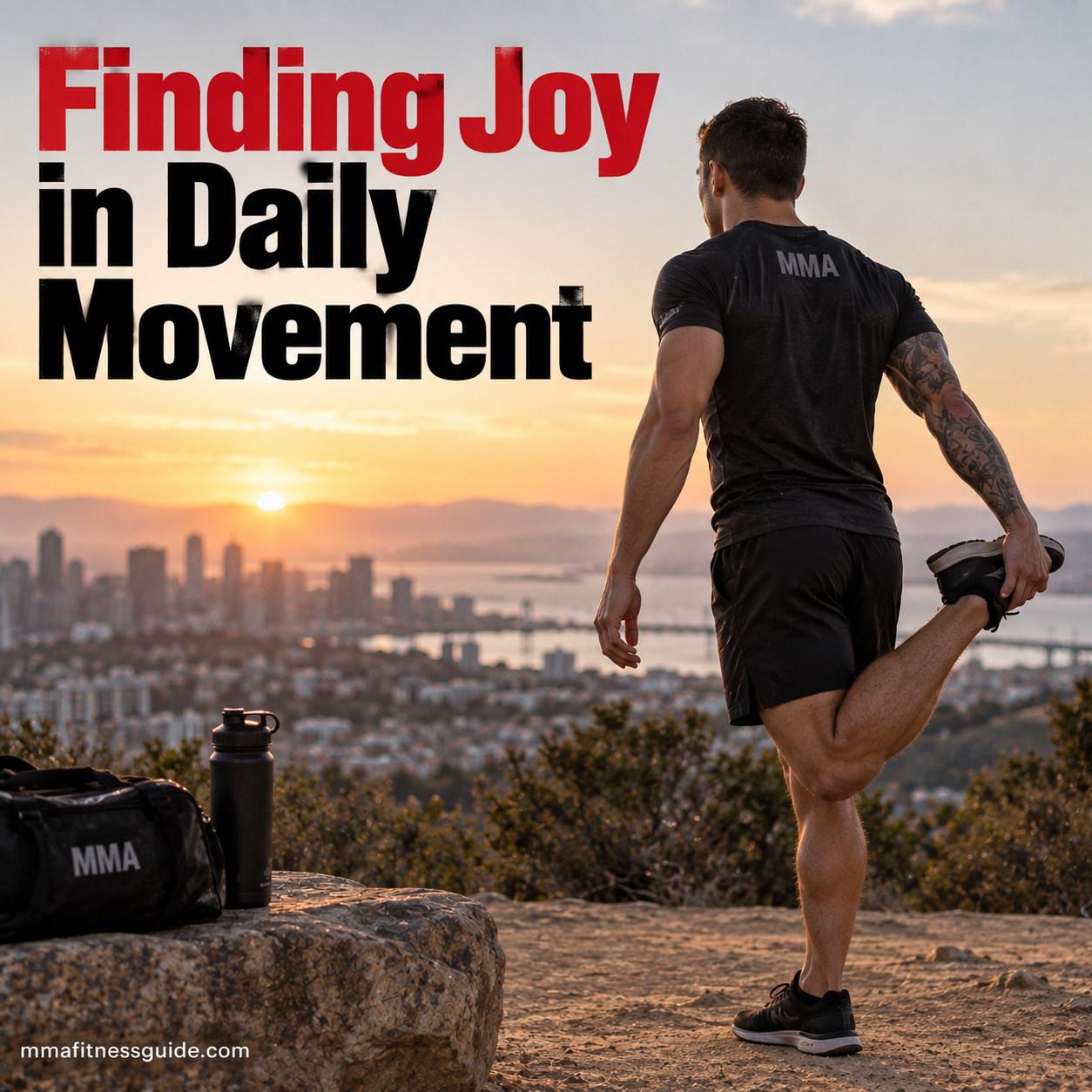
Walking somewhere you enjoy, practicing a technique because it feels good, playing a sport with friends, or doing mobility work after sitting all day can make physical activity something you naturally return to.
The goal is to find forms of movement that leave you glad you did them.
Why Move Every Day?
Hard training and everyday movement serve different purposes.
An MMA session might challenge your conditioning, strength, and technique. A relaxed walk the following day can get you outside and give stiff muscles a chance to move without adding another demanding workout.
Regular activity can also support:
- Joint mobility
- General conditioning
- Energy throughout the day
- Sleep
- Stress management
- Recovery between harder sessions
Not every day needs to test your limits. Sometimes your body simply benefits from getting out of the chair and moving.
Expand Your Definition of Movement
It’s easy to think physical activity only counts when you’re wearing workout clothes and following a program.
But your body doesn’t make that distinction.
Movement can happen while you:
- Walk around your neighborhood
- Stretch between work sessions
- Practice light shadowboxing
- Hike with friends
- Play basketball or another recreational sport
- Do bodyweight exercises at home
- Work in the yard
- Take your dog for a longer walk
Once activity stops being limited to formal workouts, finding opportunities to move becomes much easier.
Stop Judging Every Session by Intensity
Imagine you planned a 60-minute workout but only have 15 minutes available.
You could skip it entirely—or use those 15 minutes.
Do a mobility flow. Take a brisk walk. Practice footwork. Perform a few bodyweight exercises. Shadowbox for several rounds.
A shorter session isn’t a failed version of the workout you planned. It’s simply what fit that particular day.
This approach is especially useful for athletes balancing training with jobs, families, school, and other responsibilities.
Find Activities You’d Choose Again
Think about the last few times you genuinely enjoyed being active.
Maybe it happened during sparring with a trusted teammate. Maybe you were hiking somewhere scenic, hitting pads, swimming, lifting weights, riding a bike, or simply walking while listening to music.
Pay attention to those experiences.
Ask yourself:
- Do I enjoy training alone or with other people?
- Do I prefer competition or relaxed activity?
- Do I like structured sessions or more freedom?
- Would I rather be indoors or outside?
- Which activities leave me wanting to do them again?
Your answers can help shape a routine that fits your personality instead of fighting against it.
Make Your Environment Invite Movement
Sometimes the biggest obstacle isn’t motivation. It’s friction.
If your gloves are buried in a closet, your workout area is cluttered, and finding your training clothes takes 10 minutes, getting started becomes unnecessarily difficult.
Make movement easier to begin.
You might:
- Keep walking shoes near the door
- Leave resistance bands somewhere accessible
- Prepare your MMA bag before work
- Create a small open area for stretching
- Save a playlist for walks or training
- Keep basic home equipment ready to use
The fewer steps between thinking about moving and actually moving, the better.
Use Movement to Change the Pace of Your Day
After several hours at a desk, another demanding task may be the last thing you want.
A short walk or easy mobility session offers something different.
You can step outside, leave your phone behind, loosen tight muscles, and shift your attention away from work or other responsibilities.
Fighters can use the same idea on recovery days. Instead of another intense conditioning workout, 20 minutes of walking and mobility may better complement a demanding week of grappling, striking, and strength training.
Movement doesn’t always have to create more fatigue.
Build a Minimum You Can Actually Maintain
Set a version of daily movement that still feels realistic on your busiest days.
For example:
Minimum: 10 minutes.
That could mean:
- A short walk
- Three relaxed rounds of shadowboxing
- Hip and shoulder mobility
- Light stretching
- A quick bodyweight circuit
On days when you have more time and energy, keep going.
On days when you don’t, you’ve still maintained the routine.
A small baseline gives you flexibility without requiring every day to look the same.
Pay Attention to How Your Body Feels
Daily movement also gives you opportunities to notice what your body is telling you.
During an easy session, you might realize your hips feel unusually tight, your shoulders are tired from yesterday’s grappling, or your legs feel surprisingly fresh.
That information can help you decide what makes sense next.
Maybe today is appropriate for harder training. Maybe light mobility is enough. Maybe you’re due for genuine rest.
Learning to recognize those differences can make your weekly training more sustainable.
Adjust When Motivation Is Low
There will be days when even your favorite workout doesn’t sound appealing.
Instead of immediately choosing between a full workout and nothing, lower the requirement.
If you don’t want to run, walk.
If an entire MMA session feels unrealistic, do a few rounds of shadowboxing.
If strength training sounds exhausting, spend 10 minutes working on mobility.
Sometimes you’ll start moving and decide to continue. Other times you’ll finish the shorter session and call it a day.
Both outcomes are fine.
Make Room for Movement With No Performance Goal
Athletes spend plenty of time measuring things.
Rounds completed. Weight lifted. Miles run. Calories burned. Heart rate. Training hours.
Some movement can exist without a number attached to it.
Take a walk because the weather is good. Hit the heavy bag lightly because you enjoy practicing combinations. Stretch because your body feels better afterward. Play a sport because it’s fun.
Removing the scoreboard occasionally can remind you why being physically active felt good in the first place.
Final Thoughts
A sustainable active life has room for more than hard workouts.
There will be demanding MMA sessions, strength workouts, and conditioning days. There can also be walks, mobility sessions, recreational sports, easy bike rides, relaxed shadowboxing, and afternoons spent outside.
Pay attention to which activities improve your mood, loosen your body, or simply make the day more enjoyable. Keep those activities in your routine.
Some days you’ll train hard.
Other days you’ll just move.
Both can be worth showing up for.