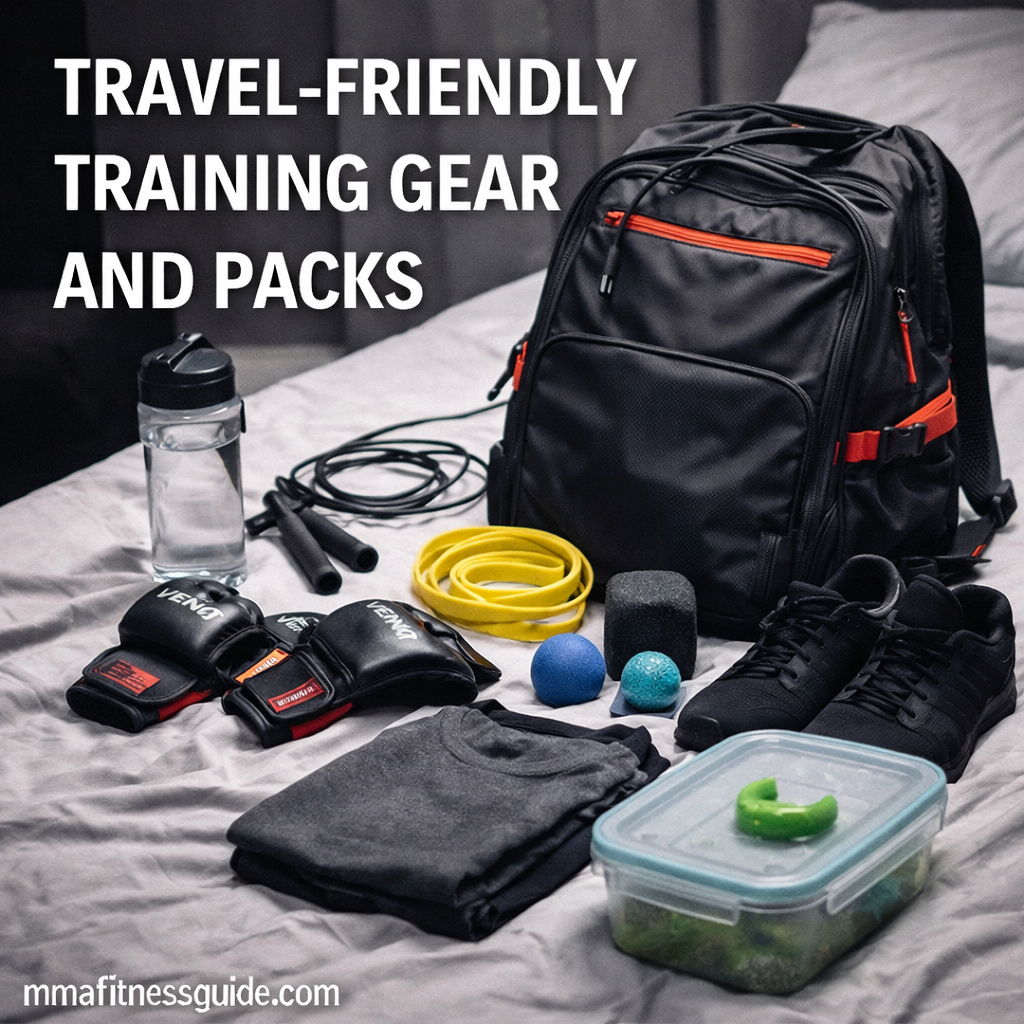
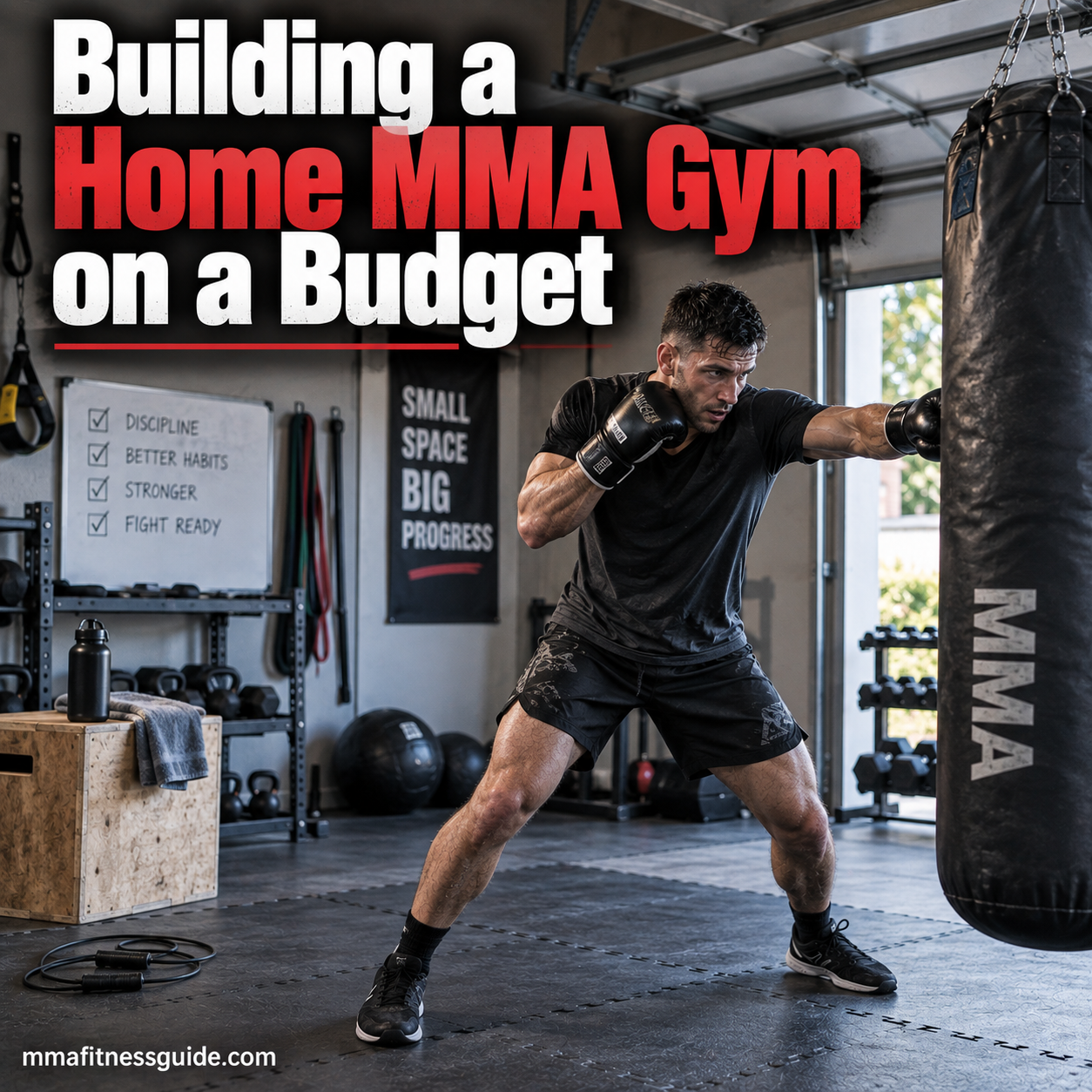
A jump rope, resistance bands, open floor space, and somewhere to shadowbox can cover a surprising amount of MMA conditioning at home. Add a pull-up bar, kettlebell, or heavy bag later, and the same space can support strength work and more specialized drills.
The key is buying equipment based on how you’ll actually train.
A small spare room, garage, or cleared section of a basement can become a useful MMA training area without filling it with machines or specialty equipment. Start with the floor and available space, add a few versatile tools, and expand only when your training creates a reason to do so.
Start With Your Training Goals
Before shopping, decide what type of training will happen at home.
Ask yourself:
- Will I mainly work on conditioning, strength, or technique?
- Do I want to practice striking?
- Will I train alone or occasionally with a partner?
- How much unobstructed floor space is available?
- Can the room safely support a heavy bag or pull-up bar?
- Which exercises am I already performing every week?
Someone primarily doing conditioning may need little more than a jump rope, timer, bands, and floor space.
A fighter wanting to supplement gym sessions with strength work might get more value from adjustable dumbbells or a kettlebell.
Let the training determine the equipment rather than buying equipment first and finding exercises for it afterward.
Prioritize Training Space Before Equipment
A room packed with equipment can actually make MMA training harder.
Shadowboxing, sprawls, footwork, mobility work, and conditioning drills require open space. Before adding anything, clear enough floor area to move forward, backward, and laterally without hitting furniture or equipment.
Check for:
- Adequate floor space
- Good traction
- Sufficient ceiling clearance
- Ventilation
- Nearby breakable objects
- Sharp corners or exposed hardware
- Secure mounting points for anything attached to a wall or ceiling
If you have to constantly move around equipment to train, you probably have too much equipment for the space.
Choose Flooring Based on the Training
Flooring requirements depend heavily on what you’re doing.
For general strength training and conditioning, rubber gym flooring can provide traction and protect the floor underneath.
For controlled ground drills, thicker training mats designed for martial arts provide more appropriate cushioning.
Possible options include:
- Interlocking exercise or martial arts mats
- Rubber gym tiles
- Properly maintained used martial arts or wrestling mats
Thin yoga mats can work for stretching and mobility, but they aren’t a substitute for appropriate martial arts flooring when practicing takedowns, throws, or harder grappling movements.
If you’re planning regular grappling at home, allocate more of the budget to suitable matting.
Budget MMA Gym Equipment: What to Buy First
The best first purchases are usually items that support several different exercises.
You don’t need to buy everything at once.
Resistance Bands
Resistance bands take up almost no space and can be used for:
- Rows
- Presses
- Shoulder exercises
- Rotational movements
- Mobility work
- Warm-ups
They’re particularly useful when you’re starting with limited room and storage.
Adjustable Dumbbells
Adjustable dumbbells provide several resistance levels without requiring a full dumbbell rack.
They can be used for:
- Squats
- Split squats
- Romanian deadlifts
- Rows
- Presses
- Carries
For a small home gym, versatility makes them easier to justify than several pieces of single-purpose equipment.
Kettlebell
One appropriately selected kettlebell can cover swings, goblet squats, carries, rows, presses, and other exercises.
You can add additional weights later as your strength progresses.
Pull-Up Bar
A pull-up bar gives you a straightforward way to train vertical pulling and grip strength.
Doorway models can work in some homes, while permanently mounted versions require an appropriate structure and correct installation.
Always follow the manufacturer’s mounting and weight-limit instructions.
Low-Cost Conditioning Equipment
Cardio machines can consume both money and floor space. MMA conditioning can also be performed with simpler tools.
Jump Rope
A jump rope works well for:
- Warm-ups
- Footwork
- Short conditioning intervals
- Longer steady rounds
It also stores almost anywhere.
Medicine Ball
Medicine balls can add rotational throws, slams, and other explosive movements if you have a safe surface and adequate space.
Make sure the ball and surrounding area are designed for the exercise you’re performing.
Battle Ropes
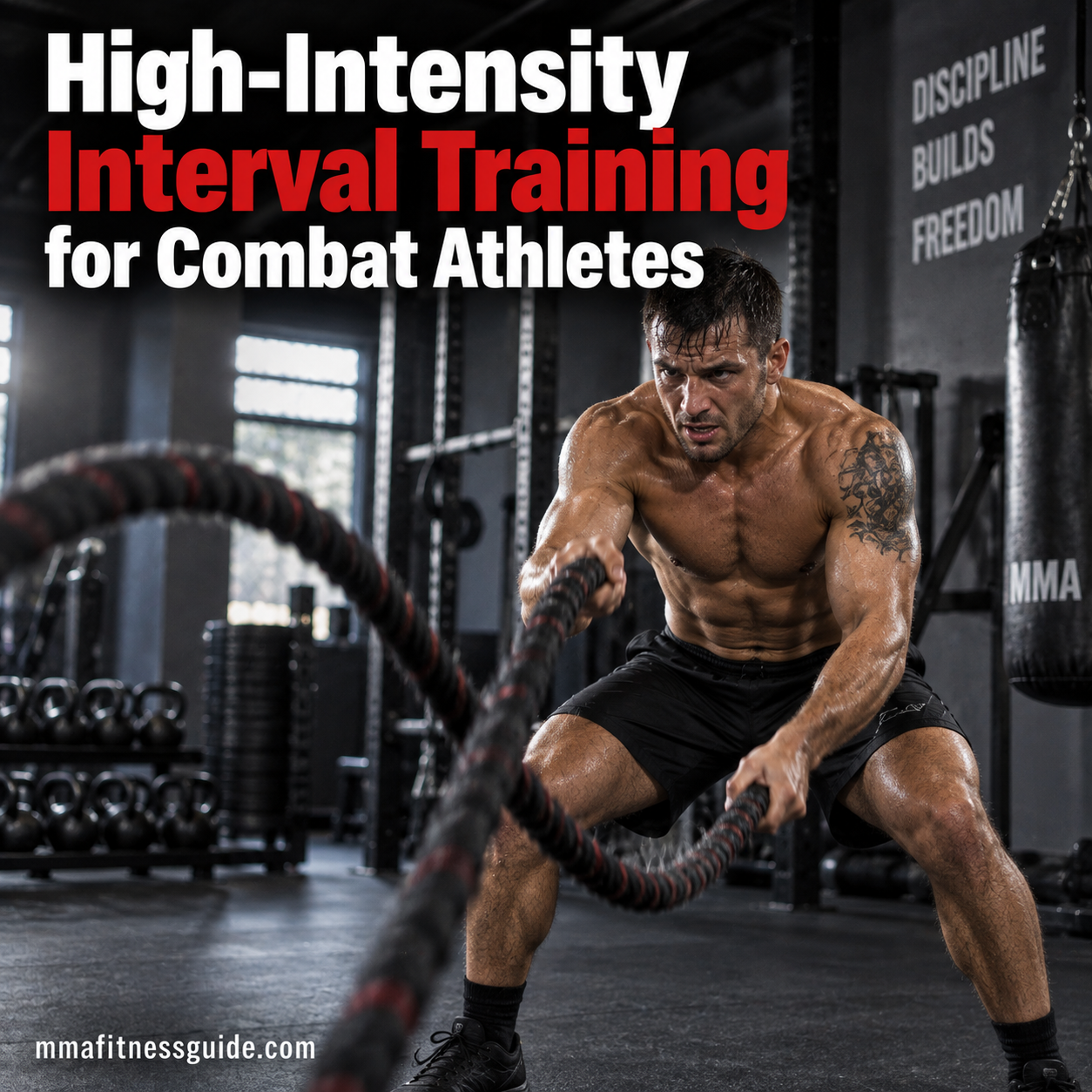
Battle ropes can provide challenging conditioning intervals, but they’re far from essential.
They require considerable floor space and a secure anchor, so they’re better treated as an optional upgrade.
Interval Timer
A phone timer can organize:
- Shadowboxing rounds
- Conditioning circuits
- Rest periods
- Heavy-bag rounds
There’s little reason to buy a dedicated timer when you’re first building the gym.
Setting Up a Home Striking Area
Shadowboxing should be the starting point because it requires open space rather than specialized equipment.
You can practice:
- Footwork
- Stance transitions
- Defensive movement
- Combination flow
- Controlled technique
- Timed rounds
A mirror can provide visual feedback, although it isn’t necessary.
Heavy Bag
A heavy bag becomes worthwhile if bag training will be a regular part of your routine.
Before buying one, determine:
- Where it will hang or stand
- Whether the structure can safely support it
- How much room the bag needs to swing
- Whether noise and vibration will affect other people
- Whether you can move around the bag freely
A bag squeezed into a corner provides much less training value than one with enough clearance for footwork.
Focus Mitts and Thai Pads
Pads make sense when you regularly have a suitable training partner.
They’re less useful for someone who trains alone most of the time, so don’t automatically include them in your first round of purchases.
Equipment You Can Delay
It’s easy to spend the budget on equipment that looks useful but rarely gets used.
Consider postponing:
- Large cardio machines
- Specialty barbells
- Multiple heavy bags
- Large weight racks
- Expensive recovery devices
- Single-purpose fitness gadgets
- Equipment requiring more space than you realistically have
Wait until your existing setup creates a genuine limitation.
If you’re consistently training three or four times per week and a particular piece of equipment would clearly expand what you can do, that’s a much stronger reason to buy it.
Make Bodyweight Training Part of the Setup
Your own bodyweight can provide a substantial portion of home MMA conditioning.
Useful movements include:
- Push-ups
- Pull-ups or assisted pull-ups
- Squats
- Split squats
- Lunges
- Planks
- Bear crawls
- Sprawls
- Technical stand-ups
- Mobility drills
Progress these exercises rather than endlessly repeating the same number of repetitions.
You can increase difficulty by changing the variation, adding resistance, increasing range of motion, or adjusting the work and recovery periods.
Build Conditioning Circuits With Minimal Equipment
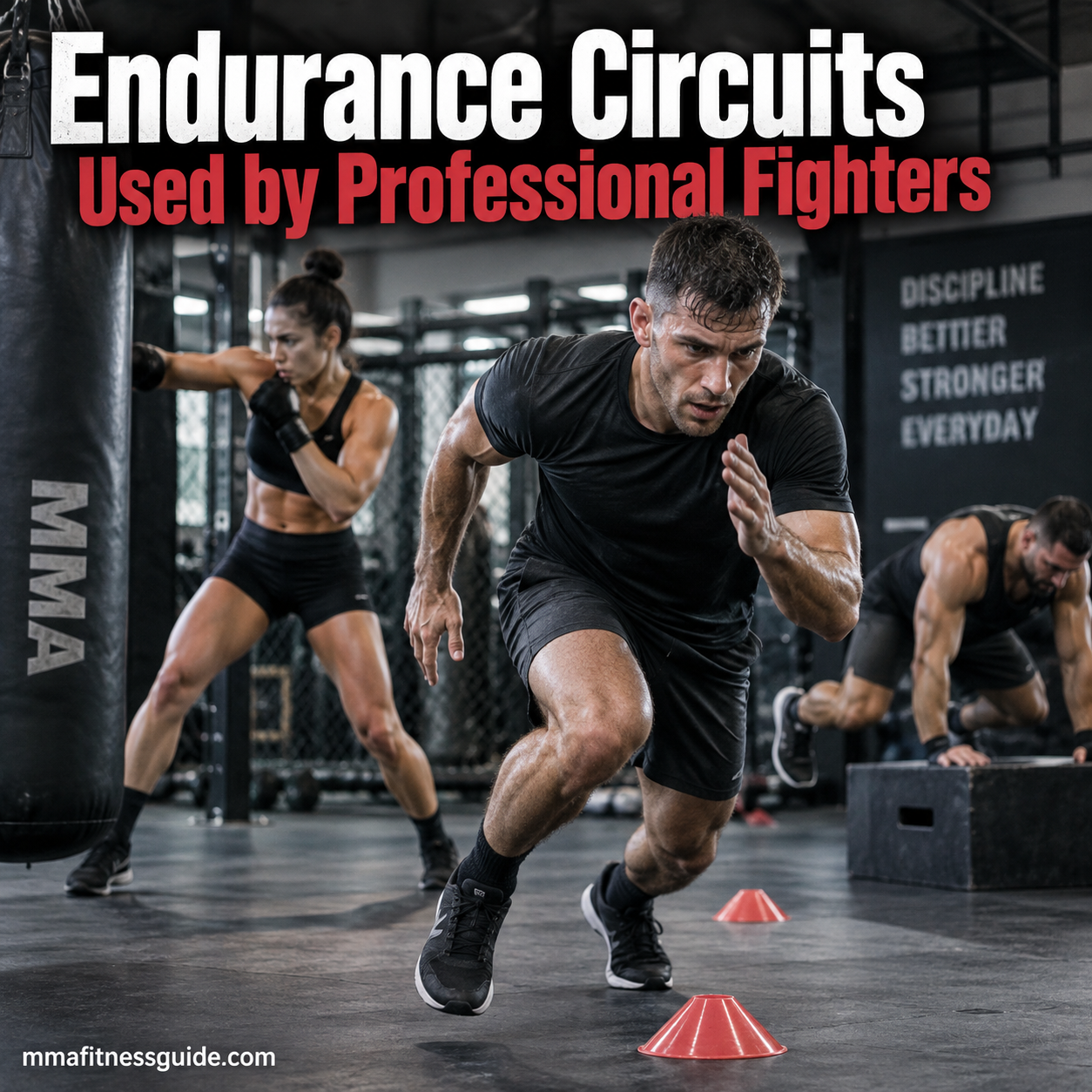
A home conditioning session doesn’t require a row of cardio machines.
For example, you could combine:
- Jump rope
- Shadowboxing
- Bodyweight squats
- Sprawls
- Push-ups
- Rest
Perform the exercises as timed stations or organize them into rounds.
Another session could combine kettlebell swings, carries, shadowboxing, and controlled bodyweight movements.
Keep the workout appropriate for your current conditioning level rather than trying to make every circuit as exhausting as possible.
Buying Used MMA and Fitness Equipment
Weights, kettlebells, racks, and some training equipment can often be purchased used.
Inspect everything before paying.
Look for:
- Cracks
- Rust or structural damage
- Damaged handles
- Loose hardware
- Torn stitching
- Deteriorating padding
- Unstable frames or stands
Used mats require additional scrutiny because cleanliness and surface condition matter.
Personal protective equipment that depends on fit, hygiene, or structural integrity deserves more caution. Mouthguards should be individually fitted rather than shared, and heavily worn protective equipment isn’t worth saving a few dollars on.
Organize the Gym Around Movement
Storage should preserve your training area rather than consume it.
Depending on the room, useful solutions can include:
- Wall-mounted storage
- Shelving
- Weight stands
- Hooks for jump ropes and bands
- Storage bins for smaller accessories
Keep frequently used equipment easy to reach.
If setting up a workout requires moving half the room around, you’re adding friction every time you want to train.
Training Alone vs. Training With a Partner
A home gym works particularly well for supplemental solo training.
Solo sessions can include:
- Shadowboxing
- Heavy-bag work
- Strength training
- Conditioning
- Footwork drills
- Mobility
- Controlled wrestling movements
Partner training introduces additional possibilities, but available space and flooring become more important.
Pad work can be practical in an appropriate area. Grappling requires considerably more room and proper matting, while high-impact takedowns and throws should be practiced in a suitable training environment with appropriate coaching and safety measures.
Your home setup should complement coached MMA training rather than replace the technical feedback and controlled partner work available at a legitimate gym.
Keep Recovery Equipment Simple
Recovery doesn’t require filling another corner of the room with gadgets.
Basic options include:
- Foam roller
- Massage or mobility ball
- Stretching mat
- Resistance band for mobility work
Sleep, nutrition, hydration, appropriate training volume, and rest between demanding sessions matter more than accumulating recovery devices.
Home MMA Gym Safety
A home setup puts equipment maintenance and environmental safety in your hands.
Before training:
- Keep the floor clear
- Check mats for gaps or movement
- Inspect mounted equipment
- Make sure weights are stored securely
- Maintain adequate clearance around a heavy bag
- Warm up before harder movements
- Keep training intensity appropriate for your ability
Periodically recheck bolts, brackets, anchors, stands, and other hardware.
Heavy bags, pull-up bars, wall-mounted storage, and similar equipment should only be installed where the structure and mounting system are designed to handle the expected load.
How to Build Your Gym in Stages
There’s no reason to complete the entire setup immediately.
Stage 1: Minimal Setup
Start with:
- Open floor space
- Appropriate basic flooring
- Jump rope
- Resistance bands
- Timer
This already supports shadowboxing, mobility, bodyweight strength work, and conditioning.
Stage 2: Add Strength Equipment
Consider adding:
- Kettlebell
- Adjustable dumbbells
- Pull-up bar
At this point, you can perform a much broader range of strength and conditioning workouts.
Stage 3: Add Specialized MMA Equipment
Once you’re training consistently, you might add:
- Heavy bag
- Medicine ball
- Additional martial arts matting
- Pads for partner training
Specialized equipment makes more sense once you know exactly how often you’ll use it.
Example Budget Home MMA Gym
A practical starter setup could be as simple as:
- Interlocking training mats
- Jump rope
- Resistance band set
- One kettlebell
- Pull-up bar
- Phone interval timer
- Open shadowboxing area
From there, adjustable dumbbells or a heavy bag could become the next major upgrade.
Someone focused primarily on grappling may instead put that money toward better mat coverage. Someone focused on striking may prioritize the heavy bag.
There isn’t one equipment list that fits every fighter.
Final Thoughts
Start with the part of a home MMA gym that’s hardest to replace: safe, usable training space.
Once the floor and movement area are sorted out, add equipment that solves specific training needs. Bands, a jump rope, a kettlebell, adjustable dumbbells, or a pull-up bar can cover a large amount of strength and conditioning without taking over the room.
A heavy bag, expanded mat area, or other specialized equipment can come later.
That approach keeps the initial cost manageable while giving you something more valuable than a room full of gear: a training space you’ll actually use.