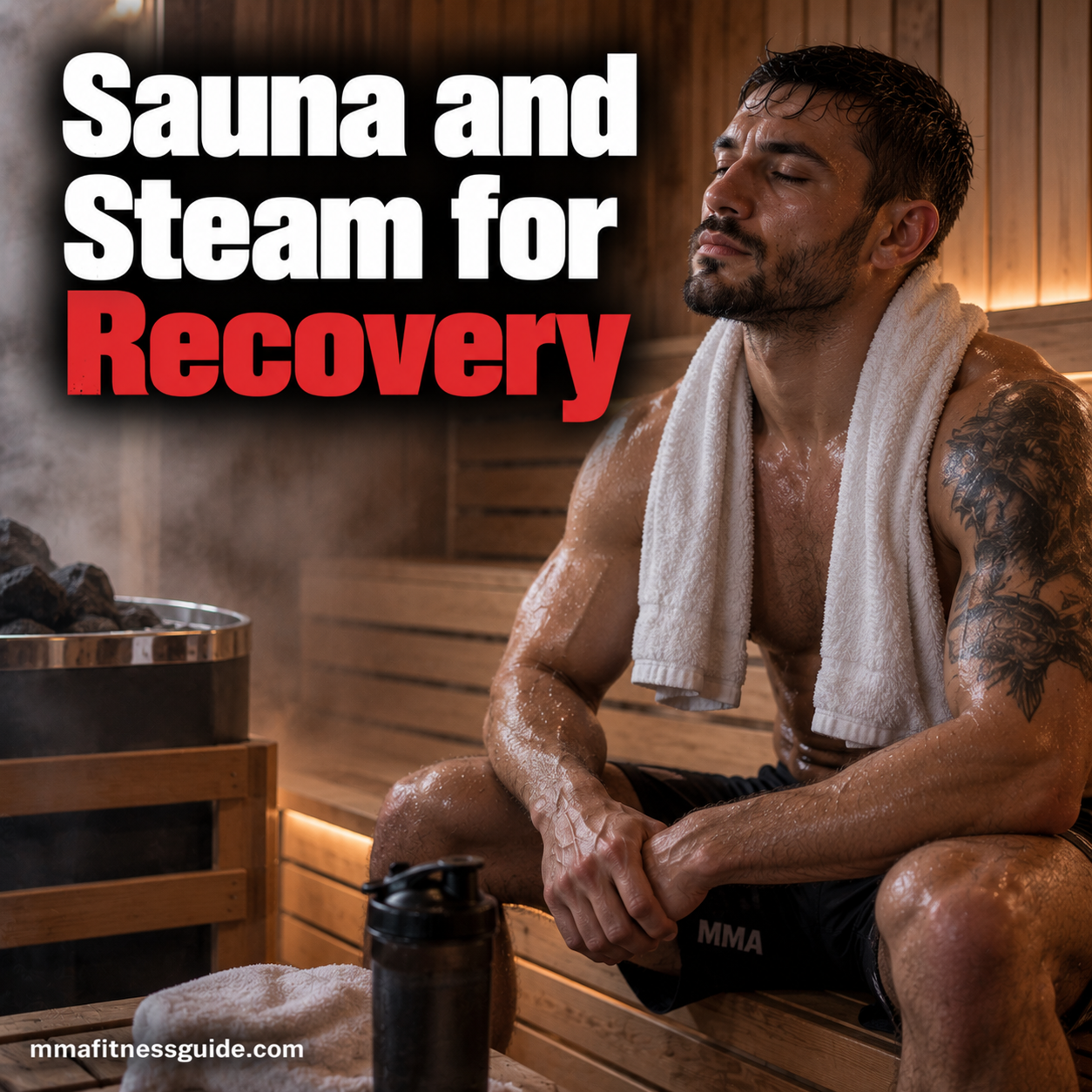
Twenty minutes in a hot sauna after wrestling practice can produce plenty of additional sweat—but that doesn’t necessarily mean additional recovery. For an MMA fighter who has already lost substantial fluid during pads, grappling, or conditioning, another bout of heat can either feel relaxing or leave them more dehydrated for the next session.
Saunas and steam rooms are better viewed as optional recovery environments than treatments that repair training damage. Heat may temporarily ease feelings of stiffness, promote relaxation, and provide a useful transition from hard training into recovery. Those benefits depend heavily on timing, duration, hydration, and how demanding the preceding workout was.
For fighters training several times per week, the question isn’t simply whether heat feels good. It’s whether the session leaves you better prepared—or less prepared—for the training that follows.
Why Fighters Use Heat After Training
MMA sessions can leave the shoulders tense from clinching, hips stiff after wrestling, and the entire body wound up after hard sparring.
Sitting quietly in a warm environment can provide a noticeable change of pace.
Fighters may use sauna or steam for:
- Temporary relief from muscular stiffness
- Relaxation after demanding sessions
- A comfortable environment for winding down
- A subjective reduction in soreness
- General recovery-day relaxation
None of these effects replaces adequate sleep, nutrition, hydration, or appropriate management of training volume.
Sauna vs. Steam: What’s the Difference?
Both expose the body to heat, but humidity changes how that heat feels and how effectively sweat can evaporate.
Sauna
Traditional saunas generally use hotter, relatively dry air.
Temperatures vary by facility, but many operate around 150–195°F (65–90°C).
Lower humidity allows sweat to evaporate more readily than it does in a steam room, although the environment still places considerable thermal stress on the body.
Steam Room
Steam rooms operate at lower temperatures but very high humidity.
Typical temperatures are roughly 100–120°F (38–49°C).
Because the air is saturated with moisture, sweat cannot evaporate as effectively. That can make a steam room feel surprisingly intense despite its lower air temperature.
Neither option is automatically better for MMA recovery. Personal tolerance, hydration status, and total heat exposure matter more.
What Happens to the Body During Heat Exposure?
As body temperature rises, the cardiovascular system responds by increasing blood flow toward the skin to help dissipate heat.
Heart rate can increase, and sweating causes fluid loss.
That explains both the appeal and the downside of sauna use: warmth may feel relaxing, but the body is still working to regulate its temperature.
Increased Skin Blood Flow
Heat causes blood vessels near the skin to dilate.
Rather than thinking of this as “flushing toxins” or clearing metabolic waste from muscles, consider it a normal thermoregulatory response.
The body redirects circulation toward the skin to manage rising temperature.
Temporary Relief From Stiffness
Warmth can make tight or sore muscles feel more comfortable.
A fighter with stiff hips or shoulders may find gentle movement more comfortable after heat exposure.
That doesn’t mean an injured structure has healed. Pain relief and tissue recovery are not the same thing.
Relaxation After Training
One practical benefit is simply having several quiet minutes after training.
After hard sparring or conditioning, sitting away from phones, equipment, and another training demand may help some fighters mentally unwind.
If sauna use helps establish a calmer post-training routine without interfering with hydration or sleep, that alone can make it worthwhile.
When Sauna or Steam Fits Into MMA Training
Heat exposure should be positioned around the demands of the training schedule rather than automatically used after every workout.
After Training
A short sauna or steam session may feel good after moderate training when you’re adequately hydrated.
It may be less appropriate immediately after:
- Long conditioning sessions
- Training in a hot gym
- Multiple workouts in one day
- Sessions producing unusually heavy sweat loss
- Training while already dehydrated
In those situations, replacing fluids and cooling down may deserve priority.
On Recovery Days
A rest or low-intensity day gives you more flexibility because another hard workout isn’t immediately approaching.
Heat can be paired with:
- Easy walking
- Gentle mobility
- Normal meals
- Adequate hydration
- Relaxation
Don’t turn a recovery day into an endurance contest inside the sauna.
Before Hard Training
Long or intense heat exposure immediately before sparring, wrestling, conditioning, or strength work can create unnecessary fatigue and fluid loss.
If you enjoy brief warmth before mobility work, keep it conservative and make sure it doesn’t leave you overheated or dehydrated.
Your actual MMA warm-up should still prepare you specifically for the movements and intensity of the upcoming session.
How Long Should Fighters Stay in a Sauna or Steam Room?
There isn’t one duration that fits every athlete.
A fighter who rarely uses a sauna shouldn’t copy the routine of someone accustomed to regular heat exposure.
A conservative approach is to:
- Start with a short session
- Assess how you feel
- Leave before dizziness or excessive fatigue develops
- Increase exposure gradually if appropriate
Many recreational sauna sessions fall somewhere around 5–20 minutes, but temperature, humidity, individual tolerance, and health status all affect what is reasonable.
Staying longer simply to produce more sweat isn’t a recovery goal.
Hydration Before and After Heat Exposure
If your rashguard is soaked after training, you’ve already lost fluid before entering the sauna.
Heat exposure adds to that loss.
Practical hydration habits include:
- Begin training reasonably hydrated
- Drink during and after long sessions as appropriate
- Replace fluids after substantial sweat loss
- Include sodium and other electrolytes when losses are significant
- Avoid entering a sauna when noticeably dehydrated
Urine color can provide a rough day-to-day hydration clue, but it isn’t a precise measurement by itself.
For athletes who want a more individualized approach, tracking bodyweight before and after training can help estimate sweat losses during specific sessions.
Sauna, Steam, and Weight Cutting
This distinction matters in combat sports:
Using heat to intentionally lose water for a weigh-in is not the same as using heat for relaxation or recovery.
Sauna-based weight cutting deliberately increases dehydration. That introduces risks that are fundamentally different from a short recreational heat session.
Rapid dehydration can affect:
- Cardiovascular function
- Temperature regulation
- Cognitive performance
- Physical performance
- Fluid and electrolyte balance
Fighters undergoing significant weight manipulation should work with qualified sports medicine and nutrition professionals rather than treating sauna dehydration as an ordinary recovery technique.
A lower number on the scale after sitting in a sauna primarily reflects water loss—not improved recovery or meaningful fat loss.
Sauna After Hard Sparring
Hard sparring deserves particular consideration.
If the session involved substantial fluid loss, overheating, or repeated head impacts, immediately adding significant heat stress may not be a sensible default.
Cool down, assess how you feel, and prioritize hydration.
After any suspected concussion or concerning symptoms following head contact—such as headache, dizziness, confusion, balance problems, nausea, or visual changes—skip the sauna and seek appropriate medical evaluation.
Heat exposure isn’t a treatment for a head injury.
Who Should Be More Cautious With Heat?
Heat exposure isn’t appropriate for everyone.
Extra caution is warranted if you:
- Are dehydrated
- Feel ill or feverish
- Are already overheated
- Have recently experienced concerning head-injury symptoms
- Become dizzy or nauseated in heat
- Have a medical condition affected by heat or cardiovascular stress
- Take medication that may affect hydration, sweating, blood pressure, or heat tolerance
People with relevant medical conditions should discuss sauna or steam use with a healthcare professional.
Leave immediately if you develop dizziness, faintness, confusion, nausea, chest discomfort, or other concerning symptoms.
Common Sauna Mistakes Fighters Make
Chasing Sweat
Sweating more doesn’t mean you’ve recovered more.
It primarily means you’re losing additional fluid.
Staying In Because Someone Else Is
Heat tolerance varies considerably between individuals.
Your teammate’s 20-minute session says very little about what your body needs.
Entering Dehydrated
Going directly from a sweat-heavy workout into intense heat can compound fluid loss.
Treating Sauna as a Substitute for Sleep
An hour of heat exposure cannot compensate for repeatedly sleeping five hours per night.
Using Heat on Every Sore Body Part
Warmth may temporarily change how soreness feels, but persistent or significant pain still requires appropriate assessment and load management.
Combining Heat With Alcohol
Both can contribute to dehydration and impair judgment. Combining them around significant heat exposure adds unnecessary risk.
Sauna vs. Other Recovery Methods
If recovery time is limited, start with the basics.
Prioritize:
- Adequate sleep
- Sufficient food and protein
- Appropriate hydration
- Rest between demanding sessions
- Manageable training volume
- Light movement when appropriate
Foam rolling, massage, cold exposure, sauna, and steam can then be added according to preference and individual response.
Think of these as optional additions rather than the foundation.
Building a Practical Post-Training Routine
After an ordinary MMA session, a simple sequence might look like:
- Finish training and gradually cool down.
- Begin replacing fluids lost during the session.
- Eat an appropriate post-training meal or snack.
- Use a brief sauna or steam session if you’re hydrated and feel well.
- Cool down comfortably afterward.
- Continue replacing fluids as needed.
- Prioritize sleep before the next training day.
After an exceptionally hot or sweat-heavy session, skip step four if additional heat is likely to leave you more depleted.
The recovery method should adapt to the workout—not the other way around.
Final Thoughts
A sauna can feel excellent after rounds of wrestling or striking, but the sweat itself isn’t evidence that damaged muscles are being repaired faster.
The practical benefits are simpler: warmth may temporarily reduce feelings of stiffness, create a relaxing post-training environment, and help some fighters unwind after demanding sessions.
Use heat when it leaves you feeling better without compromising hydration or preparation for the next workout. Skip it when you’re already overheated, dehydrated, ill, or dealing with symptoms that need medical attention.
For an MMA athlete, the best recovery routine isn’t the one that produces the most sweat. It’s the one that helps you arrive at the next session adequately rested, hydrated, and ready to train.