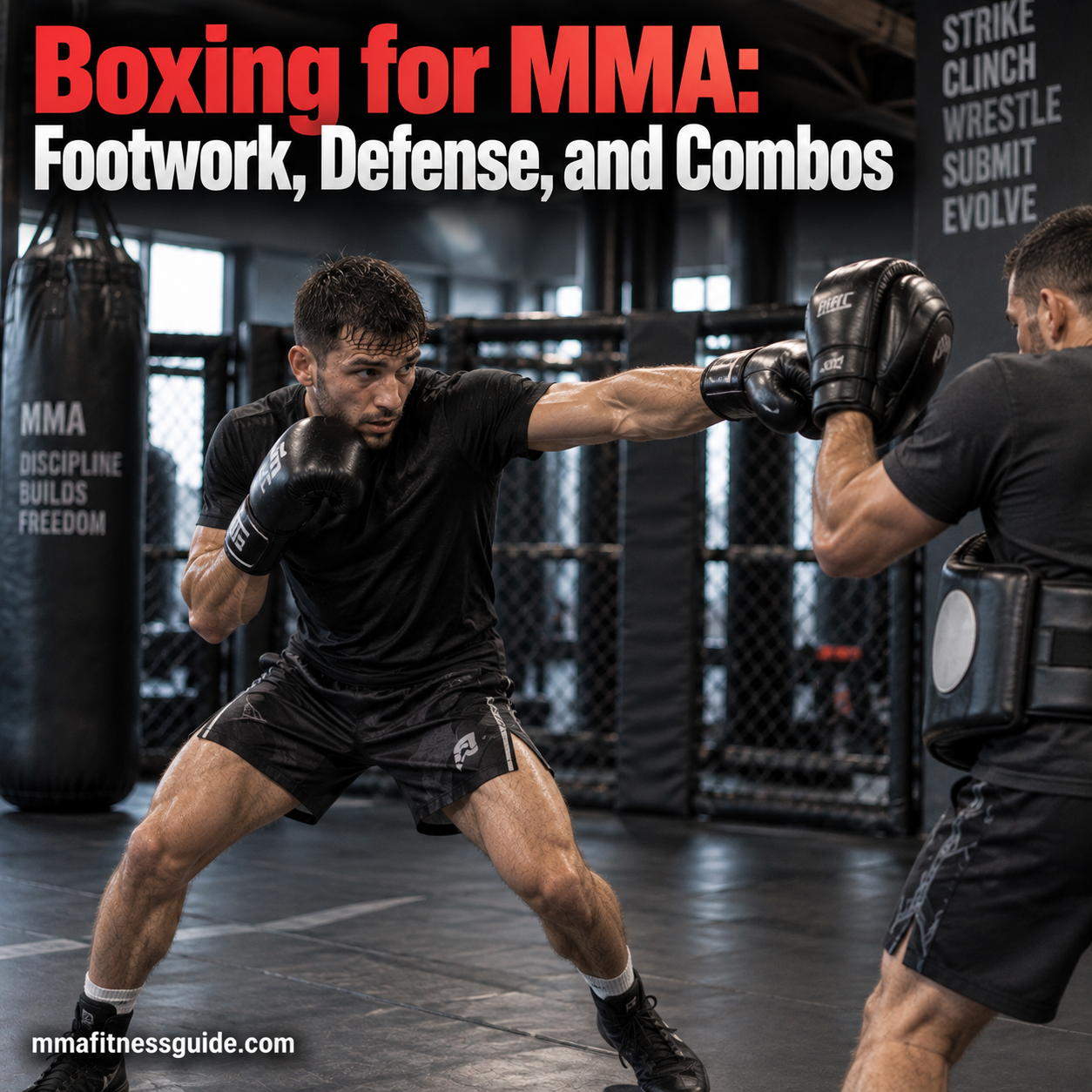
A clean jab can interrupt an opponent’s entry. A quick pivot can move you away from the cage. A two-punch combination can bring an opponent’s guard high just before a low kick or level change.
Those are the kinds of situations where boxing carries directly into MMA.
The difference is that MMA fighters cannot box as though punches are the only threat. Every stance adjustment, defensive movement, and combination has to account for kicks, knees, clinches, and takedowns. The goal is to use boxing mechanics without putting yourself in positions that expose you to the rest of an opponent’s arsenal.
Adapting Boxing to MMA
Traditional boxing techniques often need adjustment once kicks and grappling enter the exchange.
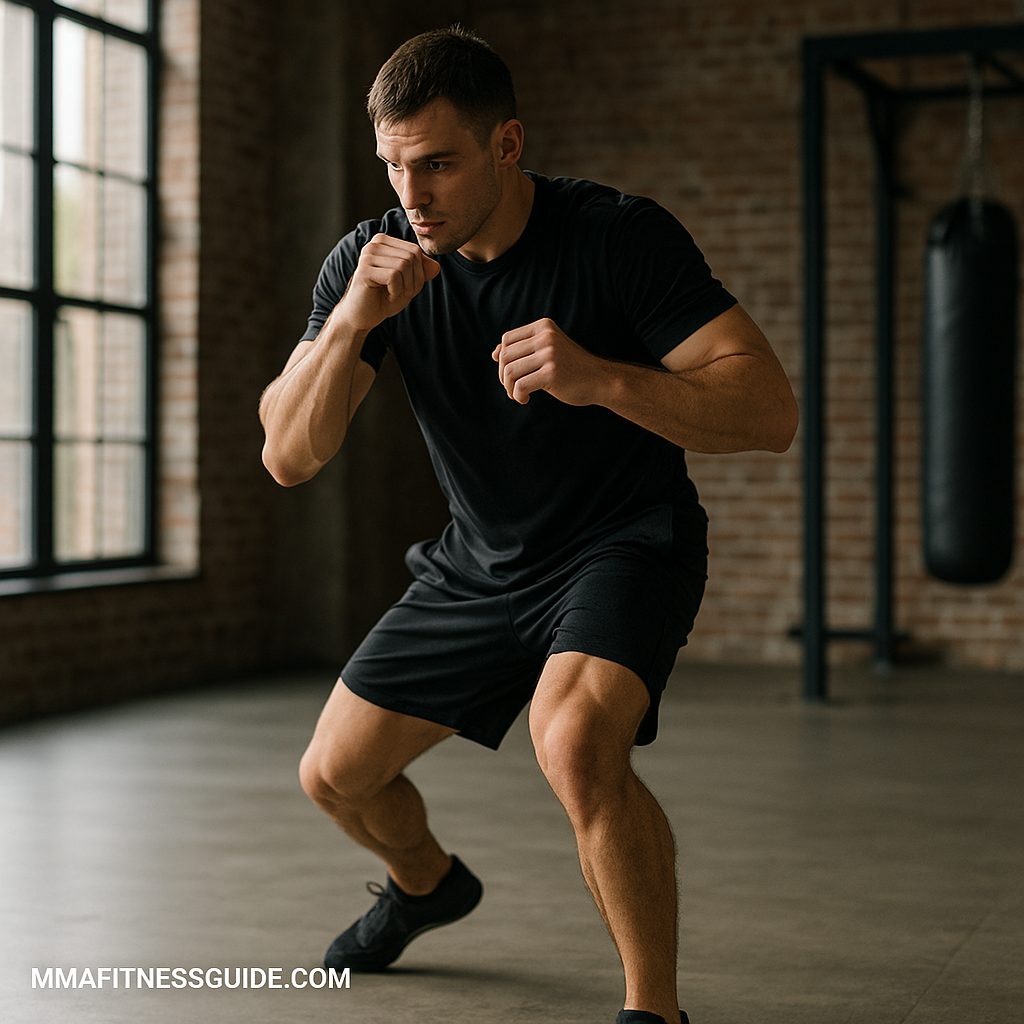
An MMA fighter might use a slightly more upright stance to make checking kicks and defending level changes easier. Range also changes because an opponent can attack with their legs before either fighter reaches normal punching distance.
Some of the main adjustments include:
- Stance: Maintain enough mobility to punch while remaining prepared to check kicks or defend takedowns.
- Range: Account for kicks, knees, and level changes before entering punching distance.
- Guard: Position the hands so you can protect against punches without becoming vulnerable to kicks or grappling entries.
- Movement: Use pivots and lateral movement to avoid being driven toward the cage.
Every boxing exchange should leave you capable of responding to another type of attack.
Footwork for MMA Boxing
Your feet determine whether a punch lands with balance behind it, whether you can escape after a combination, and whether an opponent can trap you against the fence.
Rather than moving simply for the sake of staying active, practice footwork that solves specific situations.
Circle Drill
Move around a training partner, heavy bag, or marker while maintaining your stance and controlling the distance.
Practice changing direction without crossing your feet or allowing your stance to become too narrow.
Advance and Retreat
Move forward and backward while keeping your feet underneath you.
Avoid bringing your feet together between steps. You should be able to punch, defend, or change direction at any point.
Pivot Drill
Throw a short combination and pivot off your lead foot instead of remaining directly in front of your target.
For example:
Jab → Cross → Lead Pivot
The pivot changes the angle and forces your opponent to turn before attacking again.
Cage Movement Simulation
Start with your back near a wall or cage and practice escaping laterally rather than retreating straight backward.
This teaches you to recognize when space is disappearing and move before an opponent traps you.
Defensive Boxing Adjustments for MMA
A defensive movement that works against punches can create a different problem when kicks, knees, and takedowns are allowed.
MMA defense therefore requires smaller movements and awareness of what can follow the initial attack.
Head Movement
Use compact slips to move your head just outside the path of straight punches.
Deep ducks and exaggerated weaving can put your head closer to knees, kicks, or front-headlock positions, so avoid automatically copying every movement used in pure boxing.
Parries and Blocks
A small parry can redirect a jab without taking your hands far away from defensive position.
Blocks can also absorb or redirect punches while keeping you balanced enough to counter or defend a takedown.
Shoulder Rolls
Shoulder rolls can deflect certain punches, but relying heavily on a bladed boxing posture may expose the lead leg and complicate takedown defense.
Use the movement selectively rather than treating it as your entire defensive system.
Defensive Angles
Backing straight toward the cage gives your opponent less space to cover with every step.
Instead, slip or block the attack and move laterally when possible. Even a small angle can force the opponent to reset before continuing their combination.
MMA Boxing Combinations
Punch combinations become more difficult to read when the opponent also has to consider kicks, clinches, and takedowns.
Practice combinations that naturally connect those threats.
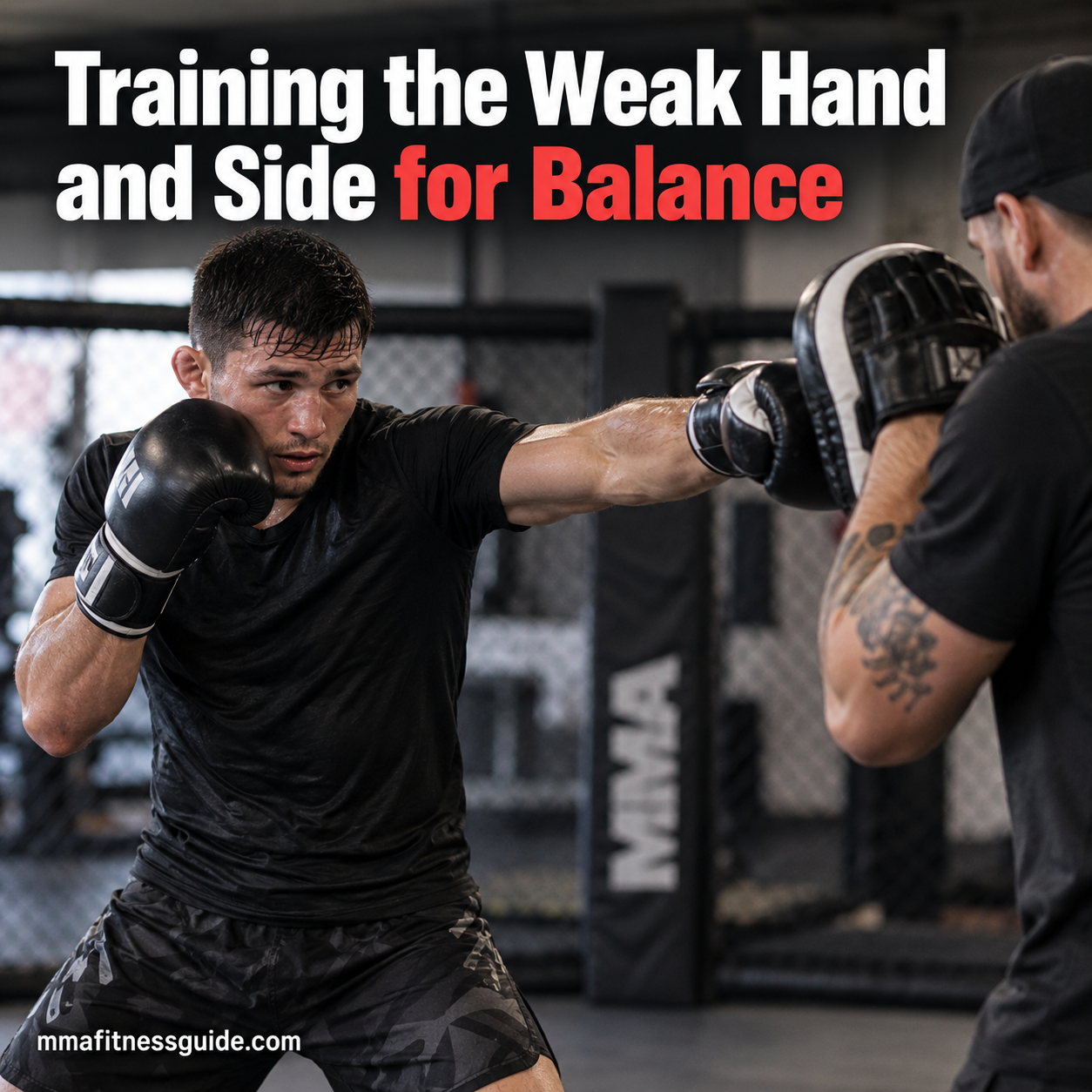
1. Jab → Cross → Low Kick
The punches bring attention toward the head while the low kick attacks the opponent’s base.
Return to your stance immediately after the kick instead of admiring the combination.
2. Double Jab → Rear Hand → Level Change
Use repeated punches to bring the opponent’s guard upward before changing levels.
The level change can lead into a takedown attempt or simply force a reaction that creates another striking opportunity.
3. Lead Hook → Rear Uppercut → Cross
This combination works at closer punching range, particularly when an opponent is covering tightly.
Keep your stance underneath you so you can transition into the clinch if the distance collapses.
4. Jab → Cross → Body Shot → Angle Exit
Finish the body attack by stepping away from the opponent’s immediate line of return fire.
The exit is part of the combination rather than something that happens afterward.
Connecting Boxing With Wrestling and Kicks
Boxing becomes harder to defend when punches disguise attacks from other disciplines.
A jab can lead into a low kick. An overhand can hide a level change. A hook can carry you into clinch range.
Try sequences such as:
- Jab → Cross → Low Kick
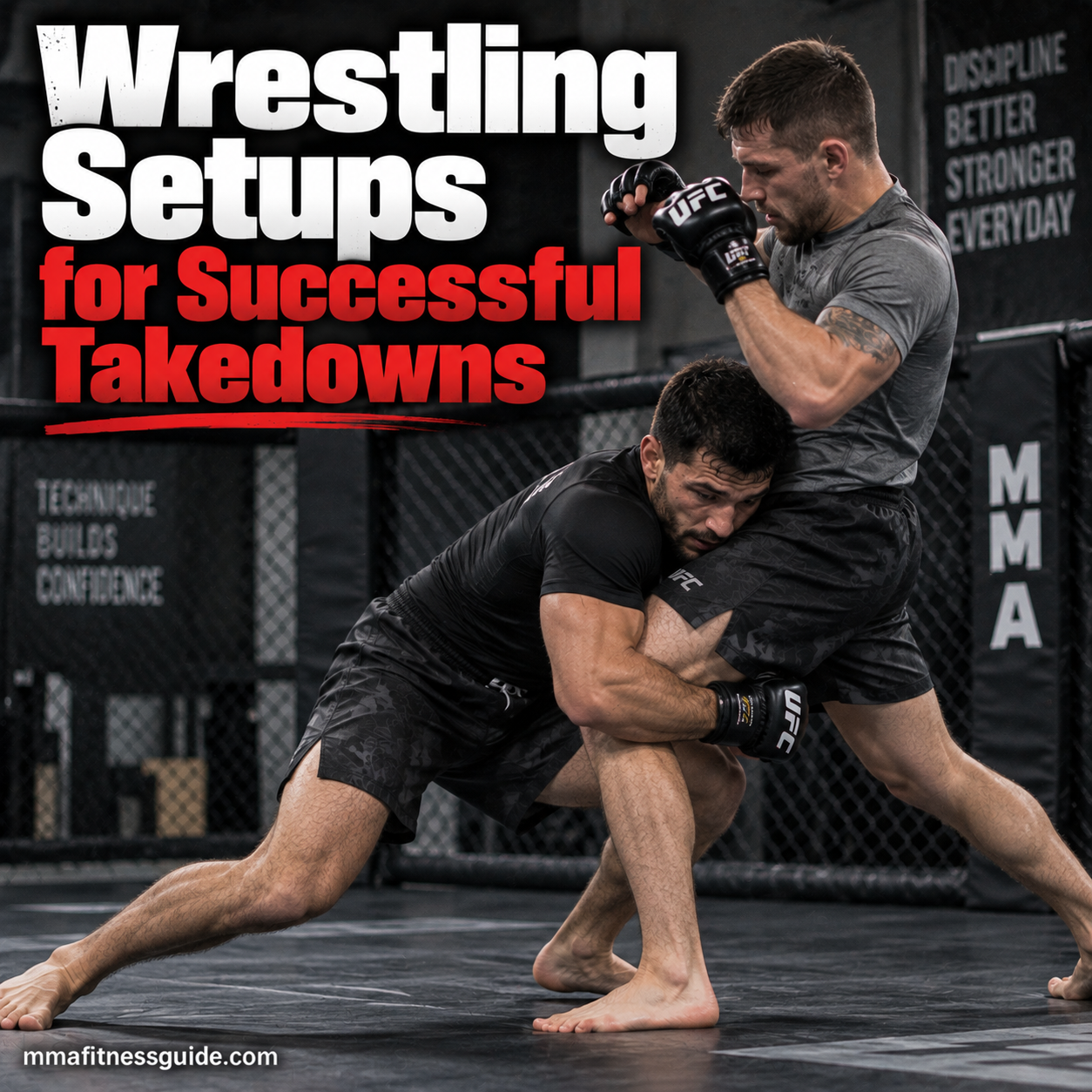
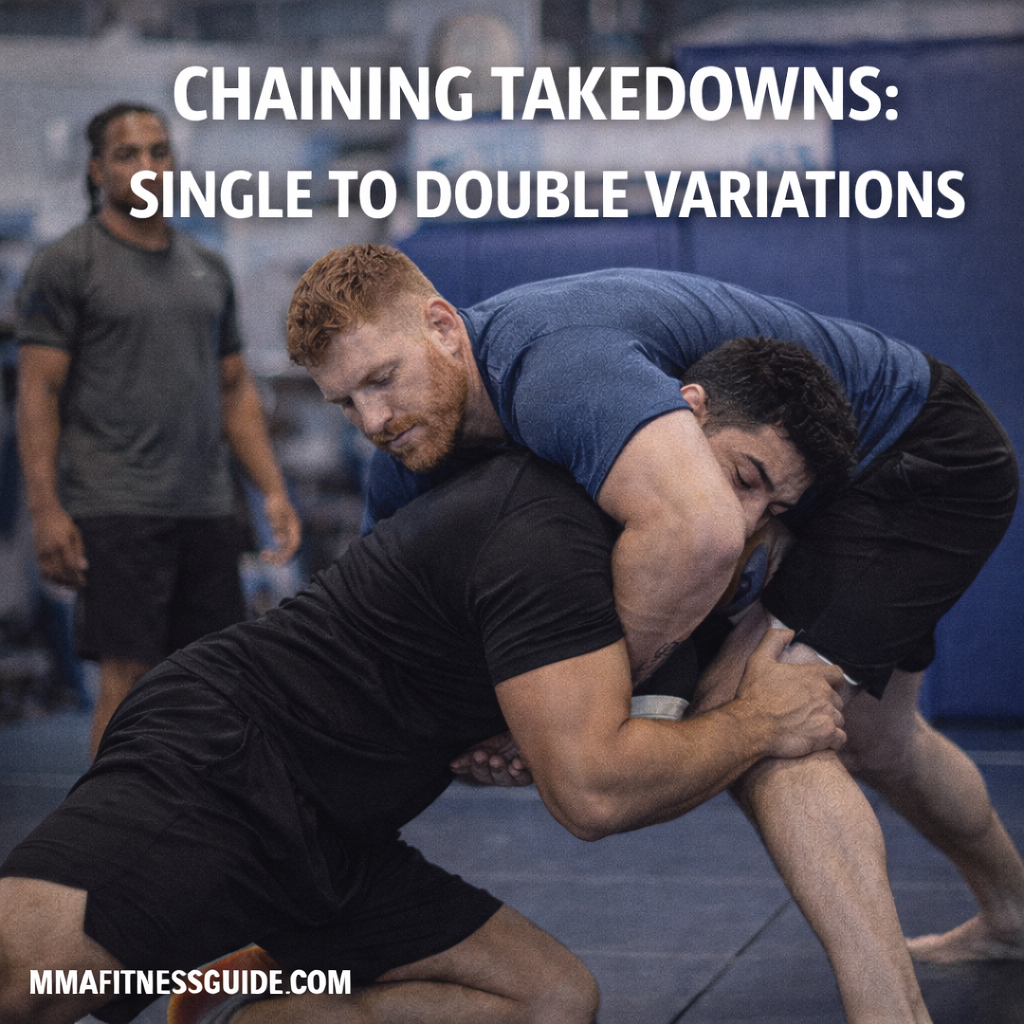
- Jab → Level Change → Double-Leg Entry
- Cross → Lead Hook → Clinch
- Jab → Cross → Body Lock
- Feint Jab → Overhand → Takedown Entry
The opponent now has to identify not only which punch is coming, but whether the exchange will remain a boxing exchange at all.
Conditioning for MMA Boxing
MMA striking requires repeated bursts of punching while you are also moving, defending, wrestling, and recovering between exchanges.
Training should reflect those changes in pace.
Heavy Bag Intervals
Alternate 30 seconds of higher-output combinations with 30 seconds of lighter technical movement.
During the lighter period, continue using footwork rather than standing still.
Shadowboxing With Footwork
Visualize an opponent instead of throwing combinations into empty space without purpose.
Imagine pressure, cage position, takedown attempts, and counterattacks as you move.
Double-End Bag
Use the moving target to practice accuracy, rhythm, reactions, and defensive movement after punching.
Defensive Sparring Rounds
Limit your offensive options during selected rounds and concentrate on recognizing punches, defending, changing angles, and returning controlled counters.
Constraints force you to solve defensive situations instead of relying on offense to escape them.
Common Boxing Mistakes in MMA
Watch for habits that leave you vulnerable outside traditional boxing rules:
- Standing flat-footed after combinations
- Throwing power punches that pull you out of stance
- Retreating directly toward the cage
- Using exaggerated head movement around knees and kicks
- Becoming excessively bladed and exposing the lead leg
- Throwing combinations without an exit
- Boxing at close range without considering clinch or takedown threats
- Treating punches, kicks, and wrestling as separate systems
Correcting these habits starts with maintaining a stance that allows you to attack, defend, and transition without unnecessary resets.
Key Takeaways
Boxing for MMA works best when every punch connects naturally to the rest of your game.
Use the jab to manage range and create reactions. Build combinations without sacrificing your stance. Pivot or step away after exchanges instead of remaining directly in front of your opponent. Adjust defensive movements for kicks, knees, clinches, and takedowns.
Most importantly, practice the transitions between skills. A punch that sets up a kick, a combination that creates a takedown entry, or a defensive slip that produces a better angle is more useful in MMA than boxing techniques practiced entirely in isolation.