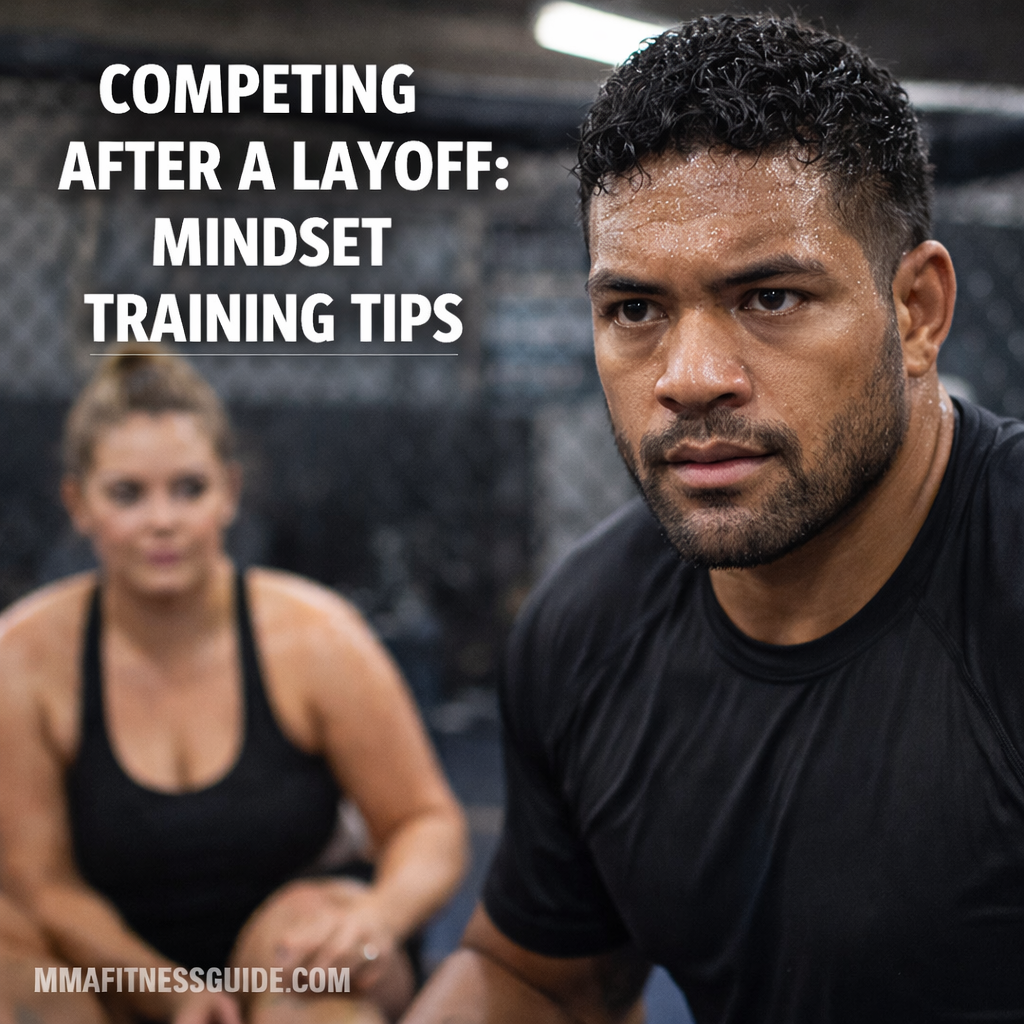
Returning to competition after a long layoff is one of the toughest mental challenges a fighter can face. Whether the break came from injury, burnout, life responsibilities, or lost motivation, stepping back into the competitive arena often brings doubt, pressure, and fear of underperforming.
The physical side of returning gets most of the attention, but mindset determines how well you actually perform. This guide focuses on mindset training strategies to help fighters rebuild confidence, manage expectations, and compete effectively after time away.
Why Layoffs Are Mentally Challenging for Fighters
Time away changes more than conditioning.
Common mental struggles include:
- Fear of being “behind” others
- Loss of competitive confidence
- Anxiety about ring rust
- Pressure to perform like your old self
- Overthinking mistakes in training
These thoughts are normal, but they must be managed to compete freely again.
Reframe the Layoff as an Asset
Instead of viewing the layoff as lost time, reframe it as preparation.
Positive reframes include:
- Your body had time to heal
- Mental burnout may have decreased
- Bad habits may have faded
- Motivation can return stronger
- Perspective often improves performance
How you frame the layoff shapes how you show up on fight day.
Reset Expectations Before You Compete
One of the biggest mindset mistakes is expecting peak performance immediately.
Healthy expectations include:
- Focusing on execution, not dominance
- Accepting small timing errors
- Measuring success by decision-making
- Competing to learn, not to prove
Pressure drops when the goal shifts from perfection to presence.
Focus on Controllables Only
After a layoff, fighters often worry about things outside their control.
Instead, lock in on:
- Preparation quality
- Effort in training
- Game plan execution
- Breathing and composure
- One exchange at a time
You can’t control outcomes — only responses.
Rebuild Confidence Through Small Wins
Confidence isn’t rebuilt overnight.
Create momentum by:
- Setting daily training goals
- Acknowledging improvements
- Tracking consistency over weeks
- Reviewing progress objectively
- Celebrating effort, not just results
Confidence grows from evidence, not self-talk alone.
Train the Mind Like the Body
Mental readiness must be trained deliberately.
Visualization
Visualization helps reduce anxiety and improve reaction.
Practice visualizing:
- Walking into the venue
- The first exchange
- Recovering after mistakes
- Staying calm under pressure
- Finishing strong regardless of outcome
Mental reps prepare the nervous system.
Breath Control and Nervous System Regulation
Breathing directly affects performance.
Use breathing to:
- Lower heart rate
- Reduce adrenaline spikes
- Improve focus between rounds
- Recover faster after exchanges
Simple nasal breathing and extended exhales can make a big difference.
Accept Ring Rust Without Fighting It
Trying to eliminate ring rust often creates more tension.
Instead:
- Expect slight timing issues
- Stay relaxed during exchanges
- Focus on fundamentals
- Trust training over perfection
Relaxed fighters adapt faster than tense ones.
Use Competition as Feedback, Not Judgment
The first competition back is data — not a verdict.
Healthy post-fight reflections include:
- What went well under pressure
- What improved compared to training
- Where timing felt off
- What needs refining next camp
Every return fight sharpens future performances.
Detach Identity From Results
A layoff can make fighters overly attached to outcomes.
Remember:
- One performance doesn’t define you
- Growth is non-linear
- Courage matters more than outcome
- Competing again is already a win
Detachment frees you to perform instinctively.
Build a Supportive Mental Environment
Surround yourself with people who understand the process.
Helpful support includes:
- Coaches who emphasize growth
- Training partners who keep perspective
- Honest feedback without pressure
- Encouragement without hype
The right environment stabilizes mindset.
Final Thoughts
Competing after a layoff isn’t about proving you’re the same fighter — it’s about becoming a smarter one. When mindset training matches physical preparation, confidence returns naturally and performance follows.
Approach your return with patience, curiosity, and self-trust. You don’t need to erase the layoff — you need to integrate it. Fighters who master their mindset after time away often come back more resilient, composed, and dangerous than before.