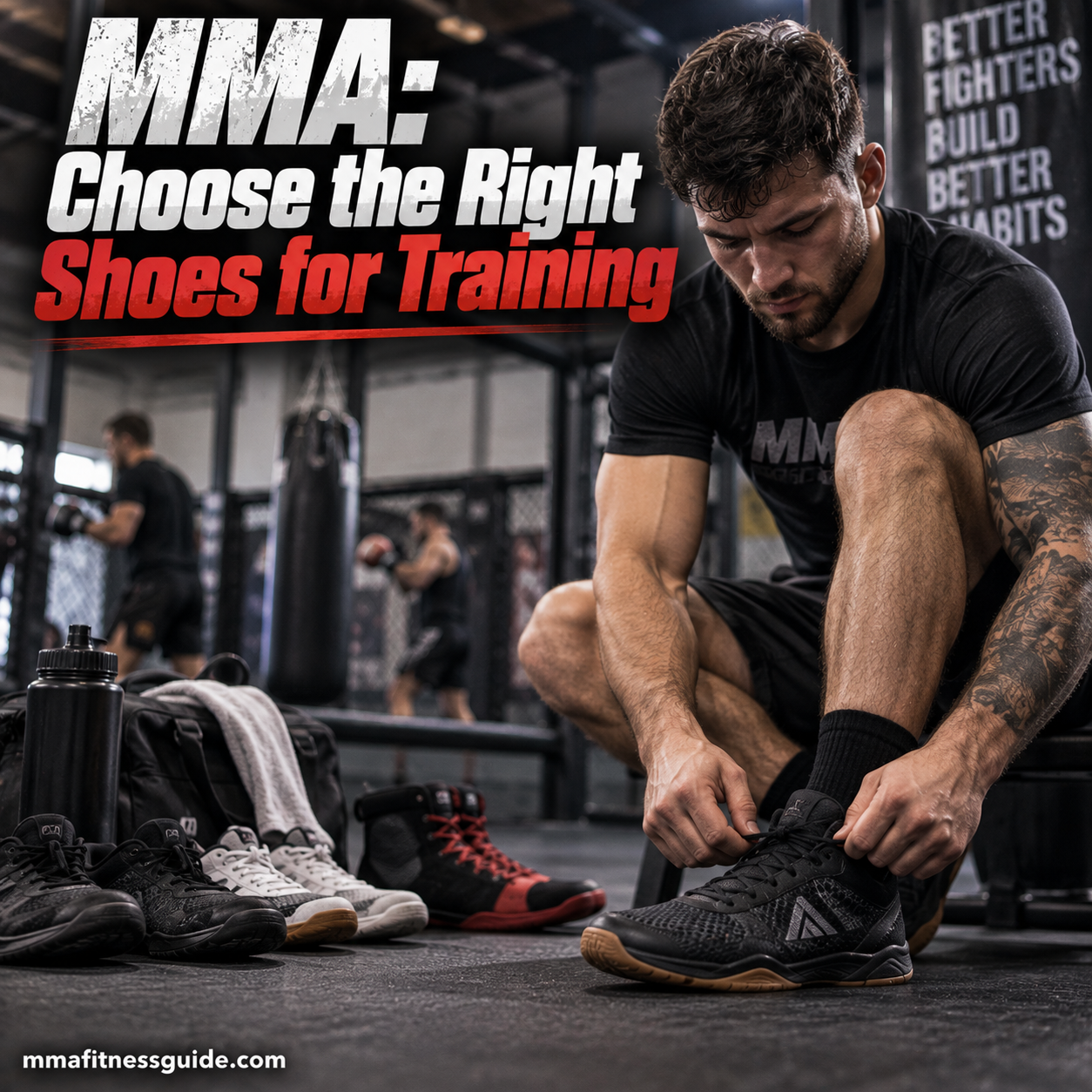
Walk into an MMA gym and you might spend one part of the session barefoot on the mats, another hitting the heavy bag, and the final 30 minutes lifting weights or pushing a sled across turf. One pair of shoes isn’t appropriate for every part of that workout—and in some parts, shoes shouldn’t be worn at all.
For most beginners, the goal isn’t to buy specialized footwear for every drill. It’s to find a stable, low-profile training shoe that handles conditioning, strength work, and movement comfortably while understanding when barefoot training or wrestling-specific footwear makes more sense. Getting that choice right can improve balance and footwork while avoiding unnecessary stress on the feet, ankles, and knees.
Why Shoes Matter in MMA Training
Your feet are your foundation. Every strike, sprawl, shot, and pivot starts at ground level.
Proper shoes help:
- Improve balance and stability
- Support safe footwork
- Reduce joint stress
- Prevent slips and foot fatigue
- Enhance comfort during long sessions
Shoes don’t make you better—but the wrong ones can hold you back.
When Fighters Actually Need Shoes
MMA training isn’t one-size-fits-all.
Shoes are typically worn during:
- Strength and conditioning workouts
- Bag work and pad drills
- Warm-ups and cooldowns
- Circuit training
- Outdoor or non-mat sessions
For grappling and sparring on mats, barefoot training is still standard.
Common Shoe Mistakes Beginners Make
New fighters often grab the wrong footwear without realizing it.
Common mistakes include:
- Using running shoes for everything
- Wearing bulky soles that reduce ground feel
- Choosing shoes with excessive cushioning
- Training in worn-out sneakers
Understanding training needs prevents these issues.
Key Features to Look for in MMA Training Shoes
Not all athletic shoes work well for MMA.
Low Profile Sole
A low-profile sole keeps you close to the ground.
Benefits include:
- Better balance
- Improved footwork
- Faster directional changes
High heels or thick soles increase instability.
Good Grip Without Excessive Traction
MMA movements require controlled traction.
Look for soles that:
- Grip the floor without sticking
- Allow smooth pivots
- Prevent slipping during lateral movement
Overly sticky soles can strain knees and ankles.
Flexible Forefoot
Your shoes should move with your feet.
Flexibility supports:
- Natural foot movement
- Better striking mechanics
- Comfortable transitions
Stiff shoes restrict mobility.
Secure Fit and Lockdown
Loose shoes are a safety risk.
Proper fit should:
- Lock the heel in place
- Prevent sliding inside the shoe
- Feel snug without pressure points
Foot movement inside the shoe reduces control.
Breathability and Comfort
MMA training gets sweaty.
Breathable materials:
- Reduce overheating
- Improve comfort
- Prevent excessive moisture buildup
Comfort helps maintain focus during training.
Best Shoe Types for MMA Beginners
Rather than focusing on brand names, focus on shoe type.
Cross-Training Shoes
Cross-trainers are one of the best options for beginners.
They offer:
- Low-profile soles
- Stable base for lifting
- Flexibility for movement
These work well for mixed training sessions.
Wrestling Shoes (Selective Use)
Some fighters use wrestling shoes for certain drills.
Benefits:
- Excellent grip on mats
- Lightweight feel
- Strong ankle support
Limitations:
- Not ideal for lifting
- Less durable off mats
Best used for drilling, not general conditioning.
Boxing Shoes (Occasional Use)
Boxing shoes can work for striking-focused sessions.
Pros:
- Lightweight
- Good ankle support
- Excellent mobility
Cons:
- Minimal cushioning
- Less stable for strength work
They’re optional, not required.
Shoes Beginners Should Avoid
Some shoe types don’t translate well to MMA.
Running Shoes
Running shoes are designed for forward motion.
Problems include:
- Excessive heel cushioning
- Poor lateral stability
- Increased ankle injury risk
They’re fine for running—not MMA training.
Thick-Soled Sneakers
Fashion or casual sneakers often:
- Reduce ground feel
- Limit agility
- Increase fatigue
They’re not built for dynamic movement.
Minimalist or Barefoot Shoes (Early On)
While minimalist shoes have benefits, beginners should be cautious.
Risks include:
- Foot fatigue
- Calf strain
- Overuse injuries
Build foot strength gradually before using them.
Training Surface Matters
Where you train affects shoe choice.
Gym Floors and Turf
Look for:
- Good grip
- Durable soles
- Cushioning for impact
Cross-trainers work well here.
Mats and MMA Cages
Shoes used on mats should:
- Have clean soles
- Avoid excessive tread
- Be lightweight
Wrestling shoes are best if allowed.
Outdoor Training
Outdoor surfaces require:
- Durable soles
- Moderate cushioning
- Weather-resistant materials
Dedicated outdoor trainers help preserve indoor shoes.
How Shoes Affect Footwork and Technique
Footwear influences movement patterns.
Good shoes support:
- Quick pivots
- Balanced stances
- Smooth transitions
Poor footwear can slow reactions and cause hesitation.
Fit Tips for Beginners
Proper sizing matters.
When trying shoes:
- Leave minimal extra space
- Ensure heel lockdown
- Avoid tight toe boxes
Comfort should be immediate—no “break-in pain.”
How Often to Replace MMA Training Shoes
Shoes wear out faster than many realize.
Replace shoes if you notice:
- Flattened soles
- Reduced grip
- Heel collapse
- Persistent foot discomfort
Worn shoes increase injury risk.
One Pair or Multiple Pairs?
Beginners don’t need multiple shoes right away.
A single, versatile pair:
- Covers most training needs
- Reduces confusion
- Simplifies gear management
Add specialized shoes later if needed.
Budget Considerations for Beginners
Expensive doesn’t always mean better.
Focus on:
- Fit and function
- Durability
- Comfort
A mid-range shoe that fits well beats a premium shoe that doesn’t.
Shoes and Injury Prevention
Footwear affects joint health.
Proper shoes help reduce:
- Ankle strain
- Knee stress
- Foot fatigue
Small improvements add up over time.
Final Thoughts
Choosing the right shoes for MMA training doesn’t have to be complicated. Beginners should prioritize low-profile, stable, flexible shoes that support movement without sacrificing comfort or safety.
The right footwear helps you train confidently, move efficiently, and stay consistent—while the wrong shoes quietly increase injury risk. Start simple, focus on fit, and let your training guide future upgrades.