You finish work at 5 p.m., rush to the gym for two hours of MMA training, and get home exhausted with nothing ready to eat. Dinner becomes whatever is quickest—a drive-through meal, a protein shake, or nothing at all. Repeat that routine several times a week, and inconsistent fueling can start affecting your energy, recovery, and training quality.
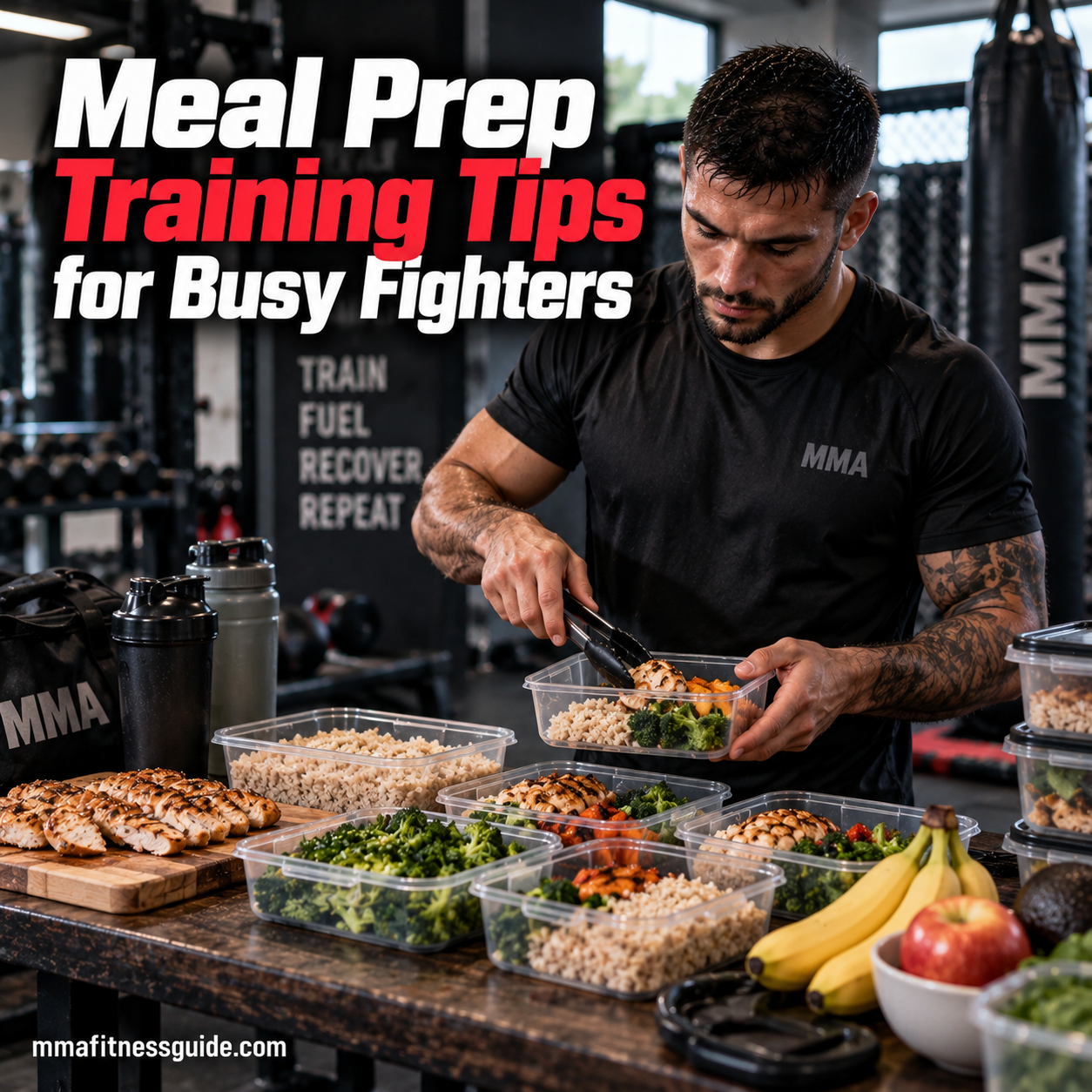
For fighters juggling jobs, family responsibilities, and demanding training schedules, preparing food ahead of time can make the difference between eating enough and regularly missing meals. A few containers of cooked chicken, rice, vegetables, and ready-to-eat snacks can eliminate the need to cook from scratch after every session.
Meal prep doesn’t mean eating identical meals seven days a week or following a rigid diet. Cooking a few staple ingredients twice a week, adjusting portions around training intensity, and keeping convenient backup meals available can help you stay fueled without spending hours in the kitchen. The goal is simple: have food ready when your schedule gets hectic, so nutrition supports your training instead of becoming another daily obstacle.
Why Meal Prep Matters for MMA Performance
Training hard without proper nutrition creates a performance ceiling. Fighters who eat inconsistently often experience:
- Low energy during sessions
- Poor recovery between workouts
- Increased injury risk
- Unstable weight fluctuations
- Mental fatigue and irritability
Meal prep removes decision fatigue and ensures fuel is available when your body needs it most.
The Biggest Nutrition Challenge for Busy Fighters
The main issue isn’t lack of knowledge—it’s lack of time.
Common challenges include:
- Back-to-back training sessions
- Long work hours
- Late-night workouts
- Limited access to healthy food
Meal prep works because it shifts effort to a single planning window instead of daily scrambling.
Meal Prep vs Dieting: A Fighter’s Perspective
Meal prep isn’t about restriction. It’s about preparation.
For fighters, effective meal prep focuses on:
- Consistent protein intake
- Balanced carbohydrates for training fuel
- Healthy fats for recovery and hormones
- Adequate calories to support workload
The goal is performance first—body composition follows naturally.
How Often Fighters Should Meal Prep
You don’t need to prep every meal for the entire week.
Most busy fighters do best with:
- 2 prep sessions per week
- 3–4 prepped meals per day
- Flexible snacks added as needed
This approach balances structure with flexibility.
Setting Up a Simple Meal Prep System
Overcomplicated plans fail quickly. Keep it simple.
Choose Core Foods You Tolerate Well
Stick to foods that:
- Digest easily
- Are affordable
- Are easy to cook in bulk
Examples include:
- Lean meats (chicken, turkey, beef, fish)
- Rice, potatoes, oats
- Vegetables you actually enjoy
Consistency beats variety during busy weeks.
Build Meals Around Training Demands
Structure meals based on training intensity.
On heavy training days:
- Higher carbohydrate intake
- Larger post-training meals
On lighter days:
- Moderate carbs
- Focus on protein and vegetables
Meal prep allows easy portion adjustments without changing foods.
Protein: The Non-Negotiable for Fighters
Protein supports:
- Muscle repair
- Recovery
- Lean mass retention
- Satiety
Busy fighters should aim to:
- Include protein in every prepped meal
- Spread intake across the day
Prepped protein prevents missed meals when schedules shift.
Carbohydrates: Fuel, Not the Enemy
Carbs are critical for:
- High-intensity training
- Sparring performance
- Glycogen replenishment
Meal prep helps fighters:
- Time carbs around training
- Avoid energy crashes
- Maintain consistent output
Under-fueling carbs is one of the most common performance mistakes.
Fats: Supporting Recovery and Hormones
Healthy fats play a supporting role.
Include fats from:
- Olive oil
- Avocados
- Nuts and seeds
- Fatty fish
Keep fat intake moderate around training times and higher in non-training meals.
Sample Meal Prep Structure for Busy Fighters
This example fits a typical work + training schedule.
Daily Meal Framework
- Breakfast or first meal: Protein + carbs
- Midday meal: Balanced protein, carbs, vegetables
- Pre-training meal: Easy-to-digest carbs + protein
- Post-training meal: Protein-heavy, moderate carbs
- Optional snack: Protein-based
Meal prep ensures at least the main meals are covered.
Time-Saving Meal Prep Tips
Efficiency is key for busy fighters.
Cook in Bulk, Assemble Later
Instead of cooking full meals:
- Cook proteins in bulk
- Cook carbs separately
- Mix and match portions
This saves time and prevents boredom.
Use Simple Cooking Methods
Fast methods include:
- Sheet-pan baking
- Slow cookers
- Rice cookers
- Air fryers
Minimal cleanup increases consistency.
Prep Snacks Too
Don’t overlook snacks.
Good prep-friendly options:
- Greek yogurt
- Protein shakes
- Hard-boiled eggs
- Fruit with nut butter
These prevent missed calories on long days.
Meal Prep During Fight Camp vs Off-Season
Nutrition needs change depending on phase.
Fight Camp Meal Prep
Focus on:
- Consistent timing
- Stable energy levels
- Weight management without drastic cuts
Meal prep reduces stress during high-volume training.
Off-Season Meal Prep
Focus on:
- Recovery
- Muscle building
- Variety and flexibility
Meal prep still matters—it just becomes more relaxed.
Common Meal Prep Mistakes Fighters Make
Avoid these traps:
- Over-restricting calories
- Eating the same bland meals every day
- Ignoring hydration and electrolytes
- Skipping meals due to “busy days”
Meal prep should make life easier, not miserable.
Staying Consistent Without Perfection
Missed a prep session? Don’t quit.
Helpful mindset shifts:
- One prepared meal is better than none
- Consistency over weeks matters most
- Flexibility prevents burnout
Meal prep is a support system—not a rulebook.
Nutrition and Mental Performance
Stable nutrition improves:
- Focus during training
- Mood regulation
- Stress resilience
Fighters who eat consistently think more clearly under pressure.
Final Thoughts
For busy fighters, meal prep does more for training and recovery than almost any other habit. It removes guesswork, reduces stress, and ensures your body has the fuel it needs—no matter how chaotic your schedule gets.
You don’t need perfect meals. You need prepared ones.