
Introduction
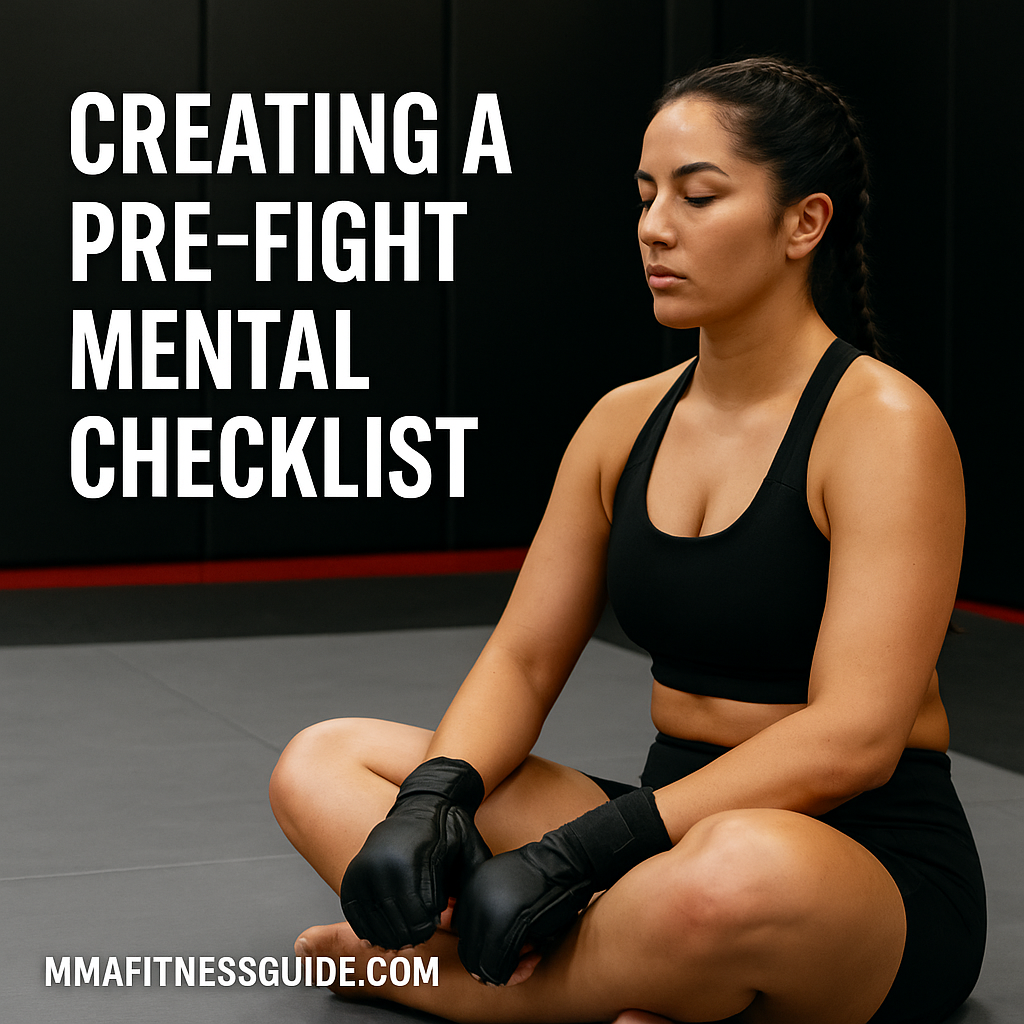
Right before a fight, your mind becomes just as important as your conditioning. Even fighters with great cardio, sharp technique, and strong preparation can fall apart mentally if they don’t control their thoughts. A pre-fight mental checklist helps you stay steady, focused, and confident — no matter how intense the moment feels.
Think of it as mental warm-up: a quick sequence that keeps your head clear and your nerves under control. Here’s how to build one that actually works.
Why You Need a Pre-Fight Mental Checklist
The moments leading up to a fight can feel overwhelming.
Your heart rate rises.
Your thoughts bounce around.
Your breathing changes.
A mental checklist gives you:
- structure
- calmness
- predictability
- focus
- confidence
Instead of thinking hundreds of thoughts, you follow a short, simple sequence that puts your mind in the right state.
The Pre-Fight Mental Checklist
Below is a clean, easy 6-step structure fighters can use. It works for amateurs, pros, and beginners.
1. Reset Your Breathing
Before anything else, calm your nervous system.
What to do:
Take 3–5 deep breaths:
- inhale through the nose
- hold for one second
- exhale slowly through the mouth
Why it works:
Slower breathing lowers anxiety and keeps your body from jumping into panic mode.
2. Release Physical Tension
Most fighters get tight without noticing.
Check these areas:
- jaw
- shoulders
- hands
- hips
- stomach
Gently shake out your arms, roll your shoulders, and loosen your stance.
Why it works:
Relaxed muscles move faster, react better, and conserve energy.
3. Repeat Your Key Cues (Not Too Many)
This step keeps you mentally sharp.
Choose 2–3 simple cues, such as:
- “Hands up.”
- “Stay loose.”
- “Breathe and move.”
- “Find my range.”
- “Own the center.”
Short cues work best — the mind remembers them under pressure.
4. Visualize the Opening Minute
Instead of imagining the entire fight, focus on the first 60 seconds.
Visualize:
- your stance
- your first steps
- your guard
- your breathing
- your reactions
- your defensive habits
Why it works:
A good first minute sets the tone — calm, composed, and smart.
5. Accept Your Nerves (Don’t Fight Them)
Nerves are normal.
Every fighter feels them.
Tell yourself:
- “This feeling means I’m ready.”
- “Everyone feels this.”
- “My body is preparing to perform.”
When you accept nerves, they stop overwhelming you.
6. Anchor Your Confidence
Create one grounding thought that reminds you who you are as a fighter.
Examples:
- “I trained for this.”
- “I’m prepared.”
- “I stay calm under pressure.”
- “I trust my game.”
This becomes your last thought before stepping out.
Add Optional Extras to Strengthen Your Checklist
Depending on your personality, these add-ons may help.
Personal Music or Rhythm
A song or beat can help you switch into “fight mode.”
Coach’s Final Words
A short cue from your coach:
- “Stay sharp.”
- “Keep your hands moving.”
- “Control the distance.”
Consistency builds confidence.
Trigger Ritual (Simple + Meaningful)
Examples:
- glove touch
- tapping your chest
- bowing head briefly
- small breathing sequence
Nothing dramatic — just something that centers you.
What NOT To Do Before a Fight
Avoid these common mental traps:
❌ Overthinking “What if?” scenarios
Stick to your checklist.
❌ Relying on hype or adrenaline
Hype fades — calm focus wins rounds.
❌ Replaying negative training moments
Your camp is done. Trust your preparation.
❌ Comparing your opponent to past losses
Every fight is new.
❌ Trying to predict everything
You only need to control your actions, not the randomness of a fight.
How to Build Your Personal Checklist
Start simple and test it in:
- sparring
- hard pad sessions
- competition-style drills
Your checklist should:
- be short
- be repeatable
- be calming
- match your style
Most fighters do best with 4–6 steps.
Example Pre-Fight Mental Checklist
Here’s a clean template many fighters use:
- Deep breaths (3–5 slow breaths)
- Relax shoulders + shake out arms
- Repeat cues: “Hands high. Stay loose. Breathe.”
- Visualize first minute
- Accept nerves
- Confidence anchor: “I’m ready.”
Short. Simple. Effective.
Final Thoughts
A pre-fight mental checklist helps you walk into the cage with clarity, confidence, and emotional control. It keeps your mind from spiraling and lets your training take over. When your internal state is steady, everything else — timing, distance, reactions, composure — falls into place.
Train your checklist just like you train your jab.
A steady mind builds a stronger fighter.