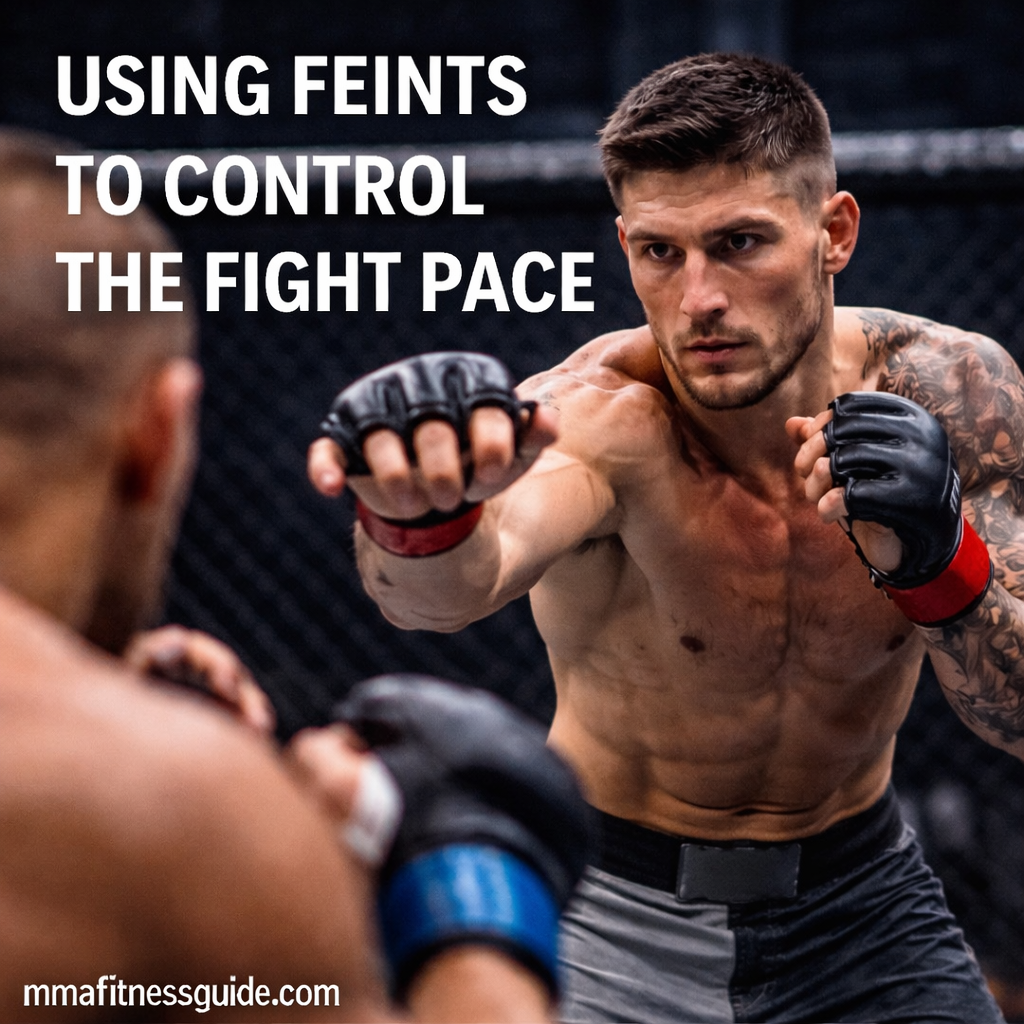
In MMA, controlling the pace of a fight is often more important than throwing the hardest strikes or shooting the fastest takedowns. Fighters who dictate rhythm force opponents to react, hesitate, and expend energy inefficiently. One of the most effective tools for pace control is the feint.
Feints are not tricks or wasted movements—they are strategic signals that manipulate reactions, timing, and decision-making. This article explains how feints work, why they are essential in MMA, and how fighters can use them to control tempo, create openings, and manage energy throughout a fight.
What Is a Feint in MMA?
A feint is a deliberate, incomplete action designed to provoke a reaction without committing to the attack.
Examples include:
- Level change without shooting
- Shoulder twitch without throwing
- Half-step forward without striking
- Hip rotation without kicking
The goal is to force the opponent to respond.
Why Feints Are Critical for Pace Control
Pace is not just speed—it’s decision pressure.
Feints help fighters:
- Interrupt opponent rhythm
- Create hesitation
- Force defensive reactions
- Control distance and timing
- Manage energy expenditure
When opponents react to feints, they fight on your terms.
How Feints Affect the Opponent’s Mind
Feints create uncertainty.
Repeated feints cause opponents to:
- Second-guess their reads
- Hesitate before attacking
- Overreact defensively
- Waste energy
Mental fatigue often arrives before physical fatigue.
Controlling Tempo With Feints
Tempo refers to the speed and rhythm of exchanges.
Slowing the Fight Down
Feints slow aggressive opponents by:
- Freezing forward pressure
- Forcing resets
- Breaking combinations
This is especially useful against fast starters.
Speeding the Fight Up
Feints can also increase pace by:
- Triggering defensive reactions
- Opening quick entries
- Creating fast follow-ups
You decide when the fight accelerates.
Types of Feints Used in MMA
Different feints serve different purposes.
Striking Feints
Common striking feints include:
- Jab feints
- Shoulder drops
- Hip rotations
These draw guard reactions and open targets.
Level Change Feints
Level changes threaten takedowns.
They force opponents to:
- Drop hands
- Widen stance
- Pause forward movement
This creates striking opportunities.
Footwork and Distance Feints
Subtle footwork feints:
- Test reactions
- Control range
- Set traps
Movement itself becomes a weapon.
Grappling and Clinch Feints
Feints aren’t just for striking.
In grappling, fighters feint:
- Takedown attempts
- Body locks
- Grip changes
These create scrambles and positional advantages.
Using Feints to Manage Energy
Pace control protects cardio.
Feints:
- Cost less energy than full attacks
- Force opponents to react repeatedly
- Drain opponents mentally and physically
Efficient fighters last longer.
Feints and Defensive Responsibility
Feints reduce risk when used correctly.
Benefits include:
- Less over-commitment
- Better defensive positioning
- Safer engagement
Feints allow information gathering without exposure.
Building Feints Into Combinations
Feints work best when chained.
Feint-to-Strike Sequences
Examples:
- Jab feint → cross
- Level feint → overhand
- Step-in feint → low kick
The first action sets the trap.
Feint-to-Feint Patterns
Multiple feints:
- Increase uncertainty
- Break timing reads
- Condition reactions
Once reactions are predictable, real attacks land.
Common Mistakes Fighters Make With Feints
Feints must be believable.
Avoid:
- Lazy or exaggerated movements
- Feinting without follow-ups
- Overusing the same feint
Good feints resemble real attacks.
How Often Should Fighters Feint?
There’s no fixed number.
Effective use means:
- Feinting enough to create doubt
- Attacking when reactions appear
- Avoiding predictable patterns
Quality matters more than quantity.
Feints Against Different Opponent Types
Adapt feints to opponent behavior.
Aggressive Opponents
Use feints to:
- Halt forward pressure
- Draw counters
- Create openings
Aggressive fighters react strongly.
Defensive Opponents
Use feints to:
- Force movement
- Open guards
- Create entries
Feints break static defenses.
Counter-Strikers
Against counter-fighters:
- Feint to draw counters
- Punish reactions
- Control distance
Patience is key.
Using Feints Along the Cage
Cage positioning amplifies feints.
Near the fence:
- Reactions are limited
- Escape options shrink
- Feints create panic
This leads to mistakes.
Training Feints Effectively
Feints require intentional practice.
Shadowboxing With Purpose
Use shadowboxing to:
- Practice subtle movements
- Combine feints and strikes
- Build rhythm control
Visualize opponent reactions.
Drilling With Partners
Partner drills should focus on:
- Reaction recognition
- Controlled responses
- Timing development
Communication improves learning.
Sparring With Feint Focus
During sparring:
- Limit power
- Emphasize deception
- Track reactions
This builds confidence and control.
Feints and Fight IQ
High-level fighters use feints strategically.
Feints improve:
- Pattern recognition
- Decision-making
- Tactical awareness
They are a marker of advanced fight IQ.
When Feints Don’t Work
Not all opponents react predictably.
If feints fail:
- Change rhythm
- Adjust distance
- Combine with pressure
Adaptability matters.
Feints and Long-Term Skill Development
Feints teach:
- Patience
- Observation
- Timing mastery
These skills carry across all phases of MMA.
Final Thoughts
Using feints to control fight pace is one of the most powerful yet underutilized skills in MMA. Feints disrupt rhythm, drain opponents mentally, and allow fighters to dictate when and how exchanges happen. They reduce risk, improve efficiency, and elevate overall fight IQ.
Mastering feints isn’t about deception alone—it’s about control. Fighters who control pace control the fight, and feints are one of the smartest tools available to do exactly that.