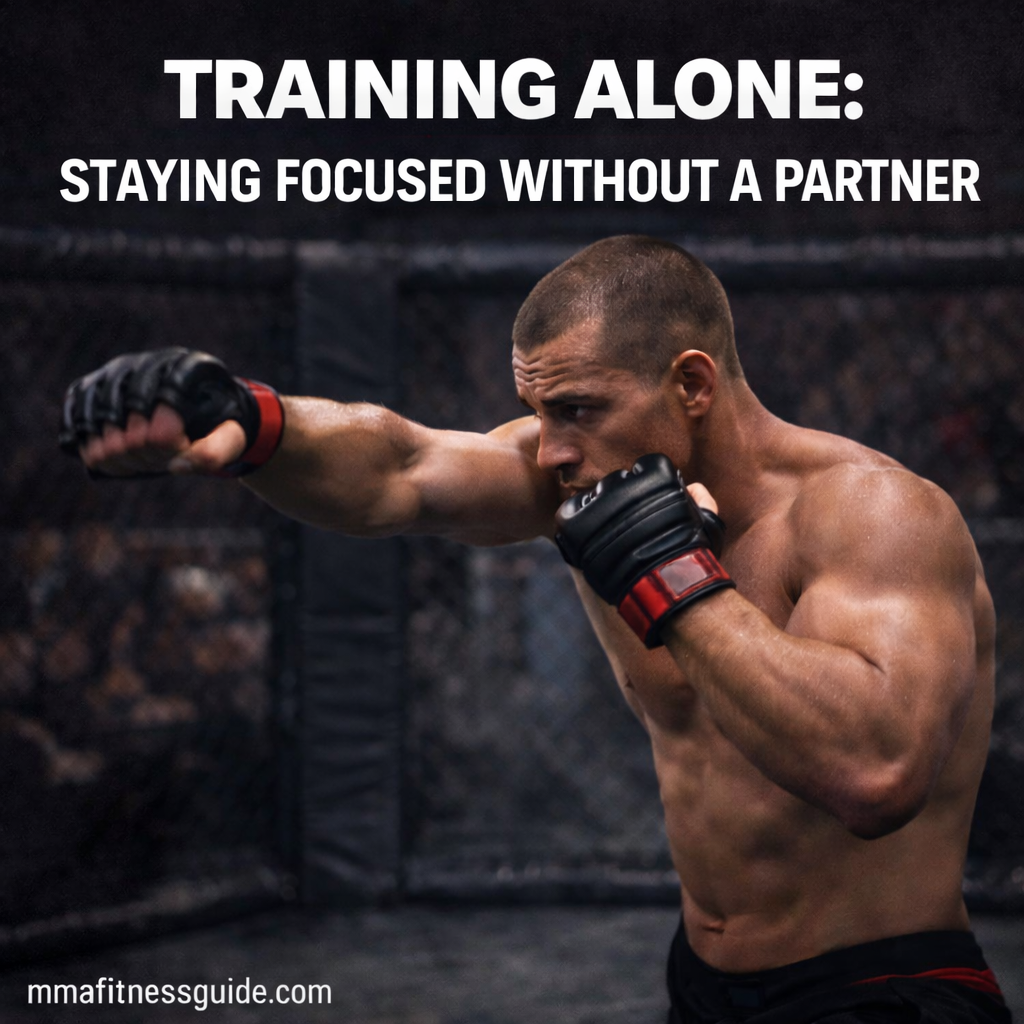
Training with teammates sharpens timing, pressure, and reactions—but not every MMA athlete has consistent access to partners. Whether due to scheduling conflicts, travel, gym availability, or personal circumstances, solo training is a reality for many fighters.
Training alone doesn’t have to mean training poorly. With the right mindset and structure, solo sessions can build discipline, technical awareness, and mental resilience that directly transfer to competition. This guide explores how MMA athletes can stay focused, motivated, and mentally strong when training without a partner.
Why Solo Training Is Mentally Challenging
Training alone removes external accountability and feedback. Without a coach or partner pushing the pace, mental discipline becomes the limiting factor.
Common challenges include:
- Loss of motivation mid-session
- Reduced intensity during rounds
- Mental fatigue and boredom
- Self-doubt about progress
- Inconsistent training habits
Understanding these challenges is the first step toward overcoming them.
Reframing Solo Training as a Skill
Elite fighters don’t see solo training as a downgrade—they treat it as a separate skill set.
Training alone develops:
- Self-accountability
- Focus under low stimulation
- Emotional control
- Internal motivation
- Mental toughness
These qualities directly support fight performance, especially in high-pressure moments.
Setting Clear Intentions Before Each Session
Unfocused solo sessions lead to wasted time and mental drift. Clear intention creates purpose.
Before starting, decide:
- What is today’s primary goal?
- Which skill or quality is being developed?
- How will success be measured?
Examples include:
- Technical shadowboxing precision
- Cardio pacing over five rounds
- Mental composure during fatigue
Intentional training sharpens attention and reduces mental wandering.
Structuring Solo Sessions for Mental Engagement
Structure removes decision fatigue and keeps the mind engaged.
Use Timed Rounds and Breaks
Timers create urgency and realism. They:
- Prevent overlong or underpaced rounds
- Build focus through fixed work periods
- Reduce the temptation to quit early
Training with defined rounds mirrors fight conditions and keeps intensity honest.
Break Sessions into Mental Blocks
Divide training into focused segments, such as:
- Technical work
- Conditioning
- Visualization
- Cooldown reflection
This segmentation helps the brain reset and stay present throughout the session.
Mental Techniques to Stay Focused While Training Alone
Mental tools keep solo training productive and intentional.
Visualization Between Rounds
Use rest periods to mentally rehearse:
- Opponent pressure
- Cage positioning
- Defensive reactions
- Successful combinations
Visualization strengthens neural pathways and maintains fight-specific focus.
Internal Coaching Language
Replace external feedback with internal cues:
- “Hands up.”
- “Breathe.”
- “Stay balanced.”
Clear, simple cues prevent mental overload and improve consistency.
Mindful Breathing During Fatigue
Breathing awareness anchors attention and reduces anxiety. Focus on:
- Slow nasal inhales
- Controlled exhales
- Relaxed shoulders and jaw
This trains composure under stress—one of MMA’s most valuable mental skills.
Managing Motivation Without External Accountability
Motivation fluctuates when training alone. Systems beat willpower.
Set Non-Negotiable Training Times
Consistency builds momentum. Treat training like an appointment—not an option.
Helpful strategies include:
- Fixed daily training windows
- Calendar scheduling
- Pre-packed gear
Reducing friction increases follow-through.
Track Progress Visually
Recording progress reinforces commitment. Track:
- Rounds completed
- Weekly training volume
- Conditioning improvements
- Technical milestones
Seeing consistency builds confidence and motivation.
Avoiding the Mental Traps of Solo Training
Training alone can amplify negative thinking if unchecked.
Overthinking Technique
Without feedback, athletes may obsess over flaws.
Counter this by:
- Focusing on one technical goal per session
- Accepting imperfect execution
- Reviewing progress over weeks, not days
Progress in MMA is gradual—not immediate.
Letting Intensity Drop
Solo training often becomes comfortable.
Combat this by:
- Using timers religiously
- Setting minimum intensity standards
- Including short high-output bursts
Discomfort builds resilience.
Building Confidence Through Solo Work
Confidence comes from preparation, not validation.
Solo training builds confidence by:
- Reinforcing discipline
- Proving self-reliance
- Developing trust in preparation
Knowing you can train effectively alone removes dependence on ideal conditions.
When to Seek Connection Despite Training Alone
Training alone doesn’t mean total isolation.
Maintain connection through:
- Occasional partner sessions
- Coach check-ins
- Video analysis feedback
- Mental health conversations
Balance independence with support.
Solo Training and Mental Health Awareness
Extended solo training can affect mental well-being.
Watch for signs such as:
- Chronic lack of motivation
- Persistent negative self-talk
- Emotional detachment
- Increased anxiety or irritability
Mental health is part of performance. Address issues early.
Turning Solo Training Into a Competitive Advantage
Fighters who master solo training gain:
- Stronger self-discipline
- Better emotional regulation
- Greater mental resilience
- Consistent training habits
These advantages show up when pressure is highest.
Final Thoughts
Training alone is not a setback—it’s an opportunity to strengthen focus, discipline, and mental toughness. By structuring sessions, setting clear intentions, and using mental training tools, MMA athletes can turn solo work into a powerful asset rather than a limitation.
When the cage door closes, it’s just you and the moment. Learning to train alone prepares you to perform alone.