
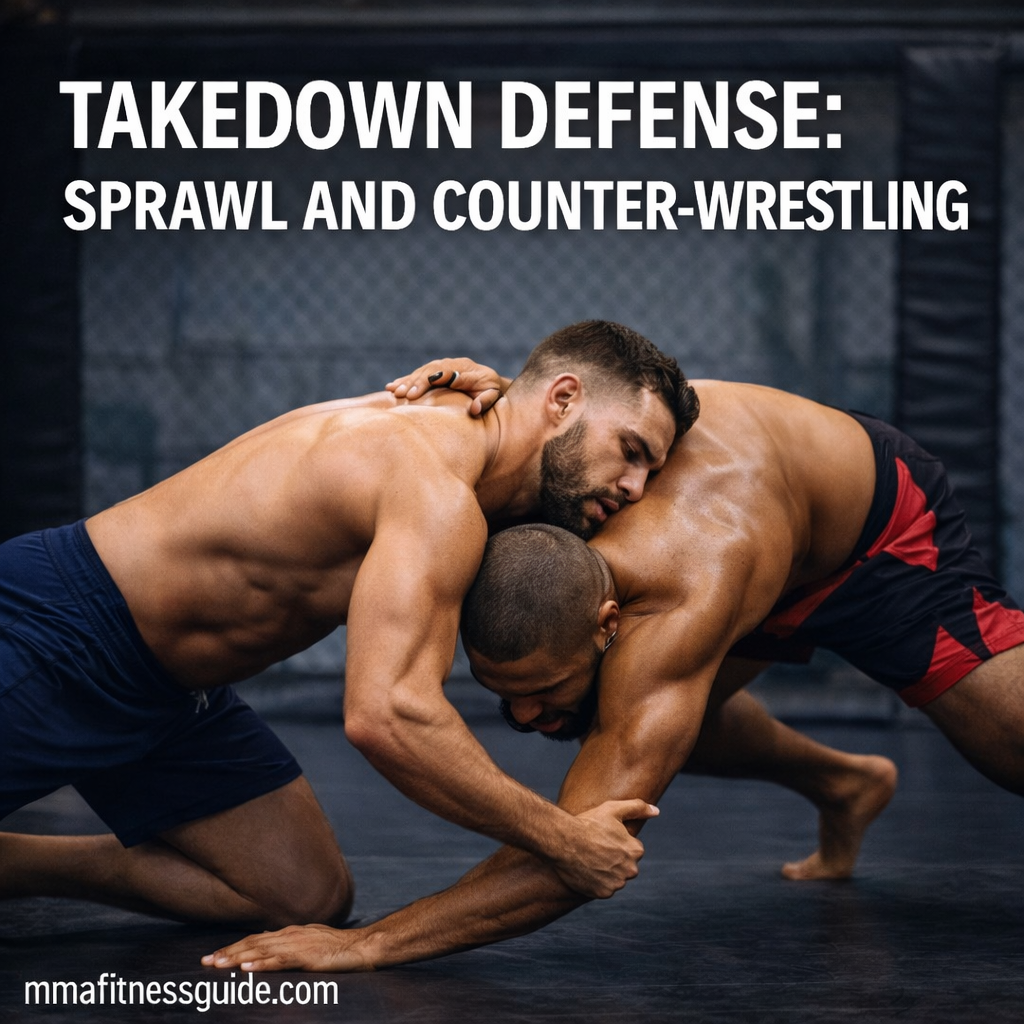
Takedown defense is one of the most important skill sets in MMA. Whether you’re a striker trying to keep the fight standing or a well-rounded fighter looking to dictate where the fight takes place, strong takedown defense gives you control.
At the core of effective takedown defense are two concepts: the sprawl and counter-wrestling. Together, they allow fighters to stop shots, punish failed attempts, and turn defense into offense. This guide breaks down how sprawls work, how counter-wrestling fits into MMA, and how to train both effectively.
Why Takedown Defense Matters in MMA
In MMA, every exchange carries the threat of a level change. Fighters who can’t defend takedowns often lose control of the fight’s pace and location.
Strong takedown defense allows you to:
- Keep the fight in your preferred range
- Conserve energy by avoiding prolonged grappling
- Punish predictable shot attempts
- Maintain confidence during striking exchanges
Even elite grapplers respect opponents with strong sprawl and counter skills.
The Sprawl: The Foundation of Takedown Defense
The sprawl is the first line of defense against wrestling shots. It’s designed to neutralize the attacker’s momentum and protect your hips.
What a Proper Sprawl Does
A correct sprawl:
- Drops your hips back and down
- Transfers bodyweight onto the opponent
- Removes your legs from danger
- Forces the attacker to carry your weight
Timing matters more than strength. A late sprawl often fails regardless of power.
Common Sprawl Mistakes
Many fighters sprawl incorrectly, reducing effectiveness.
Common errors include:
- Sprawling straight down instead of back
- Leaving hips too high
- Reaching with the hands instead of using hips
- Standing upright too quickly
Good sprawls are aggressive, not passive.
Types of Wrestling Shots You’ll Face in MMA
Understanding common takedown entries helps improve reaction speed.
Double-Leg Takedowns
The most common shot in MMA.
Key defense points:
- Lower hips immediately
- Push the head down
- Spread legs wide
Stopping the double early is critical.
Single-Leg Takedowns
Often used against the cage.
Key defense points:
- Sprawl partially
- Control the opponent’s head or arm
- Use balance and hops wisely
Single-leg defense often blends into counter-wrestling.
Body Lock and Clinch Entries
Not all takedowns start from distance.
Defensive focus includes:
- Strong underhooks
- Hip positioning
- Breaking grips early
Good clinch awareness reduces shot opportunities.
Counter-Wrestling: Turning Defense Into Offense
Counter-wrestling begins once the initial shot is stopped.
Instead of disengaging immediately, skilled fighters use:
- Front headlocks
- Crossfaces
- Snap-downs
- Angle changes
This punishes poor shot selection and discourages repeated attempts.
Front Headlock Control
One of the most effective counter positions.
Benefits include:
- Controlling posture
- Setting up strikes or submissions
- Forcing scrambles
A strong front headlock turns defense into dominance.
Crossface and Whizzer Defense
When opponents persist on single-legs:
- Crossfaces disrupt posture
- Whizzers apply shoulder pressure
- Hip positioning breaks balance
These tools slow the opponent and open counter opportunities.
Using the Cage for Takedown Defense
The cage changes takedown dynamics.
Smart cage defense includes:
- Wide stance near the fence
- Framing against the head or shoulders
- Turning off the cage quickly
Poor cage awareness leads to easy finishes.
Sprawl-to-Strike Transitions
In MMA, sprawls don’t end the exchange.
Effective fighters:
- Sprawl, then strike
- Attack the body or head on disengagement
- Punish repeated level changes
Strikes after sprawls make opponents hesitant to shoot again.
Conditioning for Takedown Defense
Good takedown defense requires endurance.
Training should include:
- Repeated sprawl drills
- Shot-defense circuits
- Clinch conditioning rounds
Fatigue is one of the biggest causes of failed defense.
Training Drills for Sprawl and Counter-Wrestling
Skill development requires repetition under pressure.
Basic Sprawl Drills
Examples include:
- Reaction sprawls from stance
- Partner shot entries
- Sprawl-and-reset repetitions
Focus on speed and hip placement.
Counter-Wrestling Drills
Useful drills include:
- Sprawl to front headlock
- Single-leg defense chains
- Cage defense scenarios
Chain techniques together for realism.
Wrestling Defense vs MMA Defense
Pure wrestling defense doesn’t always translate directly to MMA.
Key MMA differences:
- Strikes are allowed
- Cage alters angles
- Stance is more upright
MMA takedown defense blends wrestling fundamentals with striking awareness.
Mental Aspects of Takedown Defense
Confidence matters.
Fighters with poor takedown defense often:
- Overreact to feints
- Hesitate during exchanges
- Freeze under pressure
Strong defense allows relaxed, confident striking.
Style Matchups and Takedown Defense
Different styles require different defensive emphasis.
- Strikers prioritize sprawls and angles
- Wrestlers focus on counter-wrestling dominance
- Grapplers blend defense with submission threats
Adapt defense to your overall game.
Common Takedown Defense Mistakes in MMA
Avoid these frequent errors:
- Dropping hands while defending shots
- Giving up underhooks too easily
- Standing straight up after sprawls
- Relying on strength instead of positioning
Technical efficiency beats brute force.
Building a Complete Takedown Defense System
Elite takedown defense combines:
- Early shot recognition
- Strong sprawls
- Effective counters
- Smart cage awareness
No single technique works alone.
Final Thoughts
Takedown defense is not about avoiding wrestling—it’s about controlling where the fight happens. A strong sprawl paired with effective counter-wrestling gives MMA fighters confidence, efficiency, and tactical freedom.
When you can stop shots, punish attempts, and stay composed under pressure, you force opponents to fight your fight. In MMA, that control is everything.