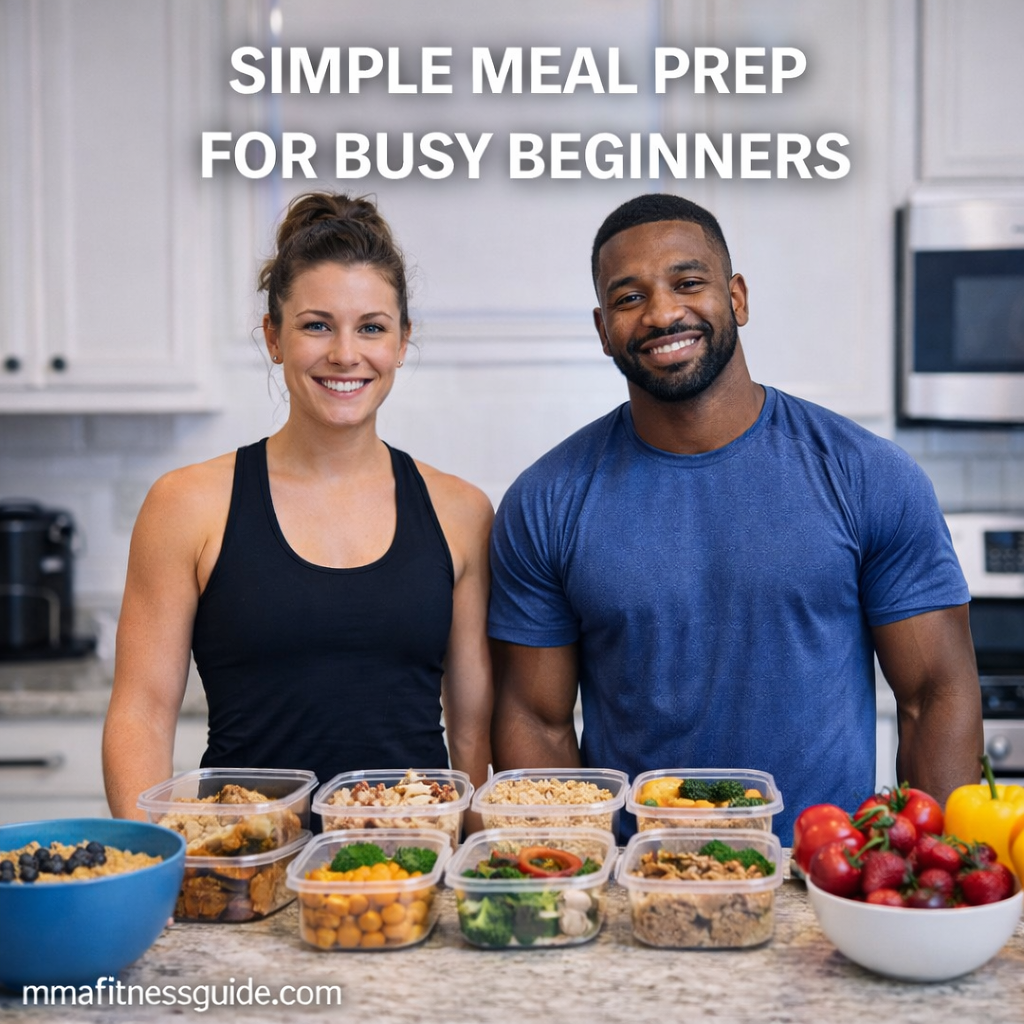
Eating well consistently is one of the hardest challenges for fitness beginners—especially those balancing work, family, and training. Many people start strong but fall off when time runs short, leading to skipped meals, poor food choices, or inconsistent energy levels.
Simple meal prep solves this problem. It doesn’t require complicated recipes, hours in the kitchen, or strict dieting. With a few basic strategies, busy beginners can prepare meals that support training, recovery, and overall health—without stress.
Why Meal Prep Matters for Beginners
Nutrition supports everything from energy and recovery to mood and consistency.
Simple meal prep helps beginners:
- Avoid skipping meals
- Reduce reliance on fast food
- Maintain stable energy levels
- Support training consistency
- Reduce daily decision fatigue
The goal isn’t perfection—it’s reliability.
Why Beginners Struggle With Nutrition
Most beginners fail due to structure, not effort.
Common challenges include:
- Lack of time
- No plan for busy days
- Overcomplicated nutrition advice
- Inconsistent schedules
Meal prep creates structure where motivation alone fails.
What “Simple” Meal Prep Really Means
Meal prep doesn’t mean eating the same bland meal every day.
Simple meal prep means:
- Preparing basic foods in advance
- Mixing and matching components
- Reducing daily cooking time
- Making healthy choices easier than unhealthy ones
Efficiency matters more than variety early on.
How Often Beginners Should Meal Prep
You don’t need to prep every day.
Most beginners succeed with:
- 1–2 prep sessions per week
- 60–90 minutes per session
Consistency beats intensity.
Core Components of Simple Meal Prep
Instead of full meals, prep building blocks.
Protein Sources
Protein supports muscle recovery and satiety.
Easy options include:
- Chicken breast or thighs
- Ground turkey or beef
- Eggs
- Greek yogurt
- Beans or lentils
Cook proteins in bulk for flexibility.
Carbohydrate Sources
Carbs fuel training and daily activity.
Simple choices:
- Rice or quinoa
- Potatoes or sweet potatoes
- Oats
- Whole-grain wraps
Choose options you enjoy and digest well.
Vegetables and Fiber
Vegetables support digestion and micronutrient intake.
Easy prep options:
- Roasted mixed vegetables
- Pre-washed greens
- Frozen vegetables
Frozen options save time and reduce waste.
Healthy Fats
Fats support hormones and satisfaction.
Easy additions:
- Olive oil
- Avocado
- Nuts or seeds
Use modest portions.
A Beginner-Friendly Meal Prep Strategy
Start with a simple framework.
Pick 2 Proteins, 2 Carbs, 2 Vegetables
This creates variety without complexity.
Example:
- Proteins: chicken and eggs
- Carbs: rice and potatoes
- Vegetables: broccoli and peppers
Mix and match throughout the week.
Cook in Batches
Batch cooking saves time.
Tips:
- Use sheet pans
- Cook multiple items at once
- Keep seasoning simple
Avoid elaborate recipes early on.
Store Smart
Use containers that:
- Stack easily
- Are microwave-safe
- Fit your fridge
Clear containers help with visibility and consistency.
Sample Simple Meal Prep Day
Here’s how prepped foods might be used.
Breakfast
- Greek yogurt
- Oats or fruit
- Nuts or seeds
Quick and portable.
Lunch
- Chicken
- Rice
- Roasted vegetables
Easy to reheat.
Dinner
- Ground meat
- Potatoes
- Side salad
Flexible and filling.
Snacks
- Hard-boiled eggs
- Fruit
- Yogurt
- Leftover protein
Prepared snacks prevent poor choices.
How Meal Prep Saves Mental Energy
Decision fatigue is real.
Meal prep:
- Removes daily food decisions
- Reduces stress
- Improves consistency
When food is ready, habits stick.
Meal Prep for Training Days vs Rest Days
Beginners don’t need separate plans.
However:
- Training days may need more carbs
- Rest days may feel better with lighter portions
Use hunger and energy as guides.
Grocery Shopping Made Simple
Planning starts at the store.
Stick to a Short Grocery List
Limit choices to avoid overwhelm.
A simple list includes:
- Proteins
- Carbs
- Vegetables
- Snacks
Avoid impulse buys.
Shop Once or Twice Per Week
Frequent shopping increases inconsistency.
Scheduled trips support routine.
Common Meal Prep Mistakes Beginners Make
Avoid these pitfalls:
- Overcomplicating recipes
- Prepping foods you don’t enjoy
- Skipping snacks
- Expecting perfection
Simple wins last longer.
How to Stay Consistent When Life Gets Busy
Busy weeks happen.
Strategies include:
- Keep frozen backups
- Use rotisserie chicken
- Rely on simple staples
Progress beats perfection.
Budget-Friendly Meal Prep Tips
Meal prep saves money when done right.
Tips:
- Buy in bulk
- Choose seasonal produce
- Use frozen vegetables
Simple food is often cheaper food.
How Meal Prep Supports Fitness Progress
Consistent nutrition leads to:
- Better energy
- Improved recovery
- Fewer skipped workouts
- Better mood
Small habits drive long-term results.
When to Adjust Your Meal Prep
As training increases, needs change.
Adjust by:
- Increasing portions
- Adding snacks
- Rotating food choices
Listen to your body.
Meal Prep and Long-Term Sustainability
Meal prep works when it fits your life.
Sustainable prep:
- Matches your schedule
- Uses foods you enjoy
- Adapts to busy periods
Rigid systems fail—flexible ones last.
Final Thoughts
Simple meal prep is one of the most effective tools beginners can use to support fitness goals. By preparing basic foods ahead of time, busy beginners remove barriers to healthy eating and build consistency without stress.
You don’t need perfect meals—just prepared ones. When food is ready, progress becomes easier, training feels better, and healthy habits stick.