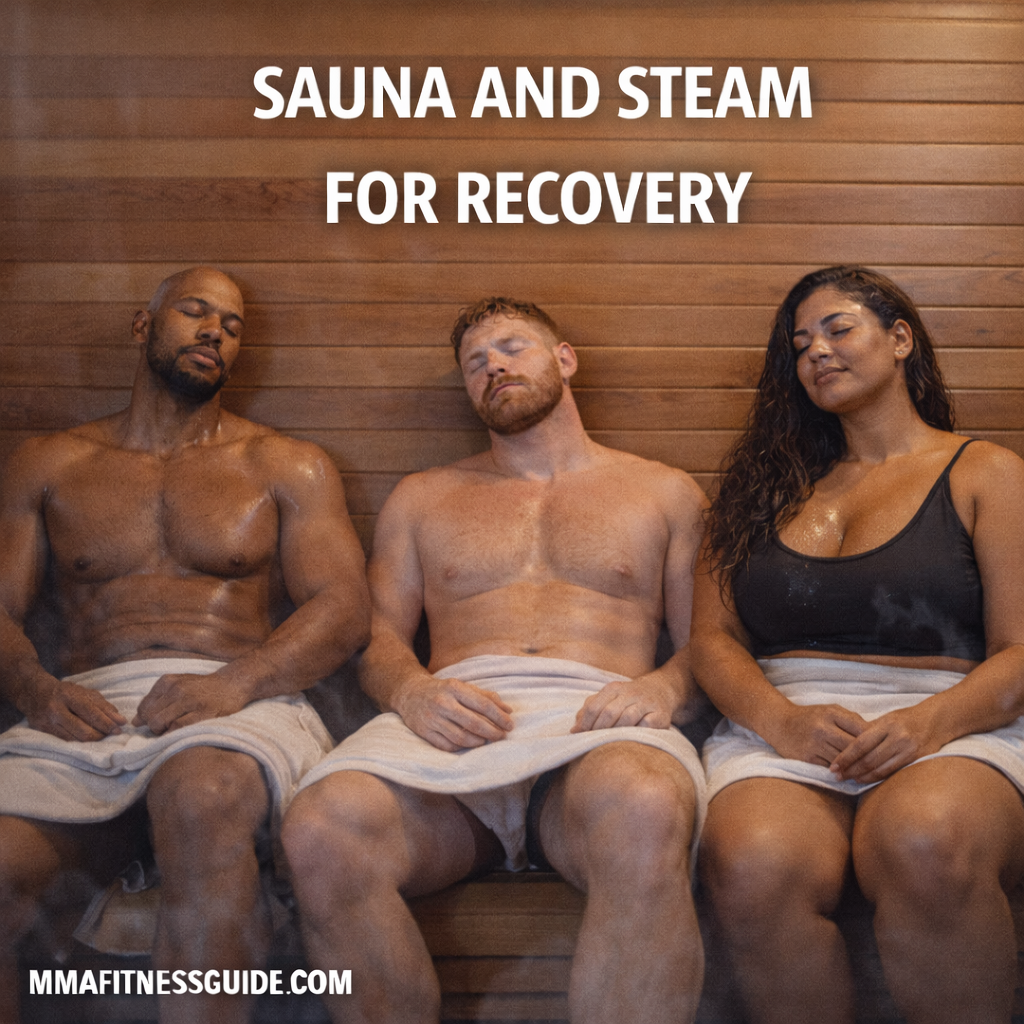
Sauna and steam rooms have been used for recovery and relaxation for centuries, and they’ve become increasingly popular among MMA fighters and athletes. When used correctly, heat exposure can support recovery, reduce soreness, and improve overall well-being. When misused, it can interfere with hydration, recovery, and performance.
This article explains how sauna and steam can benefit MMA recovery, how to use them safely, and when they make the most sense in a training schedule.
Why Heat Therapy Appeals to MMA Fighters
MMA training places repeated stress on muscles, joints, and the nervous system.
Sauna and steam are often used because they may help with:
- Muscle relaxation
- Temporary soreness relief
- Improved circulation
- Mental relaxation
- Post-training decompression
Heat therapy is about supporting recovery — not replacing it.
Sauna vs Steam: What’s the Difference?
Both involve heat, but they stress the body differently.
Sauna
Saunas use dry heat at higher temperatures.
Typical characteristics include:
- Temperatures around 160–200°F
- Low humidity
- Strong sweating response
Saunas place greater cardiovascular stress.
Steam Room
Steam rooms use moist heat at lower temperatures.
Typical characteristics include:
- Temperatures around 100–120°F
- High humidity
- Softer heat sensation
Steam rooms feel less intense but still promote sweating.
How Sauna and Steam Support Recovery
Improved Blood Flow
Heat causes blood vessels to dilate.
This can help:
- Increase circulation to tired muscles
- Support nutrient delivery
- Remove metabolic byproducts
Improved blood flow may aid short-term recovery.
Muscle Relaxation and Soreness Relief
Heat helps muscles relax.
Fighters often report:
- Reduced stiffness
- Temporary soreness relief
- Improved comfort post-training
This can improve mobility sessions following heat exposure.
Nervous System Reset
Training keeps the nervous system in a heightened state.
Sauna and steam may help:
- Reduce stress levels
- Promote relaxation
- Improve sleep quality
- Support mental recovery
Mental recovery is as important as physical recovery.
When to Use Sauna or Steam
Timing matters.
After Training
Post-training use is most common.
Benefits include:
- Relaxation after intense sessions
- Reduced perceived soreness
- Transition into recovery mode
Avoid sauna immediately after extremely dehydrating sessions.
On Recovery Days
Sauna and steam work well on lighter days.
They can be used to:
- Promote relaxation
- Support mobility work
- Enhance recovery-focused routines
They should complement rest, not replace it.
Avoid Before Hard Training
Using sauna before intense training can be counterproductive.
Heat exposure before workouts may:
- Increase fatigue
- Reduce power output
- Increase dehydration risk
Save heat for after training.
How Long to Use Sauna or Steam
Moderation is key.
General guidelines:
- 10–20 minutes per session
- Start with shorter durations
- Exit immediately if dizzy or lightheaded
- Cool down gradually afterward
Longer sessions do not equal better recovery.
Hydration Is Non-Negotiable
Heat causes fluid loss.
Important hydration practices include:
- Drinking water before and after sessions
- Replacing electrolytes when needed
- Avoiding sauna when already dehydrated
- Monitoring urine color as a hydration indicator
Dehydration undermines recovery.
Sauna, Steam, and Weight Cutting
Many fighters associate sauna use with weight cuts.
Important considerations:
- Sauna use for weight cutting is not recovery
- Rapid dehydration increases injury risk
- Frequent heat-based weight cuts harm performance
- Recovery-focused sauna use should avoid aggressive sweating
Recovery and weight cutting should not overlap.
Who Should Be Cautious With Heat Therapy
Sauna and steam are not ideal for everyone.
Fighters should avoid or limit use if they:
- Are sick or overheated
- Have cardiovascular conditions
- Are severely dehydrated
- Are close to competition weigh-ins
- Experience dizziness or nausea
Listen to your body.
Common Mistakes Fighters Make
Avoid these errors:
- Staying in too long
- Using sauna daily without recovery balance
- Skipping hydration
- Treating sauna as a replacement for sleep
- Combining sauna with alcohol
Heat is a tool, not a shortcut.
Sauna vs Other Recovery Methods
Sauna and steam should complement other recovery strategies.
They work best alongside:
- Sleep
- Proper nutrition
- Mobility work
- Active recovery
- Massage or soft tissue work
Recovery works as a system.
Final Thoughts
Sauna and steam can be valuable recovery tools for MMA fighters when used responsibly. They help promote relaxation, reduce stiffness, and support mental recovery — but only when paired with proper hydration and recovery habits.
Used in moderation and at the right time, heat therapy can enhance how fighters feel between sessions. Used excessively or carelessly, it can do more harm than good. Respect the heat, prioritize hydration, and let sauna and steam support your recovery — not sabotage it.