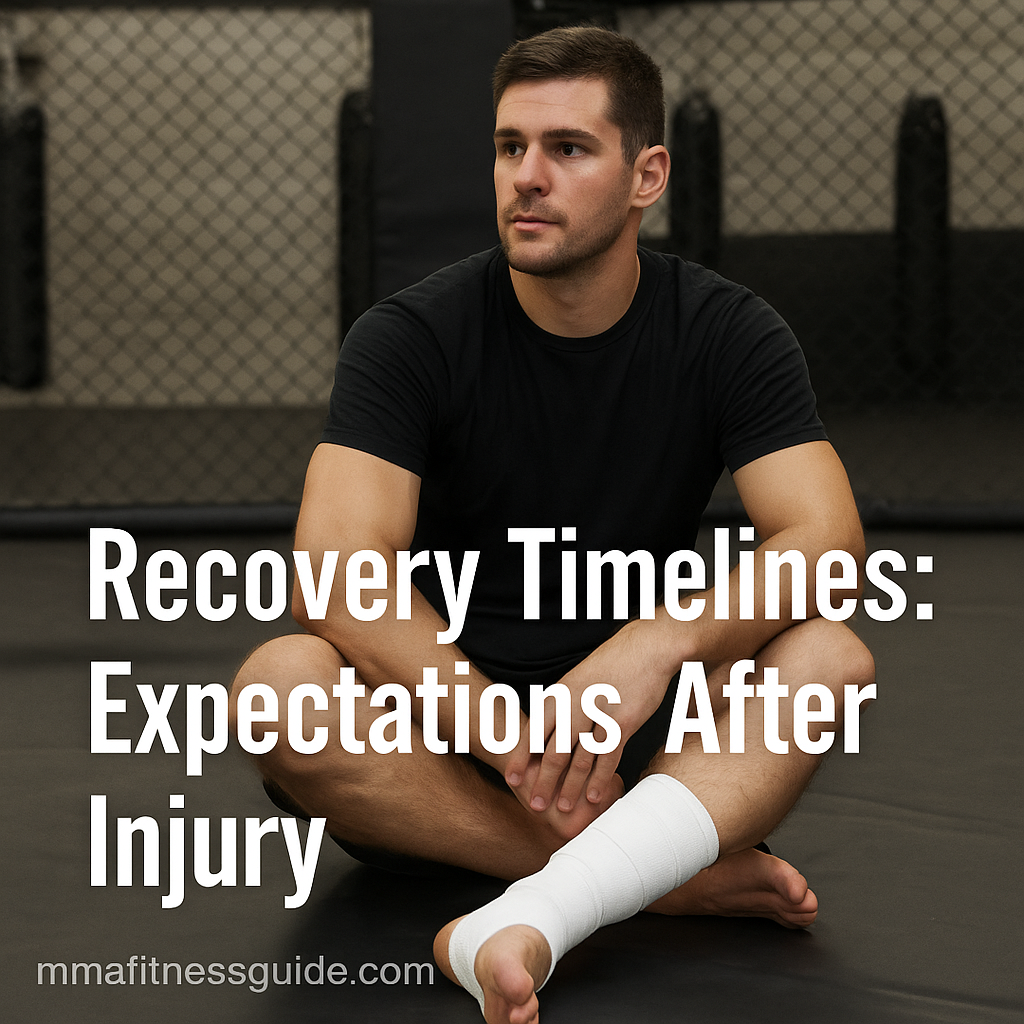
The Long Road Back
For MMA fighters, few injuries are as frustrating as a knee surgery.
Whether it’s a torn ACL, MCL, or meniscus, recovery is not just about healing — it’s about rebuilding confidence, balance, and fight readiness.
The good news: with smart rehab, patience, and discipline, fighters can return stronger than before.
Understanding the Recovery Process
Knee surgery recovery isn’t a one-size-fits-all journey. It depends on:
- The type of injury and surgery (ACL reconstruction, meniscus repair, etc.)
- Your age and conditioning level
- Rehabilitation consistency
But the general rule is this: you can’t rush the process. Trying to push too fast can undo months of healing.
Phase 1: Early Recovery (Weeks 1–4)
Goal: Reduce pain, swelling, and regain mobility.
At this stage, focus on gentle movement and circulation.
Key actions:
- Ice and elevate the knee regularly.
- Follow your physical therapist’s early mobility plan.
- Begin light range-of-motion drills (heel slides, ankle pumps).
- Keep upper-body conditioning through seated exercises.
Avoid any twisting, pivoting, or heavy loading. Your job right now is healing, not heroics.
Phase 2: Regaining Strength (Weeks 4–8)
Goal: Build foundational muscle support and joint stability.
The quadriceps and hamstrings must relearn how to support the knee.
Recommended exercises:
- Stationary bike (low resistance)
- Leg raises (straight and side)
- Hamstring curls
- Body-weight squats (only if cleared by therapist)
- Balance work using a foam pad or Bosu ball
Your therapist may introduce resistance bands to improve control without adding impact.
Phase 3: Functional Strength and Stability (Weeks 8–16)
Goal: Prepare the body for controlled, fight-related movement.
Here, you’ll shift toward dynamic control and sport-specific coordination.
Progressive exercises include:
- Step-ups and lateral step-overs
- Controlled lunges and single-leg balance drills
- Core strengthening for overall stability
- Light agility ladder footwork
- Swimming or low-impact cardio
At this stage, you’re rebuilding the base for explosive movement — but still avoiding high-impact sparring.
Phase 4: Return to Sport (Months 4–9)
Goal: Reintroduce MMA-specific movements safely.
Once cleared by your physical therapist or sports physician, you’ll gradually resume:
- Controlled pad work and shadowboxing
- Light grappling or positional drills
- Plyometric drills (box jumps, hops)
- Full-body strength circuits
Each step should feel stable and pain-free before progressing.
Remember: your first “fight” back isn’t against an opponent — it’s against impatience.
Common Mistakes Fighters Make
- Skipping rehab sessions once pain subsides.
- Returning to sparring too soon. Even small missteps can reinjure tissue.
- Ignoring imbalance. Over-reliance on the healthy leg slows full recovery.
- Neglecting mental recovery. Fear of reinjury can block full performance return.
Trust the process and listen to your body.
The Mental Side of Recovery
Rehab isn’t only physical — it’s psychological. Many fighters struggle with doubt or loss of identity during downtime.
Mental strategies:
- Set weekly, realistic goals.
- Track small wins (range of motion, pain-free movement).
- Visualize returning to peak form.
- Stay connected to your gym community for support.
Confidence grows with consistency.
The Role of Physical Therapy
Your physical therapist is your corner coach in this fight.
They tailor your recovery plan, monitor progress, and correct movement patterns to prevent reinjury.
Commit fully to their guidance — skipping steps can cost months of progress.
Long-Term Prevention
Once you’re back on the mats, prioritize knee health to avoid future issues:
- Warm up properly before every session.
- Keep hips and glutes strong to reduce knee strain.
- Stretch hamstrings, calves, and quads after training.
- Use proper landing and pivot techniques.
- Don’t ignore discomfort — early treatment prevents major setbacks.
Key Takeaways
- Recovery from knee surgery requires patience, discipline, and structure.
- Follow rehab phases — don’t rush the timeline.
- Focus equally on strength, stability, and mindset.
- Long-term success depends on prevention and consistent mobility work.
As Dominick Cruz, who came back from multiple ACL tears, once said:
“Your struggle becomes your strength.”
Rehabilitation isn’t a setback — it’s your next evolution as a fighter.