Introduction
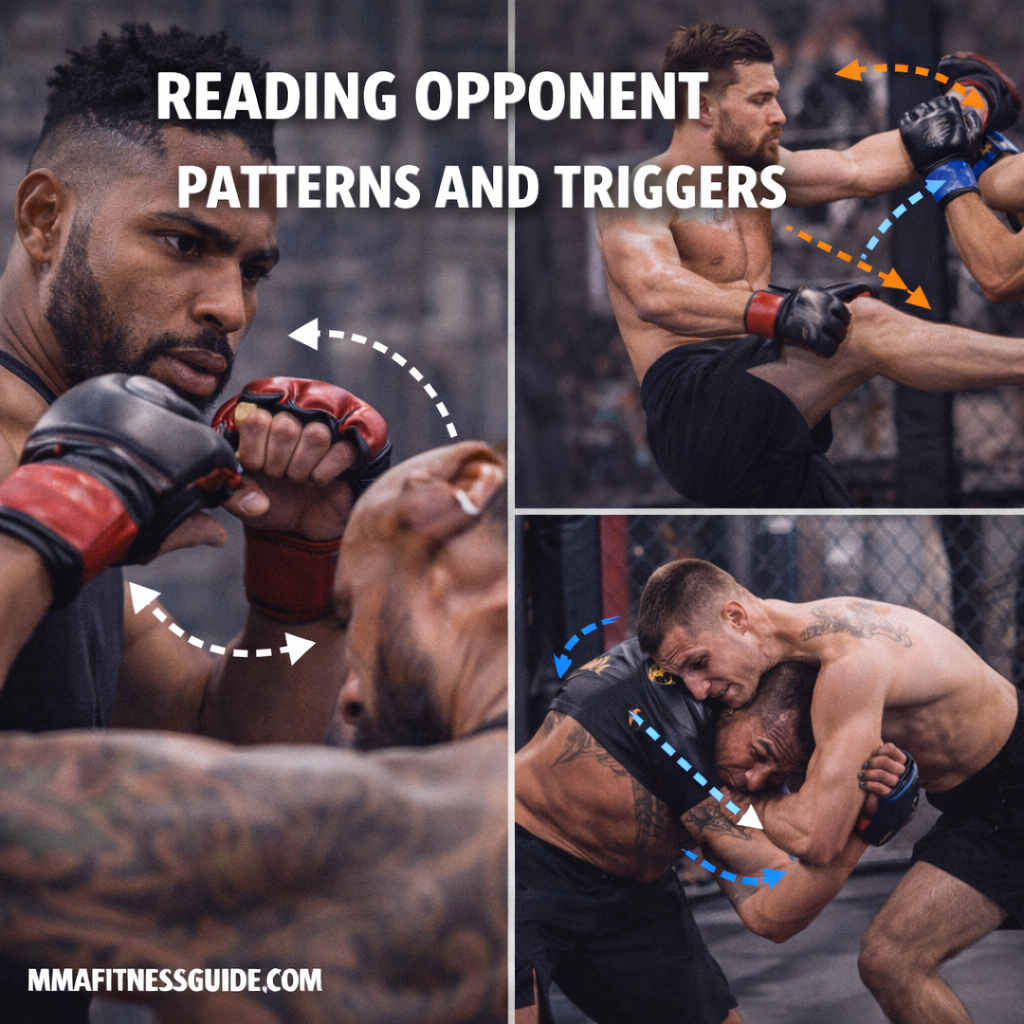
High-level martial artists don’t just react—they anticipate. The ability to read opponent patterns and triggers allows fighters to predict movements, exploit habits, and control the pace of a fight. Whether in striking exchanges, grappling transitions, or clinch battles, pattern recognition separates experienced fighters from reactive ones.
Learning to identify and exploit opponent tendencies is a skill that can be trained just like technique and conditioning.
What Are Patterns and Triggers in Fighting?
Patterns are repeated behaviors an opponent shows over time. Triggers are specific actions or situations that cause predictable responses.
Examples include:
- Always stepping back after a jab
- Dropping the lead hand before throwing a cross
- Shooting takedowns after absorbing leg kicks
- Clinching when pressured against the cage
Recognizing these habits creates opportunities.
Why Pattern Recognition Matters in MMA
MMA is too fast and chaotic to rely on raw reactions alone.
Pattern recognition helps fighters:
- Anticipate attacks instead of chasing them
- Conserve energy by making smarter decisions
- Create high-percentage counters
- Control distance and timing
- Reduce damage taken
The earlier a pattern is recognized, the greater the advantage.
How Fighters Develop Opponent Patterns
Patterns often appear in response to stress.
Common pattern-building situations:
- Fatigue
- Pressure near the cage
- Being hit cleanly
- Defending takedowns
- Losing positional control
Under pressure, fighters revert to habits.
Reading Patterns in Striking Exchanges
Footwork and Movement Patterns
Movement reveals intention.
Watch for:
- Directional bias when retreating
- Repeated pivots or resets
- Preference for circling toward power or away from it
These cues indicate where openings will appear.
Combination Habits
Most fighters favor specific sequences.
Common tells include:
- Same ending strike after combinations
- Repeating entry patterns
- Telegraphing power shots
- Predictable resets after flurries
Anticipation allows counters to land cleanly.
Recognizing Defensive Triggers
Defensive reactions are often automatic.
Examples:
- Shelling up under pressure
- Pulling the head straight back
- Ducking to one side
- Reaching to parry strikes
Defensive triggers are prime counter opportunities.
Reading Grappling and Clinch Patterns
Takedown and Scramble Habits
In grappling, patterns emerge quickly.
Watch for:
- Preferred takedown entries
- Repeated reactions to sprawls
- Direction of escapes
- Reliance on specific grips
Exploiting these patterns leads to control.
Cage and Clinch Behavior
The cage amplifies habits.
Common triggers include:
- Immediate clinch when pressured
- Turning to a dominant side
- Dropping hips defensively
- Overcommitting to underhooks
Understanding cage behavior is critical in MMA.
Using Feints to Reveal Triggers
Feints are one of the best tools for pattern discovery.
Effective feints:
- Draw predictable reactions
- Expose defensive habits
- Create timing windows
- Reduce risk while gathering data
Feints turn information into opportunity.
How to Collect Information Without Risk
Early in fights, information matters more than damage.
Smart strategies include:
- Light probing strikes
- Safe range entries
- Low-risk feints
- Clinch testing without full commitment
Patience leads to precision.
Adapting When Patterns Change
Good fighters adjust once patterns are exposed.
To stay ahead:
- Avoid over-relying on one read
- Watch for counter-adjustments
- Stay flexible with tactics
- Reset expectations if patterns disappear
Pattern reading is dynamic, not static.
Training Pattern Recognition in the Gym
Pattern recognition must be trained intentionally.
Effective drills include:
- Controlled sparring with specific goals
- Pattern-identification rounds
- Feint-focused sparring
- Video review and breakdown
Awareness improves with repetition.
Using Video Study to Identify Patterns
Film accelerates learning.
Video analysis helps fighters:
- Spot habits missed in real time
- Recognize opponent tendencies
- Prepare specific game plans
- Review personal patterns and leaks
Study turns observation into strategy.
Common Mistakes in Pattern Reading
Avoid these pitfalls:
- Forcing patterns that aren’t there
- Ignoring context and fatigue
- Becoming predictable while hunting reads
- Fixating on one habit too long
Balance observation with execution.
Mental Discipline and Patience
Pattern recognition requires calm focus.
Key mental skills:
- Staying present
- Avoiding emotional reactions
- Trusting timing over force
- Waiting for high-percentage moments
Patience creates openings.
Final Thoughts
Reading opponent patterns and triggers is one of the most valuable skills in martial arts and MMA. It transforms chaos into opportunity and reaction into strategy. Fighters who master pattern recognition fight smarter, take less damage, and create cleaner finishes.
Skill, conditioning, and mindset matter—but awareness wins fights.