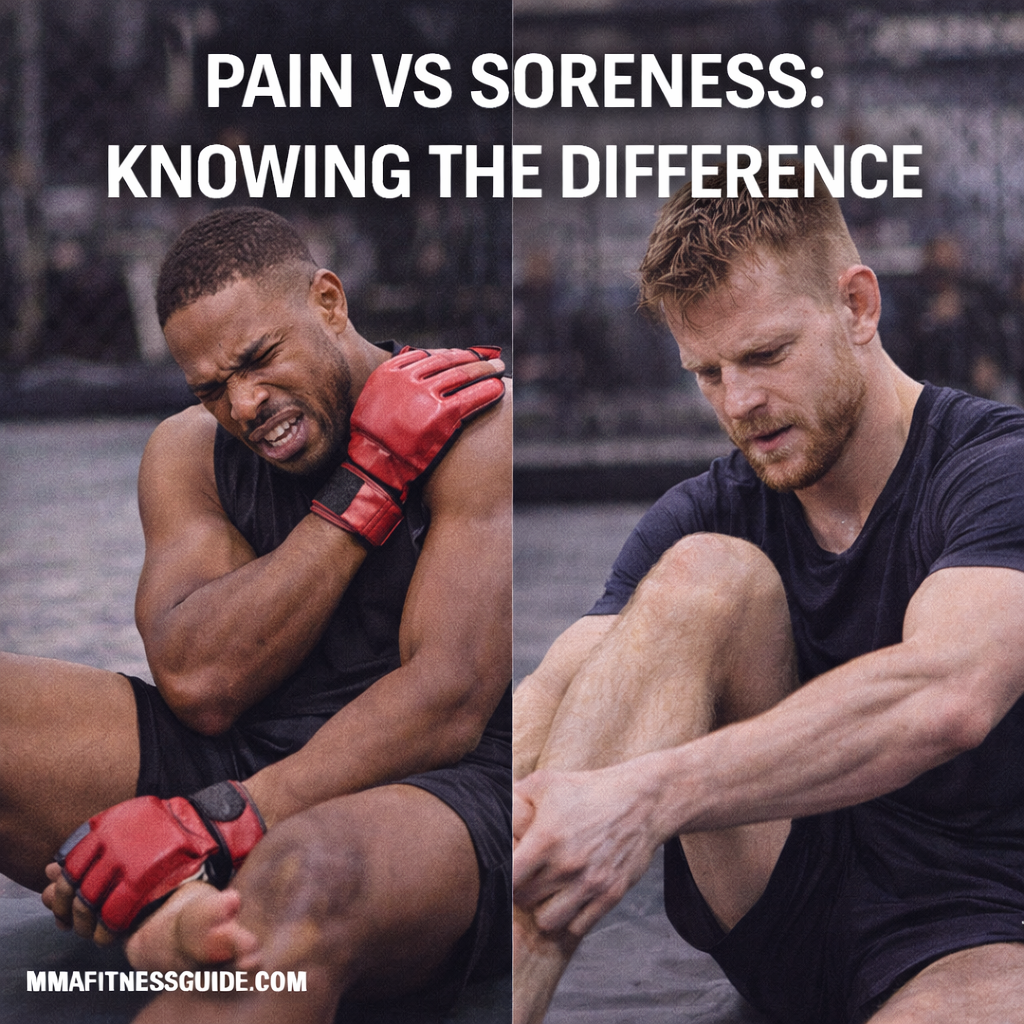
Discomfort is part of MMA training—but not all discomfort is the same. Understanding the difference between pain and soreness is essential for staying healthy, progressing consistently, and avoiding injuries that can sideline you for weeks or months. Many fighters push through warning signs simply because they don’t know what their body is telling them.
This article explains the difference between pain and soreness, how each feels, when it’s safe to train, and when it’s time to back off.
Why This Distinction Matters in MMA
MMA training places intense stress on muscles, joints, and connective tissue.
Knowing the difference helps you:
- Train consistently without setbacks
- Avoid turning small issues into serious injuries
- Adjust intensity intelligently
- Recover more effectively
- Extend your training lifespan
Ignoring warning signs often leads to forced layoffs.
What Muscle Soreness Is
Soreness is a normal response to training stress.
Characteristics of Soreness
Soreness typically:
- Feels dull or achy
- Appears 12–48 hours after training
- Improves with light movement
- Affects muscles evenly
- Decreases over several days
This type of soreness is often called delayed onset muscle soreness (DOMS).
Common Causes of Soreness
Soreness usually results from:
- New movements or techniques
- Increased training volume
- Higher intensity sessions
- Eccentric muscle loading
- Infrequent training
Soreness signals adaptation—not damage.
What Pain Is
Pain is a warning sign, not a training badge.
Characteristics of Pain
Pain often:
- Feels sharp, stabbing, or burning
- Appears suddenly or worsens quickly
- Persists during rest
- Limits range of motion
- Gets worse with continued activity
Pain indicates potential tissue damage or irritation.
Common Causes of Pain
Pain may result from:
- Poor technique
- Overuse injuries
- Acute strains or sprains
- Joint irritation
- Ignoring early warning signs
Pain should never be ignored or “trained through.”
Key Differences Between Pain and Soreness
Understanding how they differ helps guide decisions.
Soreness:
- Gradual onset
- Improves with movement
- Symmetrical muscle discomfort
- Fades over time
Pain:
- Sudden or progressive
- Worsens with movement
- Localized or sharp
- Persists or intensifies
When in doubt, err on the side of caution.
How Pain and Soreness Affect Training Decisions
Training With Soreness
Light to moderate training is often safe.
Approaches include:
- Reduced intensity
- Longer warm-ups
- Focus on technique
- Active recovery sessions
Soreness should decrease as you warm up.
Training With Pain
Training with pain increases injury risk.
Signs to stop include:
- Pain during warm-up
- Altered movement patterns
- Sharp sensations
- Loss of strength or control
Pain requires rest, modification, or evaluation.
Common Areas of Confusion for MMA Athletes
Certain sensations can be misleading.
Examples:
- Joint stiffness vs joint pain
- Muscle tightness vs strain
- Post-sparring soreness vs injury
- Impact bruising vs structural damage
Context and progression help clarify the difference.
The Role of Warm-Ups in Detection
Warm-ups reveal valuable information.
During warm-up, assess:
- Does discomfort decrease or worsen?
- Does movement feel smoother or restricted?
- Does pain appear suddenly?
If discomfort improves, it’s likely soreness. If it worsens, stop.
When to Modify Training
Modify sessions if:
- Soreness affects movement quality
- Fatigue increases compensation
- Pain begins mid-session
- Recovery feels delayed
Modification protects long-term progress.
When to Stop and Rest
Stop training if:
- Pain persists after rest
- Swelling or bruising increases
- Movement becomes painful
- Symptoms worsen over time
Rest now prevents longer breaks later.
Recovery Strategies for Soreness
Effective recovery includes:
- Light movement and mobility
- Hydration
- Proper nutrition
- Sleep
- Active recovery sessions
These support adaptation and healing.
Recovery Strategies for Pain
Pain requires a different approach.
Consider:
- Rest and load reduction
- Ice or heat when appropriate
- Professional assessment if persistent
- Gradual return protocols
Ignoring pain delays healing.
Listening to Your Body Without Fear
Awareness isn’t weakness.
Healthy athletes:
- Notice patterns
- Respond early
- Adjust intelligently
- Train for longevity
Your body provides feedback—learning to listen is a skill.
Final Thoughts
Understanding pain vs soreness is a foundational skill for injury prevention in MMA. Soreness signals growth and adaptation, while pain signals potential harm. Knowing when to push and when to pause allows fighters to train consistently, recover effectively, and extend their careers.
Smart training isn’t about ignoring discomfort—it’s about understanding it.